
 Save 15% on your 1st Autoship learn more

 Email us
 Live Chat
 FAQs
FAQs





Introduction
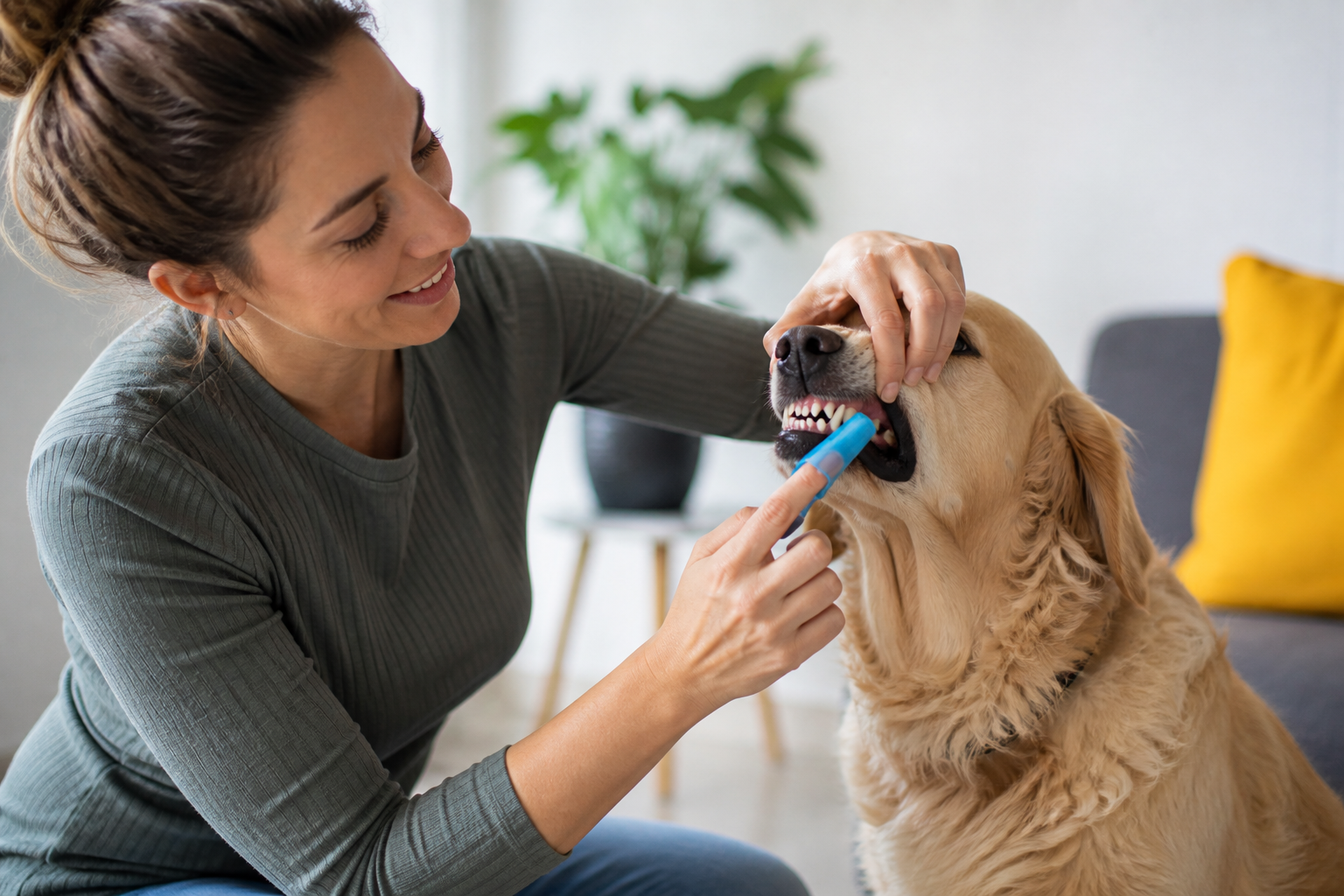
You lean in for a morning nuzzle only to be met with a puff of breath that smells less like your best friend and more like a swamp. Most dog owners have been there. While we often joke about stinky dog breath, it is usually the first sign that bacteria are making themselves at home in your dog’s mouth. At BaxterBoo, we know that dental care is about more than just fresh kisses. It is a vital part of your dog’s overall wellness that can prevent pain and even heart or kidney issues later in life. This guide covers everything you need to know about cleaning your dog’s teeth at home, from choosing the right paste to mastering the brushing technique. We will help you turn a stressful chore into a simple part of your daily routine.
Quick Answer: Clean your dog's teeth by using a pet-safe toothbrush and enzymatic toothpaste at a 45-degree angle to the gum line. Daily brushing is the most effective way to remove plaque before it hardens into tartar.
Why At-Home Dental Care is Essential
Pet dental health is one of the most overlooked aspects of animal care. By the age of three, most dogs already show some signs of periodontal disease. This happens because plaque, a sticky film of bacteria, constantly forms on the teeth. If it is not brushed away, it reacts with minerals in the saliva to become tartar. Tartar is hard, brown, and cannot be removed with a toothbrush.
When bacteria sit under the gum line, they cause inflammation. This leads to receding gums, tooth loss, and infection. These bacteria can eventually enter the bloodstream, potentially damaging the heart, liver, and kidneys. Regular cleaning at home keeps these bacteria in check and helps you avoid expensive, invasive dental surgeries at the vet's office. For additional warning signs to watch for, read our guide to bad teeth in dogs and their warning signs.
Key Takeaway: Home dental care is a preventative measure that protects your dog's internal organs and saves you money on professional procedures.
Choosing the Right Supplies
You cannot simply grab a spare toothbrush and human toothpaste from your bathroom cabinet. Human products are dangerous for dogs. Most human toothpastes contain fluoride, sodium lauryl sulfate for foaming, and sometimes Xylitol as a sweetener. Xylitol is extremely toxic to dogs and can be fatal even in small amounts.
Pet-Specific Toothpaste
Dog-formulated toothpaste is non-foaming and safe to swallow. It usually contains enzymes that help break down plaque chemically even after you stop brushing. These pastes come in flavors dogs actually like, such as poultry, beef, or peanut butter. This makes the experience feel like a treat rather than a medical procedure. A poultry-flavored option is Virbac C.E.T. Enzymatic Pet Toothpaste, which is formulated for dogs and cats.
Selecting a Toothbrush
You have several options when it comes to the actual tool:
- Finger Brushes: These are small silicone caps that slip over your pointer finger. They are excellent for puppies or dogs who are nervous about having their mouths handled.
- Double-Headed Brushes: These have long handles and two sets of bristles to clean the inside and outside of the teeth at the same time.
- Small Bristle Brushes: These look like human toothbrushes but are angled to reach the back molars.
- Baby Toothbrushes: If you have a toy breed, a soft-bristled human baby toothbrush is often the perfect size.
For a convenient starter option, consider the OxyFresh Pet Dental Kit, which includes dental-care tools for your routine.
| Tool Type | Best For | Benefit |
|---|---|---|
| Finger Brush | Beginners and Puppies | High control and less intimidating |
| Double-Headed Brush | Large Dogs | Cleans multiple surfaces quickly |
| Angled Brush | Medium to Large Dogs | Reaches deep back molars easily |
| 360-Degree Brush | Small Dogs | Cleans regardless of the angle |
A Step-by-Step Guide to Brushing Dog Teeth
If your dog is not used to having their mouth touched, do not expect to finish a full brushing on day one. It takes time to build trust. We recommend a gradual approach to ensure your dog stays relaxed and cooperative. For more introductory guidance, review these pet dental care tips.
Step 1: Get them used to the taste. / Put a small dab of pet toothpaste on your finger and let your dog lick it off. Do this for a few days so they associate the flavor with a positive experience.
Step 2: Touch the teeth and gums. / While they are licking the paste, gently lift their lip and rub your finger along their gums. Keep it brief and offer plenty of praise.
Step 3: Introduce the brush. / Apply toothpaste to the brush and let your dog lick it. Gently move the brush against the front teeth in a circular motion. If they pull away, stop and try again tomorrow.
Step 4: Focus on the gum line. / Once they are comfortable, brush at a 45-degree angle where the tooth meets the gum. This is where plaque hides. You do not need to brush the inside of the teeth if the dog resists, as their tongue naturally cleans much of that surface.
Step 5: Reach the back molars. / The large teeth in the back of the mouth are the most prone to tartar buildup. Carefully slide the brush back along the cheek to reach these areas.
Vet Tip: If you notice bleeding gums, persistent bad breath, or loose teeth, stop brushing and consult your veterinarian. These are signs of existing dental disease that may require a professional cleaning or medication from a pharmacy.
Alternatives to Traditional Brushing
Some dogs simply will not tolerate a toothbrush. While brushing is the most effective method, several supplemental tools can help keep the mouth clean. These are best used in combination with brushing or as a backup for difficult pets. You can browse our dog dental and breath care category for additional options.
Dental Chews and Treats
Not all treats are created equal. Look for dental chews that carry the Veterinary Oral Health Council (VOHC) seal. These products have been tested to prove they actually reduce plaque or tartar. The mechanical action of chewing helps scrape the tooth surface, while some treats contain ingredients that help soften existing buildup. Options include our selection of dental dog treats.
Water Additives and Oral Rinses
Water additives are flavorless liquids you pour into your dog’s water bowl. They contain enzymes or antiseptic ingredients that help kill bacteria throughout the day. This is a "set it and forget it" method that works well for dogs with very sensitive mouths. The OxyFresh kit includes products designed for this type of routine.
Dental Wipes
If your dog hates the bristles of a brush but doesn't mind your fingers, dental wipes are a great middle ground. These are textured cloths pre-soaked in an oral cleaning solution. You simply wrap them around your finger and wipe the surfaces of the teeth. They are faster than brushing but cannot reach into the deep grooves of the molars as well as bristles can.
Specialized Dental Diets
For dogs prone to rapid tartar buildup, we often suggest looking into dental-specific kibble. These kibbles are larger and have a fibrous texture that does not crumble immediately. Instead, the tooth sinks into the piece, allowing the fibers to scrub the tooth as the dog bites down.
Key Takeaway: While chews and additives help, they are supplements. Brushing remains the most effective way to physically remove the biofilm of plaque.
Recognizing the Signs of Dental Trouble
It is important to check your dog’s mouth once a week for any changes. Dogs are notorious for hiding pain, so they may continue to eat normally even if they have an infected tooth. Being proactive helps you catch issues before they become severe. Our article on recognizing dental disease in dogs covers many of these symptoms in greater detail.
- Bad Breath: A slight "doggy" smell is normal, but a pungent, rotten, or sweet odor indicates an overgrowth of bacteria.
- Discolored Teeth: Healthy teeth are white. Yellow or brown buildup near the gums is tartar.
- Red or Swollen Gums: Gums should be a healthy pink. If they look red, angry, or bleed when touched, your dog has gingivitis.
- Excessive Drooling: If your dog suddenly starts drooling more than usual, they may have a mouth injury or a painful tooth.
- Changes in Eating Habits: Dropping food, chewing on only one side of the mouth, or refusing hard kibble are major red flags.
Bottom line: Any significant change in your dog's mouth health or eating behavior warrants a trip to the vet for a professional assessment.
When to Seek Professional Help
Even with perfect at-home care, most dogs will eventually need a professional cleaning. Just as humans visit a dentist for deep cleanings, dogs need a veterinarian to remove tartar from places a brush cannot reach.
Professional cleanings are performed under general anesthesia. This allows the vet to use ultrasonic scalers to remove tartar from beneath the gum line. It also allows for a full set of dental X-rays. X-rays are crucial because up to 60 percent of a dog’s tooth is below the gum line, where you cannot see abscesses or bone loss.
Our pharmacy at BaxterBoo provides access to FDA-approved medications and prescription dental diets through our partnership with Pet's Choice. If your vet discovers an infection or advanced periodontal disease, they may prescribe specialized food or antibiotics to help the gums heal. Using our pet pharmacy ensures you get the exact medication your pet needs to recover from dental procedures.
Maintaining a Routine for Long-Term Success
Consistency is the secret to a healthy mouth. Plaque can turn into tartar in as little as 24 to 48 hours. This means brushing once a week is not nearly as effective as a quick 30-second scrub every day.
- Pick a Consistent Time: Brush at the same time every day, such as right after the final walk or before bed.
- Keep Tools Handy: Store the brush and paste where you will see them, like near the treat jar or their leash.
- Always End with a Reward: Give your dog a favorite toy or a small, healthy treat after every session to keep them motivated.
We carry over 500 trusted brands at BaxterBoo, and we have spent years helping owners find the right gear for their pets. Whether you need a starter kit for a new puppy or a specific enzymatic paste for a senior dog, we have the expert-curated selection to help you succeed. You can also explore our selection of Virbac products when building a dental-care routine.
Bottom line: A daily commitment to dental care adds years to your dog’s life and keeps their tail wagging without the pain of tooth decay.
Summary of At-Home Dental Care
Keeping your dog's teeth clean does not have to be a battle. By starting slow and using the right tools, you can protect your pet from the systemic risks of dental disease. Remember that your dog's mouth is a window into their overall health.
- Never use human toothpaste; always use pet-safe enzymatic paste.
- Aim for daily brushing to prevent plaque from hardening.
- Use dental chews and water additives as helpful supplements.
- Monitor for red gums, bad breath, and changes in appetite.
- Schedule regular veterinary checkups to catch issues early.
If your dog requires a specific prescription diet for dental health or needs medication for a mouth infection, visit our pet pharmacy. Through our partnership with Pet's Choice, we make it easy to get the professional-grade products your vet recommends delivered right to your door. You can also join the MVP Rewards programme to earn points on every dental care purchase, ensuring you get the best value while caring for your best friend.
FAQ
Can I use baking soda to clean my dog’s teeth?
No, we do not recommend using baking soda for your dog. While it is a common home remedy for humans, baking soda is high in alkaline and can upset a dog’s stomach if swallowed in large amounts. It also has a bitter taste that can make your dog dislike the brushing process. It is much safer and more effective to use an enzymatic pet toothpaste that is flavored for their palate.
How often do I really need to brush my dog’s teeth?
Ideally, you should brush your dog’s teeth every day. Plaque begins to mineralize into hard tartar within 48 hours, so brushing once a week leaves plenty of time for buildup to form. If a daily routine is too difficult, aim for at least three times a week. Even a little bit of brushing is better for your dog's oral health than none at all.
Are dental chews enough to keep my dog's teeth clean?
While high-quality dental chews are beneficial, they are generally not enough to replace brushing entirely. Chews mostly clean the chewing surfaces of the teeth but often miss the gum line where periodontal disease starts. Think of dental chews like mouthwash or sugar-free gum for humans; they help, but you still need to brush.
My dog’s gums bleed when I brush. Should I stop?
Minor bleeding can occur if your dog has mild gingivitis and you are just starting a brushing routine. However, if the bleeding is heavy or persistent, it is a sign of more serious inflammation or infection. You should stop brushing and schedule an appointment with your veterinarian to ensure there isn't an underlying issue that requires medical treatment.






