
 Save 15% on your 1st Autoship learn more

 Email us
 Live Chat
 FAQs
FAQs





Introduction
You are sitting on the sofa when your dog leans in for a friendly nuzzle. Suddenly, you notice a sharp, unpleasant odor. You lift their lip and see a film of sticky, off-white material coating their back molars. This is plaque, and it is the starting point for nearly all canine dental health issues. If left alone, it hardens into tartar within twenty-four to forty-eight hours. At BaxterBoo, we know that staying ahead of this buildup is the best way to prevent discomfort and expensive vet visits. This guide will walk you through the most effective methods for cleaning plaque at home, from the gold standard of brushing to the use of dental treats and water additives. By establishing a consistent routine, you can keep your dog’s breath fresh and their mouth healthy for years to come.
Quick Answer: The most effective way to clean dog teeth plaque is through daily mechanical brushing using dog-specific toothpaste. You can also use dental wipes, water additives, and VOHC-approved dental chews to break down the sticky biofilm before it hardens into tartar.
Understanding the Difference Between Plaque and Tartar
To keep your dog's mouth clean, you first need to understand what you are fighting. Plaque is a soft, sticky film of bacteria, saliva, and food particles. It begins to form on the teeth just a few hours after a meal. Because it is soft, you can easily remove it with mechanical action like brushing or wiping. However, if plaque is not disturbed, it reacts with the minerals in your dog's saliva.
This chemical reaction causes the plaque to calcify and harden into tartar, which is also known as calculus. Tartar is porous and rough, making it the perfect landing strip for even more bacteria to grow. While you can clean plaque at home, tartar is a different story. Once it has hardened, it bonds to the tooth enamel like cement. At that stage, a professional cleaning by a veterinarian is usually required to remove it without damaging the teeth.
Key Takeaway: Plaque is soft and removable at home, but it turns into permanent tartar in less than two days. Daily cleaning is essential to stop this transition.
The Gold Standard: Daily Brushing
Brushing is the most effective method for removing plaque. It provides the mechanical friction necessary to break up the bacterial biofilm. You do not need to spend twenty minutes on this task. Even sixty seconds of focused brushing can make a massive difference.
Choosing the Right Tools
Never use human toothpaste on your dog. Many human versions contain xylitol, an artificial sweetener that is highly toxic to dogs. Human toothpaste also contains foaming agents that can upset a dog’s stomach when swallowed. Instead, look for enzymatic dog toothpaste. These formulas contain enzymes like glucose oxidase that help break down plaque even after you stop brushing.
For the brush itself, you have several options:
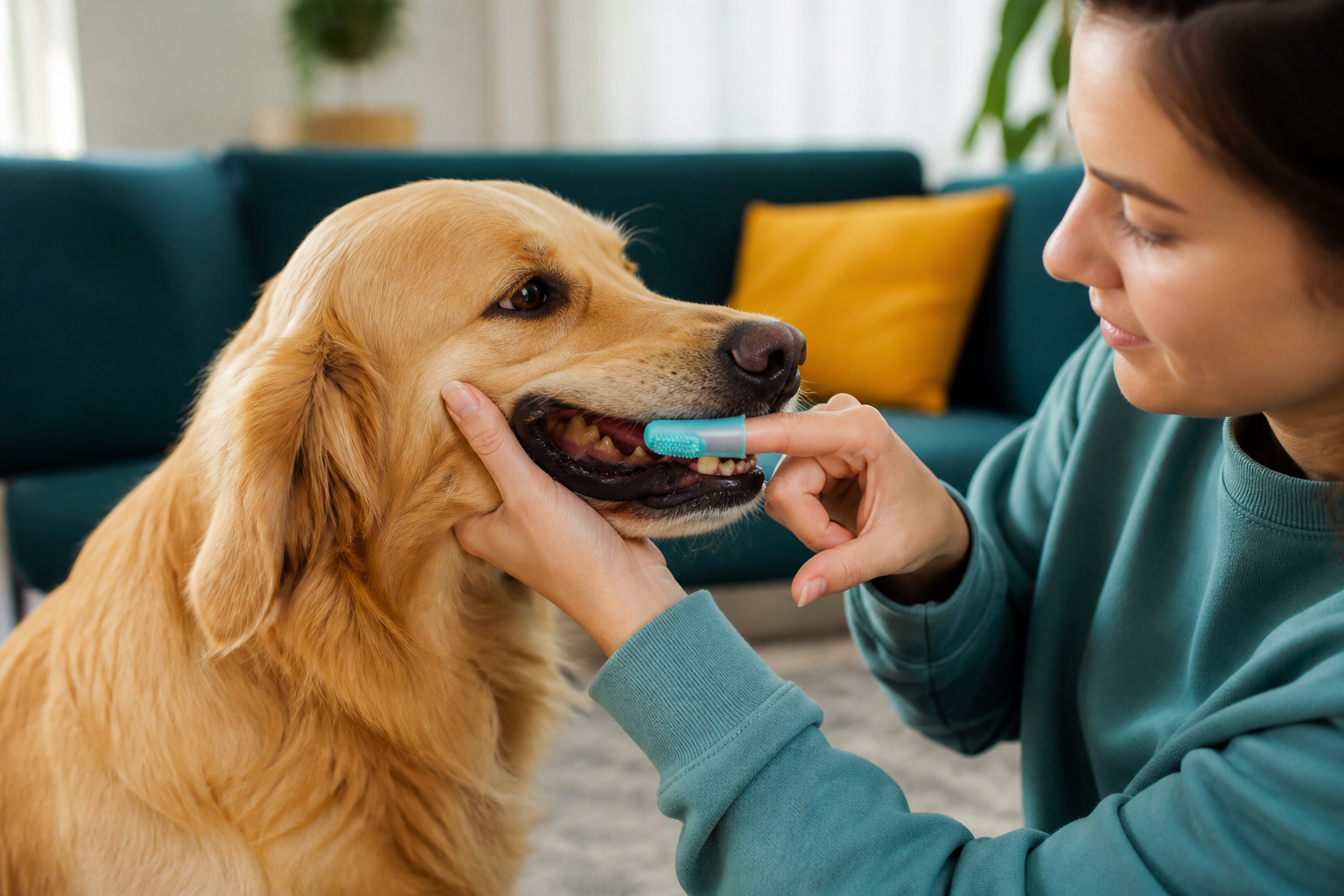
- Finger Brushes: These are small silicone or rubber caps that fit over your index finger. They are excellent for puppies or dogs who are nervous about having a long object in their mouth.
- Double-Headed Brushes: These have bristles on both sides to clean the inner and outer surfaces of the teeth at the same time.
- Soft-Bristled Children’s Brushes: A simple, soft human toothbrush for kids often works well for medium to large dogs.
How to Introduce Brushing
Step 1: Let your dog lick a small amount of flavored toothpaste off your finger. Most dog toothpastes come in poultry, beef, or peanut butter flavors to make the experience a treat. For additional guidance, read our pet dental care tips.
Step 2: Gently rub your finger along their gums and teeth. This gets them used to the sensation of your hand in their mouth.
Step 3: Introduce the brush. Angle the bristles at a 45-degree angle toward the gum line.
Step 4: Use small, circular motions. Focus primarily on the outside of the teeth, as this is where the most plaque accumulates.
Vet Tip: If your dog has red, swollen gums or bleeds during brushing, they may already have gingivitis or periodontal disease. Consult your veterinarian for a professional assessment before starting an intensive home brushing routine.
Using Dental Wipes for Reluctant Dogs
Some dogs simply will not tolerate a toothbrush. If your dog flees at the sight of a brush, dental wipes are an excellent alternative. These are textured pads pre-soaked in an antibacterial or enzymatic solution. You wrap the wipe around your finger and rub it directly over the teeth and gum line.
While wipes do not get into the deep crevices between teeth as well as bristles do, they provide enough friction to remove the daily layer of plaque. They are also very portable and easy to use after a dog finishes their dinner. This method is often less intimidating for senior dogs who may have sensitive mouths.
Bottom line: Dental wipes offer a middle ground for dogs that hate brushing but still need daily mechanical plaque removal.
The Role of Dental Chews and Toys
Chewing is a natural behavior for dogs that serves a functional purpose. When a dog chews on a textured object, the surface of the object scrapes against the tooth. This provides a "self-cleaning" effect. However, not all chews are created equal when it comes to cleaning plaque.
Selecting Effective Dental Chews
At BaxterBoo, we carry a wide variety of dental chews and treats, such as Greenies and other VOHC-approved options. These treats are designed with specific textures that allow the tooth to sink into the chew, maximizing the surface area being cleaned. Some also contain ingredients that help freshen breath and reduce bacterial growth.
Durable Chew Toys
Non-edible toys can also help. Brands like Kong offer rubber toys with ridges and grooves specifically designed to clean teeth. You can explore KONG dental dog toys for flexible options. You can even apply a bit of dog-safe dental gel inside these grooves. As the dog works to get the gel out, they are inadvertently scrubbing their teeth.
- Avoid hard bones, antlers, or hooves. These are often harder than the tooth enamel itself and can cause painful slab fractures.
- Look for toys with "give" or flexibility.
- Supervise your dog with any chew to prevent them from swallowing large chunks.
Water Additives and Oral Sprays
If you are looking for an effortless way to support your dog’s oral health, water additives are a great supplement. These are tasteless, odorless liquids that you pour into your dog's water bowl. They typically contain enzymes or minerals that prevent bacteria from sticking to the teeth.
Oral sprays work in a similar way. You spray them directly into the dog's mouth, usually along the cheek line. The dog then licks the solution around their teeth with their tongue. While these products are not a replacement for brushing, they are excellent "boosters" that keep the bacterial count low throughout the day.
For more signs to watch for, read our guide to recognizing bad teeth in dogs.
Diet and Nutrition for Plaque Control
What your dog eats can influence how quickly plaque forms. Some specialized dental diets are formulated with larger kibble pieces that do not crumble immediately when bitten. Instead, the tooth penetrates the kibble, which creates a scrubbing action.
Fresh Vegetable Snacks
Certain fruits and vegetables can provide a mild cleaning effect. For example, raw carrots or apple slices (without seeds) are crunchy and can help scrape away soft debris. These should be treated as supplements to a healthy diet and not a primary cleaning method.
Prescription Dental Diets
For dogs prone to rapid plaque buildup, your vet may recommend a prescription dental diet. These are specifically engineered to reduce the formation of both plaque and tartar. You can find these specialized foods through our dog food selection.
Key Takeaway: Diet plays a supporting role in oral health. Crunchy vegetables and specialized kibble can help, but they work best when paired with mechanical cleaning.
When Plaque Turns to Tartar: The Pharmacy and Vet Care
Despite our best efforts, sometimes plaque wins the race and hardens into tartar. You can identify tartar by its color; it usually looks like yellow or brown crusty deposits near the gum line. It feels hard to the touch and cannot be wiped away.
When this happens, it is time to visit the vet. Leaving tartar in place can lead to periodontal disease, which is an infection of the tissues surrounding the teeth. This can eventually lead to tooth loss and even heart or kidney issues as bacteria enter the bloodstream.
The BaxterBoo Pharmacy
Our pharmacy is a vital resource for managing your dog's ongoing dental health. Through our partnership with Pet's Choice, we offer access to prescription oral rinses and medications for gum infections. If your veterinarian prescribes a specific dental diet or medication following a professional cleaning, you can conveniently manage those needs through our pet pharmacy.
Vet Tip: Most dogs require a professional dental cleaning every six to twelve months. This procedure is done under anesthesia to allow the vet to clean beneath the gum line, where the most dangerous bacteria hide.
Creating a Sustainable Routine
The key to cleaning dog teeth plaque is consistency. It is better to brush for thirty seconds every day than for ten minutes once a month. To make the habit stick, try to link it to an existing routine. Many owners find that brushing their dog's teeth right after their own evening routine works best.
Step 1: Set a regular time each day for dental care.
Step 2: Start small. Even if you only get the front teeth on the first day, it is a win.
Step 3: Always end with praise or a small, healthy treat to create a positive association.
Step 4: Regularly check your dog's mouth for signs of trouble, such as red gums or broken teeth.
If you stay consistent, you will likely notice that your dog’s breath improves within a few weeks. You may also find that their future veterinary dental cleanings are faster and less complicated because there is less buildup to address.
For regularly used dental supplies, our Autoship programme can help simplify repeat orders.
Summary of Plaque Removal Methods
| Method | Effort Level | Effectiveness | Best For |
|---|---|---|---|
| Brushing | High | Excellent | All dogs; the gold standard. |
| Dental Wipes | Medium | Good | Dogs that dislike brushes. |
| Dental Chews | Low | Fair | Supplemental cleaning and rewards. |
| Water Additives | Very Low | Supportive | Multi-dog households; maintenance. |
| Professional Clean | N/A | Total | Removing hardened tartar. |
Conclusion
Cleaning plaque from your dog's teeth is one of the most impactful things you can do for their long-term wellness. By combining daily brushing with supportive tools like dental wipes and VOHC-approved chews, you can prevent the painful progression of dental disease. Remember that home care is about prevention; once plaque hardens into tartar, professional help is necessary. We are here to support your journey with a wide selection of dental care products and our convenient pharmacy services for prescription needs. Explore our dog dental care collection today to find the right tools for your dog’s unique needs.
Key Takeaway: Effective dental care is a three-pronged approach: daily mechanical cleaning at home, supportive treats and additives, and regular veterinary check-ups.
FAQ
Can I use baking soda to clean my dog's teeth?
While baking soda is not toxic, most dogs find the taste very unpleasant, which can make them resist future cleaning sessions. It also does not contain the beneficial enzymes found in formulated dog toothpastes. Using a flavored, enzymatic toothpaste is a much better way to ensure your dog enjoys the process and gets a deeper clean.
How often should I clean my dog's plaque?
Plaque should be cleaned off your dog's teeth every single day. Because plaque can begin to mineralize and harden into tartar in as little as twenty-four hours, missing even one or two days can allow buildup to start. A quick daily session is the most effective way to maintain a healthy mouth.
My dog’s breath is still bad after brushing. What should I do?
If daily brushing does not improve your dog's breath, there may be an underlying issue like a rotted tooth, a gum infection, or even an internal health problem. Persistent bad breath is often a sign that bacteria are thriving beneath the gum line where a toothbrush cannot reach. You should schedule a veterinary exam to rule out periodontal disease or other health conditions.
Are all dental chews equally effective for plaque?
No, the effectiveness of dental chews varies significantly between brands. Look for the Veterinary Oral Health Council (VOHC) seal on the packaging, which indicates the product has been tested and proven to reduce plaque or tartar. Also, ensure the chew is the correct size for your dog to prevent choking and ensure they spend enough time chewing it to get the mechanical benefits.






