
 Save 15% on your 1st Autoship learn more

 Email us
 Live Chat
 FAQs
FAQs





Introduction
You might notice it while your dog is panting or during a close-up session of belly rubs. That hard, yellow-brown crust along the gum line is not just a cosmetic flaw. It is tartar. This cement-like substance forms when soft plaque mineralizes and bonds to the tooth enamel. Once it hardens, simple brushing usually cannot scrub it away. At BaxterBoo, we have helped pet owners navigate dental care since 2006. We know that a clean mouth is a foundation for a long, happy life. This guide will walk you through the most effective ways to manage buildup. We will cover home cleaning techniques, the right tools for the job, and when it is time to see a professional. Our goal is to help you keep your dog's smile bright and healthy.
The Difference Between Plaque and Tartar
To keep a dog's mouth clean, you must understand the enemy. Oral health involves two main stages of buildup: plaque and tartar. Plaque is a sticky, colorless film of bacteria that forms on the teeth shortly after eating. Because it is soft, you can easily remove it with a toothbrush or a dental wipe.
If plaque stays on the tooth for more than 48 to 72 hours, it starts to change. It reacts with the minerals in your dog's saliva. This chemical reaction causes the plaque to harden into tartar, which is also known as calculus. Tartar is porous and rough. It provides the perfect surface for more plaque to attach. This creates a cycle of buildup that can lead to irritation and more serious health issues.
Why Tartar Is a Concern
Tartar does not just sit on the tooth surface. It often migrates under the gum line. When bacteria get trapped beneath the gums, they cause inflammation. This is known as gingivitis. If left alone, it can progress to periodontal disease. This condition can destroy the bone and tissue that hold the teeth in place.
Quick Answer: You cannot easily remove hardened tartar at home with a toothbrush alone. While you can manage plaque and mild buildup with brushes, gels, and chews, thick tartar usually requires a professional veterinary scaling.
Can You Remove Tartar at Home?
This is the question every pet owner asks when they see discoloration. The answer depends on the severity of the buildup. If the tartar is thin and has just started to form, certain home products can help soften it. Over time, consistent mechanical action might help some of it flake off.
However, if the tartar is thick, dark brown, or covering a large portion of the tooth, home methods will likely fail. Trying to scrape tartar off with metal tools at home is dangerous. You could easily slip and cut the gums or chip the tooth enamel. Enamel does not grow back. Damaged enamel makes the tooth even more prone to future decay.
Identifying the Stage of Buildup
- Stage 1: Teeth look white, but the breath is slightly "doggy." This is the plaque stage.
- Stage 2: A thin yellow line appears near the top of the tooth. This is early tartar.
- Stage 3: Thick, brown, or gray crusts are visible. Gums may look red. This is advanced tartar.
- Stage 4: Teeth appear loose, or the gums are receding. This requires immediate veterinary care.
Key Takeaway: Home care is 90 percent prevention and 10 percent management. Focus on removing plaque daily so it never has the chance to turn into the hard tartar that requires surgery.
Essential Tools for Home Dental Care
If you want to tackle mild tartar or prevent new buildup, you need the right kit. Not all brushes are the same. Not all pastes are safe. We carry a wide range of supplies at BaxterBoo that are designed specifically for the unique shape of a dog's mouth. Explore our dog dental care category to compare brushes, pastes, gels, wipes, chews, and water additives.
Choosing a Toothbrush
A standard human toothbrush is often too stiff for a dog’s gums. It can also be too large to reach the back molars. Look for a brush with soft bristles. You have a few options:
- Finger Brushes: These silicone or rubber caps fit over your pointer finger. They offer excellent control and are less intimidating for dogs that are new to brushing.
- Angled Brushes: These have long handles and dual heads. They allow you to reach the very back of the mouth where tartar tends to be heaviest.
- 360-Degree Brushes: These have bristles all the way around the head. They clean the top, front, and back of the tooth at the same time.
The Rules of Dog Toothpaste
Never use human toothpaste on your dog. Most human pastes contain foaming agents like Sodium Lauryl Sulfate. These can upset a dog's stomach. Many also contain Xylitol, an artificial sweetener that is highly toxic to dogs.
Pet-safe toothpaste is often enzymatic. These pastes contain enzymes like glucose oxidase. These enzymes work to break down the proteins that allow plaque to stick to the teeth. Plus, they come in flavors like poultry, beef, or peanut butter. This makes the process much more enjoyable for your pet. A product such as Virbac C.E.T. Enzymatic Pet Toothpaste can be used as part of a dog-safe brushing routine.
Step-by-Step Guide to Brushing for Tartar Control
If your dog is not used to having their mouth touched, do not rush. You want this to be a positive experience.
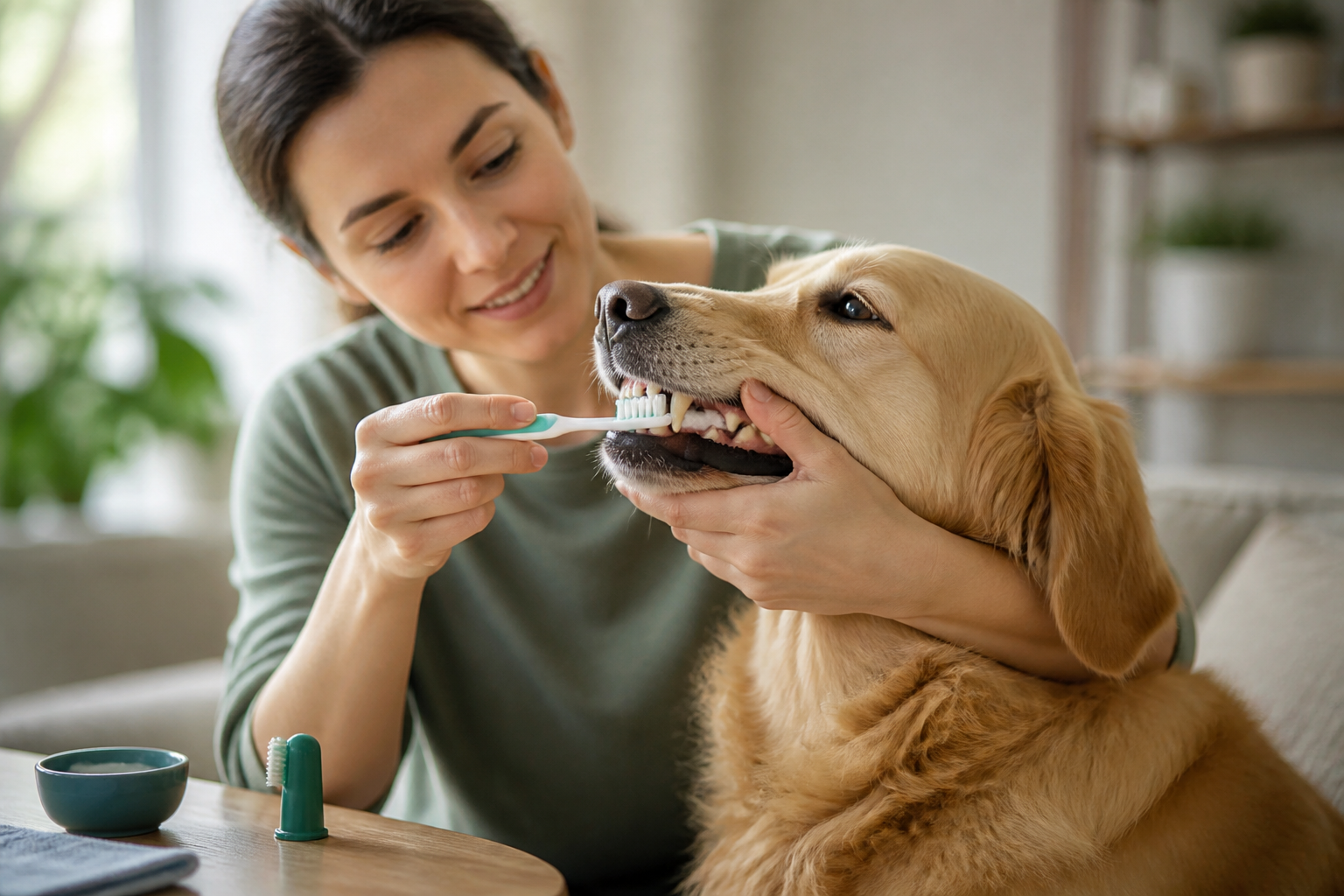
Step 1: Introduce the taste. / Put a small dab of enzymatic toothpaste on your finger. Let your dog lick it off. Do this for a few days until they get excited when they see the tube.
Step 2: Touch the teeth. / While your dog licks the paste, gently lift their lip. Rub your finger along their gums. This gets them used to the sensation of something moving in their mouth.
Step 3: Introduce the brush. / Put some paste on the brush and let them lick it. Gradually start moving the brush in a circular motion on the front "canine" teeth.
Step 4: Focus on the gum line. / Tartar starts where the tooth meets the gum. Tilt the brush at a 45-degree angle. Focus your efforts on the outside of the teeth. The tongue usually does a decent job of cleaning the inside surfaces.
Step 5: Reward and repeat. / Give a treat or plenty of praise afterward. Aim for daily brushing. If that is too difficult, try for at least three times a week.
Vet Tip: If your dog's gums bleed significantly during brushing, stop and call your vet. This is often a sign of advanced gingivitis or periodontal disease that needs medical attention before you continue a home routine.
Using Dental Wipes and Gels
Some dogs simply will not tolerate a toothbrush. If your dog treats a brush like a chew toy, dental wipes or gels are great alternatives. For additional background on introducing brushing, wipes, and toothpaste gradually, read these pet dental care tips.
Dental Wipes
These are pre-moistened pads infused with cleaning agents. You wrap the wipe around your finger and rub the surface of the teeth. They are excellent for removing the daily film of plaque. While they do not provide the same deep-cleaning mechanical action as bristles, they are far better than doing nothing at all.
Oral Gels
Enzymatic gels are a "hands-off" way to fight tartar. You apply a small amount of gel to each side of the mouth. Your dog’s saliva will naturally spread the gel over the teeth and gums. These gels work by breaking down the chemical bonds in plaque. They can be very effective at freshening breath and slowing the rate of tartar accumulation.
The Role of Mechanical Action: Chews and Toys
Dogs have a natural urge to chew. We can use this to our advantage. Mechanical cleaning happens when a dog chews on something abrasive enough to scrape the tooth surface but soft enough not to break the tooth.
Dental Chews
Brands like Greenies or RedBarn offer treats designed specifically for dental health. These chews often have ridges and textures that fit between the teeth. As the dog chews, the treat acts like a squeegee for the teeth. Many of these products are approved by the Veterinary Oral Health Council (VOHC). Look for that seal to ensure the product has been tested for safety and effectiveness. One example is Redbarn Chew-A-Bulls Hydrant Dental Dog Treats.
Hard Rubber Toys
Toys from brands like Kong can also help. When a dog gnaws on a firm rubber toy, the friction helps scrub the teeth. You can even smear a bit of dental toothpaste inside the grooves of a toy. This encourages your dog to "brush" their own teeth while they play.
Bottom line: Chews and toys are supplementary tools and should not be the only method you use to clean your dog's teeth.
Water Additives and Sprays
For the busiest pet owners, water additives are a convenient option. These are tasteless, odorless liquids that you add to your dog's water bowl. They contain ingredients that help kill oral bacteria and prevent plaque from mineralizing into tartar.
Oral sprays work similarly. You spray them directly into the dog's mouth once or twice a day. These are particularly good for dogs with chronic bad breath. While they do not remove existing hard tartar, they are excellent at keeping the mouth "environment" clean. This makes it harder for new tartar to form. For a brushless option, consider OxyFresh Pet Dental Water Additive.
Specialized Diets for Dental Health
What your dog eats every day matters. Soft, wet food tends to stick to the teeth more than dry kibble. Some dogs benefit from specialized dental diets. These kibbles are usually larger and have a specific fiber structure. Instead of crumbling immediately, the kibble stays intact longer as the tooth penetrates it. This creates a scrubbing effect on the tooth surface.
If your dog has a history of rapid tartar buildup, your vet might recommend a prescription diet. These formulas are balanced for total health but have specific mineral levels to discourage tartar formation. Our pharmacy partnership with Pet's Choice allows us to fulfill these prescription diet needs for our customers. We carry options like Farmina Vet Life that support various health conditions, including those that benefit from specific nutritional profiles.
When Home Cleaning Is Not Enough
Despite our best efforts at home, most dogs will eventually need a professional cleaning. This is similar to how humans still go to the dentist despite brushing twice a day. There are certain signs that indicate your dog's dental needs have moved beyond what a toothbrush can handle. Warning signs of hidden dental disease can help you recognize when veterinary attention may be needed.
Signs Your Dog Needs a Vet Cleaning:
- Extreme Bad Breath: If the smell is foul enough to fill a room, there is likely a deep infection.
- Visible Heavy Tartar: Thick brown or gray deposits that cover more than a third of the tooth.
- Difficulty Eating: Dropping food or only chewing on one side of the mouth.
- Red or Receding Gums: Gums that look "rolled" or are pulling away from the tooth.
- Bleeding: Finding blood on chew toys or in the water bowl.
What Happens During a Professional Cleaning?
A professional cleaning is a medical procedure. It is much more involved than just a "scraping." Most veterinarians perform these under general anesthesia. This is for the safety and comfort of your dog.
While under anesthesia, the vet can perform a full exam. They use an ultrasonic scaler to vibrate the tartar off the teeth. Crucially, they clean the area under the gum line. This is where the most damage occurs. After scaling, they polish the teeth. Polishing smooths out the microscopic scratches left by the scaling. This makes it harder for plaque to stick in the future.
The Importance of X-Rays
Many dental issues happen where we cannot see them. Up to 60 percent of a dog's tooth is below the gum line. Dental X-rays allow the vet to see the roots and the jawbone. They can spot abscesses, bone loss, or broken roots that a visual exam would miss. If a tooth is beyond saving, the vet can remove it during the same procedure. This prevents future pain and infection.
Vet Tip: Professional cleanings are the only way to address tartar under the gum line. Routine check-ups are essential to catch dental disease before it leads to heart, liver, or kidney issues caused by circulating bacteria.
Managing Oral Health Costs
Dental care can be an investment. However, preventative care is always cheaper than emergency surgery. We offer programs like MVP Rewards to help you earn back on your dental supplies. By staying consistent with home care, you can often extend the time between professional cleanings.
We also partner with FIGO Pet Insurance. Many insurance plans offer dental coverage or wellness add-ons that can help offset the cost of annual cleanings and X-rays. It is worth checking your policy to see how you can best support your dog's oral health without breaking the bank.
Creating a Long-Term Dental Routine
The best way to fight tartar is consistency. You do not need to spend an hour a day on your dog's teeth. A few minutes of focused care can make a world of difference.
- Daily: Brush the teeth with enzymatic toothpaste.
- Daily: Provide one VOHC-approved dental chew.
- Weekly: Inspect the mouth for any new redness, lumps, or broken teeth.
- Annually: Have a professional dental exam during your dog's wellness visit.
If you are just starting, do not feel discouraged. It is never too late to begin a dental routine. Start small and build the habit. Your dog might not thank you for the brushing, but their body will benefit from the lack of oral inflammation.
The Pharmacy and Ongoing Care
Sometimes, dental issues are linked to other health concerns. Dogs with certain allergies or systemic illnesses might be more prone to gum infections. Our pharmacy carries a variety of FDA-approved medications through our partnership with Pet's Choice. This includes antibiotics for oral infections and pain relief for dogs recovering from extractions.
If your vet prescribes a specific mouth rinse or a medicated gel, we can help you get those supplies delivered right to your door. Using our Autoship program is a great way to ensure you never run out of the brushes, pastes, and chews that keep your dog's mouth healthy.
Conclusion
Cleaning tartar from your dog's teeth is a two-part process. Home care focuses on removing soft plaque and slowing the hardening of tartar. Professional care handles the heavy lifting of removing mineralized deposits and cleaning beneath the gums. By combining daily brushing, quality dental chews, and regular veterinary visits, you can protect your dog from the pain and complications of dental disease. We are here to support you with the expert tools and advice you need to succeed.
- Establish a daily brushing routine using pet-safe, enzymatic toothpaste.
- Use mechanical aids like dental chews and rubber toys to scrub the tooth surface.
- Watch for signs of pain or infection like foul breath and red gums.
- Schedule annual professional exams to address hidden issues and deep tartar.
Key Takeaway: Consistent prevention is the most effective tool against tartar. Start a routine today to avoid the health risks associated with advanced periodontal disease.
For all your dental needs, from enzymatic pastes to VOHC-approved chews, visit our dog dental care category.
FAQ
Can I use baking soda to clean my dog's teeth?
While baking soda is a mild abrasive, it is not the best choice for dogs. It has a high alkaline content that can upset the stomach if swallowed in large amounts. It also lacks the enzymes found in pet-safe toothpaste that are necessary to break down plaque effectively. Stick to pastes formulated specifically for dogs to ensure safety and better results.
How often should my dog get a professional dental cleaning?
Most dogs benefit from a professional cleaning once a year. However, some breeds, especially small dogs with crowded teeth, may need one every six months. Your veterinarian can assess the rate of tartar buildup during your annual wellness exam and give you a specific recommendation. Consistent home care can often help you go longer between these appointments.
Do dental water additives actually work for tartar?
Water additives are effective at reducing the amount of bacteria in the mouth. They contain ingredients that prevent plaque from mineralizing into hard tartar. While they will not remove tartar that is already there, they are an excellent supplementary tool. They are particularly helpful for owners who cannot brush their dog's teeth every day.
Are bones safe for cleaning my dog's teeth?
Some natural bones can help scrape teeth, but they come with risks. Hard bones can cause tooth fractures, which are painful and expensive to fix. They can also splinter and cause internal blockages or injuries. If you use bones, always supervise your dog and choose "soft" raw bones or synthetic dental chews that are designed to be safer for the teeth.






