
 Save 15% on your 1st Autoship learn more

 Email us
 Live Chat
 FAQs
FAQs





Introduction
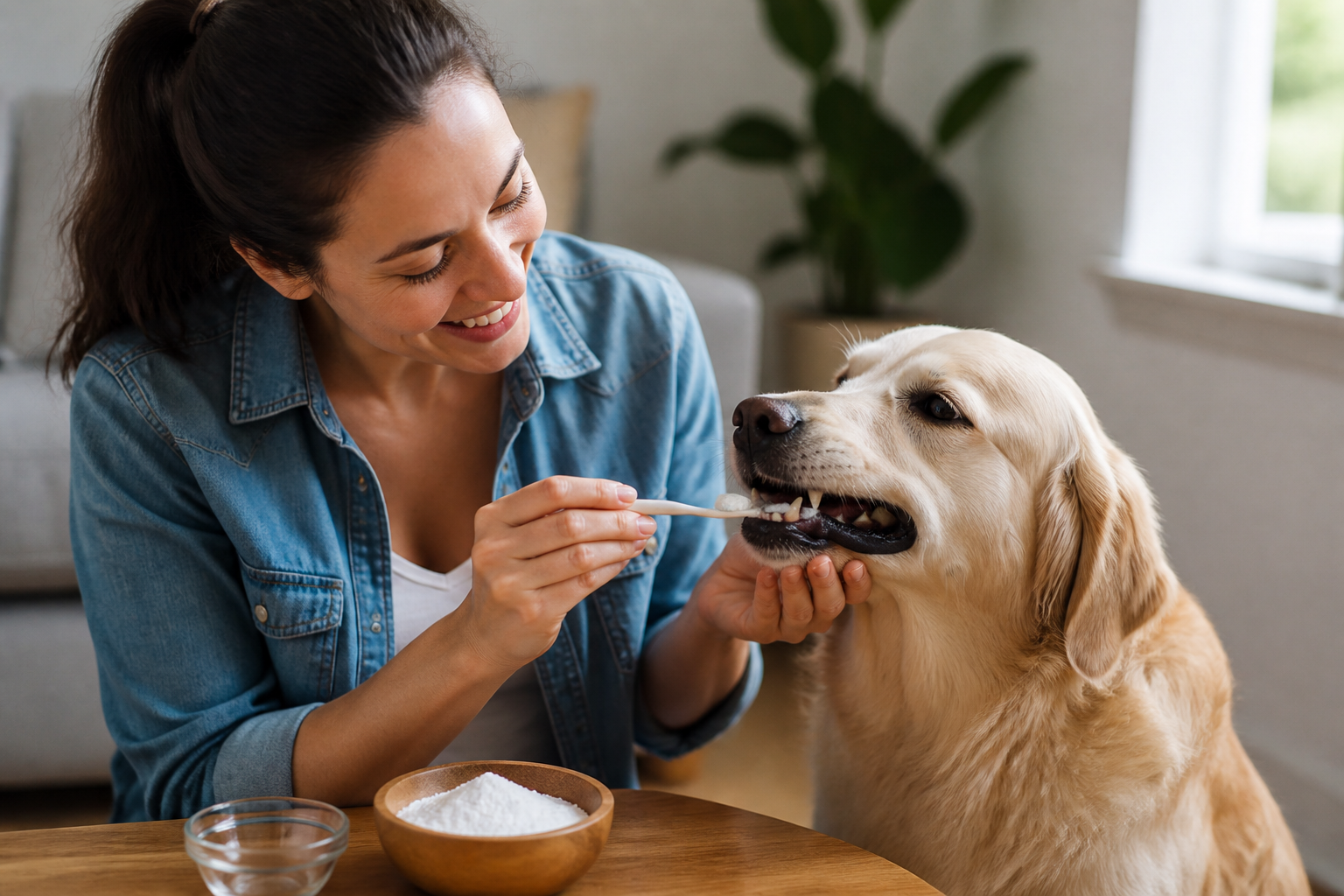
You are likely familiar with that moment when your dog leans in for a friendly lick, and the smell nearly knocks you over. Bad breath is more than a social problem for pets. It often points to plaque and tartar buildup that can lead to serious health issues. You might have a box of baking soda in your pantry and wonder if it can solve the problem without a trip to the store. At BaxterBoo, we believe in providing practical solutions that keep your pets healthy and your budget intact. This guide explores the safety, methods, and risks of using baking soda for canine dental care. We will cover how to create a DIY paste and when it is time to move beyond home remedies. Proper dental hygiene can help your dog live a longer, more comfortable life.
Quick Answer: You can clean dog teeth with baking soda by mixing a small pinch with water or coconut oil to create a paste. Use it sparingly, no more than twice a week, as the high alkaline content can upset a dog’s stomach if swallowed in large amounts.
Is Baking Soda Safe for Your Dog?
Baking soda, or sodium bicarbonate, is a common household item used for everything from baking to deodorizing carpets. It is generally safe for dogs when used in very small, controlled amounts for topical cleaning. The mildly abrasive nature of the powder helps scrub away the sticky film of plaque before it hardens into tartar. However, safety depends entirely on how you use it.
The main concern with baking soda is its alkalinity. Dogs have a specific pH balance in their digestive systems. If a dog swallows a significant amount of baking soda, it can disrupt this balance and lead to an upset stomach. You might notice signs like gas, bloating, or even vomiting if your dog ingests too much. This is why we always recommend using a tiny amount and focusing on the mechanical action of the brush rather than the volume of the paste.
Another factor is the taste. Most dogs find the salty, bitter flavor of baking soda unappealing. If the first time you brush your dog's teeth involves a flavor they hate, they may become resistant to the process. To make it safer and more palatable, many owners mix it with a base like coconut oil. This adds a flavor they enjoy while providing antimicrobial benefits.
Vet Tip: Always consult your veterinarian before starting a DIY dental routine if your dog has existing health issues. Pets with heart disease or kidney problems may need to avoid the extra sodium found in baking soda.
How to Clean Dog Teeth with Baking Soda: A Step-by-Step Guide
If you want to try this at home, preparation is the most important part. You cannot simply shove a toothbrush into a dog's mouth and expect them to cooperate. You must build trust and ensure the mixture you use is safe and effective.
Step 1: Create the paste.
Mix one teaspoon of baking soda with about a tablespoon of water or organic coconut oil. Stir it until it forms a thick, smooth paste. If it is too runny, it will just slide off the brush and into your dog's throat.
Step 2: Let your dog taste it.
Put a tiny dab of the paste on your finger and let your dog sniff or lick it. This helps them get used to the flavor. If they walk away or act disgusted, you might need to add more coconut oil or consider a flavored commercial toothpaste instead.
Step 3: Introduce the brush.
Do not start brushing yet. Let your dog sniff the toothbrush or finger brush. Many dogs are intimidated by the long handle of a standard brush. A finger brush is often a better choice for beginners because it feels like you are just petting their muzzle.
Step 4: Start with the front teeth.
Gently lift the upper lip and brush the large canines and front incisors. Use small, circular motions. You do not need to apply much pressure. The baking soda provides the grit, and the bristles do the rest of the work.
Step 5: Reward and stop.
The first few sessions should only last 30 seconds. Praise your dog and give them a small, healthy treat afterward. This creates a positive association with the process. You can gradually work your way to the back molars as they become more comfortable.
Key Takeaway: Success in home dental care comes from patience and positive reinforcement. Focus on the outside of the teeth, as this is where the most plaque accumulates.
Baking Soda vs. Commercial Dog Toothpaste
While baking soda is a handy backup, it is rarely the best long-term solution. Commercial toothpastes are formulated specifically for the canine mouth. They often contain enzymes that continue to break down bacteria long after the brushing session ends. For a ready-to-use alternative, consider Virbac C.E.T. Enzymatic Pet Toothpaste for Dogs and Cats - Poultry.
| Feature | Baking Soda Paste | Commercial Enzymatic Toothpaste |
|---|---|---|
| Flavor | Salty and bitter | Poultry, beef, or peanut butter |
| Abrasiveness | Mild to moderate | Controlled and safe for daily use |
| Active Ingredients | Sodium Bicarbonate | Enzymes (like Glucose Oxidase) |
| Safety | Risky if swallowed in large amounts | Designed to be swallowed safely |
| Cost | Very low | Moderate |
| Convenience | Requires mixing | Ready to use |
Commercial options are generally easier for most owners. We see many pet parents at BaxterBoo switch to enzymatic pastes because the flavors make the dog an active participant in the routine. When a dog likes the taste of their toothpaste, they will sit still and even lick the brush, which makes your job much easier.
Bottom line: Baking soda works well for occasional cleaning, but enzymatic toothpaste offers better long-term protection and easier training.
Why Professional Cleaning Still Matters
Even if you brush your dog's teeth every single day, they will likely still need professional cleanings. Plaque is soft and can be removed with a brush. However, once plaque sits on the tooth for 48 to 72 hours, it begins to calcify into tartar. This hard, crusty substance cannot be brushed away. It requires professional scaling tools used by a veterinarian.
Tartar often hides under the gum line where your toothbrush cannot reach. This is where the real danger lies. Bacteria under the gums can lead to periodontal disease. This condition can cause tooth loss and may eventually allow bacteria to enter the bloodstream. Once in the blood, these bacteria can travel to the heart, liver, and kidneys, causing systemic health problems.
At BaxterBoo, we recommend a hybrid approach. Use at-home brushing to slow down the buildup of tartar and schedule an annual dental exam with your vet. They can tell you if your dog needs a deep cleaning under anesthesia. Anesthesia allows the vet to take X-rays and clean deeply under the gums without causing stress or pain to your pet. For additional guidance, read what to know about bad teeth in dogs.
Natural Alternatives for Dental Health
If your dog absolutely refuses to let you near their mouth with a brush and baking soda, do not give up. There are other ways to keep those teeth sparkling. Diet and chew habits play a massive role in oral hygiene. You can also explore our dog dental care supplies for additional options.
- Crunchy Vegetables: Fresh carrots or celery sticks act as natural toothbrushes. The mechanical action of chewing these fibrous veggies helps scrape away plaque. They are also low in calories and high in vitamins.
- Coconut Oil: As mentioned before, coconut oil is antimicrobial. You can rub it on their gums with a piece of gauze if they won't tolerate a brush. It helps kill bacteria and improves the health of the gum tissue.
- Dental Toys: Brands like Kong offer toys with ridges and grooves. As your dog chews, these ridges rub against the teeth and gums. We find that stuffing these toys with a little bit of healthy wet food keeps dogs chewing longer, which increases the cleaning effect.
- Water Additives: These are liquids you add to your dog's water bowl. They contain ingredients that break down the biofilm of bacteria in the mouth. This is a great "hands-off" option for pets that are very sensitive about their mouths.
The Role of the Pharmacy in Dental Care
Sometimes, at-home care is not enough to manage a dog's dental health. Some breeds, particularly small dogs like Yorkies or Chihuahuas, are genetically predisposed to dental disease. Their teeth are often crowded, creating small pockets where bacteria thrive. In these cases, your veterinarian might prescribe a specific dental diet.
Our pharmacy at BaxterBoo offers a range of prescription pet foods and medications through our partnership with Pet's Choice. These specialized diets, like those from Royal Canin or Farmina Vet Life, are shaped to maximize the cleaning effect as the dog bites down. They also contain specific minerals that help prevent plaque from hardening into tartar.
If your dog develops a dental infection or needs extra support after a professional cleaning, our pet pharmacy can help. We carry FDA-approved medications and supplements that support gum health and manage inflammation. Since these require a prescription, you will need to work closely with your vet to find the right solution for your dog's specific needs.
Vet Tip: If you notice your dog is dropping food, drooling excessively, or has bleeding gums, stop brushing and call your vet. These are signs of pain and infection that require medical intervention, not just a cleaning.
Training Your Dog to Accept Brushing
The biggest hurdle for most owners is not the baking soda or the brush. It is the dog's behavior. Many dogs view a hand near their face as a threat or a game. You must change their perspective. These gradual steps are also covered in our pet dental care tips.
Start by touching your dog's muzzle while they are relaxed. Give them a treat. Then, lift their lip for one second and give them another treat. Do this for several days before you ever bring out the supplies. You want them to think that having their mouth handled leads to the best rewards of the day.
When you do start brushing, keep your body language calm. If you are stressed and rushing, your dog will pick up on that energy and become anxious. Sit on the floor with them rather than looming over them. Approach from the side rather than head-on. This makes you appear less intimidating.
Managing Bad Breath Between Cleanings
If you have successfully used baking soda but the "dog breath" persists, you might need to look at other factors. Sometimes bad breath comes from the digestive tract rather than the teeth. High-quality food with fewer fillers can reduce the gases produced during digestion.
You can also use natural breath fresheners like parsley. Chopping a small amount of fresh parsley into their dinner can help neutralize odors. Some owners also find that probiotics help. By balancing the bacteria in the gut and the mouth, you can reduce the foul-smelling byproducts that lead to dragon breath.
Remember that any sudden change in breath should be reported to a vet. A sweet or fruity smell can indicate diabetes, while a smell like urine can point to kidney issues. Regular brushing gives you the chance to notice these changes early. For a no-brush option, the OxyFresh Pet Dental Kit includes dental-care tools and a water additive.
Common Mistakes to Avoid
When using baking soda for dog teeth, a few common errors can make the process less effective or even harmful.
- Using Human Toothpaste: Never use your own toothpaste on a dog. Human pastes often contain xylitol, an artificial sweetener that is deadly to dogs. They also contain fluoride and foaming agents that should not be swallowed.
- Using Too Much Pressure: A dog's gums are sensitive. If you scrub too hard, you can cause irritation and bleeding. This will make your dog hate the process.
- Inconsistency: Brushing once a month does very little. Plaque turns to tartar quickly. You need to aim for at least three times a week to see a real difference in their oral health.
- Ignoring the Back Teeth: It is easy to just brush the front teeth because they are accessible. However, the heavy lifting of chewing happens in the back. This is where the most tartar usually builds up.
Conclusion
Cleaning your dog's teeth with baking soda is a practical, cost-effective way to manage their oral health. While it requires careful measurement and a bit of training, it can be a valuable tool in your grooming kit. By combining home brushing with high-quality chew toys and professional veterinary care, you are setting your dog up for a lifetime of healthy smiles. At BaxterBoo, we are here to support you with the tools, treats, and expert guidance you need for every stage of your pet's life.
Bottom line: Baking soda is a great temporary fix, but a dedicated dental routine involving enzymatic paste and regular vet checks is the gold standard for canine health.
For more specialized needs, such as prescription dental diets or medications, our pharmacy is ready to help through our partnership with Pet's Choice. You can also join the MVP Rewards programme to earn points on all your dental care supplies, ensuring your dog gets the best care for the best value.
FAQ
Can I use baking soda on my dog's teeth every day?
It is best to limit baking soda use to once or twice a week. Because it is alkaline and contains sodium, daily use could potentially upset your dog's stomach if they swallow too much of it. For daily cleaning, a commercial enzymatic toothpaste is a much safer and more effective choice.
What should I do if my dog hates the taste of baking soda?
If your dog dislikes the salty flavor, try mixing the baking soda with organic coconut oil or a small amount of low-sodium chicken broth. If they still resist, do not force the issue. Forcing a dog can lead to a fear of grooming, so switching to a flavored, dog-safe toothpaste is usually the best path forward.
Is baking soda better than dental wipes?
Baking soda provides a bit more abrasive scrubbing power than a simple wipe, which can be better for removing stuck-on plaque. However, dental wipes are often much easier to use for dogs that are wiggly or mouth-sensitive. Both are useful tools, but neither replaces the deep cleaning action of a soft-bristled toothbrush.
Can baking soda remove existing tartar from my dog's teeth?
No, baking soda cannot remove tartar once it has hardened and calcified onto the teeth. It is only effective at removing soft plaque. If your dog already has hard, brown or yellow buildup on their teeth, you should schedule a professional cleaning with your veterinarian to have it safely removed.






