
 Save 15% on your 1st Autoship learn more

 Email us
 Live Chat
 FAQs
FAQs





Introduction
You are sitting on the couch with your dog when they lean in for a lick, and the smell is unmistakable. It is not just dog breath. It is a sharp, metallic, or rotting scent that signals a buildup of bacteria. When you lift their lip, you see yellow or brown tartar crusting the gumline. Many owners worry about the risks or costs of putting their pet under for a professional cleaning. This leads to a common question: how can you manage those pearly whites yourself?
At BaxterBoo, we know that dental health is a cornerstone of overall wellness. This guide explains how to clean dog teeth at home using safe, effective methods that avoid the need for sedation. We will cover brushing techniques, dental diets, and the best tools for the job. While at-home care is not a substitute for medical treatment of advanced disease, a consistent routine can keep your dog healthy and happy.
Understanding Non-Anesthetic Dental Care
There is a big difference between at-home maintenance and professional non-anesthetic dental scaling. You may have seen advertisements for services that scrape tartar off a dog’s teeth while they are awake. Most veterinarians advise against these cosmetic procedures. They can be stressful for the dog and only clean the visible parts of the tooth. The real danger to a dog’s health lives under the gumline where these services cannot reach.
Your goal at home is different. You are focused on prevention and maintenance. By removing plaque before it hardens into tartar, you reduce the risk of gingivitis and systemic infections. Plaque is a soft film of bacteria that forms every day. If you do not brush it away, it combines with minerals in saliva to become rock-hard tartar within 48 to 72 hours. Once tartar forms, it usually requires a professional to remove it safely.
Quick Answer: Cleaning a dog's teeth without anesthesia is best achieved through daily brushing with enzymatic toothpaste and dental wipes. These methods remove soft plaque before it hardens into tartar, which is the primary cause of gum disease.
The Gold Standard: Brushing at Home
Brushing is the single most effective way to clean your dog’s teeth without a vet visit. It physically breaks up the bacterial film on the surface of the teeth. If you have never brushed your dog’s teeth before, do not expect to finish the whole mouth on day one. It is a process of building trust.
Choosing the Right Tools
You must never use human toothpaste for your dog. It often contains xylitol, which is a sweetener that is highly toxic to dogs. It also contains fluoride and foaming agents that can upset their stomach. Instead, use a pet-specific enzymatic toothpaste, such as our selection of dog toothpaste. These formulas use enzymes to help break down organic matter and food particles even if you cannot reach every corner of the mouth.
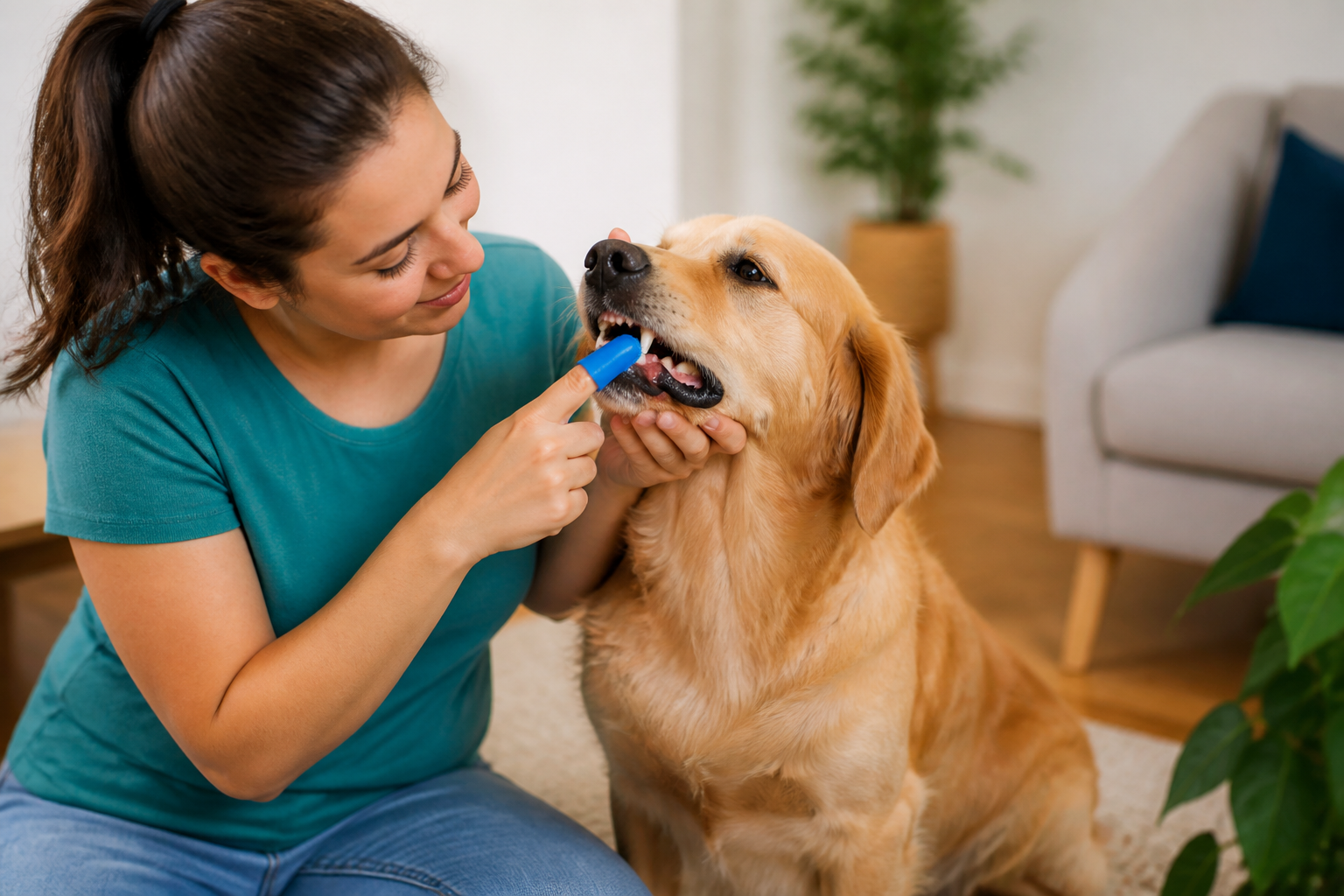
For the brush, you have options. A finger brush is a small rubber cap that fits over your fingertip. This is excellent for beginners because it gives you a better sense of where you are in the dog's mouth. For larger dogs or those who are comfortable with the process, a long-handled toothbrush with angled bristles allows you to reach the back molars more effectively.
Step-by-Step Brushing Process
Step 1: Introduce the flavor. / Put a small amount of enzymatic toothpaste on your finger and let your dog lick it. Most pet pastes come in flavors like poultry or beef to make the experience a treat.
Step 2: Desensitize the mouth. / Gently lift your dog’s lip and rub your finger along their gums. Do this for just a few seconds and follow up with immediate praise.
Step 3: Introduce the brush. / Put toothpaste on the brush and let the dog lick it off. This helps them get used to the texture of the bristles.
Step 4: The 45-degree angle. / Aim the bristles at a 45-degree angle toward the gumline. Use small, circular motions. Focus on the outside of the teeth, as this is where the most plaque accumulates.
Step 5: Reward and repeat. / Keep the first few sessions under 30 seconds. Gradually increase the time as your dog becomes more patient.
Vet Tip: If your dog has red, bleeding gums or loose teeth, stop brushing and call your veterinarian. These are signs of advanced periodontal disease that can be very painful. Brushing over an infection can cause more discomfort and may spread bacteria into the bloodstream.
For additional guidance, read our tips for introducing pets to dental care.
Effective Alternatives for Reluctant Dogs
Some dogs simply will not tolerate a toothbrush. If your pet treats a toothbrush like a mortal enemy, you can still maintain their oral health using other tools. These methods are not quite as thorough as brushing, but they are far better than doing nothing.
Dental Wipes
Dental wipes are textured pads pre-soaked with cleaning solutions. They work by physically rubbing plaque off the tooth surface. They are often easier for senior dogs or dogs with small mouths. You simply wrap the wipe around your index finger and swipe it across the teeth. While they cannot reach the deep crevices between teeth as well as bristles, they are a great way to freshen breath and remove daily buildup.
Water Additives and Foams
Oral rinses and water additives are the easiest way to support dental health. You add a specific amount of the solution to your dog's water bowl every day. Our dog dental supplements include products designed to support a daily oral-care routine. These products usually contain enzymes or ingredients like chlorine dioxide that help kill odor-causing bacteria. This is a passive way to reduce the bacterial load in the mouth. It is particularly helpful for dogs who are prone to bad breath but refuse to have their mouths touched.
For more warning signs to watch for, see how to recognize hidden dental problems in dogs.
The Role of Dental Chews and Toys
Chewing is a natural behavior for dogs, and it serves a physical purpose for their teeth. When a dog chews on a textured surface, the mechanical action scrapes away plaque. However, not all chews are created equal.
Selecting Dental Chews
Look for dental chews that have the VOHC (Veterinary Oral Health Council) seal of approval. This means the product has been tested and proven to reduce plaque or tartar by a certain percentage. Brands like Greenies or specific dental treats from NutriSource are designed to be flexible. This flexibility allows the tooth to sink into the treat, cleaning down to the gumline. You can browse our dental food and treats for additional options.
Rubber and Rope Toys
Textured rubber toys can be very effective. Look for toys with nubs, ridges, or "dental tracks." You can even smear a little pet-safe toothpaste into the grooves of the toy. As the dog plays and chews, they are essentially brushing their own teeth. Rope toys can act like dental floss, but you must monitor them. If a dog swallows long strands of rope, it can cause a dangerous intestinal blockage.
Key Takeaway: Mechanical scraping through chews and toys is a vital supplement to brushing. The best dental routine uses a combination of direct cleaning and passive chewing to address all areas of the mouth.
For more ideas, explore our guide to dental chews for dogs.
Nutritional Support for Oral Health
What your dog eats has a direct impact on their mouth. Some pet owners believe that kibble naturally cleans teeth because it is crunchy. In reality, most kibble crumbles too quickly to provide any real scraping action. However, there are specialized dental diets available.
Prescription Dental Diets
If your dog is prone to rapid tartar buildup, your vet might suggest a prescription dental diet. These formulas use a specific fiber matrix. Instead of shattering when the dog bites down, the kibble holds together, forcing the tooth to move through the piece. This provides a scrubbing effect. Our dog pharmacy offers prescription products for eligible veterinary needs. You can easily manage these specialized needs alongside your regular supplies.
Raw and Fresh Food Considerations
Some owners find that fresh or raw diets help reduce dental issues because they lack the high starch content found in some commercial kibbles. Starch and sugar are the primary fuel for the bacteria that cause plaque. Brands like Stella and Chewy's or Open Farm offer high-quality nutrition that minimizes these fillers. Regardless of the diet, you should still maintain a regular cleaning schedule.
How to Check Your Dog's Progress
You should perform a "flip the lip" check once a week. This allows you to catch changes early before they become expensive medical problems. Look for the following indicators:
- Breath quality: A slight "doggy" smell is normal, but a foul or sweet odor is a red flag.
- Gum color: Gums should be a healthy pink. Bright red or purple lines along the teeth indicate inflammation.
- Tartar buildup: Look for hard, crusty deposits that are tan, brown, or gray.
- Growths: Check for any lumps or bumps on the gums or the roof of the mouth.
If you notice that your dog's breath remains terrible despite daily brushing, there may be an underlying issue. Bacteria in the mouth can eventually enter the bloodstream and affect the heart, liver, and kidneys. This is why regular veterinary exams are so important.
Bottom line: Consistent home care can significantly delay the need for professional cleanings, but it does not replace the need for regular veterinary checkups.
When Professional Help is Mandatory
At-home cleaning is a preventative measure. It is not a cure for established dental disease. If your dog already has thick layers of tartar or visible gum recession, you cannot safely fix this yourself. Attempting to scrape off heavy tartar with metal tools at home is dangerous. You can easily fracture the tooth enamel or cause a deep puncture wound in the gums.
Signs that your dog needs a professional cleaning under anesthesia include:
- Dropping food while eating or chewing on only one side of the mouth.
- Pawing at the face or mouth.
- Excessive drooling, sometimes tinged with blood.
- Loose or missing teeth.
- Visible pus around the gumline.
When a veterinarian performs a cleaning under anesthesia, they take X-rays to see the roots of the teeth. They can also use ultrasonic scalers to remove tartar from deep pockets in the gums. This level of care is impossible to achieve while a dog is awake. If your vet determines that your dog needs medication for an oral infection or a specialized prescription diet, our pet pharmacy can help fulfill those needs.
Making Dental Care a Habit
The secret to success is consistency. It is better to brush your dog's teeth for one minute every day than for ten minutes once a month. To make it easier, tie the dental routine to an existing habit. You might brush their teeth right after your own nightly routine or before their evening walk.
We recommend keeping your supplies in a visible spot. If the toothbrush is tucked away in a drawer, you are more likely to forget it. Place it near your dog's leash or food bin as a daily reminder. Over time, your dog will come to view the tasty enzymatic paste as a reward rather than a chore.
At BaxterBoo, we have helped pet parents since 2006 by providing the tools they need for everyday care. Whether you are looking for a gentle finger brush, a specific dental chew, or a prescription diet from our pharmacy, we are here to support your journey. Your dog's health starts with their smile, and with a little patience, you can manage it right from your living room.
Key Takeaway: Successful dental care is built on the three pillars of mechanical brushing, healthy chewing habits, and regular veterinary monitoring.
Conclusion
Cleaning your dog's teeth without anesthesia is a commitment to their long-term health. By focusing on daily brushing and supplemental tools like dental wipes and chews, you can keep plaque at bay. This not only keeps their breath fresh but also protects their vital organs from the effects of chronic oral bacteria.
- Use pet-safe enzymatic toothpaste every day.
- Incorporate dental chews with the VOHC seal.
- Use water additives for passive bacterial control.
- Monitor your dog's mouth weekly for signs of redness or decay.
Note: If you ever feel overwhelmed by your dog's dental needs, start small. Even brushing just the upper canine teeth is a great first step toward better health.
To get started with the right supplies, explore our dog dental care category. For those managing existing dental conditions, remember that our pharmacy is available for prescription diets and medications. Do not forget to sign up for the MVP Rewards programme to earn back on every toothbrush and treat.
FAQ
Is it safe to scrape tartar off my dog's teeth with a metal tool?
No, you should never use metal scalers on your dog at home. It is very easy to slip and cause a painful injury to their gums or tongue. Furthermore, scraping without professional polishing leaves microscopic scratches on the enamel, which actually makes it easier for plaque to stick to the tooth in the future.
Can I use baking soda to brush my dog's teeth?
Baking soda is not recommended for dogs. While it is not as toxic as human toothpaste, it has a high alkaline content that can upset a dog’s stomach if swallowed in large amounts. It also lacks the beneficial enzymes found in pet-specific toothpaste that help break down plaque even after the brushing session is over.
How often should I brush my dog's teeth?
Ideally, you should brush your dog's teeth every single day. Plaque begins to harden into tartar within 48 hours, so a daily routine is the only way to ensure you are staying ahead of the buildup. If daily brushing is not possible, aim for at least three times a week to see a meaningful difference in their oral health.
Do dental chews really work as well as brushing?
Dental chews are an excellent supplement, but they are not a total replacement for brushing. They are most effective at cleaning the chewing surfaces of the molars. They are less effective at cleaning the front incisors and the canine teeth. For the best results, use dental chews on the days when you cannot fit in a full brushing session.






