
 Save 15% on your 1st Autoship learn more

 Email us
 Live Chat
 FAQs
FAQs





Introduction
You lean in for a happy morning nuzzle, but your dog greets you with a cloud of breath that could wilt a flower. We have all been there. Most pet owners eventually notice that distinctive "dog breath" or see yellowing patches near the gumline. While a professional veterinary cleaning is the gold standard for oral health, it often involves anesthesia and a significant bill. Many owners want to know how to manage their pet's hygiene between those visits.
At BaxterBoo, we know that consistent home care is the most effective way to prevent serious dental issues. This guide explains how to clean your dog’s teeth at home using tools like enzymatic toothpaste, dental wipes, and specialized treats. We will help you build a routine that keeps your pup’s mouth fresh and healthy.
The Importance of Routine Dental Care
Dental health is about much more than just fresh breath. When food particles and bacteria sit on the teeth, they form a sticky film called plaque. If you do not remove this film, it reacts with minerals in the saliva to become tartar. Tartar is a hard, brown substance that regular brushing cannot easily remove.
When tartar builds up, it pushes under the gumline. This creates pockets where bacteria thrive. This can lead to gingivitis, tooth loss, and even infections that spread to the heart or kidneys. Home care focuses on stopping plaque before it turns into tartar. This keeps your dog comfortable and potentially saves you from expensive medical procedures later.
Quick Answer: You can clean your dog's teeth at home using enzymatic toothpaste, dental wipes, and water additives. These methods help remove plaque and freshen breath. However, they cannot remove hardened tartar or treat infections deep under the gums.
The Gold Standard: Brushing with Enzymatic Paste
Brushing is the single most effective way to clean teeth without a vet visit. It physically breaks up plaque through mechanical action. However, you cannot use human toothpaste. Our toothpaste contains fluoride and xylitol, both of which are toxic to dogs.
Dogs need enzymatic toothpaste. These formulas contain enzymes that break down food particles even after you stop brushing. They also come in flavors dogs actually enjoy, like poultry, beef, or peanut butter. This makes the process much easier for both of you. Explore our dental and breath care collection for pet-safe oral hygiene supplies.
Choosing the Right Brush
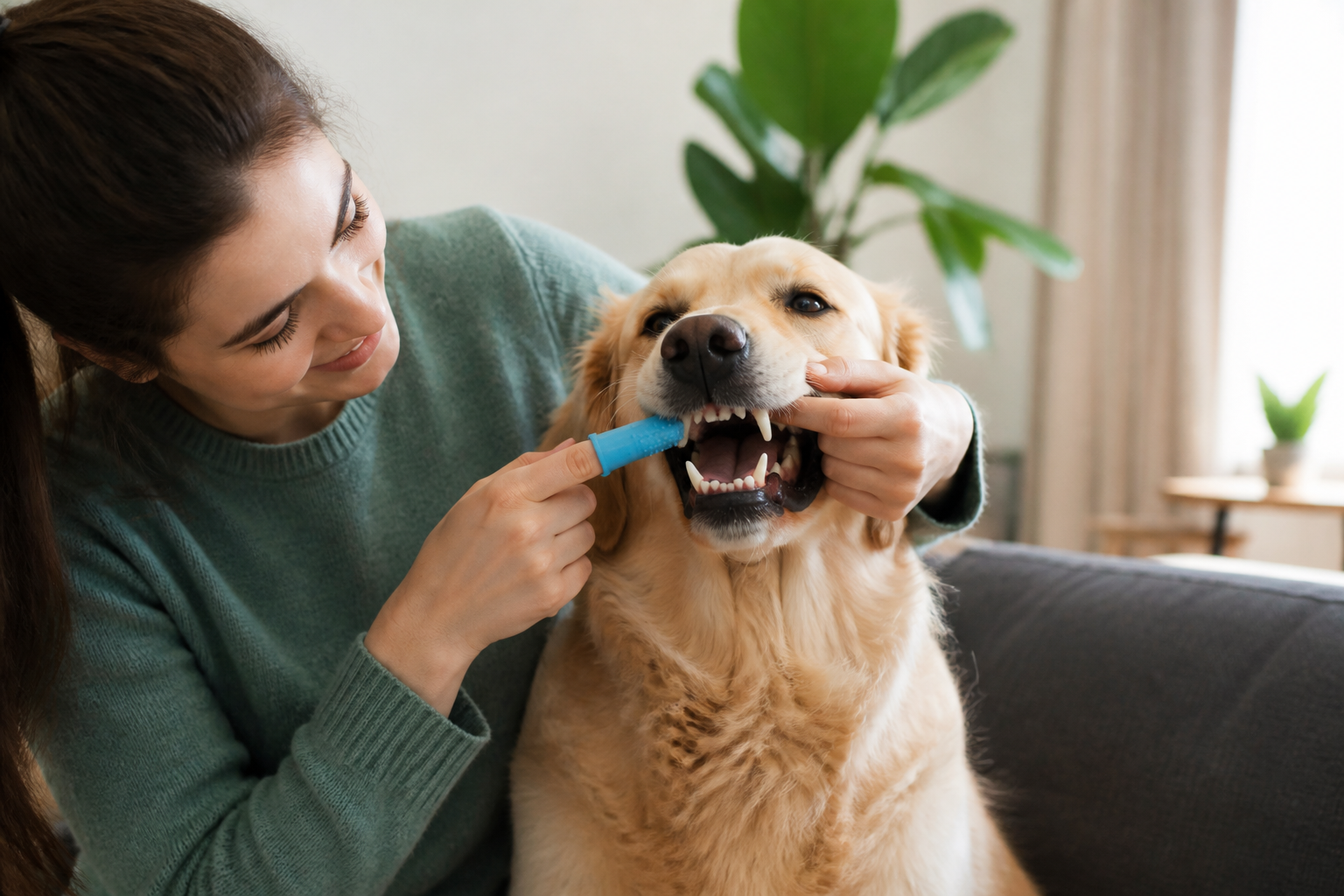
The tool you use depends on your dog’s size and comfort level. A standard pet toothbrush has a long handle and angled bristles. This helps you reach the molars at the back of the mouth. If your dog is smaller, a finger brush might be better. These are soft silicone caps that fit over your pointer finger. They allow you to feel exactly where you are cleaning.
Step-by-Step Brushing Guide
Step 1: Introduce the paste. / Put a small amount of dog-safe toothpaste on your finger. Let your dog sniff and lick it so they associate the flavor with a positive experience.
Step 2: Touch the mouth. / Gently lift your dog's lip and rub your finger along their gums. Do this for a few seconds and then give them a treat or praise.
Step 3: Introduce the brush. / Put some paste on the brush and let them lick it off. Gently brush just the front teeth in a circular motion.
Step 4: Target the back molars. / Once they are comfortable, move to the back teeth. This is where most plaque accumulates. You do not need to brush the inside surface of the teeth, as the dog's tongue usually keeps that area clean.
Step 5: Reward and repeat. / Keep the first few sessions under a minute. Always end with a reward to make sure they look forward to the next time.
Key Takeaway: Enzymatic toothpaste is essential because it continues to clean the teeth long after the brushing session ends. Always use a brush or finger tool that fits the size of your dog's mouth.
For additional guidance on introducing brushing, read these pet dental care tips.
Using Dental Wipes for Sensitive Dogs
Not every dog will tolerate a toothbrush. If your dog struggles with the sensation of bristles, dental wipes are a great alternative. These are pre-moistened pads designed to be wrapped around your finger. They are textured to help scrub away surface plaque.
Wipes are especially helpful for puppies or senior dogs with sensitive gums. While they do not reach deep into the crevices like a brush, they are much better than no cleaning at all. They are also very convenient for travel or quick clean-ups after a particularly messy meal.
Water Additives and Oral Rinses
If your dog is completely resistant to you touching their mouth, water additives can help. These are tasteless and odorless liquids you add to your dog's water bowl. They contain ingredients that help kill the bacteria responsible for plaque and bad breath.
Think of these like a mouthwash for pets. They work every time your dog takes a drink. For the best results, look for products that are formulated to reduce biofilm. While they are not a replacement for brushing, they provide a constant, passive way to fight bacteria throughout the day.
Vet Tip: Always provide a second bowl of plain water when you first start using an additive. Some dogs are very sensitive to changes in their water. You want to make sure they stay hydrated while they get used to the new routine.
The Role of Dental Chews and Treats
Dogs have a natural urge to chew. You can use this to your advantage by providing dental treats. These items are designed with specific textures that scrape the teeth as the dog bites down. Some brands, like Greenies, are specifically shaped to reach into the gaps between teeth. Browse our selection of Greenies products for dental chew options.
When choosing a dental treat, look for the VOHC seal. The Veterinary Oral Health Council only gives this seal to products that have been proven to reduce plaque or tartar. These treats are an excellent supplement to brushing.
What to Look For in a Chew
- Firm texture that requires effort to chew
- Ingredients that support gum health
- Appropriate size for your dog to prevent choking
- Low calorie counts if your dog is on a weight management plan
A Note on Raw Bones
Some owners use raw, meaty bones to clean teeth. The mechanical action of gnawing on a bone can be very effective at removing tartar. However, this comes with risks. Cooked bones should never be given because they can splinter. Even raw bones can cause tooth fractures or digestive blockages if the dog is an aggressive chewer. Always supervise your dog with any bone or hard chew.
Dental Toys and Enrichment
Toys can also help with oral hygiene. Many toys are made from durable rubber or nylon with ridges and nubs. As your dog plays and chews, these nubs rub against the teeth. This helps dislodge food particles.
Kongs and other fillable toys are excellent for this. You can even smear a little dog-safe toothpaste inside the grooves of a toy. This encourages your dog to "brush" their own teeth while they play. This is a low-stress way to keep the mouth clean for dogs that suffer from anxiety during grooming. Browse our dental dog toys for textured play options.
How Diet Impacts Dental Health
What your dog eats every day plays a major role in their oral health. There is a common belief that dry kibble cleans teeth better than wet food. While the crunch of kibble can provide some scraping action, most standard kibble pieces are small. Dogs often swallow them whole or shatter them quickly, which does not provide much cleaning.
Specific dental diets are different. Brands like Royal Canin and Farmina Vet Life offer specialized formulas. These kibbles are usually larger and have a fibrous structure. Instead of crumbling, the tooth sinks into the kibble, allowing the fibers to scrub the tooth surface.
If your veterinarian prescribes a specific dental food for your dog's health, we can help. Our pharmacy offers access to prescription pet foods and FDA-approved medications through our pet care services. You can have these specialized diets delivered right to your door with the convenience of our website.
Identifying Signs of Dental Disease
Even with the best home care, problems can still arise. It is important to check your dog's mouth once a week for signs of trouble. If you catch issues early, they are much easier to manage.
Common signs of dental problems include:
- Red, swollen, or bleeding gums
- Visible brown or yellow buildup on the teeth
- Excessive drooling
- Pawing at the mouth
- Dropping food while eating or refusing hard treats
- One-sided chewing
- Persistent bad breath that does not improve with brushing
If you see these symptoms, it is time for a professional checkup. Home cleaning is a preventative measure, but it cannot cure an existing infection or a rotted tooth. For more information about warning signs, read what to know about bad teeth in dogs.
Vet Tip: If your dog has a sudden change in behavior, such as becoming aggressive or shy when you touch their face, they may be in pain. Dental pain is often hidden by dogs, so look for these subtle signs and consult your veterinarian for an exam.
Creating a Sustainable Routine
The key to cleaning dogs' teeth at home is consistency. Brushing once a month will not do much to stop plaque. Ideally, you should aim for daily care, but even three times a week can make a significant difference.
Start slow and build up. If you try to do a full two-minute scrubbing session on the first day, your dog will probably hate it. Start with just five seconds. Gradually increase the time as your dog gets used to the routine.
We recommend setting a specific time for dental care. Many owners find it easiest to brush their dog's teeth right after the evening walk or before bed. This helps the dog understand that it is part of the daily wind-down routine.
To make the process more affordable, you might consider the MVP Rewards programme. You can earn up to 5% back on your purchases, which includes dental supplies like brushes, pastes, and treats. If you find a product that works well for your dog, you can also use our Autoship programme. This ensures you never run out of toothpaste and gives you a discount on your recurring orders.
Professional Cleaning vs. Home Care
It is important to understand the limits of what you can do at home. A veterinarian performing a professional cleaning uses specialized tools to reach under the gumline. This is where the most dangerous bacteria hide. Most professional cleanings require anesthesia so the vet can work safely and thoroughly without causing the dog stress or pain.
Some services offer "non-anesthetic" cleanings. While these can remove visible tartar and make the teeth look white, they cannot address issues below the gumline or take X-rays to check the roots. They are a cosmetic improvement but not a complete medical treatment. Use home care to keep the teeth clean, but do not skip your yearly vet exam.
Bottom line: Home dental care is about prevention and maintenance, while professional cleanings are about deep treatment and diagnosis.
Summary of Home Dental Care
Maintaining your dog's oral health does not have to be a struggle. By combining different methods, you can find a system that works for your dog's personality.
- Brush regularly: Use enzymatic toothpaste and a pet-specific brush.
- Use additives: Add oral health solutions to their water bowl for passive cleaning.
- Provide treats: Choose VOHC-approved dental chews to help scrape away plaque.
- Offer toys: Use textured rubber toys to encourage self-cleaning through play.
- Monitor health: Check for red gums or bad breath weekly.
Taking these steps helps ensure your dog stays comfortable and keeps their bright smile for years to come. Whether you are starting with a new puppy or helping a senior dog, it is never too late to begin a dental hygiene routine.
Our team at BaxterBoo is always here to help you find the right supplies. From the latest enzymatic pastes to durable dental toys, we curate our selection to ensure your pet gets the best care possible. Explore our dog healthcare products to continue building your dog's wellness routine.
FAQ
Can I use baking soda to brush my dog's teeth?
It is not recommended to use straight baking soda for dogs. While it is an abrasive that can clean teeth, it has a very high salt content that can upset a dog's stomach if swallowed. It also lacks the enzymes found in pet-specific toothpaste that help break down plaque chemically. It is much safer and more effective to use a paste formulated specifically for canines.
How do I know if my dog's teeth are hurting?
Dogs are experts at hiding pain, but you can look for subtle clues. If your dog suddenly prefers wet food over dry kibble, or if they drop pieces of food while eating, they may have a painful tooth. You might also notice them pawing at their face or resisting when you try to pet their head. A foul odor that persists even after cleaning is often a sign of an underlying infection that requires a vet's attention.
Are dental wipes as good as brushing?
Dental wipes are a great alternative, but they are generally not as effective as a toothbrush. Brushing allows the bristles to reach into the small gaps between teeth and just slightly under the gumline. Wipes only clean the flat surfaces they can touch. However, if your dog refuses a brush, using wipes is far better than doing nothing at all and can still significantly reduce plaque buildup.
Will dry food alone keep my dog's teeth clean?
Standard dry food is not a substitute for dental care. Most kibble pieces are small and brittle, meaning they shatter easily without providing much scrubbing action. While it may be slightly better than a diet of only soft wet food, your dog still needs active cleaning through brushing, treats, or specialized dental diets. Look for kibble specifically labeled for oral health if you want the food to assist in cleaning.






