
 Save 15% on your 1st Autoship learn more

 Email us
 Live Chat
 FAQs
FAQs





Introduction
You are relaxing on the couch when your dog leans in for a snuggle. Then you smell it. That heavy, sour scent of "dog breath" hits you before they even get close. Many owners think bad breath is just a normal part of having a dog. At BaxterBoo, we know that stinky breath is often the first sign of dental trouble. Keeping those pearly whites clean is about more than just fresh kisses. It is a vital part of your dog’s overall health. This post covers the best tools and techniques for cleaning your dog’s teeth at home. We will also look at alternatives for dogs that hate the brush. Proper oral care can add years to your best friend's life.
Why Home Dental Care Matters
Most dogs show signs of oral disease by the time they are three years old. Plaque is a sticky film of bacteria that forms on the teeth every day. If you do not remove it, it reacts with minerals in the saliva. This turns it into hard tartar within 48 hours. You can easily brush away plaque at home. You cannot brush away tartar. For more information about warning signs, read our guide to recognizing bad teeth in dogs.
Tartar buildup leads to gingivitis and periodontal disease. This causes pain, tooth loss, and infection. The danger goes deeper than the mouth. Bacteria from infected gums can enter the bloodstream. This can damage the heart, liver, and kidneys. Regular cleaning at home is the best way to prevent these serious issues.
Key Takeaway: Home dental care is a preventive measure that protects your dog's vital organs and prevents painful mouth infections.
Essential Supplies for Success
You cannot use your own toothbrush or toothpaste on your dog. Human products are not designed for pets and can be dangerous. You need a kit specifically made for canine mouths. You can browse our dog dental and breath care category for pet-safe oral care supplies.
Choosing the Right Toothbrush
There are several styles of brushes available. The right one depends on your dog’s size and comfort level.
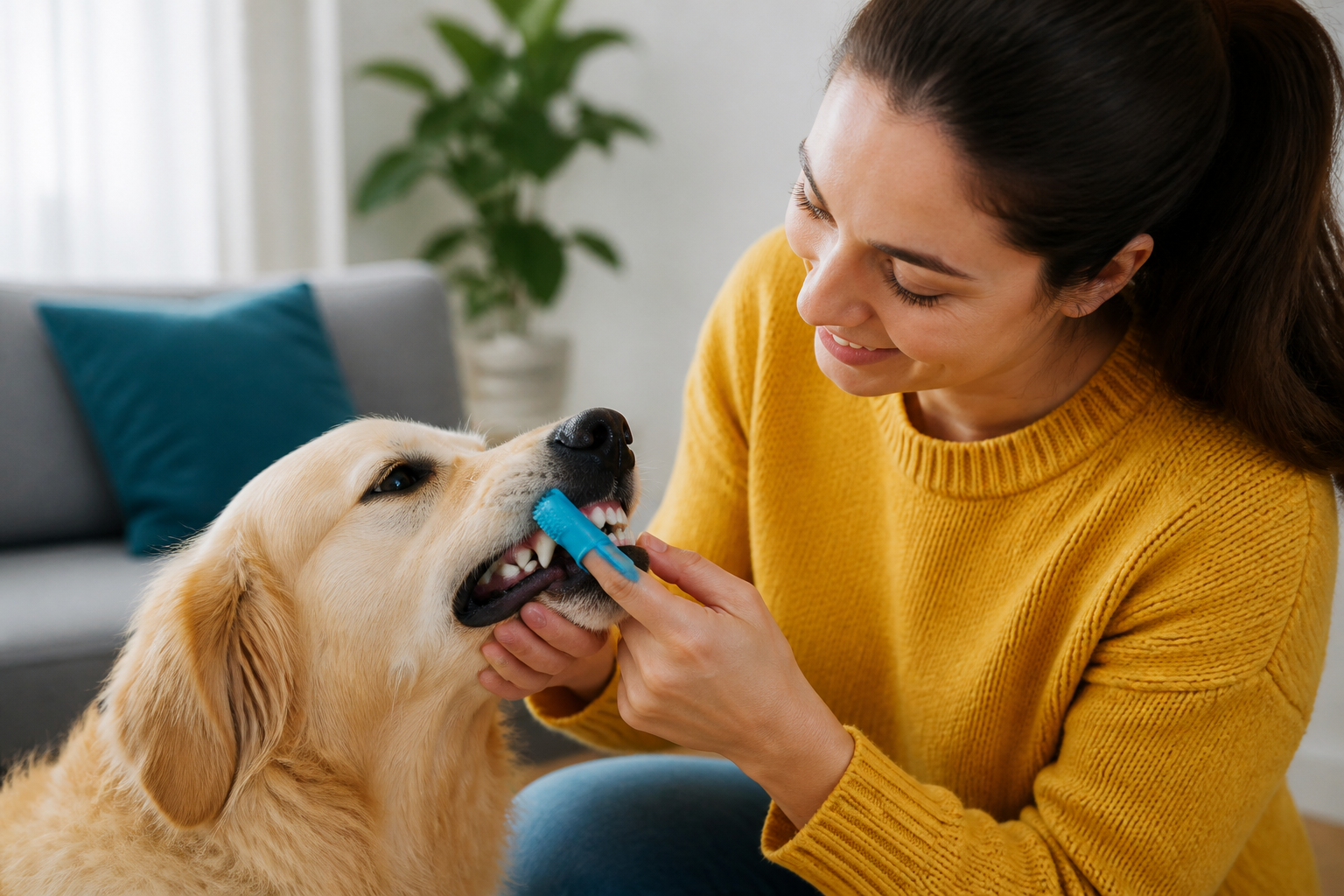
- Finger Brushes: These are small silicone caps with bristles that fit over your pointer finger. They give you great control and are less intimidating for puppies.
- Long-Handled Brushes: These look like human toothbrushes but have angled heads. They help you reach the back molars in larger dogs.
- Double-Headed Brushes: These have bristles on both sides. They clean the front and back of the tooth at the same time.
- Dental Wipes: If your dog will not tolerate a brush, wipes are a textured alternative. They rub away soft plaque but do not reach the gumline as well as bristles.
Dog-Safe Toothpaste
Human toothpaste contains fluoride and often Xylitol. Both are toxic to dogs. Since dogs cannot spit, they swallow everything you put in their mouth. A pet-specific option such as Nutri-Vet Dog Toothpaste is designed for canine dental routines.
Look for enzymatic toothpaste. These formulas contain enzymes that break down food particles and plaque even after you stop brushing. Most come in flavors dogs love, such as poultry, beef, or peanut butter. This makes the experience feel more like a treat than a chore.
Vet Tip: If you notice bleeding gums, loose teeth, or a sudden change in eating habits, stop home cleaning and call your vet. These are signs of advanced dental disease that require professional care.
Step-By-Step Guide to Brushing at Home
Do not expect to do a full cleaning on the first try. Patience is the most important tool in your kit. Follow these steps to get your dog comfortable with the process. For additional guidance, see these pet dental care tips.
Step 1: The Taste Test
Start by letting your dog lick a small amount of toothpaste off your finger. Do this for a few days without trying to touch their mouth. You want them to associate the flavor with a positive reward.
Step 2: Finger Rubbing
Once they like the paste, start rubbing your finger along their gums. Lift their lips gently. Keep these sessions very short. Five to ten seconds is plenty at first.
Step 3: Introducing the Brush
Put a dab of paste on the brush or finger cap. Let them sniff it. Gently brush just the front "fang" teeth (canines). Use small circular motions.
Step 4: Reaching the Back
Most plaque builds up on the outside of the upper back molars. This is where the salivary glands are located. Gently slide the brush back under the cheek. You do not need to brush the inside of the teeth. A dog's tongue does a decent job of cleaning those surfaces.
Step 5: The Grand Finale
Always end the session with a high-value treat or play. This builds a positive association. Your dog should look forward to "teeth time."
Bottom line: Consistent daily sessions of sixty seconds are more effective than one long session once a month.
Alternatives to Brushing
We understand that some dogs simply will not tolerate a toothbrush. If your dog gets aggressive or extremely stressed, do not force it. There are other ways to support their oral health.
Dental Chews and Treats
Not all treats are created equal. Specific dental chews are designed to be hard enough to scrape away plaque but soft enough not to break teeth. We carry a wide selection of these at BaxterBoo to help keep your dog's mouth fresh. Look for products with the VOHC (Veterinary Oral Health Council) seal of approval. A product such as Whimzees Variety Pack Grain-Free Dental Dog Treats can be one option to discuss with your veterinarian.
Water Additives
These are like a mouthwash you add to your dog's water bowl. They contain enzymes or ingredients like chlorine dioxide that kill bacteria. This helps freshen breath and slow down plaque formation. It is the easiest option for busy owners.
Dental Toys
Textured rubber or rope toys can help clean teeth during play. Look for toys with nubs or ridges. As the dog chews, the material rubs against the teeth to provide a mechanical cleaning effect.
Prescription Dental Diets
Some dogs benefit from a specific therapeutic diet. These kibbles are usually much larger than standard food. They are designed not to shatter when bitten. Instead, the tooth sinks into the kibble, which scrubs the surface.
Note: If your veterinarian recommends a prescription dental diet, our pet pharmacy can help. We partner with Pet's Choice to fulfill prescription food orders and health supplies for our customers.
Signs of Dental Trouble to Watch For
Even with the best home care, problems can arise. You should check your dog's mouth at least once a week for these warning signs. You can also review our article about hidden dental problems in dogs.
- Foul Breath: A slight doggy smell is normal, but a rotting or metallic scent is not.
- Discolored Teeth: Healthy teeth should be white. Yellow or brown buildup near the gumline is tartar.
- Red or Swollen Gums: This is a sign of gingivitis. The gums might bleed when you touch them.
- Drooling: Excessive drooling or dropping food can indicate mouth pain.
- Lumps and Bumps: Check for any unusual growths on the gums or under the tongue.
The Role of Professional Cleanings
Home care is like brushing your own teeth. Professional veterinary cleanings are like going to the dentist for a deep scale and polish. At-home methods cannot reach the area beneath the gumline where the most dangerous bacteria live.
Most vets recommend a professional cleaning once a year. This usually requires general anesthesia. This allows the vet to take X-rays of the tooth roots and clean thoroughly without stressing the dog. While many owners worry about anesthesia, it is the only safe way to perform a complete oral exam.
Quick Answer: Clean your dog's teeth at home daily for the best results. If daily is not possible, aim for at least three times a week to prevent plaque from hardening into tartar.
Managing Dental Care for Senior Dogs
Senior dogs often face more significant dental challenges. As dogs age, their immune systems change. They may be more prone to infections. Many seniors also have existing tartar that makes brushing uncomfortable.
For older dogs, focus on comfort. If they have loose teeth, avoid hard dental chews that could cause a fracture. Instead, use dental wipes or water additives. Regular vet checks are even more important for seniors. Managing oral pain can significantly improve a senior dog's quality of life and energy levels.
Tips for Brushing Seniors
- Be extra gentle with the gums.
- Use warm water on the brush to soften the bristles.
- Ask your vet if a professional cleaning is safe for your senior based on their bloodwork.
Behavioral Tips for Reluctant Dogs
If your dog hides when they see the toothbrush, you need to change your approach. You may have moved too fast through the training steps. The gradual approach described in our pet dental care tips can help you rebuild comfort.
- Change the Location: If you always try to brush on the grooming table, try the living room floor instead.
- Swap the Paste: Your dog might hate the mint flavor but love the poultry flavor.
- Use a Helper: Have someone else feed the dog tiny licks of peanut butter while you quickly brush a few teeth.
- Keep it Playful: Use a happy, high-pitched voice. If you are stressed, your dog will be too.
Common Mistakes to Avoid
Avoid these pitfalls to keep your dog's mouth safe:
- Using Human Paste: We cannot stress this enough. It can cause stomach upset or toxicity.
- Scrubbing Too Hard: Dog gums are sensitive. Light pressure is all you need.
- Neglecting the Back Teeth: Most owners only clean the front teeth because they are easy to see. The back molars are where the trouble usually starts.
- Giving Real Bones: While many think bones clean teeth, they often cause painful fractures. Hard plastic or rubber is a safer choice.
A Routine for Every Lifestyle
We know life is busy. You do not need an hour to care for your dog's teeth. Finding a routine that fits your schedule ensures it actually gets done.
- The Busy Professional: Add a dental solution to the water bowl in the morning. Give one VOHC-approved chew in the evening.
- The Weekend Warrior: Use dental wipes or a brush three times a week. Supplement with textured toys during play.
- The Dedicated Caretaker: Brush every night before bed. Use a finger brush for a quick session.
Key Takeaway: Any amount of dental care is better than none. Start small and build the habit over time.
Support for Chronic Oral Issues
Some breeds, like Pugs, Yorkies, and Chihuahuas, are prone to severe dental crowding. This makes them much more likely to develop disease. If your dog has chronic gum issues or needs ongoing medication for mouth infections, we can help.
Our pharmacy provides access to FDA-approved medications and specialized dental health products through our partnership with Pet's Choice. This allows you to manage your pet's health needs conveniently from home. We are committed to being more than just a store. We are a resource for your pet's long-term wellness.
Summary Checklist for Home Success
- Purchase a dog-specific toothbrush and enzymatic toothpaste.
- Introduce the toothpaste flavor as a treat first.
- Practice lifting the lips and touching the gums.
- Focus on the outside of the upper back molars.
- Reward your dog after every session.
- Monitor the mouth weekly for redness or bad odors.
- Schedule an annual dental exam with your veterinarian.
Conclusion
Cleaning your dog's teeth at home is one of the kindest things you can do for them. It prevents pain, saves money on expensive surgeries, and keeps their breath fresh for all those close-up snuggles. Whether you use a brush, a wipe, or a dental chew, consistency is the secret. We at BaxterBoo are here to support you with the best supplies and expert advice. From our wide selection of toys to our specialized pharmacy services, we want to help your dog stay healthy from puppyhood through their senior years.
Bottom line: Start a dental routine today to ensure your dog enjoys a lifetime of healthy, pain-free smiles.
Ready to start your dog's dental journey? Browse our dog dental and breath care category for dental care supplies. You can also sign up for Autoship to ensure you never run out of your favorite dental chews. Plus, MVP Rewards members earn points on every dental purchase!
FAQ
Can I use baking soda to clean my dog's teeth?
It is not recommended to use baking soda. While it can help scrub away stains, it has a high alkaline content that can upset your dog's stomach if swallowed. It also tastes very salty, which might make your dog dislike the cleaning process. It is much better to use a flavored enzymatic toothpaste made specifically for pets.
How do I know if my dog's teeth are hurting?
Dogs are very good at hiding pain. You might notice them chewing only on one side of their mouth or dropping pieces of kibble. Other signs include pawing at the face, acting unusually grumpy, or losing interest in their favorite chew toys. If your dog has a foul odor in their mouth and seems less active, it is time for a vet visit.
Are dental wipes as good as brushing?
Brushing is the gold standard because the bristles can reach into the tiny gaps and slightly under the gumline. However, dental wipes are much better than doing nothing at all. They are very effective at removing the soft plaque that forms on the flat surfaces of the teeth. If your dog refuses a brush, wipes are an excellent second choice.
Is it too late to start cleaning my senior dog's teeth?
It is almost never too late to start, but you must be careful. If a senior dog already has heavy tartar and loose teeth, brushing could be very painful. Have your vet perform a dental exam first to see if a professional cleaning is needed to "reset" the mouth. Once the mouth is healthy and pain-free, you can start a gentle home care routine.






