
 Save 15% on your 1st Autoship learn more

 Email us
 Live Chat
 FAQs
FAQs





Introduction
You are relaxing on the couch when your dog leans in for a friendly nuzzle. Suddenly, you are hit with a wave of "dog breath" that is more than just a little funky. You lift their lip and notice a yellowish film along the gum line. This is a common moment for many pet owners. It is the realization that dental hygiene cannot be ignored. At BaxterBoo, we know that keeping those pearly whites clean is about more than just a fresh-smelling smile. It is a critical part of their overall wellness. In this post, we will explore safe and effective ways to support your dog’s oral hygiene without relying solely on chemical treatments. You will learn about the power of raw components, beneficial bacteria, and safe chewing habits. Natural dental care is a multi-layered approach that combines diet, mechanics, and biology to keep your dog healthy. For additional options, explore our dog dental care category.
Understanding the Foundation of Dog Dental Health
Before exploring remedies, it is important to understand why teeth get dirty. Every time your dog eats, a sticky film called biofilm or plaque forms on the teeth. This film is a community of bacteria. If it is not removed within 24 to 48 hours, it begins to mineralize. This happens when the minerals in your dog's saliva mix with the plaque. Once it hardens, it becomes tartar or calculus.
Tartar is much harder to remove than plaque. It provides a rough surface where even more bacteria can grow. This can lead to red, inflamed gums known as gingivitis. If left alone, it can progress to periodontal disease. This condition can affect the structures that hold the teeth in place. It can even lead to systemic issues as bacteria enter the bloodstream. This is why a proactive approach is so important. For more guidance on warning signs, read how to recognize bad teeth in dogs.
Quick Answer: You can clean a dog's teeth naturally by using raw meaty bones, providing species-appropriate diets, and using natural antibacterial agents like coconut oil. These methods work through mechanical scraping and biological enzyme action to reduce plaque buildup.
The Role of Diet in Dental Hygiene
Many people believe that dry kibble naturally cleans a dog’s teeth because it is crunchy. This is actually a common myth in the pet world. Most kibble is small and brittle. It shatters almost instantly when a dog bites down. This means there is very little mechanical scraping happening at the gum line. Furthermore, many kibbles are high in carbohydrates and starches. These starches break down into sugars in the mouth. Sugar is the primary fuel for the bacteria that cause plaque.
Transitioning to a Low-Starch Diet
A diet high in protein and low in processed starches can make a big difference. When dogs eat meat-based diets, their mouth environment changes. Meat contains amino acids that help break down certain types of buildup. Feeding a fresh or raw diet can provide natural enzymes that resist bacterial growth. If you are not ready for a full raw diet, look for high-quality, grain-free options. We carry brands like Open Farm that focus on high-protein, low-carbohydrate recipes.
The Power of Probiotics and Prebiotics
The mouth is the beginning of the digestive tract. It has its own microbiome. By introducing beneficial bacteria, you can crowd out the harmful bacteria that cause bad breath and decay. Probiotics help create a healthy biofilm in the oral cavity.
- Use a high-quality pet probiotic powder.
- Mix it with a small amount of water or bone broth to create a "slurry."
- Let your dog lap it up after their final meal of the day.
- This allows the good bacteria to sit on the teeth and gums overnight.
Vet Tip: Always consult your veterinarian before making major dietary changes or adding new supplements. This is especially true if your dog has a history of kidney issues or sensitive digestion.
Raw Meaty Bones for Mechanical Cleaning
Raw meaty bones are nature's toothbrush. They are one of the most effective ways to clean teeth naturally. When a dog gnaws on a raw bone, the action of the meat and bone scraping against the teeth acts like floss. This mechanical action breaks off tartar and wipes away plaque.
Choosing the Right Bone
Not all bones are safe. It is vital to understand the difference between weight-bearing bones and recreational meaty bones.
- Avoid weight-bearing bones: These are the large leg bones from heavy animals like cows. They are designed to support thousands of pounds. They are often harder than a dog's teeth. Chewing these can lead to painful tooth fractures.
- Choose "meaty" bones: Think of turkey necks, chicken backs, or lamb ribs. These are softer and more pliable.
- Match the size to the dog: A bone should be large enough that the dog cannot swallow it whole. It should require significant chewing.
- Never feed cooked bones: Cooking makes bones brittle and prone to splintering. This can cause internal injuries or blockages.
Safety Guidelines for Bone Chewing
Supervision is the most important rule. Always watch your dog while they are enjoying a bone. Take the bone away once it has been chewed down to a size that could be swallowed. If your dog is an "aggressive" chewer who tries to gulp items, raw bones might not be the right choice for them.
Key Takeaway: Raw meaty bones provide mechanical cleaning that kibble cannot match. However, you must choose non-weight-bearing bones and supervise your pet to prevent fractures or choking.
Natural Brushing Aids and Techniques
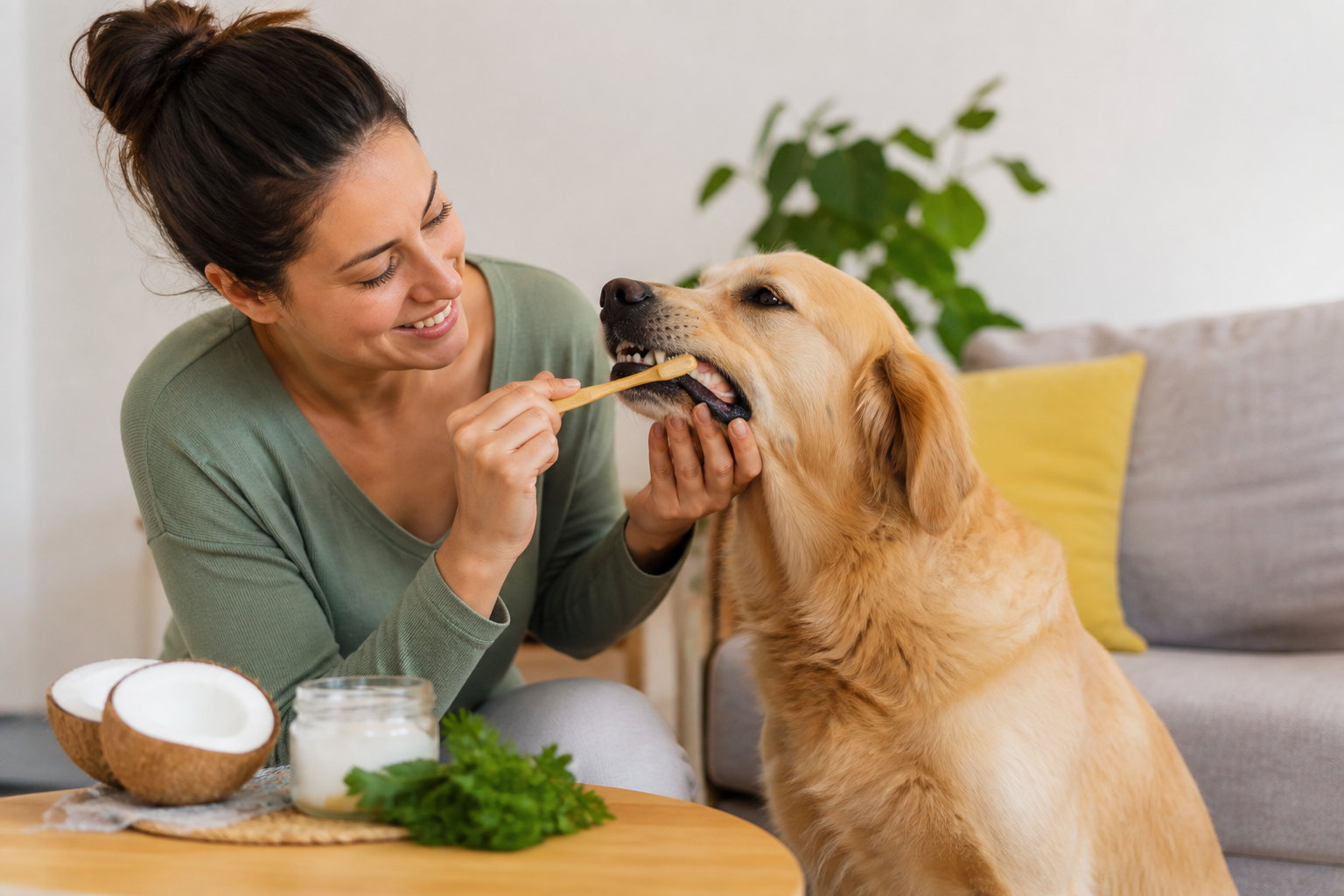
While many dogs resist a traditional toothbrush, you can use natural substances to make the process easier and more effective. You do not always need a plastic brush. A piece of clean gauze wrapped around your finger can often work just as well. You can also review these pet dental care tips for help introducing oral-care habits.
Using Coconut Oil
Coconut oil is a favorite for natural pet care. It contains lauric acid, which has natural antibacterial and antifungal properties. Many dogs love the taste, which makes them more willing to cooperate.
- Step 1: Place a small amount of organic, unrefined coconut oil on a finger brush or gauze pad.
- Step 2: Gently rub the oil onto your dog’s teeth and along the gum line.
- Step 3: Focus on the back molars where tartar tends to build up the most.
- Step 4: Allow your dog to lick the remaining oil. It is safe and can even help with their coat and digestion.
Enzymatic Pastes
You can also find natural enzymatic toothpastes specifically designed for dogs. These contain enzymes like glucose oxidase. These enzymes react with the oxygen in the mouth to produce a mild antibacterial effect. This helps break down the protein structure of plaque. Never use human toothpaste. It often contains xylitol, which is highly toxic to dogs. It also contains foaming agents that can upset a dog's stomach. One option is Zymox Oratene Brushless Enzyme Oral Care Dog and Cat Dental Gel.
Supplements That Fight Plaque
Sometimes the best way to clean teeth is from the inside out. Certain natural supplements can change the chemistry of your dog's saliva to prevent plaque from sticking.
Seaweed and Kelp (Ascophyllum Nodosum)
A specific type of brown seaweed called Ascophyllum nodosum is famous for dental health. When ingested, the compounds in the seaweed are absorbed into the bloodstream. They are then released back into the mouth through the saliva. These compounds break down the "glue" that holds plaque to the teeth. Over several weeks, existing tartar may become softer and easier to remove through chewing. We carry ProDen PlaqueOff Powder Dog and Cat Teeth Care as an easy-to-use option to sprinkle over food.
Water Additives
Natural water additives act like a mouthwash for dogs. They are typically tasteless and odorless. Most contain enzymes or minerals that neutralize the bacteria in the water bowl and the mouth. This is a great "hands-off" way to support dental health. It is particularly useful for dogs that are very sensitive to having their mouths touched. You can browse dental and breath care products for water additives and other oral-care options.
Bottom line: Supplements like seaweed and water additives work systemically to soften tartar and freshen breath over time.
Safe Toys for Dental Enrichment
Playtime can also be a cleaning time. The right toys can provide a gentle abrasive action that keeps teeth clean. However, you must be careful about the hardness of the materials. Browse our dog toys for options that can add supervised chewing and play to your routine.
Rubber Dental Toys
Toys made of high-quality, durable rubber are excellent. Look for toys with ridges, nubs, or "fingers." As the dog chews, these rubber protrusions massage the gums and scrape the surface of the teeth. Brands like Kong offer classic rubber toys that are both safe and effective. You can even stuff them with a bit of coconut oil or a probiotic slurry to double the benefits.
Cotton Rope Toys
Rope toys act like giant pieces of dental floss. As the fibers of the rope slide between the teeth, they help pull away debris. Just be sure to monitor the rope for fraying. If your dog starts to pull off and swallow the cotton strings, it is time to replace the toy. Swallowed rope fibers can cause serious intestinal blockages.
Items to Avoid
Be cautious with very hard toys. Many "natural" options are actually quite dangerous for tooth enamel.
- Antlers: These are very popular but are extremely hard. They are a leading cause of broken carnassial teeth in dogs.
- Nylon chews: Like antlers, some hard plastic or nylon chews have no "give." If you cannot dent the item with your thumbnail, it is likely too hard.
- Tennis balls: The fuzz on a tennis ball is surprisingly abrasive. Over time, it can actually wear down the enamel on a dog's teeth. This is often called "blunting."
When Natural Care Needs a Professional Hand
Even with the best natural routine, some dogs are genetically predisposed to dental issues. Smaller breeds, like Pugs or Chihuahuas, often have crowded mouths. This creates many small spaces where bacteria can hide. Similarly, senior dogs may have years of buildup that natural methods cannot fully resolve.
The BaxterBoo Pharmacy and Prescription Care
Sometimes, a veterinarian may determine that your dog needs a professional cleaning under anesthesia. After a professional cleaning, they might suggest a specific therapeutic diet. Our pharmacy carries prescription pet foods through our partnership with Pet's Choice. Brands like Royal Canin or Farmina Vet Life offer specialized dental diets. These kibbles are often larger and have a specific fiber matrix. They are designed not to shatter, forcing the dog to chew and providing a superior mechanical scrub.
If your dog is managing a chronic dental infection or needs medication after a dental procedure, our pet pharmacy can help. We provide FDA-approved medications and prescription diets. Having access to these professional tools ensures that your natural efforts are built on a healthy foundation.
Signs of Dental Distress
It is important to know when natural remedies are not enough. If you notice any of the following, please schedule a visit with your veterinarian:
- Bleeding or very red gums.
- Loose or missing teeth.
- Difficulty eating or dropping food.
- Pawing at the mouth or face.
- Swelling under the eyes or along the jawline.
- A sudden change in temperament or refusal to play with toys.
Vet Tip: A professional dental exam should be part of your dog's annual checkup. A vet can see issues below the gum line that are invisible to the naked eye.
Establishing a Natural Dental Routine
Consistency is the secret to success. You do not have to do everything every day. Instead, create a weekly rhythm that incorporates different methods. This keeps your dog engaged and covers all aspects of oral health.
Sample Weekly Routine:
- Daily: Add a natural water additive to the bowl.
- Monday/Wednesday/Friday: Rub teeth with a little coconut oil on a gauze pad.
- Tuesday/Thursday: Offer a safe rubber dental toy stuffed with a healthy treat.
- Saturday: Provide a raw meaty bone (supervised) for deep cleaning.
- Sunday: Add a probiotic "slurry" to their evening meal.
Introducing New Habits
If your dog is not used to having their mouth touched, start slow. Spend the first few days just lifting their lip and giving them a treat. Gradually move to touching a tooth with your finger. Once they are comfortable, introduce the gauze or the coconut oil. Most dogs will eventually look forward to "brushing" time if it involves a tasty treat like coconut oil.
Conclusion
Natural dental care for dogs is about creating a healthy environment where bacteria cannot thrive. By focusing on a low-starch diet, providing safe mechanical cleaning through bones and toys, and using natural antibacterial agents, you can significantly reduce the risk of dental disease. Remember that every dog is different. What works for a large Labrador might not be suitable for a tiny Yorkie. Our team at BaxterBoo is here to help you find the right tools for your dog's specific needs. Whether you are looking for VOHC-approved chews, seaweed supplements, or specialized toys, we have curated the best options to keep your pet healthy.
Next Steps for Your Dog's Smile:
- Check out our Dental Care category for natural supplements and additives.
- Explore our dog toys section for durable rubber chew options.
- Sign up for our Autoship programme to ensure you never run out of your favorite dental treats while saving on every order.
- Visit our pet pharmacy for any prescription dental diets recommended by your vet.
Bottom line: A combination of a species-appropriate diet and regular mechanical cleaning is the best way to maintain your dog's oral health naturally.
FAQ
Can carrots really clean a dog's teeth?
Carrots can provide a very mild mechanical cleaning because they are crunchy and require chewing. However, they are also high in natural sugars. While they are a healthy treat, they should not be the only method you use to clean your dog's teeth. They are best used as a supplement to other methods like raw meaty bones or brushing.
Is it safe to use baking soda to brush my dog's teeth?
While baking soda is a common ingredient in human toothpaste, you should be very careful using it with dogs. It has a high alkaline content and a salty taste that many dogs dislike. If swallowed in large amounts, it can upset a dog's stomach or affect their electrolyte balance. It is much safer to use coconut oil or a pet-specific enzymatic toothpaste.
How long does it take for seaweed supplements to work?
Most pet owners begin to notice an improvement in breath within two to three weeks of daily use. To see a reduction in tartar, it usually takes about six to eight weeks. The seaweed works by softening the tartar, so you will still need to provide chew toys or bones to help scrape the softened material away.
Does my dog still need professional cleaning if I use natural methods?
Natural methods are excellent for prevention, but they are not a substitute for veterinary care. Some tartar can hide deep under the gum line where brushes and bones cannot reach. Regular vet checkups are essential to ensure there are no hidden infections or painful issues that require professional intervention.






