
 Save 15% on your 1st Autoship learn more

 Email us
 Live Chat
 FAQs
FAQs





Introduction
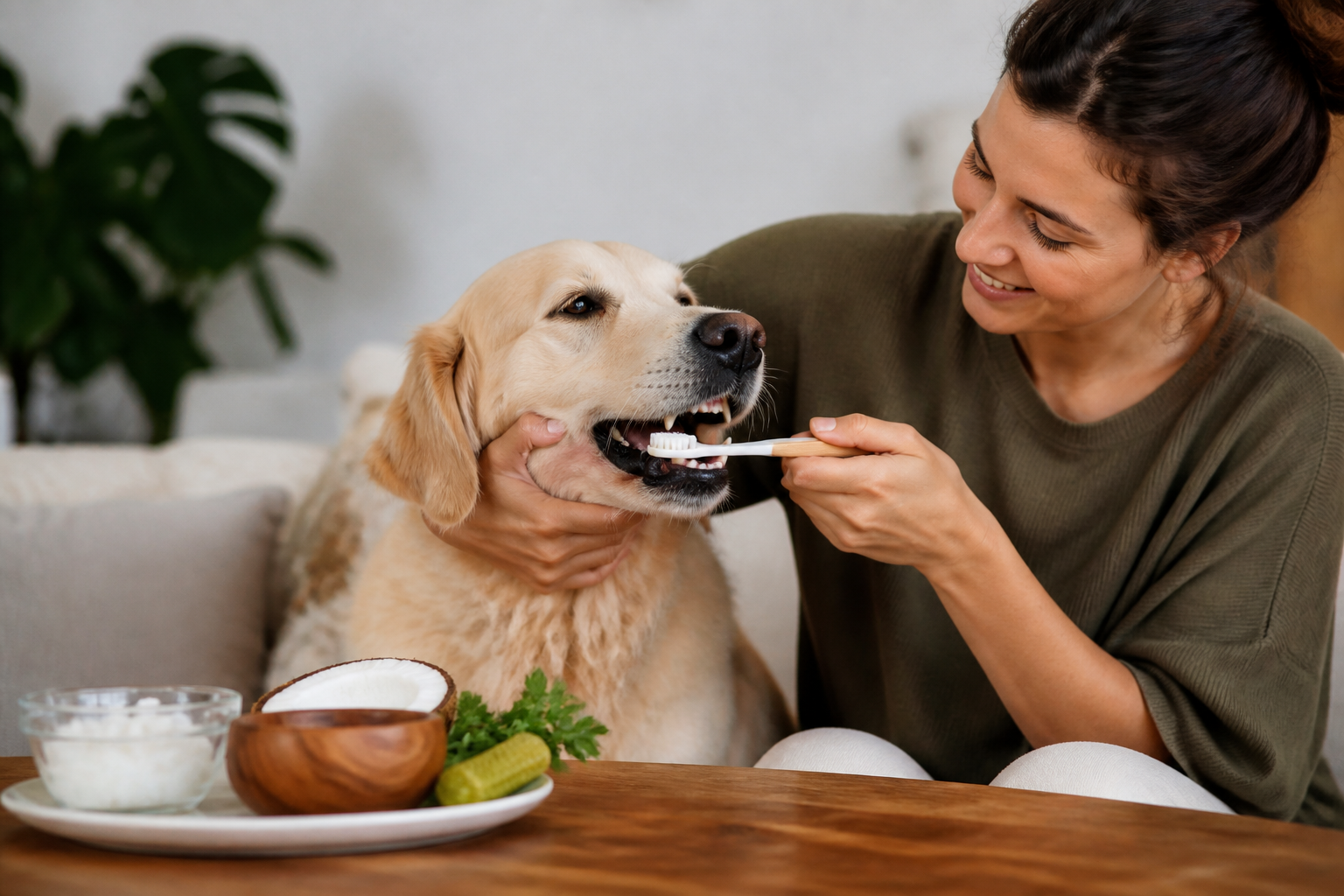
You are relaxing on the sofa when your dog decides it is time for some close-up affection. As they lean in for a lick, you are hit with a scent that is definitely not a bouquet of roses. Bad breath is often the first sign that your dog needs a better dental routine. At BaxterBoo, we know that many dogs view a toothbrush with the same suspicion they reserve for the vacuum cleaner. Brushing is the gold standard, but it is not the only way to maintain a healthy mouth. Natural dental care involves a mix of diet, safe chewing habits, and supplemental tools that work with your dog's biology. This post covers how to keep those pearly whites clean using simple, natural methods. We will help you build a routine that supports your dog's oral health and overall wellness.
The Importance of Natural Dental Care
Pet dental health has changed significantly over the last two decades. We now understand that a clean mouth is about more than just fresh breath. It is a vital part of protecting your dog's internal organs. Bacteria from the mouth can enter the bloodstream through inflamed gums. This can lead to long-term issues with the heart, liver, and kidneys.
Many owners prefer natural methods to avoid synthetic chemicals found in some commercial pastes. Natural care focuses on mechanical cleaning and antibacterial ingredients that occur in nature. It is a preventive approach designed to stop plaque from turning into rock-hard tartar.
Key Takeaway: Oral health is a window into your dog's total body health. Consistent natural cleaning prevents bacteria from migrating to vital organs.
For additional guidance, review our top pet dental care tips.
The Power of Mechanical Cleaning
In the wild, canines do not have toothbrushes. They rely on the mechanical action of chewing to scrape their teeth. You can replicate this at home with specific vegetables and safe chews.
Raw Vegetables as Natural Scrubbers
Crunchy vegetables act like a natural abrasive. When a dog chews a raw carrot, the fibrous texture rubs against the surface of the teeth. This helps lift away food particles and early plaque.
- Carrots: Large, raw carrots are excellent for heavy chewers. They are low in calories and high in Vitamin A.
- Apples: Slices of apple can help scrub the teeth. Always remove the seeds and the core first. Seeds contain small amounts of cyanide and the core is a choking hazard.
- Celery: Many dogs enjoy the crunch of celery. The long fibers can act somewhat like natural dental floss.
The Myth of Dry Kibble
There is a common belief that dry food keeps teeth clean. The idea is that the hard nuggets scrape away plaque. However, most dogs swallow kibble whole or shatter it easily. Most kibble is also high in carbohydrates. These starches can actually stick to the teeth and encourage bacterial growth. Do not rely on standard dry food as your only dental tool.
You can explore our dog treats selection for additional chew and treat options.
Using Coconut Oil as a Natural Toothpaste
If you want to try brushing but want to avoid commercial products, coconut oil is a fantastic alternative. It has natural antibacterial and antifungal properties thanks to its high lauric acid content.
Most dogs love the taste of coconut oil. This makes the cleaning process much easier because they see it as a treat. You can use a soft-bristle brush designed for dogs or even a clean piece of gauze wrapped around your finger.
Step 1: Get the right oil. / Use organic, cold-pressed, unrefined coconut oil.
Step 2: Start slow. / Let your dog lick a small amount of oil off your finger to build a positive association.
Step 3: Apply to the gums. / Use your finger or a brush to gently rub the oil onto the teeth and along the gum line.
Step 4: Focus on the back. / The molars in the back of the mouth usually have the most buildup.
Vet Tip: While coconut oil is healthy, it is also high in fat. If your dog is prone to pancreatitis or is on a strict weight-management plan, consult your veterinarian before adding it to their routine.
For dogs that resist brushing, our dog dental care collection includes brushes, gels, wipes, and other oral-care options.
Safe Natural Chews for Tartar Control
Chewing is a natural instinct for dogs. It provides mental stimulation and keeps teeth clean through abrasion. However, not all chews are created equal.
All-Natural Animal Parts
Specific animal-based chews are effective for scraping teeth.
- Bully Sticks: These are 100 percent beef muscle. They are long-lasting and soften slightly as the dog chews, allowing them to wrap around the teeth for a better clean.
- Beef Collagen Sticks: These are a safer alternative to rawhide. They are highly digestible and provide a tough texture that helps manage plaque.
- Yak Cheese Chews: These hard blocks are made from yak and cow milk. They are very durable and require significant chewing, which is great for dental health.
A specific option is the Barkworthies Odor-Free Double Cut Bully Stick, which is made from beef and designed for long-lasting chewing.
The Debate Over Raw Bones
Raw bones are often cited as the ultimate natural toothbrush. The act of gnawing on a raw bone can peel back tartar effectively. However, you must follow strict safety rules.
- Never feed cooked bones. Cooking makes bones brittle. They can splinter and cause internal punctures or blockages.
- Size matters. The bone should be larger than your dog's mouth so they cannot swallow it whole.
- Supervise always. Watch your dog while they chew to ensure they do not break off large chunks.
- Avoid weight-bearing bones. The leg bones of large animals like cows are extremely hard. They can actually fracture a dog's teeth.
Bottom line: Natural chews provide the mechanical action needed to scrape teeth, but safety and supervision are mandatory to prevent injuries.
For a dairy-based chew option, consider the Himalayan Long-Lasting Dog Chew - Original Cheese, and always supervise your dog while chewing.
Water Additives and Natural Supplements
Sometimes the best way to clean a dog's teeth is through their water bowl. Some natural water additives use enzymes or ingredients like green tea extract to break down the biofilm on teeth. This biofilm is the sticky layer where bacteria live.
There are also seaweed-based supplements that you can sprinkle on your dog's food. Certain types of brown algae have been shown to change the chemistry of the dog's saliva. This makes it harder for plaque to stick to the teeth. Look for products that carry the VOHC (Veterinary Oral Health Council) seal for the best results.
OxyFresh Pet Dental Water Additive is one brushless option that can be added to your dog's water bowl.
Recognizing the Signs of Dental Disease
Even with the best natural routine, some dogs are genetically predisposed to dental issues. Smaller breeds, for instance, often have crowded teeth that trap food more easily. You need to know when natural methods are not enough and a vet visit is required.
Watch for these warning signs:
- Red, swollen, or bleeding gums.
- Extreme bad breath that does not go away after a chew.
- Yellow or brown crust along the gum line (tartar).
- Dropping food or whining while eating.
- Pawing at the face or mouth.
- Loose or missing teeth.
If you see these symptoms, your dog may already have periodontal disease. At this stage, a professional cleaning is necessary. Our pharmacy at BaxterBoo works in partnership with Pet's Choice to provide FDA-approved medications and prescription diets. If your veterinarian prescribes a specific dental diet or an antibiotic for a mouth infection, our pet pharmacy can help fulfill those needs.
Quick Answer: Natural methods are best for preventing plaque. If your dog already has thick, brown tartar or bleeding gums, they need a professional veterinary cleaning to prevent pain and infection.
For more information about warning signs, read what to do when your dog has damaged teeth.
Creating a Sustainable Dental Routine
Consistency is the most important part of any dental plan. You do not need to do everything every day. Instead, rotate your methods to keep your dog interested and ensure all parts of the mouth are reached.
Sample Weekly Schedule
- Monday: A session of "brushing" with coconut oil.
- Tuesday: A large raw carrot as an afternoon snack.
- Wednesday: A long-lasting chew like a bully stick or yak cheese.
- Thursday: Water additive added to the fresh water bowl.
- Friday: Slices of apple and a quick gum massage.
- Saturday: A durable rubber toy, like a Kong, stuffed with a healthy spread.
- Sunday: A thorough mouth check to look for any redness or new buildup.
By varying the activities, you address plaque through different textures and methods. This multi-pronged approach is much more effective than relying on a single treat or tool.
Training Your Dog to Accept Mouth Handling
The biggest barrier to natural dental care is a dog that will not let you touch their mouth. You can fix this with positive reinforcement.
Start by simply touching your dog's muzzle while they are relaxed. Give them a small, high-value treat immediately. Once they are comfortable with that, try lifting their lip for one second. Reward again. Gradually work your way up to rubbing their teeth with your bare finger. This process might take a few weeks. Do not rush it. The goal is to make dental time a positive experience rather than a struggle.
For more ideas on building cooperation, read how to introduce your dog to regular dental checks.
Tips for Success
- Keep sessions very short (under two minutes).
- Always end on a positive note.
- Use a calm, quiet voice.
- Perform the routine when the dog is already a bit tired, like after a long walk.
Conclusion
Cleaning your dog's teeth naturally is an achievable goal that pays off in the long run. By using a combination of fibrous vegetables, antibacterial coconut oil, and safe mechanical chews, you can significantly reduce plaque buildup. Remember that these methods are preventive. Regular checks with your veterinarian remain a cornerstone of good care. If your pet ever requires specialized dental diets or medications, we are here to support you. We carry over 500 trusted brands and offer a full-service pharmacy to help manage your dog's health at every stage of life.
- Build a routine that includes both diet and mechanical cleaning.
- Use coconut oil as a safe, tasty alternative to human toothpaste.
- Monitor your dog's mouth weekly for signs of redness or tartar.
- Consult your vet if you notice bleeding or difficulty eating.
Key Takeaway: A proactive, natural approach to dental care can extend your dog's life and keep them more comfortable. Start small, stay consistent, and use high-quality tools to protect their smile.
For more tools to support your dog's oral health, browse our Dental Care section. You can also sign up for our Autoship programme to ensure you never run out of your favorite dental chews and additives.
FAQ
Can I use human toothpaste on my dog if it is all-natural?
No, you should never use human toothpaste on a dog. Even natural human versions often contain xylitol, which is a sweetener that is highly toxic to dogs. Human toothpaste also contains foaming agents that are not meant to be swallowed and can cause severe stomach upset. Stick to coconut oil or pastes specifically formulated for canines.
How often should I use natural methods to clean my dog's teeth?
For the best results, you should aim for some form of dental care every day. This does not mean you have to brush every day. You can rotate between giving a dental chew, adding a supplement to their water, or offering crunchy vegetables. Consistency is what prevents plaque from mineralizing into tartar.
Are raw bones safe for every dog's teeth?
Raw bones are not suitable for every dog. Very aggressive chewers may bite down too hard and fracture their teeth on dense bones. Dogs with existing dental disease or weakened enamel should also avoid hard bones. Always supervise your dog with any bone and choose a size appropriate for their breed.
Does green tea extract really help with dog breath?
Yes, many natural water additives and sprays use green tea extract because it contains polyphenols. These compounds help reduce the growth of bacteria that cause bad breath and plaque. It is a gentle, natural way to improve oral hygiene without using harsh chemicals or alcohols that can dry out the mouth.






