
 Save 15% on your 1st Autoship learn more

 Email us
 Live Chat
 FAQs
FAQs





Introduction
Many dog owners know the struggle of trying to brush a pet’s teeth when they simply want no part of it. Stinky breath and yellowing teeth are common concerns that we hear about at BaxterBoo, and finding a natural way to manage oral hygiene can make the process much less stressful. Coconut oil has gained popularity as a simple, pantry-stable option for supporting a cleaner mouth and fresher breath. This post covers the science behind using coconut oil, the most effective application methods, and how to safely integrate it into your dog’s daily life. We want to help you build a routine that works for your dog’s specific needs while keeping their overall wellness in mind. By the end of this guide, you will have a clear plan for using coconut oil to support your dog’s dental health.
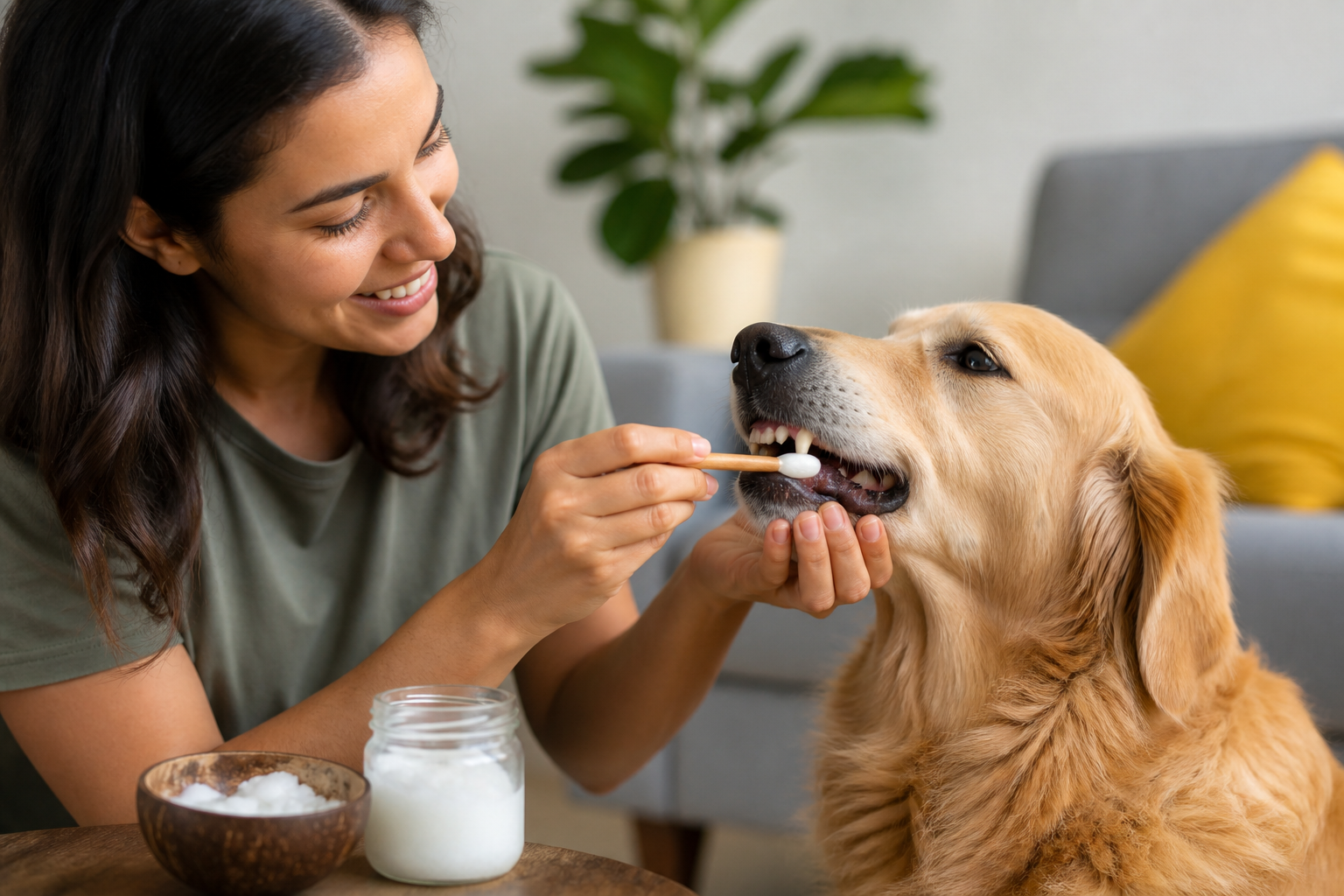
Quick Answer: You can clean a dog’s teeth with coconut oil by applying a small amount to a soft toothbrush or your finger and gently rubbing it along the gumline. The lauric acid in the oil helps manage bacteria that cause plaque and bad breath. For best results, use unrefined, virgin coconut oil and introduce it slowly to avoid digestive upset.
Why Coconut Oil Works for Canine Dental Health
The primary reason coconut oil is effective for dental care is its high concentration of lauric acid. This is a medium-chain fatty acid that possesses natural antimicrobial and antibacterial properties. When applied to the teeth and gums, it works to disrupt the buildup of harmful bacteria that live in the mouth. These bacteria are the main culprits behind the development of plaque and the persistent odor known as dog breath.
Regular use of coconut oil can help create an environment in the mouth that is less hospitable to these microbes. While it is not a magic solution that removes thick layers of hardened tartar, it is an excellent preventative tool. It helps keep the surfaces of the teeth smoother and the gums more comfortable. For dogs with mild gum redness, the soothing nature of the oil can also provide some relief during the cleaning process.
It is important to remember that oral health is linked to the rest of the body. A clean mouth reduces the burden on the immune system and supports heart and kidney health as the dog ages. Using a natural fat like coconut oil is a practical way to provide this support without introducing artificial flavors or harsh chemicals that some dogs find off-putting.
Key Takeaway: Lauric acid in coconut oil acts as a natural antimicrobial agent that helps reduce oral bacteria and supports healthier gums.
Choosing the Best Coconut Oil for Your Dog
Not all jars of coconut oil are created equal when it comes to your pet's health. When you are standing in the grocery aisle or shopping online, you will likely see terms like refined, unrefined, virgin, and cold-pressed. For dental use, the quality of the oil directly impacts how well it works.
We recommend choosing unrefined or virgin coconut oil. Refined coconut oil often undergoes heavy processing, which can involve high heat and chemical deodorizers. This process can strip away the beneficial lauric acid and other nutrients that make the oil effective. Unrefined oil is extracted from fresh coconut meat and retains its natural scent, flavor, and chemical profile.
Cold-pressed is another term to look for. This indicates that the oil was extracted without high heat, further preserving its integrity. Always check the ingredient label to ensure there are no added sugars, preservatives, or xylitol. Xylitol is a sweetener often found in human products that is highly toxic to dogs. A short ingredient list that contains only pure coconut oil is always the safest bet.
What to Look For on the Label
- Virgin or Unrefined: This ensures the oil still contains its natural antimicrobial properties.
- Cold-Pressed: This extraction method keeps the nutrients intact.
- Organic: This reduces the risk of pesticide residues.
- No Additives: Avoid anything with flavorings or sweeteners.
Step-by-Step: How to Clean Your Dog’s Teeth with Coconut Oil
Cleaning a dog’s teeth is often more about the technique than the tool. If your dog is not used to having their mouth touched, you should start slowly. The goal is to make the experience positive so they do not hide when the jar comes out.
Step 1: Introduce the taste. / Place a tiny amount of coconut oil on your finger and let your dog lick it off. Most dogs love the taste, which helps them associate the oil with a treat rather than a chore.
Step 2: Start with finger rubbing. / Once they like the taste, put a small amount of oil on your fingertip. Gently lift their lip and rub the oil along the outer surface of the teeth and the gumline. Focus on the back molars where plaque tends to hide.
Step 3: Introduce a tool. / If your dog is comfortable with your finger, move to a soft silicone finger brush or a pet-specific toothbrush. Apply the coconut oil to the bristles. Use small, circular motions to spread the oil across all tooth surfaces.
Step 4: Keep sessions short. / You do not need to spend ten minutes on this. A quick thirty-second pass over the teeth a few times a week is much more effective than a long session that stresses the dog out.
Vet Tip: If your dog has red, bleeding, or swollen gums, consult your veterinarian before starting a brushing routine. Brushing inflamed tissue can be painful and may require medical treatment first.
Mixing Coconut Oil into Dog Food for Dental Benefits
If your dog absolutely refuses to let you touch their mouth, you can still gain some benefits by adding coconut oil to their meals. While topical application is better for direct plaque control, ingesting small amounts of the oil supports systemic health. This includes skin, coat, and cognitive support.
When the oil is mixed into food, it still comes into contact with the oral cavity as the dog eats. It can help coat the teeth and provide a mild antibacterial effect. This is a great alternative for senior dogs or rescues that may have past trauma associated with handling.
Start with a very small amount to avoid upsetting their stomach. A good rule of thumb is a quarter teaspoon for small dogs and up to one tablespoon for very large dogs. Consistency is key here. Adding it to their bowl daily or every other day allows the benefits to accumulate over time.
Bottom line: Adding coconut oil to food provides systemic health benefits and a mild oral antimicrobial effect for dogs that resist manual brushing.
Understanding the Risks and Safety Precautions
While coconut oil is generally safe, it is still a fat. This means it must be used with caution in certain situations. The most common side effect of too much coconut oil is digestive upset. This usually manifests as loose stools or diarrhea. Always start with a tiny amount and watch your dog for any changes in their bathroom habits.
Weight gain is another consideration. Coconut oil is calorie-dense. If you are adding it to your dog’s diet regularly, you may need to slightly adjust their portions of regular food to keep them at a healthy weight. This is especially important for breeds prone to obesity.
For dogs with a history of pancreatitis, coconut oil may not be appropriate. High-fat additions can trigger a flare-up of this painful condition. Dogs with chronic digestive issues or those on a strictly managed low-fat diet should have their veterinarian approve the use of coconut oil before you start.
Vet Tip: Always consult your vet before adding any fat-based supplement to your dog's diet, especially if they have a history of pancreatitis or are prone to weight gain.
Building a Complete Dental Care Routine
Coconut oil is a fantastic tool, but it works best as part of a broader strategy. Just as humans use floss, mouthwash, and toothpaste, dogs benefit from a multi-pronged approach to oral hygiene.
One of the best ways to supplement coconut oil cleaning is with physical scraping. This is achieved through dental chews and toys. We carry a wide variety of options that are designed to mechanically rub away plaque as the dog chews. Products from brands like Greenies or Whimzees are shaped specifically to reach into the crevices of the teeth.
Rope toys and rubber chew toys like those from Kong can also help. As the dog gnaws on these surfaces, the fibers and textures act like natural dental floss. We find that combining a coconut oil rub with regular access to high-quality chew toys provides a much more thorough cleaning than using oil alone.
- Daily: Add a small amount of coconut oil to food or use it for a quick finger rub.
- Weekly: Use a toothbrush with coconut oil for a deeper clean.
- Daily/Ongoing: Provide dental chews or hard rubber toys to encourage chewing.
- Annual: Schedule a professional dental exam with your veterinarian.
When to See a Veterinarian
Home care is intended for prevention and maintenance. It cannot replace professional medical intervention when a serious problem exists. If you notice that your dog’s breath is foul enough to fill a room, or if they are dropping food while eating, there may be an underlying issue.
Advanced periodontal disease involves bacteria getting under the gumline where a toothbrush or coconut oil cannot reach. This can lead to tooth root abscesses and systemic infections. If your dog has loose teeth, heavy brown tartar buildup, or significant gum recession, they need a professional cleaning.
Our pet pharmacy carries FDA-approved medications that your vet might prescribe for dental infections or oral pain. We also offer prescription dental diets, like those from Royal Canin or Farmina Vet Life, which are formulated with specific kibble sizes and nutrients to manage dental disease. These items require a prescription, so your vet will need to determine if they are the right fit for your dog’s health plan.
Key Takeaway: Home dental care is for prevention, but existing dental disease requires a veterinary diagnosis and potentially professional cleaning or prescription treatment.
Choosing Other Dental Support Products
Beyond coconut oil, we have carefully selected many products to help you maintain your dog’s smile. For owners who want a mess-free option, dental sprays and water additives can be helpful. These products often contain enzymes that help break down the protein film that leads to plaque.
If your dog loves to chew, look for natural options like bully sticks or certain dehydrated treats. Brands like RedBarn and Real Meat Co offer treats that satisfy the urge to chew while providing some dental benefits. Always supervise your dog when they are enjoying hard chews to ensure they do not swallow large pieces or break a tooth.
Using our Autoship program is a great way to ensure you never run out of your dog’s favorite dental supplies. You can set up recurring deliveries for treats, toys, and even supplements. This saves you time and ensures that your dog's dental routine stays consistent, which is the most important factor in long-term oral health.
Conclusion
Cleaning your dog’s teeth with coconut oil is a practical, natural, and cost-effective way to support their oral hygiene. By using the antimicrobial power of lauric acid, you can help manage plaque and keep their breath smelling much better. Remember to choose high-quality, unrefined oil and introduce it slowly to your dog’s routine. While it is a great tool for daily maintenance, it works best when paired with dental chews and regular veterinary check-ups. Our team at BaxterBoo is here to help you find the right supplies to make dental care a simple part of your life. Whether you need a new toothbrush, a bag of dental treats, or help with a prescription diet through our pharmacy, we have the expertise to guide you.
Bottom line: Consistent use of coconut oil combined with mechanical chewing is the most effective natural way to maintain your dog's dental health at home.
FAQ
Can I use the same coconut oil I use for cooking on my dog's teeth?
Yes, as long as it is pure coconut oil with no additives or seasonings. It is best to choose an unrefined, virgin, and organic variety to ensure it contains the maximum amount of beneficial lauric acid. Avoid any products that contain xylitol or added flavors, as these can be dangerous or irritating to your dog.
How often should I clean my dog's teeth with coconut oil?
For the best results, aim for at least two to three times per week. If your dog enjoys the process and their digestion handles the oil well, you can move to a daily routine. Consistency is more important than the length of each session, so even a quick thirty-second application can be very helpful over time.
Will coconut oil remove existing tartar from my dog's teeth?
Coconut oil is excellent for preventing new plaque from forming and for managing bacteria, but it generally cannot remove thick, hardened tartar. Once plaque mineralizes into tartar, it usually requires professional scaling by a veterinarian. Think of coconut oil as a preventative maintenance tool rather than a cure for advanced dental disease.
Is coconut oil safe for all dog breeds?
Most dogs handle coconut oil well, but those with a history of pancreatitis or those who are overweight should use it with caution. Because it is high in fat, it can cause digestive upset if introduced too quickly or in large amounts. It is always a good idea to check with your vet if your dog has specific health conditions or is on a restricted diet.






