
 Save 15% on your 1st Autoship learn more

 Email us
 Live Chat
 FAQs
FAQs





Introduction
You are leaning in for a "good dog" snuggle when you catch a whiff of something decidedly unpleasant. That stale, metallic scent is often the first sign of plaque buildup. It is a moment many owners recognize, yet few feel prepared to handle at home. At BaxterBoo, we know that looking at a set of dental tools can feel intimidating when you are trying to navigate a wiggly dog. This guide covers everything from choosing the right brushes to the specific techniques that keep your pet’s mouth healthy. We will explain how to use these tools effectively and when it is time to put the brush down and call a professional. Developing a solid home care routine is the most effective way to ensure your dog stays comfortable and avoids painful dental issues.
The Essential Dental Toolkit for Dogs
Cleaning a dog’s mouth requires a specialized kit. You cannot simply grab a spare human toothbrush and a tube of minty paste from your bathroom cabinet. Human products are not designed for the unique anatomy and behavior of a dog. For example, human toothpaste contains fluoride and foaming agents like sodium lauryl sulfate. These are toxic when swallowed. Since dogs cannot "spit," everything you put in their mouth ends up in their stomach.
The right toolkit starts with an enzymatic toothpaste. These pastes use specific enzymes to break down organic matter and food particles even after you stop brushing. Most come in flavors like poultry, beef, or peanut butter to make the experience more like a treat than a chore. A pet-safe option is Virbac C.E.T. Enzymatic Pet Toothpaste for Dogs and Cats, available in a poultry flavor.
When it comes to the actual cleaning tool, you have several options:
- Dual-Ended Toothbrushes: These have a large head for the big molars and a smaller head for the tiny front teeth. The long, angled handle helps you reach the very back of the mouth where tartar likes to hide.
- Finger Brushes: These are silicone or rubber caps that slip over your pointer finger. They provide more control and allow you to feel exactly where you are brushing. This is a great choice for dogs that are nervous about a long plastic stick in their mouth.
- Dental Wipes: These are pre-moistened pads designed to be rubbed over the teeth. While they do not reach deep into the crevices like bristles, they are excellent for removing surface slime and plaque.
- Gauze Sponges: A simple piece of medical gauze wrapped around your finger can act as a gentle abrasive.
Quick Answer: The best dental tools for dogs include enzymatic toothpaste and a soft-bristled pet toothbrush or finger brush. Never use human toothpaste or metal scrapers at home, as these can be toxic or cause permanent damage to the tooth enamel.
Why You Should Avoid Metal Dental Scalers
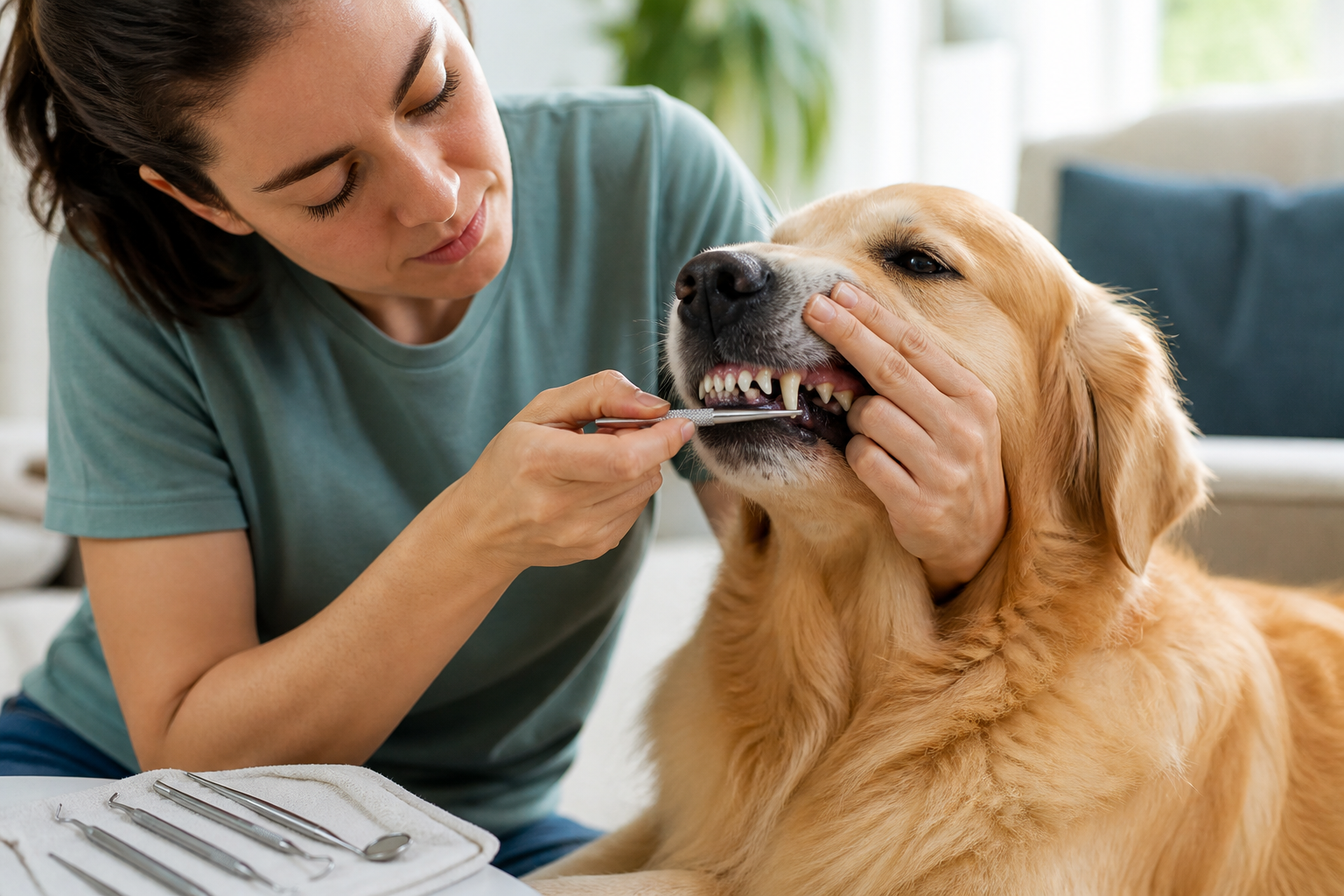
It is tempting to look at a metal scaler or scraper and think you can simply "pop" that brown tartar off your dog's teeth. This is a common mistake that can lead to serious oral health problems. Professional veterinary dental cleanings use these tools under controlled conditions, usually while the dog is under anesthesia.
Using a metal scaler at home is risky for several reasons. First, any metal instrument used on enamel creates microscopic scratches. These tiny grooves actually provide more surface area for bacteria to cling to, which means plaque will return faster and more aggressively. Professional cleanings always end with a polishing step to smooth these scratches, something you cannot do effectively at home.
Second, if your dog flinches or moves suddenly while a sharp metal tool is in their mouth, you can easily slice their gums or puncture the soft tissue under the tongue. Finally, scraping only addresses the tartar you can see. The most dangerous bacteria live below the gumline where you cannot reach with a hand tool.
Vet Tip: If you notice hard, brown, or grey deposits that do not come off with a brush, do not try to scrape them. This is tartar, which has mineralized. Schedule a professional cleaning with your veterinarian to have this removed safely under anesthesia.
Preparing Your Dog for the Process
You cannot expect a dog to sit still for a full cleaning if they have never had their mouth handled. The goal is to build a positive association with the tools and the process. This takes patience and a slow approach.
Start by simply lifting your dog's lips. Touch their teeth and gums with your bare finger for a few seconds, then immediately provide a high-value treat. Repeat this over several days until they are completely relaxed when you handle their mouth.
Next, introduce the toothpaste. Put a small amount on your finger and let them lick it off. Because it is flavored like food, most dogs will see this as a snack. Once they like the taste, rub a bit of the paste onto their canines using your finger. This introduces the sensation of something being applied to the teeth.
Finally, show them the brush. Let them sniff it and lick the paste off the bristles. Do not try to brush yet. You want them to think the brush is just a delivery system for a tasty treat.
Key Takeaway: Desensitization is the secret to a successful dental routine. By rewarding your dog at every small step, you transform a potentially scary event into a bonding experience that they will eventually tolerate or even enjoy.
Step-by-Step Brushing Technique
Once your dog is comfortable with the tools, you can move on to the actual cleaning. You do not need to clean the inside surfaces of the teeth (the side facing the tongue). A dog’s tongue is quite abrasive and does a decent job of keeping those surfaces clean. Focus your energy on the outside surfaces facing the cheeks and lips.
Step 1: Position yourself. / It often helps to have your dog sit in a corner or have their back against you so they cannot back away. Small dogs can be held in your lap.
Step 2: Apply the paste. / Use a generous amount of enzymatic toothpaste on your brush or finger cap. You do not need to wet the brush unless the paste is very thick.
Step 3: Lift the lip. / Use your non-dominant hand to gently pull the upper lip upward. Start with the large canine teeth, as they are the easiest to access.
Step 4: Use a 45-degree angle. / Aim the bristles toward the gumline at a 45-degree angle. This allows the bristles to reach slightly under the edge of the gum where bacteria gather.
Step 5: Move in circles. / Use small, circular motions. You do not need to apply much pressure. A helpful rule is to use about as much pressure as you would use to brush a ripe tomato without breaking the skin.
Step 6: Reach the back. / The most common place for dental disease is the large upper premolars at the very back of the mouth. Slide the brush along the inside of the cheek to reach these areas.
A soft-bristled option such as the Virbac C.E.T. Dual-Ended Pet Toothbrush can help you work across different tooth sizes.
Bottom line: Focus your brushing on the outside of the teeth near the gumline using light pressure and circular motions.
Recognizing the Signs of Dental Disease
Even with the best at-home tools, some dogs are genetically predisposed to dental issues. Smaller breeds like Pugs, Yorkies, and Chihuahuas often have crowded teeth that trap food and bacteria more easily. It is important to know when your home routine is no longer enough.
Bad breath is the most common sign, but you should also look for redness along the gumline. Healthy gums should be a pale pink. If they look bright red or purple where they meet the tooth, this is gingivitis. You might also see flecks of blood on their chew toys or in their water bowl.
If your dog starts dropping food, chewing on only one side of their mouth, or pawing at their face, they might have a fractured tooth or a painful abscess. At this stage, brushing will be painful for them and could make the problem worse by pushing bacteria into the bloodstream.
For more warning signs to watch for, read our guide to recognizing bad teeth in dogs.
Vet Tip: If your dog shows signs of significant pain, loose teeth, or heavy bleeding, stop all home brushing and consult your veterinarian immediately. They may need to prescribe antibiotics or pain relief from our pet pharmacy to manage an infection before any dental work can be done.
Alternatives and Supplements to Manual Brushing
We realize that not every dog will tolerate a toothbrush. If you have a senior dog with existing mouth pain or a particularly head-shy pet, you can still support their oral health using other methods. While these are not as effective as a manual brush, they are significantly better than doing nothing.
Dental chews are a popular option. When choosing a chew, look for the Veterinary Oral Health Council (VOHC) seal. This seal means the product has been scientifically tested to reduce plaque or tartar. Brands like Greenies offer specific textures designed to scrub the teeth as the dog bites down. You can browse our selection of Greenies products for dental chew options.
Water additives are another "hands-off" tool. These are tasteless liquids you add to your dog's water bowl. They contain enzymes or mild antiseptics that help break down the biofilm of bacteria in the mouth. This is particularly helpful for dogs that drink a lot of water throughout the day. The dental and breath care collection includes water additives and other oral-care products.
For dogs with severe or chronic dental issues, your veterinarian might recommend a prescription dental diet. These kibbles are much larger than standard food and are designed not to shatter when bitten. Instead, the tooth sinks into the kibble, which acts like a squeegee to wipe the surface of the enamel. Our pharmacy at BaxterBoo carries various prescription diets, such as Farmina Vet Life, through our partnership with Pet's Choice for owners who have a valid veterinary prescription.
Key Takeaway: While brushing is the "gold standard," dental chews, water additives, and specialized diets can provide a secondary line of defense against plaque and tartar.
Establishing a Long-Term Routine
Consistency is more important than duration. Brushing for thirty seconds every single day is much more effective than doing a deep clean once a month. Plaque begins to mineralize into hard tartar in as little as 24 to 48 hours. Once that tartar forms, it cannot be brushed away.
Try to link brushing to an existing habit. For many owners, doing it right after the final evening walk or right before bed works best. Keep your tools in a visible place so you do not forget. If you regularly reorder toothpaste or other repeat-use supplies, our Autoship programme can help simplify the routine.
If your dog is resistant, start with just one or two teeth per session. There is no rule saying you have to do the whole mouth at once. You can do the right side in the morning and the left side in the evening. As long as the brush makes contact with the teeth and the enzymatic paste is applied, you are making progress.
We also recommend taking a "before" photo of your dog's teeth. Every few months, take another photo to track changes. This helps you notice if a particular area is being neglected or if redness is starting to develop in a specific spot.
Bottom line: A daily thirty-second brushing session is the most effective way to prevent tartar buildup and keep your dog's breath fresh.
The Role of Professional Care
It is a common myth that home brushing replaces the need for a vet. In reality, home care is what happens between professional cleanings to make those cleanings easier and less frequent. Even a human who brushes and flosses twice a day still needs to visit the dentist for a professional cleaning.
During a professional cleaning, your vet can take dental X-rays. This is the only way to see what is happening beneath the gumline and inside the tooth roots. Many dogs suffer in silence with "hidden" pain from rotted roots that look perfectly fine from the outside.
A professional cleaning at the clinic involves ultrasonic scaling to remove tartar and a thorough polish to protect the enamel. If your dog has underlying health conditions like heart or kidney issues, managing their dental health is even more critical, as oral bacteria can travel through the blood and damage these organs.
If your vet discovers an infection or chronic periodontal disease, they may provide a prescription for specialized care. We can help fulfill those needs through our pharmacy, ensuring your dog gets the FDA-approved medications or prescription foods they need to recover.
Vet Tip: Think of home brushing as "preventative maintenance" and professional cleanings as "restorative care." You need both to ensure your dog lives a long, pain-free life.
Conclusion
Cleaning your dog's teeth with the right dental tools does not have to be a stressful event. By choosing pet-safe enzymatic pastes and soft-bristled brushes, you are already halfway to a healthier mouth for your companion. Remember to move slowly, use plenty of positive reinforcement, and never use metal scrapers or human products. While home care is vital, it works best as a partnership with your veterinarian. If you notice signs of pain or advanced decay, seek professional help and check our BaxterBoo pharmacy for any prescription support your vet recommends. Start with just one tooth tonight and build the habit that will keep your dog's tail wagging for years to come.
- Choose a pet-safe enzymatic toothpaste in a flavor your dog enjoys.
- Introduce the tools slowly over several days to build trust.
- Brush at a 45-degree angle toward the gumline using circular motions.
- Avoid metal scalers and human toothpaste to prevent injury or toxicity.
- Supplement your routine with VOHC-approved dental chews and water additives.
Bottom line: Consistent at-home dental care using the right tools is the best way to prevent dental disease and reduce the frequency of professional cleanings.
FAQ
Can I use a regular human toothbrush on my dog?
While a very soft-bristled baby toothbrush can work for small dogs, it is generally better to use a pet-specific brush. Dog toothbrushes are shaped to reach the unique angles of a canine's mouth and often have longer handles to keep your fingers safe. If you choose a human brush, ensure the bristles are "extra soft" to avoid damaging their delicate gum tissue.
How often should I realistically brush my dog's teeth?
The gold standard for oral health is once per day, as plaque begins to harden into tartar within 24 to 48 hours. If daily brushing is not possible, aim for at least three times a week to see a significant benefit. Brushing less than once a week provides very little benefit because the plaque will have already mineralized into tartar.
What should I do if my dog's gums bleed during brushing?
A small amount of spotting can be normal if you are just starting a routine and your dog has mild gingivitis. However, if the bleeding is heavy or persistent, it is a sign of advanced gum disease or that you are brushing too hard. Stop brushing and consult your veterinarian to ensure there isn't a more serious infection or a broken tooth causing the bleeding.
Is there a way to clean my dog's teeth if they won't let me brush?
If your dog absolutely refuses a brush, you can use dental wipes or even a piece of gauze to rub the surfaces of the teeth. Combining these with VOHC-approved dental chews, water additives, and a dental-specific diet can help manage plaque. For pets with severe behavioral or physical barriers to brushing, talk to your vet about professional options and prescription oral health products available through our pharmacy.






