
 Save 15% on your 1st Autoship learn more

 Email us
 Live Chat
 FAQs
FAQs





Introduction
You are relaxing on the couch when your dog leans in for a close-up greeting. Instead of the usual warmth, you are hit with a wave of breath so strong it makes you recoil. Many of us assume "doggy breath" is just a fact of life for pet owners. In reality, that scent is often the first sign of plaque buildup and potential gum disease. At BaxterBoo, we talk to owners every day who want to protect their dogs from dental pain but feel intimidated by the thought of a toothbrush.
Brushing your dog’s teeth is the single most effective way to prevent periodontal disease and avoid costly veterinary bills later. It might feel like a chore at first, but with the right tools and a gentle approach, it can become a simple part of your daily routine. This guide covers everything from choosing the right enzymatic toothpaste to mastering the 45 degree angle technique. We will help you turn a stressful task into a bonding moment that extends your dog's life.
Why Brushing Is Necessary for Canine Wellness
Dental care is not just about keeping teeth white or breath fresh. It is a critical component of systemic health. When a dog eats, a film of bacteria called plaque begins to form on the surface of the teeth. If that plaque is not disturbed, it reacts with minerals in the saliva. Within 24 to 48 hours, it hardens into tartar, also known as calculus.
Once plaque becomes tartar, a toothbrush can no longer remove it. Tartar provides a rough surface where more bacteria can thrive, eventually leading to inflammation of the gums. This is called gingivitis. If left untreated, the bacteria can enter the bloodstream through the sensitive gum tissue. This allows it to travel to major organs like the heart, liver, and kidneys, where it can cause significant damage over time.
Quick Answer: To clean a dog's teeth, use a pet-specific toothbrush and enzymatic toothpaste at a 45 degree angle to the gum line. Focus on the outside surfaces of the teeth using gentle circular motions for about 30 to 60 seconds.
For more warning signs to watch for, read about bad teeth in dogs and what to do.
Choosing the Right Dental Tools
You should never reach for the toothbrush and toothpaste sitting on your bathroom counter. Human products are designed for people who know how to spit. Dogs swallow everything you put in their mouths, and human toothpaste often contains ingredients that are toxic to them.
Selecting a Safe Toothpaste
Most human toothpastes contain fluoride and sodium lauryl sulfate, which can cause upset stomachs in dogs. Even more dangerous is xylitol, a common artificial sweetener in human oral care products that is highly toxic to canines.
Pet-specific toothpaste is usually enzymatic. This means it contains enzymes that help break down plaque chemically even after you stop brushing. These pastes come in flavors dogs actually enjoy, such as poultry, beef, malt, or peanut butter. This turns the cleaning process into a treat rather than a punishment.
You can browse our dog dental care collection for pet toothpaste, brushes, wipes, and other oral-care supplies.
Finding the Best Toothbrush
The size of your dog and their comfort level with mouth handling will determine which brush works best. We carry a wide variety of options at BaxterBoo to suit every pup.
- Finger Brushes: These are small rubber or silicone caps with soft bristles that fit over your index finger. They are excellent for puppies or dogs who are nervous about having a long plastic stick in their mouth.
- Dual-Headed Brushes: These have a large brush on one end and a smaller one on the other. They allow you to reach the tiny incisors in the front and the large molars in the back with ease.
- 360-Degree Brushes: These feature bristles all the way around the head, making it easier to clean multiple surfaces of the tooth at once.
- Pediatric Human Brushes: In a pinch, a very soft-bristled toothbrush designed for human infants can work for small dogs.
For a specific option, consider the Pure and Natural Pet Organic Dental Solutions Bamboo Dog Toothbrush.
Key Takeaway: Always use enzymatic toothpaste formulated specifically for pets to avoid toxicity risks and to let the enzymes continue cleaning after the session ends.
Training Your Dog to Accept the Toothbrush
If you try to brush every tooth on the first day, your dog will likely struggle and try to hide the next time the brush comes out. Success depends on a slow, multi-stage introduction over at least one week.
Phase 1: The Flavor Test
Start by putting a small amount of flavored toothpaste on your finger. Let your dog lick it off. Do this for two or three days without even mentioning a toothbrush. You want them to associate the smell and taste of the paste with a positive experience.
Phase 2: Mouth Handling
Once they love the taste, start gently lifting their lips. Rub your finger along their gums and teeth while they lick the paste. Keep these sessions very short, perhaps only 15 seconds. Follow every session with plenty of praise or a small dental-friendly treat.
Phase 3: Introducing the Brush
Apply a small amount of paste to the toothbrush and let them lick it off the bristles. This gets them used to the texture of the brush. If they seem comfortable, try brushing just the two large canine teeth in the front using a very light touch.
For additional guidance, review these pet dental care tips for introducing brushing.
Vet Tip: If your dog shows signs of aggression, such as growling or snapping, stop immediately. Consult a professional trainer or your veterinarian to discuss alternative dental care options like water additives or prescription diets.
How to Clean Dogs Teeth with Toothbrush Technique
When your dog is finally ready for a full cleaning, your goal is efficiency and gentleness. You do not need to spend two minutes brushing like a human does. Thirty to sixty seconds for the whole mouth is usually sufficient.
Step 1: Position Yourself Correctly
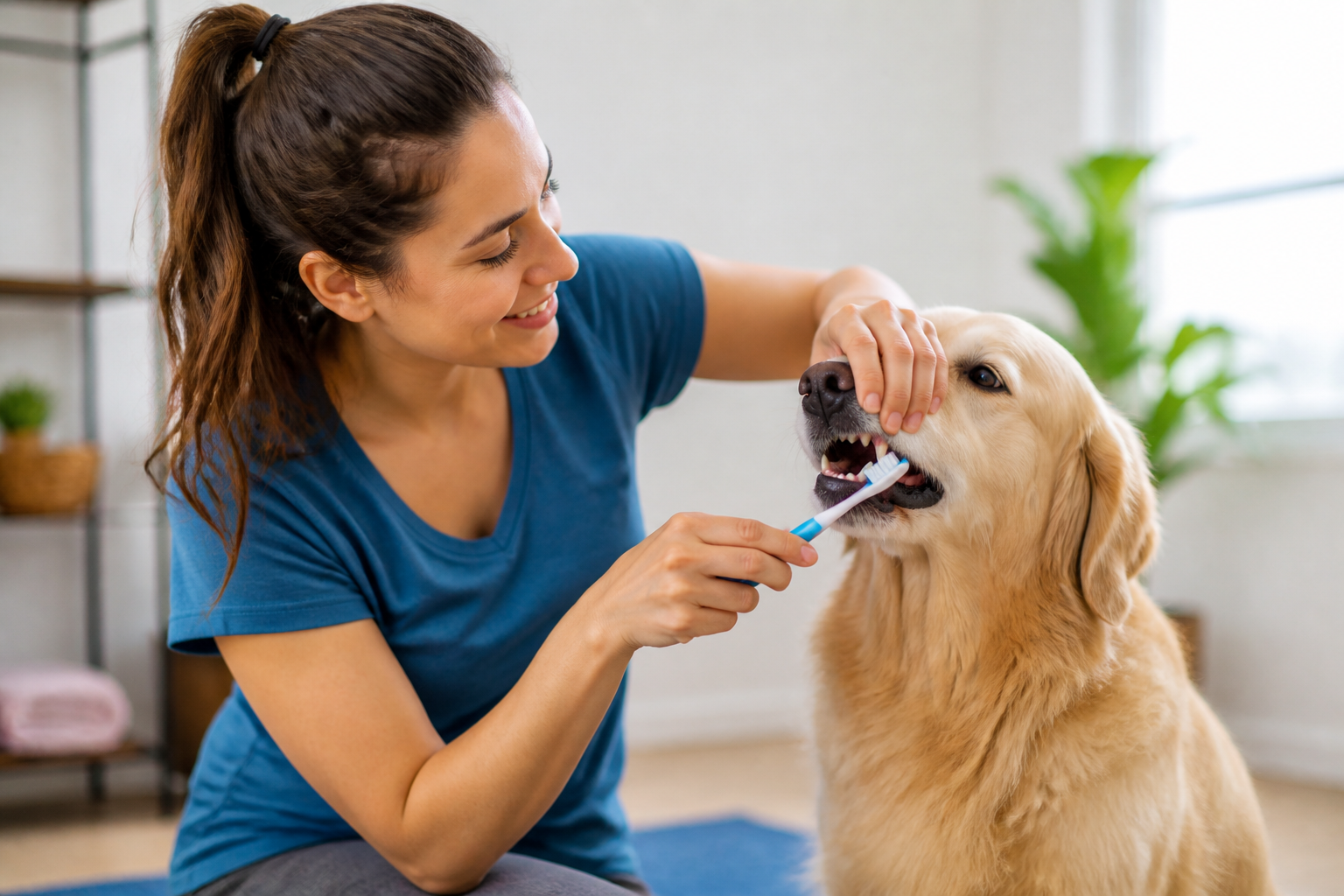
Do not stand over your dog in a dominant way, as this can be intimidating. Sit at their level or have them sit beside you. If you have a small dog, you can hold them in your lap.
Step 2: Lift and Angle
Gently lift the upper lip to expose the teeth. Hold the brush at a 45 degree angle so the bristles can reach the gum line. This is where most plaque accumulates and where periodontal disease starts.
Step 3: Use Circular Motions
Move the brush in small, gentle circles. Focus on the area where the tooth meets the gum. You do not need to apply heavy pressure. The bristles should do the work.
Step 4: Focus on the Outside
You do not need to worry about the inside surfaces of the teeth near the tongue. A dog's rough tongue naturally cleans those surfaces. Focus 95 percent of your effort on the cheek side of the teeth, where tartar is most likely to build up.
Step 5: Reach the Back Molars
The most common place for dental problems is the large premolars and molars at the very back of the mouth. Slide the brush back under the cheek to reach these areas. This is often where owners miss the most buildup.
Bottom line: Focus your brushing efforts on the outside surfaces of the upper back molars, as these are the most prone to heavy tartar accumulation.
Troubleshooting Common Dental Issues
Even with the best intentions, you might run into a few hurdles. Knowing how to handle these situations will keep your dog's oral health on track.
Bleeding Gums
If you see a small amount of pink on the toothbrush, do not panic. This usually indicates mild gingivitis, meaning the gums are inflamed because they have not been cleaned regularly. Continue brushing gently. If the bleeding is heavy or does not improve after a week of daily brushing, it is time for a vet visit.
Refusal to Cooperate
Some dogs simply never get used to a traditional brush. If your dog is head-shy, try using a soft microfiber cloth wrapped around your finger. This is less intrusive and still provides enough friction to remove plaque.
Existing Tartar
If you look at your dog's teeth and see thick, brown or orange "stones" stuck to the surface, you cannot brush that away. Brushing over heavy tartar can actually be painful for the dog because the tartar pushes against the gums. In this case, you need a professional cleaning before you can start a home maintenance routine.
Supporting Oral Health Between Brushing
While daily brushing is the gold standard, other products can help keep the mouth clean between sessions. Using a multi-pronged approach is often the best way to manage stubborn bad breath.
Dental Chews and Treats
Specific chews are designed with textures that scrub the teeth as the dog bites down. Look for products that have the Veterinary Oral Health Council (VOHC) seal of approval. This ensures the product has been tested and proven to reduce plaque or tartar. Be mindful of calories, as some dental treats can be quite rich.
For supplemental care between brushing sessions, explore our dental chews and treats for dogs.
Water Additives
These are tasteless liquids you add to your dog's water bowl. They contain enzymes or ingredients that help kill bacteria in the mouth. While they are not a replacement for the mechanical action of brushing, they are a great supplemental tool for dogs that are difficult to handle.
Dental Diets
Our pharmacy partnership with Pet's Choice allows us to provide prescription dental diets for dogs with chronic oral health issues. These kibbles are usually larger and designed not to shatter immediately when bitten. This forces the dog to chew more, which provides a natural cleaning effect. Our pharmacy team can help you fulfill these prescriptions once your veterinarian determines they are necessary.
- Check for the VOHC seal on all treats.
- Monitor your dog while they enjoy chews to prevent choking.
- Avoid hard bones or antlers that can fracture teeth.
- Replace your dog's toothbrush every three months.
Caring for Senior Dogs and Puppies
The age of your dog changes how you approach dental care. Puppies have deciduous teeth that will eventually fall out, but starting a brushing routine early makes them much more compliant as adults. It is about the habit, not just the cleanliness of the temporary teeth.
Senior dogs often have existing dental sensitivity or missing teeth. You must be extra gentle with an older dog. They may have receding gum lines that expose sensitive roots. For seniors, a very soft finger brush or a dental gel that does not require heavy scrubbing might be more comfortable.
If your senior dog suddenly stops eating or starts dropping food, they might have a fractured tooth or an abscess. These are painful conditions that require immediate veterinary intervention.
Professional Cleanings and the Role of the Vet
Even the most diligent brushers will eventually need a professional cleaning. Just like humans who brush twice a day still need to see a dentist, dogs have hard-to-reach areas where tartar can hide.
A professional cleaning involves scaling the teeth above and below the gum line while the dog is under anesthesia. This allows the vet to take X-rays and identify problems with the roots that are not visible to the naked eye. Brushing at home extends the time between these professional cleanings and ensures that when the vet does go in, the mouth is in much better shape.
Our pharmacy can assist with any medications your vet might prescribe after a dental procedure, such as antibiotics or pain relief. Through our partnership with Pet's Choice, we make it easy to get FDA-approved medications delivered right to your door.
Vet Tip: Schedule a dental checkup at least once a year. If your dog has foul breath, loose teeth, or significant discoloration, do not wait for the annual exam. These can be signs of infection that require professional care.
Conclusion
Cleaning your dog's teeth with a toothbrush is a commitment that pays dividends in the form of a healthier, happier pet. By starting slowly, using the right enzymatic toothpaste, and focusing on the gum line, you can prevent the progression of periodontal disease. Remember to keep sessions positive and reward your dog for their cooperation.
At BaxterBoo, we have been helping pet owners find the best dental supplies since 2006. From flavored pastes to specialized brushes, we have the tools you need to keep those pearly whites shining. If you are ready to start a routine, consider signing up for our Autoship program to ensure you never run out of toothpaste or fresh brushes.
- Use pet-safe enzymatic toothpaste.
- Brush at a 45 degree angle.
- Focus on the outside of the teeth.
- Maintain a consistent daily schedule.
Key Takeaway: Consistent daily brushing is the most effective way to prevent plaque from hardening into tartar and to protect your dog's long-term organ health.
FAQ
How often should I realistically brush my dog's teeth?
Ideally, you should brush your dog's teeth every single day. Plaque begins to harden into tartar within 24 to 48 hours, so daily cleaning is the only way to prevent buildup entirely. If your schedule is tight, aim for at least three times per week to provide a basic level of protection.
Can I use baking soda instead of dog toothpaste?
No, it is best to avoid using baking soda. It has a very high sodium content that can upset your dog's stomach or cause an electrolyte imbalance if swallowed in large amounts. Additionally, most dogs dislike the salty taste, which can make them resist the brushing process in the future.
Why do my dog's gums bleed a little bit during brushing?
Minor bleeding is often a sign of early gingivitis or gum inflammation. It means there is bacteria along the gum line that needs to be cleaned away. Continue to brush gently with a soft brush, and the bleeding should stop as the gums become healthier. If the bleeding is heavy or persistent, you should consult your veterinarian.
What should I do if my dog refuses the toothbrush entirely?
If your dog will not tolerate a brush, try using a dental wipe or a piece of clean gauze wrapped around your finger. You can also look into dental gels that you simply smear on the teeth, which rely on enzymes to break down plaque. Supplement these efforts with VOHC-approved dental chews and water additives to maximize oral hygiene.






