
 Save 15% on your 1st Autoship learn more

 Email us
 Live Chat
 FAQs
FAQs





Introduction
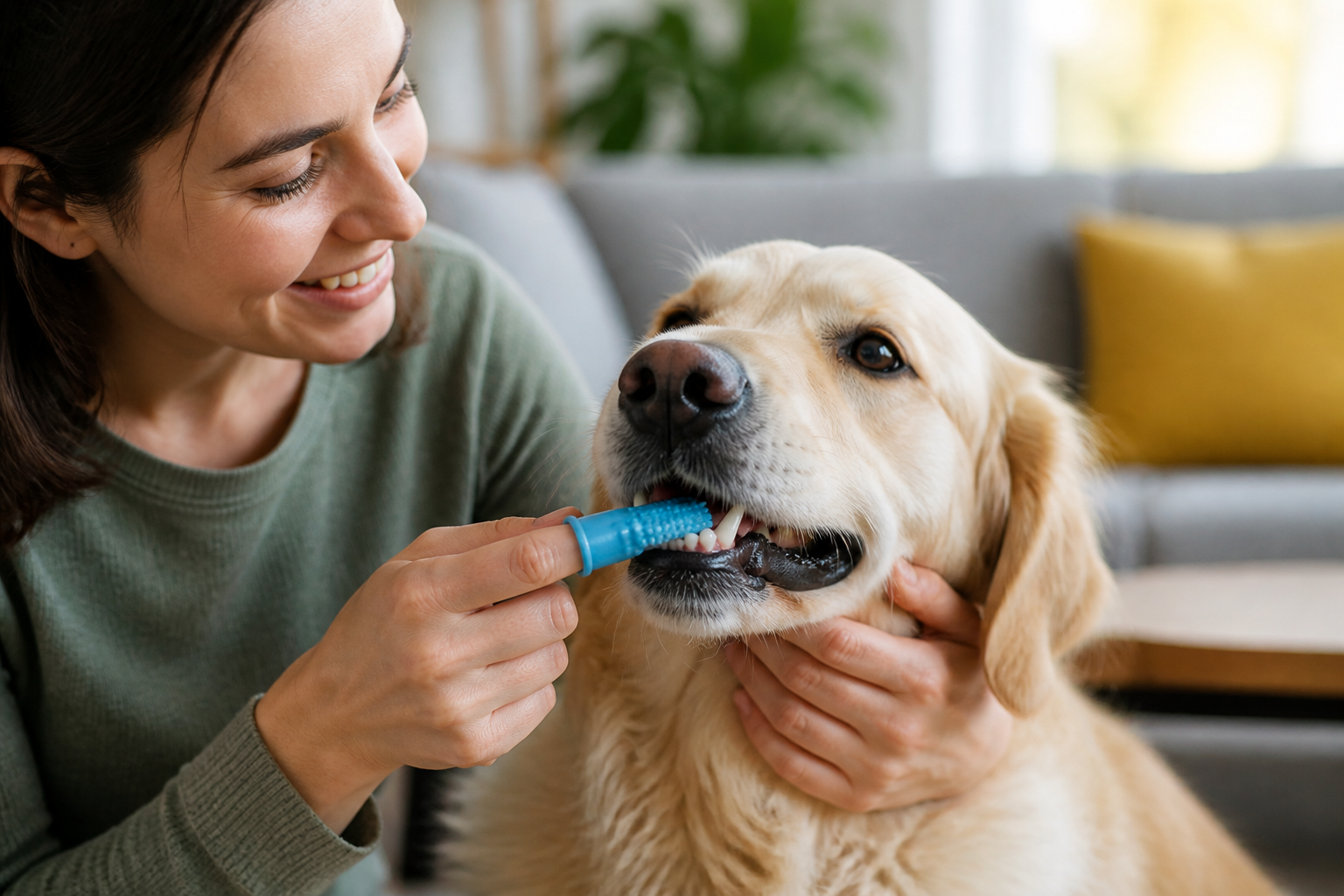
You lean in for a pup kiss and notice it. The scent is no longer just "dog breath" but something much sharper and more unpleasant. When you lift your dog's lip, you see a thick layer of yellow-brown buildup along the gumline. For many owners, the immediate worry is the vet visit. We often hear from customers at BaxterBoo who are concerned about the risks of anesthesia, especially for senior pets or those with underlying health issues. While a professional dental cleaning under anesthesia is the only way to treat advanced disease, there are many proactive steps you can take at home to manage oral hygiene. This article covers the most effective mechanical, systemic, and dietary methods to keep your dog's mouth healthy. Our goal is to help you build a routine that minimizes the need for surgical interventions through consistent, everyday care.
Quick Answer: You can clean a dog's teeth without surgery by using a combination of VOHC-approved dental chews, water additives, and systemic supplements like seaweed powder. These methods work by mechanically scraping plaque or chemically softening tartar before it hardens into permanent buildup.
The Difference Between Plaque and Tartar
To understand how to clean teeth without surgery, you first need to understand what you are fighting. It starts with plaque. This is a soft, sticky film of bacteria that forms on the teeth within hours of eating. At this stage, plaque is very easy to remove. Simple mechanical action, like chewing a toy or a firm treat, can rub it away.
If plaque is left alone for more than 48 hours, it begins to mineralize. It reacts with the minerals in your dog's saliva and hardens into tartar, also known as calculus. Tartar is like concrete for the teeth. Once it has formed, it is almost impossible to remove with a brush or a chew. This is why consistency matters more than the specific tool you use. If you miss a few days, you are essentially allowing that plaque to turn into a permanent fixture that only a professional scaler can remove.
Key Takeaway: Plaque is a soft film that you can manage at home, but tartar is a hard mineral deposit that usually requires professional equipment. The secret to avoiding surgery is preventing plaque from ever turning into tartar.
Why the VOHC Seal Matters
When you walk down the dental aisle of a pet store, almost every package makes big claims. Some say they "whiten teeth" while others promise "fresh breath." As pet owners, it is hard to know which products actually work and which are just fancy treats. This is where the Veterinary Oral Health Council comes in.
The VOHC is an independent organization of veterinary dentists. They do not manufacture products. Instead, they set strict protocols for clinical trials. A brand must prove through scientific testing that its product significantly reduces plaque or tartar to earn the VOHC Seal of Acceptance. At BaxterBoo, we always recommend looking for this seal on dental treats and additives. It is the only way to be sure a product has been held to a high standard of proof rather than just marketing fluff.
Vet Tip: Always check the back of your dental treat packaging for the VOHC Seal. If a product has the seal, it means it has been clinically proven to slow the accumulation of plaque or tartar when used as directed.
Dental Chews and Mechanical Cleaning
Chewing is a natural behavior for dogs, but it is also one of the best ways to keep their teeth clean. When a dog chews on a specifically designed dental treat, the texture of the treat acts like a squeegee. As the tooth sinks into the treat, the material rubs against the surface of the tooth all the way down to the gumline.
Brands like Greenies have become staples for a reason. Their texture is flexible enough to allow the tooth to penetrate, which provides a larger surface area of cleaning. Other options like those from Royal Canin or various dental bones use a specific density to ensure the dog has to chew several times before swallowing.
Choosing the Right Size
One common mistake is giving a chew that is too small. If your dog can swallow a dental treat in two bites, it is not doing its job. The mechanical cleaning happens during the repetitive gnawing action. Always choose a size that forces your dog to use their back molars to break it down.
Monitoring Calorie Intake
Dental treats are effective, but they are also food. If you are giving a daily dental chew, you may need to slightly reduce your dog's meal portions. Keeping your dog at a healthy weight is just as important for their longevity as their dental health.
Water Additives and Oral Rinses
For dogs that are extremely picky or those that have lost teeth and cannot chew hard treats, water additives are a great alternative. These are liquid solutions that you pour into your dog's water bowl. They typically contain enzymes or antibacterial agents that help break down the protein chains in plaque.
The benefit here is the lack of "mouth handling." If your dog growls or hides when you try to look at their teeth, an additive allows you to provide care without the stress. While an additive alone is rarely enough to fix a dirty mouth, it is an excellent "layer" of protection. It works in the background every time your dog takes a drink. Products such as Synergy Labs Dental Fresh Water Additive are designed for easy addition to your dog's water bowl.
Key Takeaway: Water additives are the easiest dental care method for "hands-off" owners, but they work best when paired with a mechanical method like a toy or a chew.
Seaweed and Systemic Support
One of the most interesting developments in pet dental care is the use of specific types of seaweed, specifically Ascophyllum nodosum. This is not a mechanical cleaner. Instead, it works systemically. Once the dog eats the seaweed, it is absorbed into the bloodstream and eventually comes out in the saliva.
This seaweed changes the chemistry of the saliva, making it harder for plaque to stick to the teeth. It also helps to soften existing tartar over several weeks. Many owners report that after a month of using a seaweed-based powder, the hard brown tartar on their dog's teeth begins to flake off during normal play or chewing. This is a fantastic option for senior dogs where you want to avoid anesthesia but need to address existing buildup. ProDen PlaqueOff Dental Care Bones use sea kelp in a daily chew format.
The Role of Prescription Dental Diets
Sometimes, the best way to clean a dog's teeth is through the food they eat every single day. Standard kibble often shatters the moment a dog bites it, providing almost no cleaning benefit. However, prescription dental diets are engineered differently.
The kibbles in these diets are much larger than normal food. They are also made with a "matrix" of fibers that do not crumble. When the dog bites down, the kibble stays intact and scrubs the side of the tooth. These diets also often include calcium-chelating agents. These agents grab the calcium in the saliva so it cannot be used to turn plaque into hard tartar.
Our pet pharmacy carries FDA-approved medications and prescription pet foods. If your veterinarian recommends a specific dental diet like those from Farmina Vet Life or Royal Canin, you can often find them through our pharmacy services. These diets require a prescription because they are formulated to manage a specific health condition: periodontal disease.
Vet Tip: If your dog has a history of rapid tartar buildup, ask your vet about a prescription dental diet. These are not ordinary kibbles and can be a core part of a no-surgery dental plan.
Safe Toys for Teeth Cleaning
Not all toys are created equal when it comes to oral health. Some toys are too hard and can actually cause the very surgery you are trying to avoid.
The Kneecap Rule
A good rule of thumb for dog toys is the "kneecap rule." If you wouldn't want to be hit in the kneecap with the toy, it is probably too hard for your dog's teeth. Hard plastic bones, elk antlers, and cow hooves are notorious for causing slab fractures. These fractures are painful and almost always require surgical extraction.
Rubber and Rope
Rubber toys with nubs or ridges are excellent. Brands like Kong make specialized dental toys that have grooves you can fill with pet-safe toothpaste. As the dog licks and chews, the rubber ridges gently massage the gums and scrape the teeth. Rope toys can also act as a natural floss, though you must monitor your dog to ensure they do not swallow the strings.
Natural Alternatives and Raw Vegetables
If you prefer a more natural approach, some vegetables can provide mild cleaning benefits. Raw carrots are a popular choice. They are crunchy, low in calories, and most dogs love the taste. While a carrot will not remove heavy tartar, the firm texture provides some mechanical scrubbing.
Sliced apples (without seeds) and celery can also help. Celery is particularly interesting because it contains a lot of water and its fibrous strings can act as a light abrasive. Just remember that vegetables should be a supplement to a proven dental routine, not the entire plan.
When "No Surgery" Is Not an Option
We all want to avoid putting our pets under anesthesia. However, it is important to be realistic. At-home cleaning methods are preventative. They are designed to keep a healthy mouth healthy. They are not a cure for advanced periodontal disease.
If your dog has any of the following, you must consult a veterinarian:
- Loose or wiggling teeth
- Bleeding or bright red gums
- A "rotten" smell that persists despite cleaning
- Swelling under the eye or along the jawline
- Reluctance to eat or dropping food while chewing
These are signs of infection beneath the gumline. No chew, powder, or water additive can reach the roots of the teeth. If an infection is present, it can lead to heart, kidney, and liver issues as bacteria enter the bloodstream. In these cases, a professional cleaning under anesthesia is a life-saving medical procedure, not just a cosmetic one. For more warning signs, read how to recognize bad teeth in dogs.
Note: At-home dental care is like brushing your teeth. Professional vet cleanings are like going to the dentist for a root canal or deep scaling. One prevents the need for the other, but one cannot replace the other once disease has set in.
Creating a Daily Dental Routine
The reason most dental plans fail is that they are too complicated. To keep your dog's teeth clean without surgery, you need a routine that takes less than two minutes a day.
Step 1: The Daily Base. Add a seaweed-based powder or a VOHC-approved water additive to your dog's breakfast or water bowl. This provides 24-hour chemical protection.
Step 2: The Reward. Give one VOHC-approved dental chew every evening. This provides the mechanical scrubbing needed to remove the day's plaque.
Step 3: The Interaction. Give your dog a rubber dental toy for 15 minutes of active chewing. This targets the back molars that chews sometimes miss.
Step 4: The Inspection. Once a week, lift your dog's lips. Look for changes in gum color or new spots of buildup. Early detection is the best way to avoid the surgeon's table. For additional guidance, review these pet dental care tips.
Comparing Dental Care Methods
| Method | Effort Level | Primary Action | Best For |
|---|---|---|---|
| Dental Chews | Low | Mechanical Scrape | Food-motivated dogs |
| Water Additives | Very Low | Chemical/Enzymatic | Picky or aggressive dogs |
| Seaweed Powder | Very Low | Systemic/Softens Tartar | Senior dogs with buildup |
| Dental Toys | Medium | Mechanical Abrasion | Active chewers |
| Prescription Diet | Low | Mechanical & Chemical | Dogs prone to disease |
| Raw Vegetables | Medium | Mild Mechanical | Weight management |
The Role of Professional Guidance
While we provide the tools at BaxterBoo to support your dog's health, your veterinarian is your best partner. Regular checkups allow a professional to see things you might miss, such as a fractured tooth hidden in the back of the mouth. If your vet does find an issue, our pharmacy is here to help with any prescribed antibiotics or pain management medications your dog might need. Through our pharmacy services, we make it easy to get exactly what your vet ordered delivered to your door.
Bottom line: Consistency is the only way to avoid dental surgery. A mix of mechanical chewing and systemic additives provides the best defense against tartar.
Final Steps for Oral Health
Taking care of your dog's teeth does not have to be a source of stress. By focusing on plaque prevention today, you are investing in a pain-free future for your pet. Remember that every dog is different. A routine that works for a young Labrador might not be enough for a senior Chihuahua. Start with one or two methods and watch how your dog's breath and teeth respond.
If you are looking for the best products to start your journey, explore our dog dental care category. For those managing ongoing health needs, our pharmacy offers a wide range of prescription supports. We also recommend our Autoship programme for dental treats. It ensures you never run out, which is key to maintaining that 48-hour window of plaque removal.
FAQ
Can I use human toothpaste on my dog's teeth?
No, you should never use human toothpaste for a dog. Human toothpaste often contains xylitol, which is highly toxic to dogs even in small amounts, and fluoride, which can be harmful if swallowed. Dog-specific toothpastes are flavored like poultry or beef and are designed to be safely swallowed.
How long does it take to see results from no-surgery dental methods?
You will typically notice a difference in your dog's breath within one to two weeks of consistent care. For physical changes like the softening of tartar or the reduction of plaque, it generally takes four to eight weeks. Consistency is the most important factor in seeing these long-term results.
Are bones safe for cleaning a dog's teeth?
Natural raw bones can provide cleaning benefits, but they carry risks like bacterial contamination and potential blockages. Cooked bones should always be avoided as they splinter easily. For the safest mechanical cleaning, stick to VOHC-approved dental chews or firm rubber toys designed for oral health.
Is bad breath in dogs always a sign of dental problems?
While dental disease is the most common cause of bad breath, it is not the only one. Persistent foul odors can also be linked to digestive issues, kidney disease, or dietary choices. If your dog's breath does not improve after a month of a solid dental routine, it is time to visit the vet for a full health screening.






