
 Save 15% on your 1st Autoship learn more

 Email us
 Live Chat
 FAQs
FAQs





Introduction
You lean in for a happy morning cuddle, but your dog’s breath stops you in your tracks. It is a common moment that many pet owners recognize. We often notice the smell first, but bad breath is usually a sign of bacteria and plaque buildup. At BaxterBoo, we see dental health as a vital part of your dog’s overall wellness. It affects their comfort, their ability to eat, and even their long-term heart and kidney health. This guide provides practical steps to help you manage your dog's oral hygiene from the comfort of your living room. We will cover the best tools to use, how to handle a reluctant pet, and when it is time to call the veterinarian. Establishing a simple routine now can prevent painful dental issues and expensive procedures later.
Quick Answer: To clean your dog’s teeth at home, use a pet-safe toothbrush and enzymatic toothpaste to brush the outer surfaces daily. Focus on the gum line where plaque accumulates. If brushing is not possible, use dental wipes, water additives, and VOHC-approved dental chews to help reduce bacteria.
Why At-Home Dental Care is Essential
Many pet owners assume that professional cleanings every few years are enough. However, plaque begins to turn into tartar in as little as 48 hours. Plaque is the soft, sticky film of bacteria that forms on the teeth after eating. If you do not remove it through brushing, it reacts with minerals in your dog's saliva. This process creates tartar, which is a hard, brown substance that cements itself to the tooth.
Once tartar forms, you cannot brush it away at home. Only a professional veterinary cleaning under anesthesia can safely remove tartar from below the gum line. Regular home care keeps the plaque at bay and protects the gums from inflammation. Gum disease, or periodontal disease, can lead to tooth loss and systemic infections. By spending a few minutes each day on oral care, you are protecting your dog's entire body.
Key Takeaway: Home dental care is about prevention. Brushing removes plaque before it hardens into tartar, which requires professional veterinary intervention to remove.
Gathering the Right Supplies
Before you begin, you need the right tools for the job. Never use products designed for humans on your dog. Human toothpaste often contains xylitol, which is an artificial sweetener that is highly toxic to dogs. It also contains foaming agents that are meant to be spit out, not swallowed. Dogs will naturally swallow the paste, so they need a formula designed specifically for them.
Selecting a Toothbrush
There are several types of brushes available. The right one depends on your dog’s size and their comfort level with you touching their mouth.
- Standard Pet Toothbrush: These look like human brushes but often have angled heads. They help you reach the back molars more easily.
- Dual-Headed Brush: These have a large brush on one end and a tiny one on the other. They are great for households with multiple dogs of different sizes. A Virbac C.E.T. dual-ended pet toothbrush offers both brush sizes in one tool.
- Finger Brush: This is a small silicone or plastic cap with bristles that fits over your index finger. It provides more control and is less intimidating for many dogs.
- Microfiber Cloths: If your dog refuses a brush entirely, a piece of gauze or a specialized dental microfiber cloth wrapped around your finger can still remove significant plaque.
Choosing the Best Toothpaste
Pet toothpastes come in flavors that dogs actually enjoy. You can find options like poultry, beef, malt, or peanut butter. These flavors make the experience feel like a treat rather than a chore. Most pet toothpastes are enzymatic. This means they contain enzymes that help break down plaque chemically even after you stop brushing. A dog-specific toothpaste is made for your pet’s needs and is non-foaming.
A Step-By-Step Guide to Brushing
If your dog is not used to having their mouth touched, do not expect to brush every tooth on the first day. The goal is to make this a positive experience so they do not hide when they see the toothbrush.
Step 1: Gentle Introduction
Start by simply touching your dog’s muzzle and lifting their lips for a few seconds. Reward them with praise or a small treat immediately. Do this for several days until they are completely relaxed.
Step 2: The Taste Test
Put a small amount of flavored pet toothpaste on your finger. Let your dog lick it off. This helps them associate the paste with a reward. Once they like the taste, rub your finger along their gums and teeth.
Step 3: Introducing the Brush
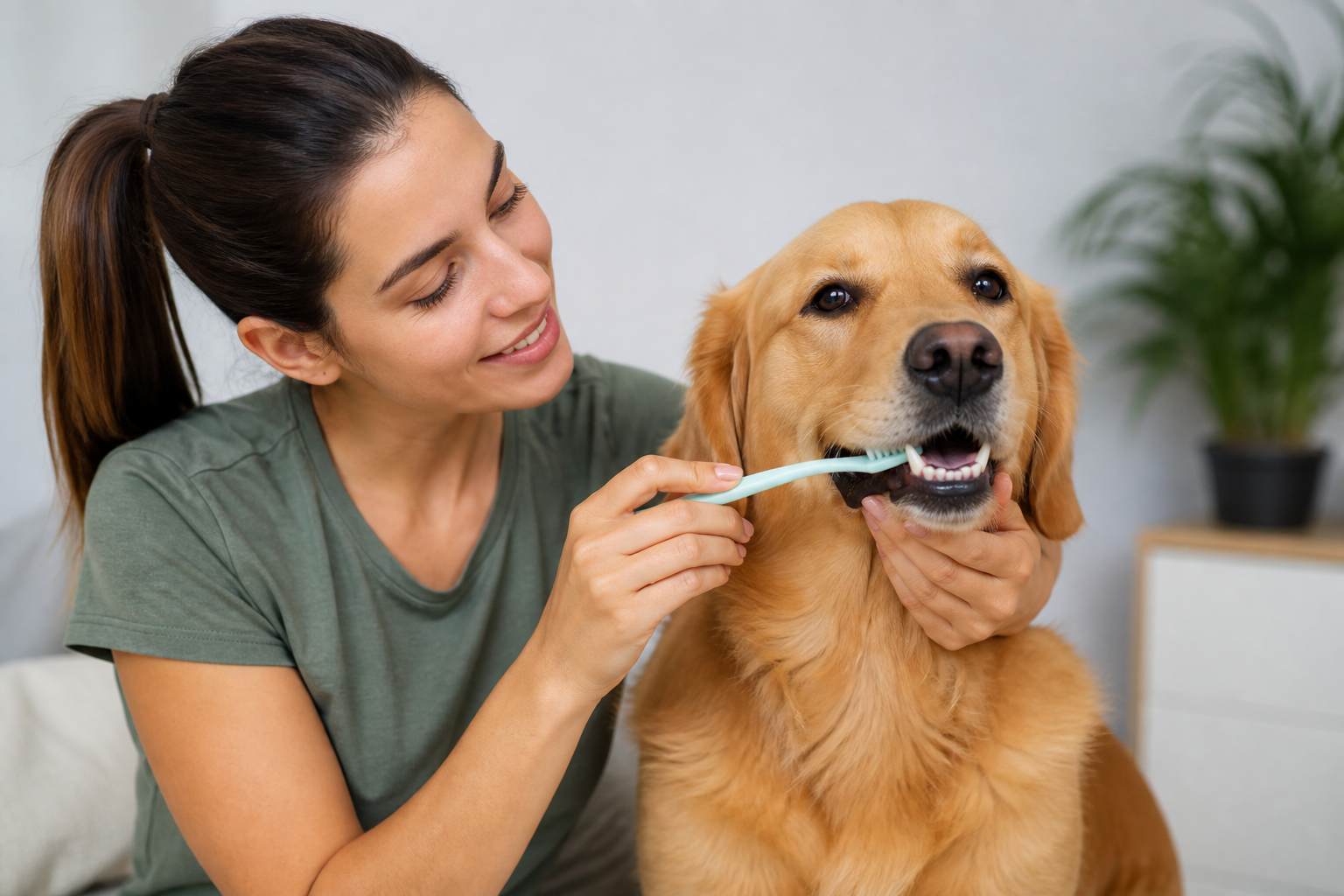
Apply toothpaste to the brush or finger cap. Lift the lip and gently brush the front canine teeth using small circular motions. Focus only on the outside of the teeth. Most plaque accumulates on the side touching the cheek. You do not need to worry about the inside of the teeth. A dog's tongue generally does a good job of keeping the inner surfaces clean.
Step 4: Reaching the Back Molars
Once your dog is comfortable with the front teeth, gradually work your way back. The large molars in the back are where the most tartar usually builds up. Keep these sessions short. Start with 30 seconds and work up to two minutes.
Vet Tip: Always watch for signs of stress or aggression. If your dog growls, snaps, or pulls away forcefully, stop the session. Consult your veterinarian or a professional trainer for guidance on cooperative care techniques.
Alternatives to Brushing
Some dogs simply will not tolerate a toothbrush. While brushing is the most effective method, several alternatives can help maintain oral health. These are also great supplements to use on days when you are too busy for a full brushing session. Browse our dog dental and breath care category for brushes, pastes, wipes, and oral care products.
Dental Chews and Treats
Many treats are specifically designed to scrape plaque off the teeth as the dog chews. Look for products with the Veterinary Oral Health Council (VOHC) seal of approval. This seal ensures the product has been tested and proven to reduce plaque or tartar. At BaxterBoo, we carry a variety of VOHC-approved treats like Greenies and Cosequin dental supplements. Our selection of Greenies products includes dental chews for dogs.
Water Additives and Oral Sprays
These products are essentially a mouthwash for pets. You add a small amount of liquid to their water bowl each day. They contain enzymes or ingredients like chlorhexidine that kill bacteria in the mouth. This helps freshen breath and slows down the formation of plaque. Oral sprays work similarly but are applied directly to the gums.
Dental Wipes
Dental wipes are pre-moistened pads that you wrap around your finger. They are easier to use than a brush and can be very effective at wiping away soft plaque. They are a great middle ground for dogs that are nervous about the texture of bristles. Vet's Best Dental Care Finger Wipes are designed for guided cleaning with your fingers.
| Method | Effectiveness | Ease of Use | Best For |
|---|---|---|---|
| Brushing | Highest | Moderate | Cooperative dogs, maximum prevention |
| Dental Wipes | High | Easy | Dogs sensitive to brushes |
| Dental Chews | Moderate | Very Easy | Daily maintenance and enrichment |
| Water Additives | Low to Moderate | Very Easy | Freshening breath and reducing bacteria |
Recognizing the Signs of Dental Disease
Even with the best home care, some dogs are genetically prone to dental issues. Small breeds, such as Pugs or Chihuahuas, often have crowded teeth that trap food and bacteria more easily. It is important to inspect your dog's mouth weekly for any changes. For more guidance, read these tips for recognizing dental disease in dogs.
Look for these warning signs:
- Persistent bad breath that smells like rot or ammonia.
- Red, swollen, or bleeding gums.
- Yellow or brown crust near the gum line.
- Loose or broken teeth.
- Excessive drooling.
- Loss of appetite or dropping food while eating.
- Pawing at the mouth or face.
If you notice these symptoms, it is time for a professional exam. Home cleaning is a preventative measure. It cannot fix an active infection or a painful tooth.
Vet Tip: If your dog has red gums or visible brown tartar, do not try to scrape it off yourself. You may accidentally damage the enamel or push bacteria deeper into the gums. Schedule a veterinary exam to discuss a professional cleaning.
Professional Care and Prescription Needs
There are times when home care must be supported by clinical intervention. Our pet pharmacy carries a range of FDA-approved products and prescription dental diets through our partnership with Pet's Choice. If your veterinarian identifies significant dental disease, they may prescribe a therapeutic diet. These kibbles are larger and have a specific texture that cleans the tooth as the dog bites down.
Professional cleanings are also a necessary part of a long-term health plan. During these visits, the vet can take X-rays to look for problems under the gum line that the naked eye cannot see. They can also perform scaling and polishing to restore the tooth surface. We recommend discussing your dog's dental grade with your vet during their annual checkup.
Maintaining a Consistent Routine
The key to success is consistency. Brushing once a month does very little to help. Aim for daily brushing, but try for at least three times a week if daily is not possible. Set a specific time for dental care, such as right after your evening walk or before bed.
Link the dental routine to something your dog loves. If they get a favorite toy or a walk immediately after their teeth are cleaned, they will begin to look forward to the process. Be patient with yourself and your pet. It can take several weeks for a dog to become fully comfortable with a toothbrush. BaxterBoo’s top pet dental care tips can help you build a manageable routine.
Bottom line: A few minutes of daily dental care can add years to your dog's life by preventing systemic health issues.
Conclusion
Cleaning your dog’s teeth at home is one of the most impactful things you can do for their long-term health. By starting slowly and using the right pet-safe supplies, you can turn a potential chore into a bonding moment. Remember that while brushing is the gold standard, using dental wipes and VOHC-approved chews provides significant benefits. We are here to support your journey with a wide selection of dental care products. Keeping those pearly whites clean ensures your dog stays happy, comfortable, and ready for all the kisses they want to give.
- Start with a pet-safe enzymatic toothpaste.
- Introduce the brush gradually with plenty of praise.
- Use dental chews and water additives as supplements.
- Schedule annual veterinary dental checkups.
Check out our dental care category to find the right brushes, pastes, and treats for your dog's routine. You can also save on your recurring dental supplies by joining our Autoship programme.
FAQ
Can I use baking soda to clean my dog's teeth?
It is best to avoid using baking soda regularly. While it can help scrub teeth, it has a high salt content that can be harmful if swallowed in large amounts. It also lacks the enzymes found in pet-specific toothpaste that help break down plaque chemically.
How often should I replace my dog's toothbrush?
You should replace your dog's toothbrush every three to four months, just like your own. If the bristles become frayed or if your dog has recently recovered from an oral infection, replace it sooner. Finger brushes should be replaced if the material starts to tear or thin.
My dog's gums bleed a little when I brush. Is this normal?
Minor bleeding can occur if your dog has early-stage gingivitis. This usually means you need to brush more frequently to reduce inflammation. However, if the bleeding is heavy or the gums look very red and angry, stop brushing and consult your veterinarian for an exam.
At what age should I start cleaning my dog's teeth?
You should start a dental routine as soon as your puppy has their permanent teeth, which is usually around six months of age. You can even start earlier with a finger brush and puppy-safe paste to get them used to the sensation. Starting young makes it a much easier habit to maintain throughout their life.






