
 Save 15% on your 1st Autoship learn more

 Email us
 Live Chat
 FAQs
FAQs





Introduction
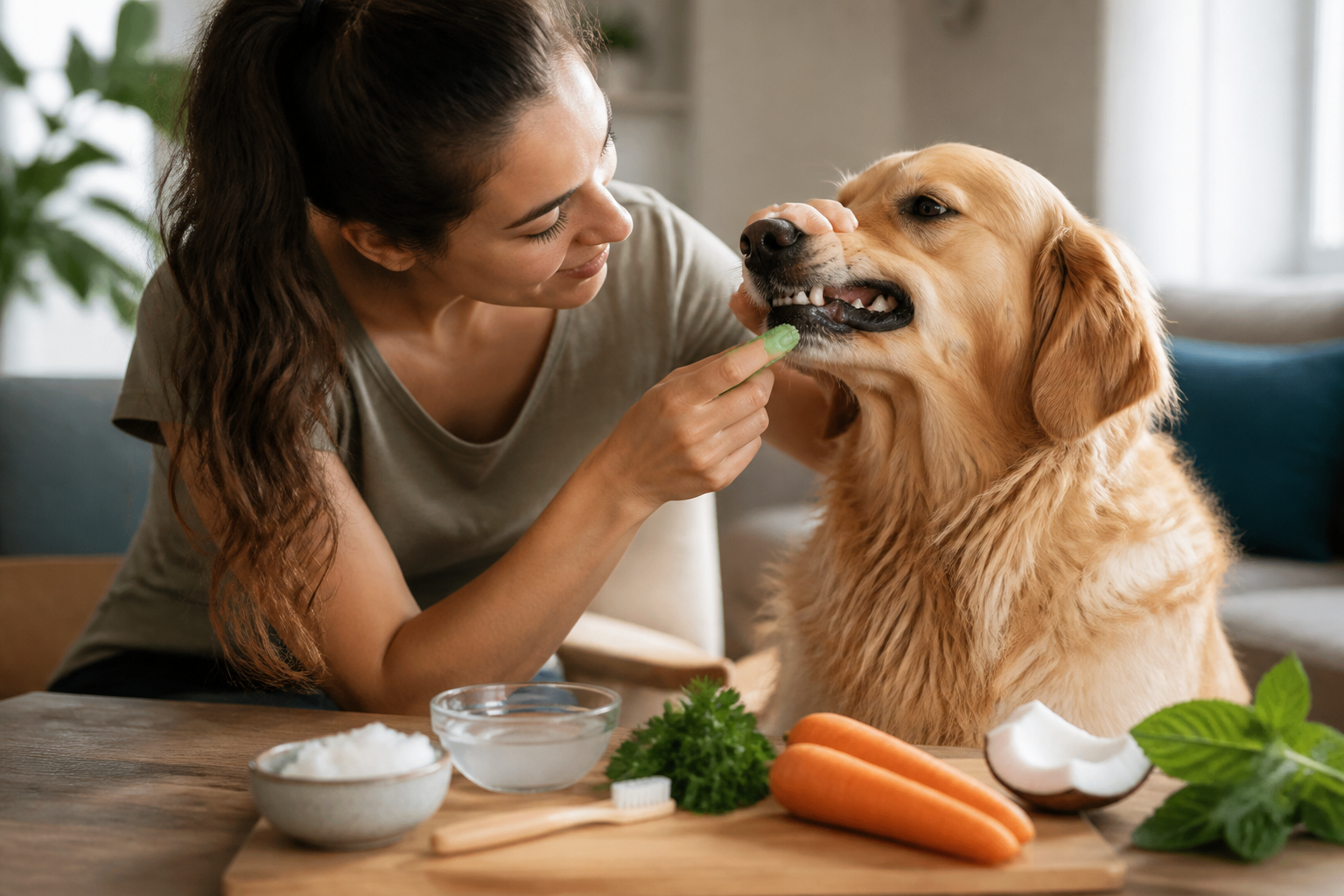
You lean in for a morning snuggle with your dog, but instead of warmth, you are met with a wall of fishy, unpleasant breath. This is the exact moment many pet owners realize that dental hygiene cannot be ignored. While many dogs resist a toothbrush, maintaining oral health is vital for their overall well-being. At BaxterBoo, we believe that dental care should be effective without becoming a daily battle with your pet. This post explores how to support your dog’s oral hygiene using natural methods, supplements, and specific dietary choices. You can manage plaque and keep breath fresh using ingredients found in nature and mechanical cleaning techniques. A consistent daily routine is the best way to prevent dental disease and ensure those morning snuggles stay sweet.
Quick Answer: You can clean a dog's teeth naturally by using seaweed-based supplements like ProDen PlaqueOff Powder Dog and Cat Teeth Care, offering raw vegetables like carrots for mechanical cleaning, and using VOHC-accepted dental chews. These methods work by disrupting plaque biofilm or physically scraping the tooth surface during chewing.
The Difference Between Plaque and Tartar
Understanding the timeline of dental decay helps you choose the right natural cleaning method. Plaque is a sticky, colorless film of bacteria that forms on the teeth within hours of eating. At this stage, plaque is soft. You can remove it relatively easily through mechanical action or systemic supplements.
If plaque stays on the teeth for 24 to 48 hours, it begins to mineralize. It mixes with minerals in your dog's saliva and hardens into tartar, which is also known as calculus. Tartar is the hard, yellow or brown buildup you see at the gumline. Once tartar forms, it is like concrete. Natural home methods cannot remove it. Only a professional cleaning by a veterinarian under anesthesia can safely clear tartar from the teeth and below the gumline.
Focusing on natural care means you are targeting plaque before it becomes a permanent problem. By disrupting the plaque biofilm daily, you prevent the foundation of dental disease from ever taking hold. For additional guidance on warning signs, read our guide to recognizing bad teeth in dogs.
Vet Tip: If your dog already has thick brown buildup or red, bleeding gums, schedule a dental exam with your veterinarian. Natural methods are excellent for prevention but cannot cure active gum disease or remove hardened tartar.
The Power of Seaweed and Systemic Cleaning
One of the most effective natural ways to clean a dog's teeth requires no brushing at all. Certain types of seaweed, specifically the kelp known as Ascophyllum nodosum, have been clinically shown to improve oral health. This is a systemic approach rather than a mechanical one.
When your dog eats a supplement containing this seaweed, the active compounds are absorbed into the bloodstream. They then enter the saliva. These compounds work to break down the bacterial biofilm that allows plaque to stick to the tooth surface. Over time, this makes existing plaque softer and easier to remove. It also prevents new plaque from sticking.
At BaxterBoo, we recommend ProDen PlaqueOff Powder Dog and Cat Teeth Care because it is a 100 percent natural product made from this specific North Atlantic seaweed. It is free from artificial colors, preservatives, and gluten. You simply sprinkle the daily amount onto your dog's food. It is an ideal solution for dogs that become stressed or aggressive when you try to touch their mouths.
Why the VOHC Seal Matters
When looking for natural dental products, you should look for the Veterinary Oral Health Council (VOHC) Seal of Acceptance. This seal is not a marketing gimmick. It is awarded only to products that provide data from controlled clinical trials proving they reduce plaque or tartar by at least 20 percent. ProDen PlaqueOff holds this seal, making it a trusted natural choice for your routine.
Natural Mechanical Cleaning with Vegetables
If your dog loves to chew, you can use that natural instinct to keep their teeth clean. Mechanical cleaning involves physically scraping the surface of the tooth to rub away soft plaque.
Raw carrots are a popular natural tool for this. They are low in calories and high in fiber. When a dog crunches on a large, raw carrot, the firm texture acts like a very mild abrasive. It helps scrub the molars as they chew. Slices of apple (without the seeds or core) can provide a similar benefit.
However, vegetables alone are rarely enough to keep the entire mouth clean. They usually only reach the chewing surfaces of the back teeth. They do little for the canines or the outsides of the front teeth where plaque often builds up. Use vegetables as a healthy supplement to a more robust dental plan.
Key Takeaway: Mechanical cleaning through chewing is most effective when the item is firm enough to scrub the tooth but soft enough to give slightly. Avoid extremely hard items like cooked bones or antlers, which can fracture teeth.
Using Dental Chews and Treats
Not all dental treats are created equal. Many generic treats are high in starch and sugar, which can actually feed the bacteria that cause plaque. To clean teeth naturally, look for chews that use high-quality ingredients and specific textures to clean the teeth.
- Texture: The chew should have a "honeycomb" or fibrous texture that allows the tooth to sink in. This ensures the material rubs against the gumline.
- Ingredients: Look for natural enzymes or seaweed extracts that provide a chemical boost to the physical scrubbing.
- Size: Always choose a chew appropriate for your dog's weight. If the chew is too small, your dog might swallow it whole, which eliminates any dental benefit and creates a choking hazard.
We carry several brands like Ark Naturals and Zesty Paws that focus on functional ingredients to support oral health. These can be given daily to keep the mouth fresh between meals. Explore our dog dental and breath care selection for additional options.
The Role of Water Additives
Water additives are another "no-brush" natural option. These are liquid concentrates that you add to your dog's water bowl. Most natural water additives use enzymes or plant extracts like green tea or peppermint to neutralize odors and kill bacteria in the mouth.
While they are excellent for freshening breath, they are generally less effective at removing existing plaque than powders or chews. Think of a water additive as a mouthwash for your dog. It is a great finishing touch to a dental routine but should not be the only tool you use. You can also review these pet dental care tips for more routine ideas.
Comparing Natural Dental Methods
| Method | Effort Level | How it Works | Best For |
|---|---|---|---|
| Seaweed Powder | Very Low | Systemic (via saliva) | All dogs, especially those who hate handling. |
| Raw Vegetables | Medium | Mechanical (scraping) | Healthy snackers and light chewers. |
| Dental Chews | Low | Mechanical + Enzymatic | Dogs with a high chew drive. |
| Water Additives | Very Low | Antibacterial (rinsing) | Freshening breath and daily maintenance. |
| Dental Wipes | High | Mechanical (manual rub) | Calm dogs and targeted cleaning. |
Recognizing the Signs of Dental Trouble
Before you start a natural cleaning routine, you should assess the current state of your dog's mouth. Dogs are experts at hiding pain. They will often continue to eat even if they have a loose tooth or an abscess.
Check for these red flags:
- The Smell Test: While "dog breath" is normal, a truly foul, rotting, or metallic smell indicates an infection or heavy bacteria.
- Gum Color: Healthy gums should be a vibrant pink. Red, swollen, or bleeding gums are a sign of gingivitis.
- Visual Buildup: Look for tan or brown crusty material near the gumline.
- Behavioral Changes: If your dog drops food, eats on only one side of the mouth, or paws at their face, they may be in pain.
If you notice these signs, our pet pharmacy can help. Through our partnership with Pet's Choice, we offer FDA-approved medications and prescription dental diets like Farmina Vet Life for dogs managing specific health conditions. A prescription diet is often the next logical step when standard over-the-counter options aren't enough to manage rapid plaque buildup.
A Simple Step-By-Step Natural Routine
You do not need to spend an hour every day on your dog's teeth. A successful natural routine is built on small, consistent habits.
Step 1: The Daily Base. / Add a scoop of seaweed powder like ProDen PlaqueOff to your dog's breakfast every single day. This provides the systemic protection needed to keep plaque soft.
Step 2: The Afternoon Crunch. / Give your dog a VOHC-accepted dental chew or a large raw carrot 3 to 4 times a week. This provides the mechanical scrubbing needed for the back molars.
Step 3: The Water Refresh. / Use a natural water additive in their main water bowl to keep breath fresh and reduce bacteria levels throughout the day.
Step 4: The Weekly Check. / Once a week, lift your dog's lips to look at the teeth and gums. This helps you spot any new chips, redness, or buildup before it becomes a crisis.
Bottom line: Consistency is more important than intensity when it comes to natural dental care for dogs.
Why Quality Food Matters
The food your dog eats every day plays a massive role in their oral health. Many people believe that dry kibble cleans teeth naturally because it is crunchy. However, most kibble is small and shatters instantly when a dog bites it. This provides almost no mechanical cleaning.
Some premium brands like Royal Canin or Farmina offer specific dental formulas with larger, specially shaped kibble. These are designed to stay in contact with the tooth longer. Furthermore, high-quality foods avoid unnecessary fillers and sugars that contribute to the "slime" on a dog's teeth. By feeding a clean, nutrient-dense diet, you are giving your dog's immune system the tools it needs to fight off oral infections. Browse our dog food selection when evaluating everyday diet options.
Safety Precautions with Natural Chews
While natural cleaning is the goal, safety must come first. Some items marketed as "natural" for teeth can actually be dangerous.
Avoid cooked bones of any kind. Cooking makes bones brittle, meaning they can splinter and tear the esophagus or stomach. Even raw bones can be problematic if they are too hard. A good rule of thumb is the "knee cap test." If you wouldn't want to be hit in the knee with the object, it is likely too hard for your dog's teeth.
Always supervise your dog when they are working on a new dental chew. If they manage to break off a large chunk, remove it so they do not swallow it whole. This is especially important for "power chewers" who can demolish a standard dental treat in seconds.
Training Your Dog for Mouth Handling
Even if you choose a no-brush natural route, being able to touch your dog's mouth is a vital skill. It makes vet visits easier and allows you to check for injuries.
Start by briefly touching your dog's muzzle while giving them a high-value treat. Gradually move to lifting the lip for one second, then two. Once they are comfortable with this, you can use a dental wipe or a piece of soft gauze to rub the outer surfaces of the teeth. This manual action, combined with a seaweed supplement, provides a very high level of protection against tartar.
The Long-Term Benefits of Dental Care
Investing time in natural dental care pays off in the long run. Dental disease is linked to more serious health issues, including heart, liver, and kidney disease. Bacteria from the mouth can enter the bloodstream through inflamed gums and travel to vital organs.
By keeping the mouth clean, you are not just fixing bad breath. You are extending your dog's life and saving yourself from expensive veterinary surgeries later on. We have seen many owners transform their dog's health simply by adding a daily supplement and better chew options to their routine.
Natural Solutions at BaxterBoo
We have been helping pet owners find the best products since 2006. Our selection is expertly curated by people who actually care about the long-term health of your pets. Whether you are looking for a VOHC-approved powder or a specific dental toy, we offer 500+ trusted brands to choose from.
For those who want to ensure they never run out of dental supplies, our Autoship programme is a great choice. You save on your first order and earn a free MVP Gold membership, which gives you even more rewards on every purchase. Keeping a steady supply of natural dental products ensures you never miss a day of care.
Key Takeaway: Natural dental care is a multi-pronged approach involving systemic supplements, mechanical chewing, and a high-quality diet.
Conclusion
Cleaning your dog's teeth naturally is an achievable goal that does not require a daily struggle with a toothbrush. By combining a seaweed-based supplement like ProDen PlaqueOff with mechanical tools like raw vegetables and dental chews, you can significantly reduce plaque buildup. Remember to watch for signs of gingivitis and consult your veterinarian if you see significant tartar. A clean mouth is a window into your dog's overall health, and a few simple steps each day can make a world of difference. To get started on your natural dental journey, explore our dog healthcare selection for the latest in pet oral health technology.
Bottom line: Start with a daily seaweed supplement and add mechanical chews for the most effective natural dental routine.
FAQ
Can I use human toothpaste to clean my dog's teeth naturally? No, you should never use human toothpaste for dogs. Many human toothpastes contain xylitol, which is a sweetener that is highly toxic to dogs and can be fatal. They also contain foaming agents that can upset a dog's stomach. Always use a dog-specific enzymatic toothpaste or stick to natural supplements and chews.
Do raw carrots actually clean a dog's teeth? Raw carrots provide a mild mechanical cleaning effect. When a dog crunches on a firm, raw carrot, the texture helps scrape away soft plaque from the surface of the teeth. While they are a healthy, low-calorie snack, they are not a replacement for a full dental routine and may not reach the gumline where most bacteria hide.
How often should I give my dog dental chews? Most dental chews are designed to be given once a day for maximum effectiveness. This provides a consistent mechanical scrubbing action to remove the plaque that forms after every meal. Always check the packaging for specific feeding guidelines and ensure you are not over-feeding your dog's daily calorie limit.
Is bad breath in dogs always a sign of dirty teeth? While dental disease is the most common cause of bad breath, it is not the only one. Persistent foul breath can also be a sign of digestive issues, kidney problems, or respiratory infections. If your dog's breath smells sweet, fruity, or like ammonia, you should consult your veterinarian immediately as these can be signs of serious systemic illnesses.






