
 Save 15% on your 1st Autoship learn more

 Email us
 Live Chat
 FAQs
FAQs





Introduction
You reach for the doggy toothbrush and suddenly your dog is nowhere to be found. For many pet parents, the daily struggle of wrestling a toothbrush into a reluctant mouth is stressful for everyone involved. While traditional brushing is the gold standard, many dogs simply will not tolerate it. The good news is that modern pet care offers effective alternatives that work while your dog eats, drinks, or plays. At BaxterBoo, we know that consistency is more important than a perfect technique that only happens once a month. This guide explains how to maintain your dog's oral health using evidence based methods that require zero bristles. You can protect your pet from plaque and tartar without the daily dental drama.
Quick Answer: You can clean your dog's teeth without brushing by using VOHC-accepted dental powders, dental chews, and water additives. These methods work through chemical disruption of plaque or mechanical scraping while your dog chews, making them excellent options for pets that resist handling.
Understanding the Difference Between Plaque and Tartar
To clean your dog's teeth effectively, you first need to understand what you are fighting. Oral health issues start with plaque. This is a sticky, colorless film of bacteria that forms on the teeth within hours of eating. If plaque is not disrupted, it reacts with the minerals in your dog's saliva. Within 48 hours, it begins to harden into tartar, also known as calculus.
Tartar is the hard, yellow or brown buildup you see at the gumline. Unlike plaque, tartar cannot be removed with a toothbrush or a chew. It requires professional scaling by a veterinarian. This is why no-brush methods focus on stopping plaque before it has a chance to mineralize. By using tools that disrupt the bacteria daily, you prevent the foundation of dental disease from ever taking hold.
The Risks of Ignoring Oral Health
Poor dental hygiene does not just cause bad breath. It leads to periodontal disease, which is an infection of the tissues surrounding the teeth. Bacteria from the mouth can enter the bloodstream through inflamed gums. From there, it can travel to vital organs like the heart, liver, and kidneys. Maintaining a clean mouth is one of the most effective ways to extend your dog's lifespan and improve their daily comfort. For more warning signs to watch for, read our guide to recognizing bad teeth in dogs.
Key Takeaway: Plaque turns into permanent tartar in as little as two days. Daily intervention is necessary to prevent dental disease, even if you are not using a traditional brush.
Using Dental Powders for Passive Cleaning
Dental powders are often the easiest way to clean a dog's teeth without any mouth handling. These supplements are designed to be sprinkled directly onto your dog's food once a day. They work systemically, meaning the active ingredients are absorbed into the bloodstream and then secreted back into the saliva. You can explore our dog dental supplements for no-brush options.
Many of these powders use a specific type of North Atlantic seaweed called Ascophyllum nodosum. This seaweed contains compounds that naturally disrupt the biofilm of plaque. It makes the plaque softer and less likely to stick to the tooth surface. Over time, existing tartar may even become easier to scrape away through normal chewing.
Why the VOHC Seal Matters
When shopping for dental powders at BaxterBoo, look for the Veterinary Oral Health Council (VOHC) Seal of Acceptance. This seal is only awarded to products that have provided clinical data proving they actually reduce plaque or tartar. Many generic supplements make big claims, but VOHC-accepted products like ProDen PlaqueOff Powder Dog and Cat Teeth Care have undergone rigorous testing to ensure they work.
How to Introduce Dental Powders
- Start with a small amount to ensure your dog likes the taste.
- Mix it thoroughly into wet food or sprinkle it over dry kibble.
- Apply the powder at the same time every day to keep a consistent level in the saliva.
- Be patient, as it can take 4 to 8 weeks to see a visible difference in tartar buildup.
Vet Tip: While dental powders are highly effective, they are not a replacement for regular veterinary checkups. If your dog already has heavy tartar or red, bleeding gums, consult your vet for a professional cleaning before starting a maintenance routine.
The Role of Dental Chews and Bones
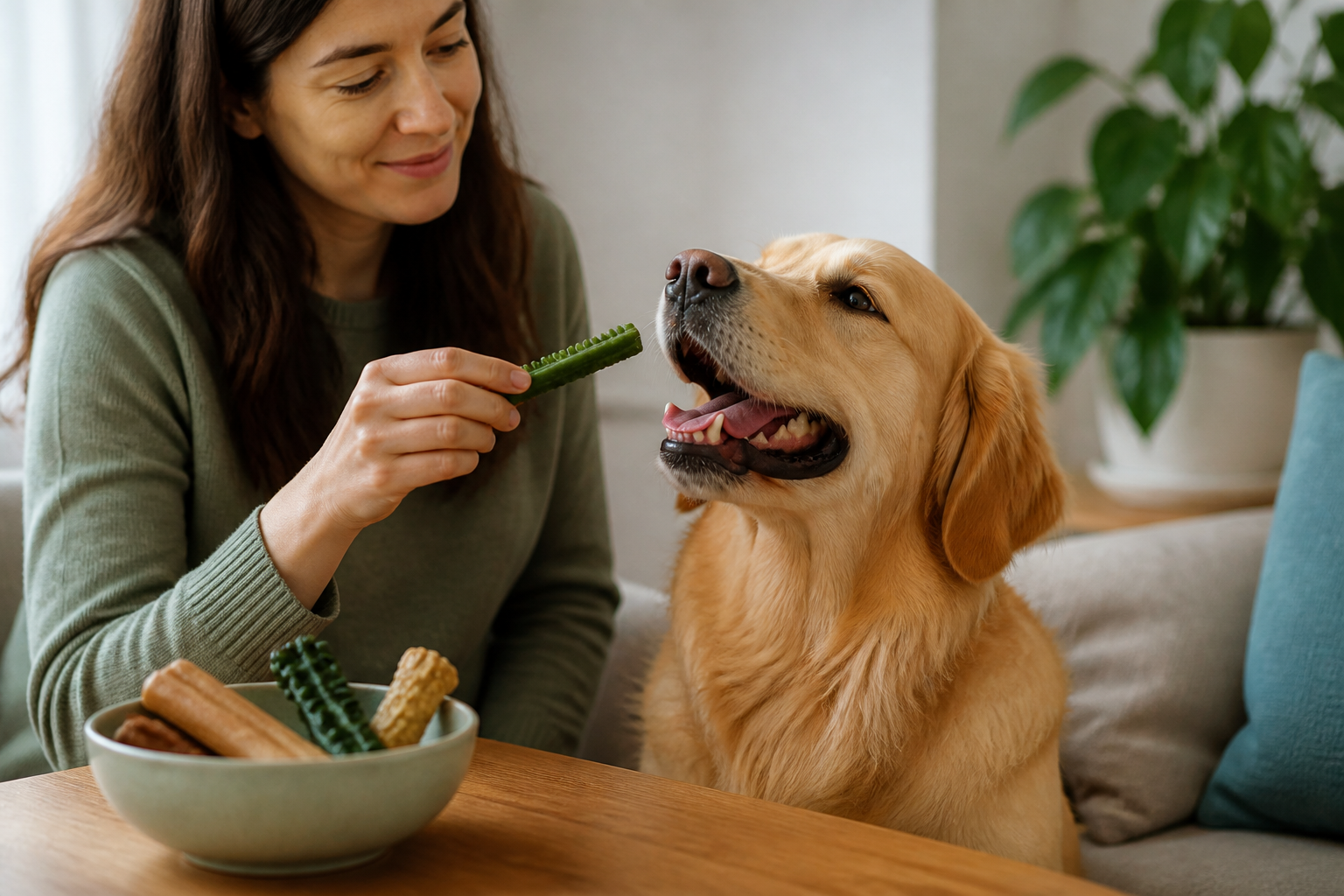
Dogs have a natural instinct to chew, and you can use this to your advantage. Dental chews are specifically engineered to provide mechanical abrasion against the teeth. As your dog bites down, the texture of the chew scrapes against the surface of the tooth, especially near the gumline. Browse our dog dental treats to compare chew options.
Many high quality chews, such as Greenies or ProDen PlaqueOff Dental Care Bones, also include active ingredients that fight bacteria. These chews provide a two-pronged attack: the physical scraping removes plaque, and the enzymes help prevent new bacteria from settling.
Choosing the Right Size
Size is the most important factor when choosing a dental chew. If a chew is too small, your dog might swallow it whole, which creates a choking hazard and provides zero dental benefit. If it is too large, they may lose interest or struggle to get their back molars involved. Always match the chew to your dog’s weight as indicated on the packaging.
Supervised Chewing
Always watch your dog when they are working on a dental chew. You want to ensure they are actually chewing and not just gulping. If your dog is a "power chewer" who destroys treats in seconds, look for longer-lasting options or dental rings that require more effort to break down.
Bottom line: Dental chews provide mechanical cleaning that mimics the action of a toothbrush while satisfying your dog's natural urge to chew.
Water Additives and Oral Sprays
If your dog is picky about food toppers or chews, water additives are a convenient alternative. These are flavorless or lightly scented liquids that you pour into your dog's water bowl. They usually contain enzymes or antibacterial agents like chlorhexidine that help reduce the bacterial load in the mouth. See our dog dental care collection for water additives and oral-care products.
Every time your dog takes a drink, the additive coats their teeth and gums. This helps freshen breath and keeps the environment in the mouth less hospitable to plaque. Oral sprays work similarly but are applied directly to the teeth. Some dogs find the "hiss" of a spray bottle frightening, so you may need to spray it onto a cloth first and wipe it on their gums.
Consistency is Key
Water additives only work if they are used in every bowl of water. If you fill the bowl with plain water half the time, the concentration of the active ingredients will not be high enough to make a difference. Make it a habit to add the solution every time you refresh the water.
Prescription Dental Diets and the Pharmacy
Sometimes, standard over the counter options are not enough for dogs prone to rapid tartar buildup. In these cases, a prescription dental diet can make a massive difference. These foods are formulated with a specific kibble structure. Unlike regular kibble, which often crumbles when bitten, dental kibble is designed to stay together until the tooth has fully penetrated the piece. This creates a "squeegee" effect on the tooth surface.
We carry premium brands like Farmina Vet Life and Royal Canin that offer specialized dental formulas. These diets are often available through our pet pharmacy, which operates in partnership with Pet's Choice. Because these are medical-grade foods, you will need a prescription from your veterinarian.
How Prescription Diets Help
- The large kibble size encourages more chewing.
- Specific fibers help scrub the teeth as the dog eats.
- Mineral binders in the food help prevent plaque from turning into tartar.
- They provide balanced nutrition while focusing on oral health.
Key Takeaway: For dogs with chronic dental issues, a prescription diet from our pharmacy can provide daily professional-level plaque control through every meal.
Natural Abrasives and Chew Toys
Beyond edible treats, certain toys can help clean teeth. Rubber toys with nubs or ridges are designed to massage the gums and scrape the teeth as the dog plays. Rope toys are also excellent because the cotton fibers act like natural dental floss, sliding between the teeth to remove food particles. You can find additional options in our dog healthcare category.
Safe Natural Options
Some raw vegetables can provide a safe, low-calorie way to scrub teeth. Raw carrots or apple slices (without seeds) are crunchy and require significant chewing. While they do not contain the active enzymes found in dental products, the mechanical action is better than nothing for a quick snack.
What to Avoid
Be careful with very hard items like antlers, hooves, or nylon bones. While they are marketed for cleaning teeth, they are often harder than the tooth enamel itself. This can lead to painful tooth fractures. A good rule of thumb is the "knee cap test": if it would hurt to hit your knee with it, it is likely too hard for your dog's teeth.
Identifying Signs of Dental Distress
Even the best no-brush routine cannot fix an existing infection. You should regularly check your dog's mouth for signs that they need a vet's attention. If you notice any of the following, it is time to schedule an exam:
- Extreme Bad Breath: While "dog breath" is normal, a truly foul, rotting smell usually indicates infection.
- Red or Bleeding Gums: Healthy gums should be pink. Redness along the tooth line is a sign of gingivitis.
- Difficulty Eating: If your dog drops food, chews on only one side, or stops eating hard kibble, they may be in pain.
- Loose or Missing Teeth: This is a sign of advanced periodontal disease.
- Excessive Drooling: Sudden changes in salivation can point to oral discomfort.
Vet Tip: Never try to scrape tartar off your dog's teeth with metal tools at home. You can easily scratch the enamel, which creates even more surface area for bacteria to grow, or you could accidentally injure their gums.
Creating a Sustainable No-Brush Routine
The best way to ensure your dog’s teeth stay clean is to layer different methods. You do not have to pick just one. A combination of approaches ensures that plaque is attacked from multiple angles.
A Sample Weekly Schedule
- Daily: Add a VOHC-accepted dental powder to their breakfast.
- Daily: Ensure their water bowl has a dental additive.
- Three times a week: Give them a high quality dental chew or a raw carrot.
- Weekly: Check their mouth for any redness or new buildup.
This routine takes less than a minute of your time each day but provides continuous protection for your dog. It is much easier to maintain than a brushing routine that your dog hates, and it is far more effective than doing nothing at all. For repeat-purchase products, our Autoship programme can help you maintain a regular supply.
How to Transition Between Products
If you are moving from one dental product to another, do it gradually. This is especially important for dental powders or water additives, as some dogs are sensitive to changes in the taste of their food or water. Start with a half dose for the first week to let their digestive system and palate adjust.
Most no-brush products are safe to use together, but always read the labels. If you are using multiple products that contain the same active ingredients, check with your vet to ensure you are not overdoing it.
Bottom line: A consistent no-brush routine using dental powders and chews is a practical and effective way to manage your dog's oral health for the long term.
FAQ
Can dental chews really replace brushing?
Dental chews are an excellent supplement and can significantly reduce plaque, but they may not reach every surface of every tooth as well as a brush. However, for a dog that refuses brushing, a daily VOHC-accepted dental chew is a much better alternative than no care at all. Combining chews with a dental powder provides a more complete cleaning than using chews alone.
Is it too late to start cleaning an older dog's teeth?
It is never too late to start, but older dogs often have existing tartar that no-brush methods cannot remove. The best approach for a senior dog is to have a veterinarian perform a professional cleaning first. Once the teeth are clean, you can use powders, chews, and additives to keep them that way and prevent future extractions.
Why does my dog still have bad breath even though I use dental treats?
Bad breath can be caused by bacteria hiding under the gumline where treats cannot reach, or it could be a sign of an underlying health issue like kidney or digestive problems. If the breath remains foul despite a good dental routine, you should visit your vet. They can check for deep pockets of infection that require medical treatment.
Are water additives safe for multi-pet households?
Most water additives are safe for both dogs and cats, but you must read the product label carefully to be sure. If you have a cat and a dog sharing a bowl, choose a product specifically labeled for both species. If you have pets with specific health conditions like kidney disease, consult your vet before adding any supplements to their communal water.






