
 Save 15% on your 1st Autoship learn more

 Email us
 Live Chat
 FAQs
FAQs





Introduction
You lean in for a morning snuggle and catch a whiff of something less than fresh. When you lift your dog's lip, you notice a sticky, off-white film coating their back molars. This is plaque, and while it might look like a minor cosmetic issue, it is the starting point for significant health concerns. At BaxterBoo, we talk to pet owners every day who are surprised by how quickly dental hygiene can affect a dog's overall well-being. This guide covers the most effective ways to remove plaque at home and how to prevent it from turning into permanent tartar. We will explore everything from the gold standard of brushing to water additives and dental chews. Maintaining a clean mouth is one of the kindest things you can do for your dog's long-term comfort.
Quick Answer: You can clean plaque off a dog's teeth through daily brushing with dog-safe toothpaste, using dental wipes, or offering VOHC-approved dental chews. Plaque is soft and removable at home, but if it remains for more than 48 to 72 hours, it hardens into tartar that requires a professional veterinary cleaning.
Understanding the Plaque and Tartar Timeline
Plaque starts forming on your dog's teeth only a few hours after they finish a meal. It is a soft, sticky film made of bacteria, saliva, and food particles. At this stage, plaque is easy to remove because it has not yet bonded to the tooth enamel. If you can disrupt this film daily, you prevent the cycle of decay before it truly begins.
The problem starts when plaque is left undisturbed. Minerals in your dog's saliva react with the plaque, causing it to harden into a substance called tartar or calculus. This process can happen in as little as two or three days. Unlike plaque, tartar is hard, porous, and yellowish-brown. You cannot brush tartar away with a toothbrush. It acts like a coral reef for more bacteria, leading to gum inflammation and eventual tooth loss.
Knowing the difference between these two substances is vital. If your dog has soft, sticky film, you can handle it at home. If you see hard, stony deposits, you are looking at tartar. Once tartar forms, it requires professional tools and expertise to remove safely. This is why consistency is the most important part of any dental routine.
The Gold Standard: Brushing Your Dog’s Teeth
Brushing is the most effective way to remove plaque because of the mechanical scrubbing action. It physically breaks apart the bacterial colonies before they can mineralize. While many dogs are hesitant at first, most can learn to tolerate or even enjoy the process with the right approach. For additional guidance, read these pet dental care tips.
You must never use human toothpaste for your dog. Our toothpaste contains foaming agents like sodium lauryl sulfate that can upset a dog's stomach. Many human brands also contain xylitol, which is highly toxic to pets. Dog-specific toothpastes come in flavors like poultry, beef, or peanut butter to make the experience more like a treat.
Choosing the Right Tools
The type of brush you use depends on your dog's size and comfort level. We carry several options in our dog dental care category:
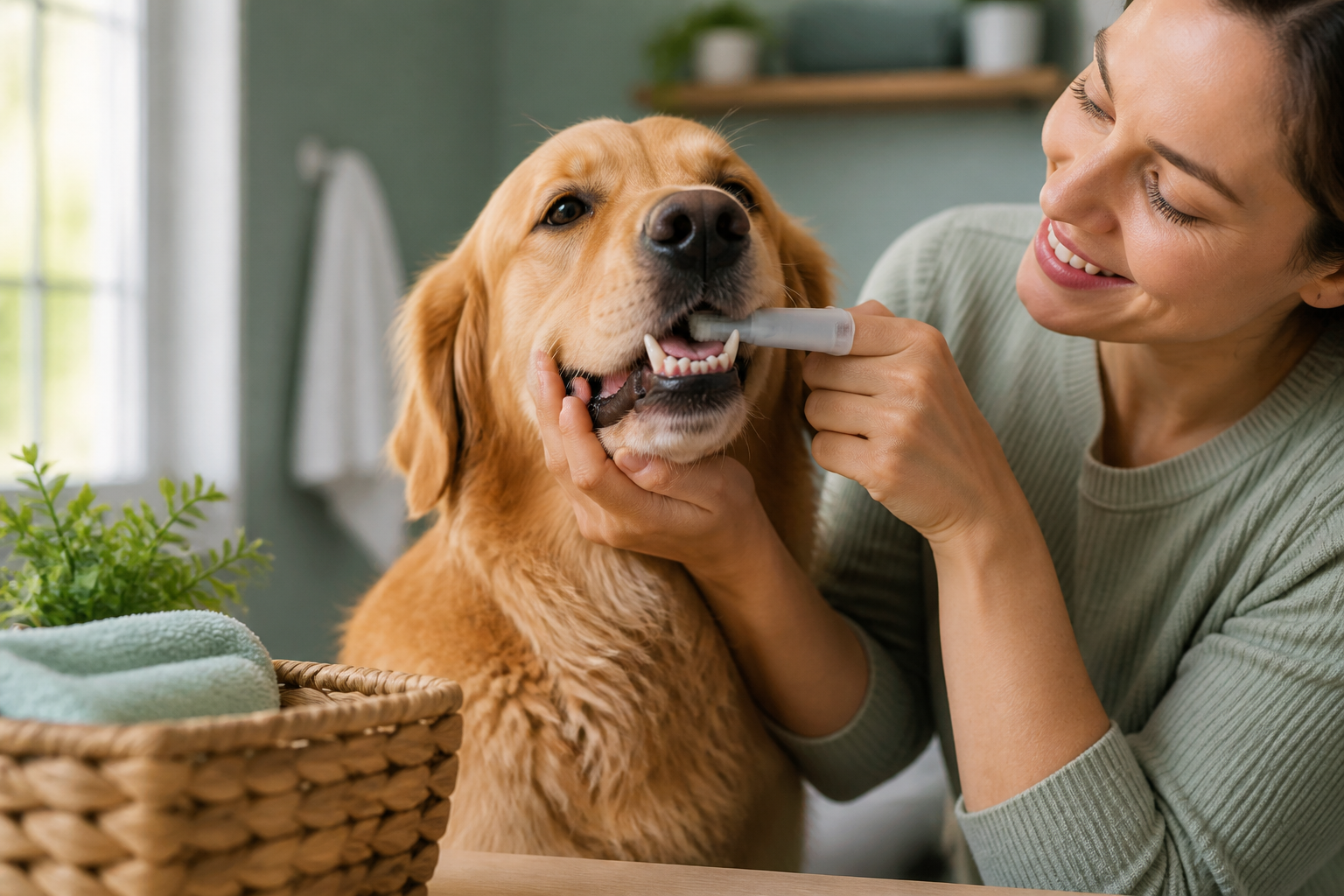
- Finger brushes: These are small rubber caps that fit over your index finger. They are excellent for puppies or dogs that are intimidated by a standard toothbrush.
- Long-handled brushes: These usually have angled heads to reach the back molars. Some have two heads of different sizes on either end.
- Triple-headed brushes: These clean the top, inside, and outside of the tooth simultaneously. This can significantly speed up the process for wiggly dogs.
How to Introduce Brushing
Step 1: Let your dog taste the toothpaste. / Put a small amount on your finger and let them lick it off. Do this for a few days to create a positive association.
Step 2: Get them used to mouth handling. / Gently lift their lips and rub your finger along their gums. Reward them with praise or a small treat afterward.
Step 3: Introduce the brush. / Put toothpaste on the brush and let them lick it. Slowly start brushing just the front teeth in a circular motion.
Step 4: Reach the back teeth. / Gradually work your way toward the molars. Focus on the outside of the teeth, as this is where the most plaque accumulates.
Step 5: Keep it short. / A session does not need to last ten minutes. Aim for 30 to 60 seconds of focused brushing every day.
Key Takeaway: Mechanical brushing is the only way to physically disrupt the bacterial film that forms plaque daily. Even brushing three times a week is significantly better than not brushing at all.
Using Dental Wipes for Reluctant Dogs
Some dogs simply will not tolerate a toothbrush in their mouth. If your dog finds the bristles or the handle too stressful, dental wipes are a great middle ground. These are pre-moistened pads textured to help scrub away surface debris and plaque.
To use a wipe, wrap it around your pointer finger and gently rub the surface of each tooth. Because you are using your finger, you have a better sense of where you are in the dog's mouth. This often feels less invasive to the pet. Wipes are particularly useful for senior dogs or those with sensitive gums that might bleed easily with a traditional brush. You can also review these dental care tips for introducing wipes and toothpaste.
While wipes are effective at removing the soft film of plaque, they cannot reach the deep crevices between teeth as well as a brush can. If you rely on wipes, we recommend combining them with other methods like dental chews to ensure the entire mouth stays clean.
The Power of Dental Chews and Toys
Dogs have a natural urge to gnaw. You can use this instinct to help keep their teeth clean. Not all chews are created equal, however. To effectively clean plaque, a chew needs to have a specific texture and density. For more ideas, browse our dog dental treats and chews.
When a dog bites into a high-quality dental chew, the material should allow the tooth to sink in slightly. This creates a scrubbing action against the surface of the tooth as the dog chews. Some products, like Greenies, are specifically designed to break down into small, digestible pieces while providing this mechanical cleaning.
What to Look for in a Dental Toy
- Rubber nubs and ridges: These help massage the gums and scrape the teeth.
- Durability: For aggressive chewers, look for brands like Kong that can withstand heavy use.
- Size appropriateness: A chew that is too small can be a choking hazard. One that is too large might be too hard for the dog to get their jaw around effectively.
- VOHC Seal: The Veterinary Oral Health Council (VOHC) awards a seal to products that have been scientifically proven to reduce plaque or tartar.
Chewing also stimulates saliva production. Saliva contains natural enzymes that help neutralize the acids produced by oral bacteria. This provides a secondary chemical defense against plaque formation. For additional product ideas, read about the best dental chews for dogs.
Bottom line: Dental chews are a helpful supplement to brushing, but they should not be the only method used because they often miss the teeth used less during chewing.
Water Additives and Enzymatic Gels
For the busiest pet owners or the most difficult dogs, water additives and oral gels offer a "hands-off" approach to plaque control. Water additives are liquids you pour into your dog's water bowl. They typically contain enzymes or mild antiseptics that break down the sticky proteins in plaque. You can explore our dental supplements and water additives for options that fit into your routine.
Enzymatic gels can be applied directly to the gumline. You do not necessarily have to brush them in. The dog’s tongue and saliva will move the gel around the mouth. These enzymes go to work by attacking the bacteria that cause plaque and bad breath.
We often suggest these products as a baseline defense. Even if you cannot brush every day, having an additive in the water ensures some level of bacterial control is happening every time your dog takes a drink. These products are also helpful for freshening "dog breath" almost instantly.
Diet and Natural Plaque Fighters
What your dog eats plays a role in how quickly plaque builds up. While there is a common myth that all dry kibble cleans teeth, many standard kibbles shatter too easily to provide any real scrubbing. However, specific dental diets use larger, fibrous kibble pieces that stay in contact with the tooth longer.
You can also use fresh vegetables as natural plaque fighters. Crunchy, raw carrots or apple slices (without seeds) can help scrape teeth while providing a healthy, low-calorie snack. These should be given in moderation and cut into safe, bite-sized pieces.
Some pet owners find success with kelp-based supplements. These are powders you sprinkle on food. Certain types of sea kelp have been shown to change the chemistry of a dog's saliva, making it harder for plaque to stick to the teeth. Our dental supplements for dogs include options for this part of a dental routine.
Vet Tip: If you notice your dog has extremely red gums, loose teeth, or is dropping food while eating, schedule a veterinary exam immediately. These are signs of advanced dental disease that cannot be treated with home cleaning alone.
When to Seek Professional Help
No matter how diligent you are at home, most dogs will eventually need a professional dental cleaning. This is similar to how humans still go to the dentist twice a year despite brushing and flossing. A professional cleaning at the vet is the only way to remove tartar from beneath the gumline, which is where the most dangerous bacteria live. For more warning signs, read how to recognize bad teeth in dogs.
A professional cleaning usually involves:
- Pre-anesthetic blood work to ensure safety.
- General anesthesia to allow the vet to work thoroughly without stressing the pet.
- Ultrasonic scaling to vibrate tartar off the teeth.
- Polishing to smooth out microscopic scratches that could trap future plaque.
- Digital X-rays to check for abscesses or bone loss hidden under the gums.
Our pharmacy provides access to prescription medications your vet may recommend after a professional cleaning. If your dog is diagnosed with periodontal disease, these specialized foods can be a vital part of their recovery and long-term maintenance. Explore our pet pharmacy for veterinarian-prescribed solutions.
Creating a Sustainable Routine
The best way to clean plaque off your dog's teeth is to choose a routine you can actually stick to. If you know you will not brush every day, do not set that as your only goal. Instead, try a combination of methods that fit your lifestyle.
- Daily: Add a dental solution to their water bowl.
- Daily: Offer a VOHC-approved dental chew after their main meal.
- Three times a week: Brush their teeth or use a dental wipe.
- Yearly: Have your veterinarian perform a dental check-up.
This multi-layered approach ensures that you are attacking plaque from several different angles. You are using mechanical scrubbing (brushing and chews), chemical defense (water additives and gels), and professional oversight (the vet).
At BaxterBoo, we have been helping pet owners navigate these choices since 2006. Whether you are looking for a first toothbrush for a puppy or a specialized gel for a senior dog, we have curated a selection of over 500 brands to ensure you find exactly what works for your pet. Puppy owners can also find age-specific ideas in this guide to puppy teething toys.
Key Takeaway: Consistency is more important than perfection. Using a combination of water additives, chews, and occasional brushing is far more effective than trying to brush once a month and giving up.
Summary of Plaque Removal Methods
| Method | Effort Level | Effectiveness | Best For |
|---|---|---|---|
| Brushing | High | Very High | Maximum plaque removal and prevention. |
| Dental Wipes | Medium | High | Dogs that dislike the feel of a brush. |
| Dental Chews | Low | Medium | Daily maintenance and mechanical scrubbing. |
| Water Additives | Very Low | Low-Medium | Hands-off bacterial control and fresh breath. |
| Enzymatic Gels | Low | Medium-High | Targeted cleaning for dogs with sensitive gums. |
Maintaining your dog's oral health does not have to be a battle. By starting slowly and finding the right products, you can keep their teeth clean and their breath fresh. This protects their heart, kidneys, and liver from the systemic effects of oral bacteria.
FAQ
Can I use baking soda to clean my dog's teeth?
While baking soda is a mild abrasive that can help clean teeth, it has a very high salt content and a taste that most dogs dislike. If swallowed in large amounts, it can cause an upset stomach or electrolyte imbalances. It is much safer and more effective to use a specially formulated dog toothpaste that includes pet-safe enzymes and flavors.
How often should I clean my dog's teeth at home?
Ideally, you should clean your dog's teeth every day. Plaque begins to mineralize into tartar within 48 to 72 hours, so daily cleaning ensures you remove the film before it hardens. If daily brushing is not possible, aim for at least three times a week and supplement with water additives or dental chews on the off days.
Why does my dog's breath still smell after brushing?
Persistent bad breath can be caused by bacteria living deep under the gumline where a toothbrush cannot reach. It can also be a sign of an underlying health issue, such as an infected tooth, gum disease, or even kidney or digestive problems. If regular brushing does not improve your dog's breath, it is time to consult your veterinarian for a professional evaluation.
Is it too late to start cleaning my senior dog's teeth?
It is never too late to start an oral care routine, but you should have a vet check their mouth first. Senior dogs are more likely to have existing tartar, gingivitis, or loose teeth that might be painful if you start brushing abruptly. Once a vet confirms their mouth is healthy or performs a professional cleaning, you can start with gentle methods like wipes or gels.






