
 Save 15% on your 1st Autoship learn more

 Email us
 Live Chat
 FAQs
FAQs





Introduction
You lean in for a friendly nuzzle from your favorite pup only to be met with a puff of breath that smells less than fresh. When you lift their lip, you notice a sticky film or a yellowish tint near the gumline. This is the moment most pet owners realize that dental care is just as important for dogs as it is for humans. At BaxterBoo, we know that keeping those pearly whites clean is about more than just a sparkling smile. It is a vital part of protecting your dog from pain and long term health issues. This guide covers practical ways to remove plaque at home, the difference between plaque and tartar, and when it is time to call in the professionals. Consistency is the secret to a healthy mouth and a happy dog.
Understanding Plaque Versus Tartar
Plaque is a sticky and colorless film of bacteria that constantly forms on your dog's teeth. It develops within hours after a meal. Because it is soft, you can easily remove it with brushing or mechanical chewing. If plaque stays on the teeth for more than 48 hours, it reacts with the minerals in your dog’s saliva. This process causes the plaque to harden into a substance called tartar or calculus.
Tartar is much more difficult to handle. It often looks like a yellow or brown crusty deposit along the gumline. Unlike plaque, you cannot simply brush tartar away at home. Once it has mineralized and bonded to the tooth enamel, it requires professional tools for removal. Understanding this timeline is important. You have a small window of time to clear away plaque before it becomes a permanent fixture that requires a veterinary visit.
Key Takeaway: Plaque is a soft bacterial film that can be brushed away, but it turns into hard tartar within two days if left alone.
The Best Way to Clean Plaque: Daily Brushing
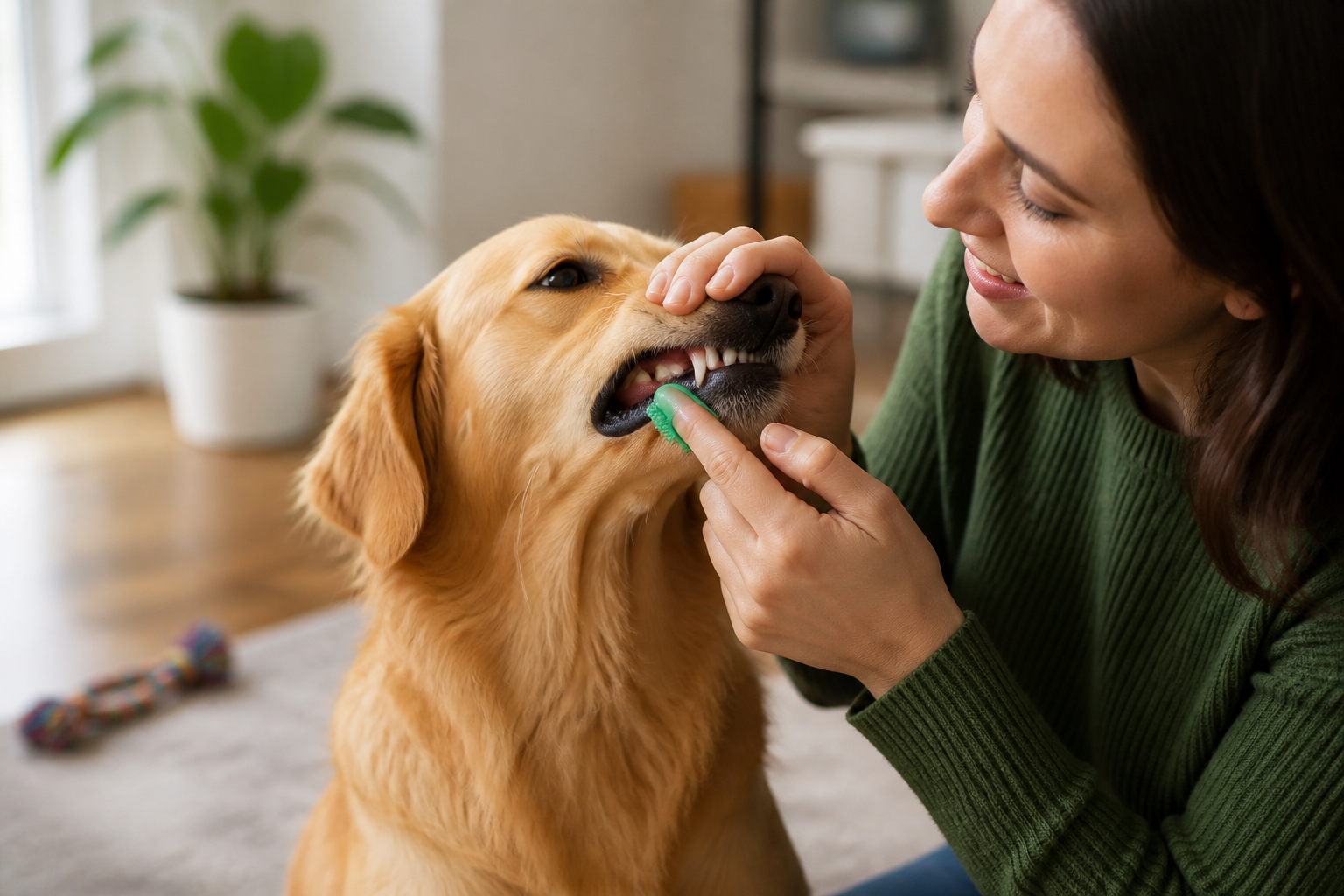
Brushing remains the gold standard for canine dental health. It is the most effective way to physically disrupt the biofilm of plaque before it hardens. You do not need to spend twenty minutes on this task. A quick thirty second session every day can make a massive difference in your dog’s oral health.
Choosing the Right Tools
Never use human toothpaste for your dog. Our toothpaste often contains xylitol, which is a sweetener that is highly toxic to dogs. It also contains foaming agents that are meant to be spit out, not swallowed. Dog-specific toothpaste comes in flavors like poultry or beef to make the experience enjoyable. For brushes, you can choose a traditional long-handled pet brush or a silicone finger brush. Finger brushes are often easier for beginners because they give you more control and feel less intimidating to the dog. You can explore our dog dental care products for toothpaste, brushes, and other oral-care supplies.
Introducing the Routine
If your dog is not used to having their mouth touched, do not start with the brush. Follow these steps to build trust:
Step 1: Let your dog lick a small amount of flavored pet toothpaste off your finger. This creates a positive association with the taste.
Step 2: Rub your bare finger gently along their upper gums and teeth for a few seconds. Follow this with praise or a small treat.
Step 3: Introduce the brush or finger wrap with a bit of toothpaste. Focus on the outside surfaces of the upper teeth first.
Step 4: Gradually increase the time you spend brushing until you can reach the back molars where plaque loves to hide.
For additional guidance, read these pet dental care tips.
Vet Tip: Focus your brushing efforts on the outside of the teeth. A dog’s tongue does a decent job of cleaning the inner surfaces, but the outer cheeks and gums need your help.
No-Brush Alternatives for Plaque Control
We understand that not every dog is a willing participant in a brushing routine. If your dog resists the toothbrush, you can still manage plaque through other effective methods. Combining a few of these options is often the best strategy for maintaining a clean mouth.
Dental Powders and Supplements
Dental powders are one of the easiest ways to support oral health with zero stress. Products like ProDen PlaqueOff use a specific type of North Atlantic seaweed. When your dog eats this powder, it works systemically through the saliva to soften existing tartar and prevent new plaque from sticking. You simply sprinkle the recommended dose onto their food once a day. This is a great option for senior dogs or pets that are highly reactive to mouth handling. Browse our dental supplements for powder-based oral-care options.
Dental Chews and Sticks
Many dogs view dental sticks as a high-value treat. These products work through mechanical abrasion. As the dog chews, the texture of the stick scrapes against the tooth surface to rub away plaque. Look for chews that carry the Veterinary Oral Health Council (VOHC) seal. This seal confirms that the product has been scientifically tested and proven to reduce plaque or tartar. For more ideas, see our dental food and treats.
Water Additives
Water additives are liquid solutions you mix into your dog’s drinking bowl. They usually contain enzymes or mild antibacterial agents that help kill the bacteria responsible for plaque. While these are not a replacement for brushing, they are an excellent supplemental tool. They help freshen breath and provide a baseline of protection throughout the day.
Dental Wipes
Wipes are a middle ground between brushing and passive treatments. They are textured pads pre-soaked in a cleaning solution. You wrap the wipe around your finger and rub it over the teeth. This is often less scary for a dog than a bristled brush, but it still provides the physical friction needed to clear away sticky plaque. TrueBlue Fast & Fresh Dog Dental Wipes are one option to consider alongside other dental-care supplies.
The Role of Diet and Natural Solutions
What your dog eats can impact how quickly plaque builds up. While diet alone is rarely a total cure for dental issues, it is a significant piece of the puzzle.
Crunchy Vegetables and Fruit
Giving your dog safe and crunchy snacks can provide a natural way to clean teeth. Raw carrots and apple slices act like nature's toothbrushes. The firm texture requires extra chewing and provides a light scraping action. These snacks are also low in calories, making them a better choice than some processed treats. Just be sure to cut them into appropriate sizes to prevent choking.
Specialized Dental Diets
Some dogs are genetically prone to heavy plaque buildup regardless of their routine. In these cases, we often suggest looking at specialized dental kibble. Brands like Royal Canin and Farmina Vet Life offer formulas with a specific kibble shape and size. These pieces are designed not to crumble immediately when bitten. Instead, the tooth sinks into the kibble, allowing the fibers to scrub the tooth surface all the way to the gumline.
Note: If your vet recommends a prescription dental diet, you can conveniently fulfill those needs through our pharmacy partnership with Pet's Choice.
Identifying the Signs of Dental Disease
It is important to know when home cleaning is no longer enough. If plaque has already turned into tartar, or if your dog is in pain, you must seek veterinary care.
Watch for these warning signs:
- Foul breath that does not improve with cleaning
- Gums that look bright red, swollen, or bleed during play
- Yellow or brown crusty buildup that does not budge with a brush
- Reluctance to eat hard kibble or favorite chew toys
- Drooling more than usual or dropping food while eating
- Pawing at the mouth or face
If you notice these symptoms, your dog may be suffering from periodontal disease. This is an infection of the tissues surrounding the teeth. Left untreated, it can lead to tooth loss and allow bacteria to enter the bloodstream. Once in the blood, these bacteria can travel to the heart, liver, and kidneys, causing serious organ damage.
For more warning signs to watch for, read what to do when your dog has bad teeth.
Vet Tip: Schedule a professional dental checkup at least once a year. Your vet can see problems beneath the gumline that are invisible to the naked eye.
Professional Dental Cleaning
Even with the best home care, most dogs will eventually need a professional cleaning. This is similar to a human going to the dentist for a deep clean. At the vet, this procedure is performed under general anesthesia. This is necessary because it allows the vet to clean under the gumline where the most damaging bacteria hide. It also allows for dental X-rays to check the health of the tooth roots.
During the cleaning, the vet uses ultrasonic scalers to vibrate tartar off the teeth. They then polish the enamel to smooth out any tiny scratches. This smooth surface makes it harder for new plaque to attach. While anesthesia can be a worry for pet owners, modern protocols are very safe. Your vet will perform blood work beforehand to ensure your dog is a good candidate for the procedure.
Building a Sustainable Routine
The key to success is making dental care a habit. It is much easier to prevent plaque than it is to treat advanced gum disease. We recommend a layered approach to keep your dog's mouth healthy.
- Daily: Brush the teeth if possible, or use a dental powder in their morning meal.
- Weekly: Offer a few VOHC-approved dental chews to provide mechanical cleaning.
- Monthly: Lift your dog’s lips and inspect the teeth and gums for changes.
- Annually: Visit the vet for a professional oral exam.
Managing your supplies is also part of the routine. Using a program like Autoship at BaxterBoo ensures you never run out of toothpaste, dental sticks, or supplements. This helps you stay consistent without having to think about it every month. Plus, our MVP Rewards program lets you earn points on every dental purchase, which adds up quickly for a recurring need like oral care.
Bottom line: A combination of physical brushing, mechanical chewing, and regular veterinary checks is the only way to truly keep plaque at bay.
Why Dental Care Matters for Longevity
Caring for your dog's teeth is an investment in their long term health. A dog with a healthy mouth is a dog that is free from chronic pain and inflammation. Studies have shown that dogs with good oral hygiene can live longer than those with neglected teeth. By taking a few minutes each day to address plaque, you are helping your best friend stay active and comfortable well into their senior years.
If your dog requires specific medications or prescription foods to manage their oral health, remember that our pharmacy is here to help. Through our partnership with Pet's Choice, we provide FDA-approved medications and prescription diets for chronic conditions. This makes it easy to get everything your pet needs in one place while receiving the expert service you expect from us.
FAQ
Can I remove hard tartar from my dog's teeth at home?
No, you should not try to scrape hard tartar off your dog's teeth at home with metal tools. Professional dental scaling requires specific training to avoid damaging the tooth enamel or hurting the sensitive gum tissue. If you see hard yellow or brown buildup, it is time to schedule a professional cleaning with your veterinarian.
How often should I brush my dog's teeth to see results?
Ideally, you should brush your dog's teeth every single day. Plaque begins to mineralize into tartar within 24 to 48 hours, so daily brushing ensures you are clearing the film before it hardens. If daily is not possible, three times a week is the minimum needed to provide a significant benefit to their oral health.
Are dental chews enough to keep teeth clean without brushing?
While high-quality dental chews are very helpful, they are usually not enough on their own to replace brushing. Chews are most effective at cleaning the chewing surfaces of the teeth but may miss the area right at the gumline. Think of dental chews as a helpful supplement to a routine that includes brushing or dental powders. For more options, explore these dental chews for dogs.
Does dry kibble really keep a dog's teeth clean?
Standard dry kibble provides very little dental benefit because most dogs swallow it whole or the pieces crumble immediately upon contact. While it is better than soft canned food for plaque buildup, it is not a substitute for dental care. If you want a food that cleans teeth, you should look for a specialized dental diet designed with a specific fiber structure.






