
 Save 15% on your 1st Autoship learn more

 Email us
 Live Chat
 FAQs
FAQs





Introduction
You are relaxing on the sofa when your dog leans in for a friendly lick. Suddenly, you notice a sharp, metallic odor. You lift your dog's lip and see a hard, yellow-brown crust along the gumline. This is tartar, and it is more than just a cosmetic issue for your pet. At BaxterBoo, we know that dental health is the cornerstone of your dog's overall wellness. While hardened tartar usually requires a professional touch, there are several ways you can manage and soften it from your living room. This post covers the best tools and techniques for at-home dental care. We will explore how to stop plaque from turning into stone and when it is time to call in the professionals.
Quick Answer: You can clean mild tartar at home by using enzymatic toothpaste and daily brushing to break down the film. While established tartar often requires a vet, you can soften it using dental gels, water additives, and mechanical chews.
Understanding the Difference Between Plaque and Tartar
To clean your dog's teeth effectively, you must understand what you are fighting. Plaque is a soft and sticky film of bacteria that forms on the teeth within hours of eating. Because it is soft, you can easily remove it with a toothbrush or a simple wipe. If plaque sits on the tooth for more than 24 to 72 hours, it begins to mineralize.
Minerals in your dog's saliva mix with the plaque to create a rock-hard substance called tartar. Also known as calculus, this material is porous and provides a perfect hiding spot for more bacteria. This cycle leads to gum inflammation and eventually more serious health concerns.
The 24-Hour Window
The best way to "clean" tartar is to never let it form in the first place. Once plaque turns into tartar, it becomes much harder to remove without specialized equipment. Regular care at home focuses on disrupting that soft plaque before it hits the 24-hour mark. If you see visible brown or yellow deposits, the plaque has already hardened. At this stage, your goal shifts from simple cleaning to softening the deposits so they might eventually break away.
Why Tartar Is Dangerous
Tartar does not just sit on the surface of the tooth. It often creeps under the gumline where you cannot see it. This causes the gums to pull away from the tooth, creating pockets where infection can thrive. Bacteria from these infections can eventually enter the bloodstream. This may lead to issues with the heart, kidneys, and liver.
Key Takeaway: Plaque is a soft film that turns into hard tartar within three days. Consistent daily care is the only way to prevent this mineralization process.
The Gold Standard: Brushing with Enzymatic Toothpaste
Brushing is the most effective way to clean your dog's teeth at home. However, you cannot use human toothpaste. Most human brands contain xylitol, which is toxic to dogs. They also contain foaming agents that are meant to be spit out, whereas dogs will swallow whatever you put in their mouth.
Instead, use an enzymatic toothpaste formulated specifically for pets, such as Virbac C.E.T. Enzymatic Pet Toothpaste for Dogs and Cats - Poultry. These pastes contain enzymes like glucose oxidase. These active ingredients work to break down the chemical bonds in plaque and tartar even after you stop brushing.
Choosing the Right Tools
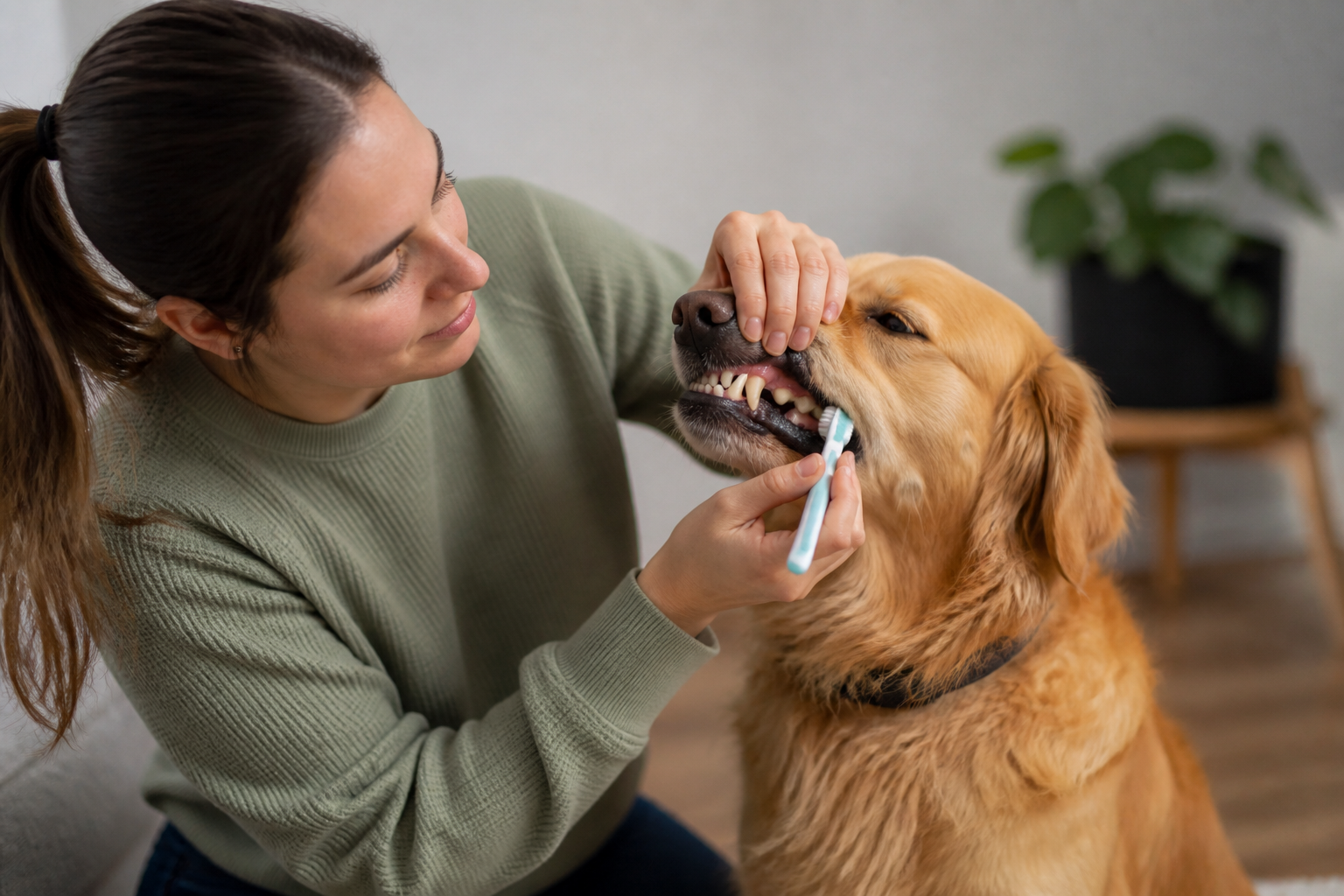
You have several options for toothbrushes. A standard long-handled pet brush helps you reach the back molars. A finger brush is a small rubber cap that fits over your index finger. This is often better for dogs who are nervous about long objects in their mouth. If your dog is very small, a piece of soft gauze wrapped around your finger can also do the trick.
The Proper Technique
Do not worry about cleaning the inside surfaces of the teeth. Most tartar accumulates on the outside, near the cheeks. Focus your efforts there.
Step 1: Let your dog taste the toothpaste. Most pet pastes come in flavors like poultry or beef to make the experience a treat.
Step 2: Lift the lip and gently rub the brush against the teeth in a circular motion. Aim for a 45-degree angle toward the gumline.
Step 3: Focus on the upper back molars and the large canine teeth. These are the "hot spots" for tartar buildup.
Step 4: Keep the session short. Start with just 30 seconds and work your way up as your dog becomes more comfortable.
Vet Tip: If your dog has red or bleeding gums, stop brushing and call your veterinarian. Brushing over active gingivitis can be very painful and may push bacteria further into the gum tissue.
Using Dental Gels and Sprays to Soften Tartar
If your dog absolutely refuses a toothbrush, dental gels and sprays are the next best thing. These products are designed to be applied directly to the teeth and gums. They often contain ingredients like chlorhexidine or natural antimicrobials that kill the bacteria responsible for plaque.
How Dental Gels Work
You typically apply a small bead of gel to each side of the dog's mouth. The dog will naturally lick the gel, spreading it over the teeth and gums. The active ingredients stay in the saliva and continue to work for several hours. Over time, these gels can help soften the edges of tartar, making it easier to remove during a future brushing session or through chewing.
Sprays for Quick Refreshing
Dental sprays are a convenient way to freshen breath and kill surface bacteria. They are not as concentrated as gels, but they are excellent for maintaining oral health between brushings. Look for sprays that carry the Veterinary Oral Health Council (VOHC) seal. This seal ensures the product has been tested and proven to reduce plaque or tartar by at least 20 percent.
Bottom line: Dental gels and sprays provide a passive way to fight bacteria and soften tartar for dogs who resist manual brushing.
The Role of Dental Wipes and Water Additives
Sometimes the simplest solutions are the most consistent. For dogs who find the sensation of a brush or a spray too intense, wipes and water additives provide a low-stress alternative.
Texture and Mechanical Action
Dental wipes are pre-moistened pads that you wrap around your finger. They are textured to help physically scrub away the film of plaque. While they cannot get between teeth or deep under the gumline like a brush, they are excellent for cleaning the flat surfaces of the teeth. If you use a wipe daily, you can significantly slow down the rate at which tartar forms.
Water Additives: The Passive Approach
Water additives are flavorless liquids that you add to your dog's water bowl. A product such as Zymox Oratene Brushless Enzyme Dog and Cat Oral Care Water Additive can provide a convenient option for a daily routine. They contain enzymes and minerals that help neutralize the bacteria in the mouth. As your dog drinks throughout the day, the additive continually coats the teeth. This is a "set it and forget it" method that works well in multi-pet households.
- Wipes are great for training puppies to accept mouth handling.
- Water additives help reach the back of the throat and tongue.
- Always use fresh water and follow the dosage instructions on the bottle.
Mechanical Cleaning Through Chews and Toys
Dogs are natural chewers. We can use this instinct to our advantage. The physical act of gnawing on a textured object acts like a squeegee for the teeth. It scrapes away plaque before it has a chance to harden.
Specialized Dental Chews
Brands like Greenies and Kong offer treats designed with ridges and nubs. These shapes are engineered to reach the gaps between teeth. As the dog chews, the treat crumbles in a way that provides maximum friction against the tooth surface. Many of these chews also contain ingredients that help freshen breath.
Choosing the Right Toys
Rubber toys with deep grooves are excellent for dental health. You can even smear a little enzymatic toothpaste into the grooves of a Kong toy. As the dog works to get the paste out, they are inadvertently brushing their own teeth. Explore our dental dog toy collection for textured options. Avoid extremely hard items like cow hooves, antlers, or nylon bones. These can be harder than the tooth enamel itself and may cause painful tooth fractures.
Crunchy Vegetables
If you prefer a natural approach, crunchy vegetables like carrots or apple slices (without seeds) can help. The fiber in these vegetables provides a mild abrasive action. While they are not a replacement for brushing, they are a healthy way to supplement a dental routine.
Key Takeaway: Mechanical cleaning through chewing is a vital part of a dental stack. Use VOHC-approved chews to ensure they are both safe and effective.
Natural Remedies: Coconut Oil and Seaweed
Many owners look for natural alternatives to chemical rinses. While these should not be the only tools in your kit, they can provide extra support.
The Power of Coconut Oil
Coconut oil contains lauric acid, which has well-known antibacterial and antifungal properties. Many owners use it as a base for homemade toothpaste. It tastes great to most dogs, which makes them more willing to participate in a brushing session. You can simply apply a small amount to a brush or a piece of gauze.
Seaweed and Kelp Supplements
There is growing evidence that certain types of brown seaweed (specifically Ascophyllum nodosum) can improve oral health. When ingested, the compounds in the seaweed are absorbed into the bloodstream and eventually released back into the saliva. This change in saliva composition helps soften existing tartar and prevents new plaque from sticking to the teeth.
Step 1: Buy a high-quality kelp or seaweed dental powder.
Step 2: Sprinkle the recommended dose onto your dog's food once daily.
Step 3: Monitor for changes in breath and tartar color over 4 to 8 weeks.
Step 4: Combine with regular brushing for the best results.
Why You Must Avoid DIY Scaling Tools
It is very tempting to buy a metal dental scaler online and try to chip away at the tartar yourself. This is highly discouraged by veterinarians. Professional scaling is done under anesthesia for several very important reasons.
Enamel Damage
Your dog's enamel is thin. Metal tools can easily scratch the surface of the tooth. These microscopic scratches actually provide more surface area for bacteria to cling to, which means tartar will return even faster and stick even harder.
Pain and Safety
Tartar is often attached firmly to the tooth and gumline. Chipping it off can be painful, especially if the gums are already inflamed. A sudden flinch from your dog could result in a serious puncture wound to their mouth or your hand. Furthermore, simply removing the visible tartar on the crown of the tooth does nothing for the disease hiding under the gumline.
The Danger of Inhalation
When tartar is chipped off, it breaks into small, bacteria-laden shards. If a dog is awake, they can easily inhale these pieces. This can lead to aspiration pneumonia or other respiratory infections.
Vet Tip: Never use metal scrapers or "at-home scaling kits" on your dog. This can cause permanent enamel damage and does not address the bacteria living under the gumline.
When Home Care Isn't Enough: The Pharmacy and the Vet
Home care is about prevention and maintenance. It is not a cure for established periodontal disease. If your dog already has heavy tartar buildup, the most responsible step is to schedule a professional cleaning with your veterinarian.
Signs of Dental Distress
You should look for signs that the problem has moved beyond simple tartar. If you notice any of the following, a vet visit is necessary:
- Persistent foul breath that does not improve with brushing.
- Visible bleeding or pus along the gumline.
- Loose or missing teeth.
- Dropping food or refusing to eat hard kibble.
- Pawing at the face or acting sensitive when you touch their muzzle.
The BaxterBoo Pharmacy Connection
Sometimes, your vet may prescribe specific medications or diets to manage your dog's oral health. Through our pet pharmacy, we offer a pharmacy where you can fill prescriptions for FDA-approved dental rinses, antibiotics for oral infections, or specialized prescription diets. Diets like Farmina Vet Life are often formulated with specific textures and minerals to slow down tartar accumulation in dogs prone to dental disease. Having a trusted pharmacy source makes it easy to keep these essential health items on hand.
What Happens During a Professional Cleaning?
During a professional cleaning, your dog is placed under general anesthesia. This allows the vet to take dental X-rays to see what is happening beneath the gums. They use ultrasonic scalers to remove tartar safely and then polish the teeth to smooth out the enamel. This is the only way to truly "reset" your dog's oral health.
Key Takeaway: Home care is the "brushing" we do every day, but a vet visit is the "deep cleaning" we get at the dentist. Both are required for a healthy dog.
Building a Consistent Dental Routine
The secret to cleaning tartar from your dog's teeth at home is consistency. Doing one thing perfectly once a month is less effective than doing three things "well enough" every single day. We recommend building a "dental stack" that fits your lifestyle.
The Daily Dental Stack
A sample routine might look like this:
- Morning: Add a water additive to the fresh water bowl.
- Evening: A 60-second brushing session with enzymatic toothpaste.
- Treat Time: A VOHC-approved dental chew after the main meal.
- Supplement: Seaweed powder mixed into their dinner.
By attacking the bacteria from multiple angles—mechanical, chemical, and systemic—you give your dog the best chance at a pain-free smile. If you find yourself running low on supplies, our Autoship program is a great way to ensure you never miss a day of care. You can save on your first order and earn MVP Rewards points on every purchase of toothpaste, chews, and wipes.
Conclusion
Cleaning tartar at home is a marathon, not a sprint. While you may not be able to remove every speck of hardened calculus, you can certainly improve your dog's comfort and long-term health. Use enzymatic toothpaste for daily disruption, dental chews for mechanical scrubbing, and water additives for passive protection. Remember that home care is a supplement to, not a replacement for, professional veterinary exams. If you see signs of pain or infection, please consult your veterinarian immediately to discuss a professional cleaning or prescription options through our pharmacy.
- Brush daily with pet-safe enzymatic paste.
- Use VOHC-approved chews and toys.
- Avoid DIY scaling with metal tools.
- Schedule annual dental exams with your vet.
Bottom line: Consistent at-home care prevents plaque from becoming tartar and protects your dog's heart, kidneys, and overall quality of life.
FAQ
Can I remove hardened tartar with a toothbrush?
A toothbrush is generally not strong enough to remove hardened tartar that has been on the teeth for weeks. It is designed to remove soft plaque and help distribute enzymes that can soften tartar over time. If the tartar is thick and stone-like, a professional cleaning is usually the only way to remove it completely.
Is coconut oil actually effective for dog teeth?
Coconut oil has antimicrobial properties thanks to its lauric acid content, which can help reduce the bacteria that cause plaque. While it is not a "magic eraser" for tartar, it is a safe, natural, and tasty base for brushing. It works best when used as a lubricant for a toothbrush to provide mechanical cleaning.
How often should I brush my dog's teeth to prevent tartar?
Ideally, you should brush your dog's teeth once every 24 hours. Since plaque begins to mineralize into tartar within one to three days, brushing daily ensures that you are clearing away the soft film before it has a chance to harden. If daily is not possible, three times a week is the minimum for seeing a clinical benefit.
Are dental chews a good replacement for brushing?
Dental chews are a fantastic supplement, but they are not a total replacement for brushing. Chews mostly clean the chewing surfaces of the molars and do not always reach the gumline of the front teeth or the canines. For the best results, use a combination of mechanical chews and manual brushing.






