
 Save 15% on your 1st Autoship learn more

 Email us
 Live Chat
 FAQs
FAQs





Introduction
You might be sitting on the sofa when your dog leans in for a friendly lick, only for you to be hit by a wave of surprisingly bad breath. When you lift their lip to investigate, you notice a thick, yellow-brown crust along the upper molars. This hardened buildup is tartar, and it is a common concern for many pet parents. At BaxterBoo, we know that dental health is one of the most overlooked aspects of pet care. This article will explain what tartar is and how it differs from plaque. We will discuss the limits of home cleaning and when it is time to call in a professional. You will also learn about the best tools and routines to keep your dog's mouth healthy for years to come.
Quick Answer: While you can brush away soft plaque at home, hardened tartar usually requires a professional veterinary cleaning under anesthesia. Home care focuses on preventing new buildup through daily brushing, dental chews, and enzymatic gels.
What Is Tartar and Why Does It Form?
Tartar is not the same thing as plaque, though they are closely related. Plaque is a sticky, colorless film of bacteria that begins to form on the teeth just hours after a meal. If you do not brush this film away, it reacts with the minerals in your dog's saliva. This chemical reaction causes the plaque to harden into a substance called dental calculus, or tartar.
This hardening process happens surprisingly fast. In many dogs, plaque can turn into tartar in as little as 24 to 72 hours. Once it has reached this stage, it is essentially like concrete on the teeth. It provides a porous surface where even more bacteria can hide. This cycle leads to inflammation of the gums and eventual tooth loss.
Several factors influence how quickly this happens. Some dogs have crowded teeth that trap more food. Others have saliva with a higher mineral content. Age also plays a role, as older dogs have often had more time for accumulation. Regardless of the cause, managing this buildup is vital for your dog's comfort and long-term health.
The Dangers of Ignoring Dental Buildup
Many owners think bad breath is just a normal part of being a dog. In reality, a foul odor is often the first sign of periodontal disease. When tartar builds up along the gum line, it pushes the gums away from the teeth. This creates small pockets where bacteria thrive.
Untreated dental issues can lead to much more than just a lost tooth. The mouth has a massive blood supply. Bacteria from infected gums can enter the bloodstream and travel to vital organs. Veterinarians frequently see links between chronic dental disease and issues with the heart, kidneys, and liver.
Key Takeaway: Tartar acts as a reservoir for bacteria that can cause systemic health problems beyond the mouth.
For additional warning signs, read our guide to recognizing bad teeth in dogs.
Can You Remove Hardened Tartar at Home?
This is the question most pet owners ask once they spot that yellow crust. The short answer is that it is very difficult and often unsafe to remove thick tartar yourself. Because tartar is mineralized, a standard toothbrush will not nudge it.
Some people try to use metal dental scrapers at home. We strongly advise against this. Dogs do not sit perfectly still like humans do at the dentist. One sudden flinch can result in a deep gouge to the gums or even a facial injury. Furthermore, scraping the tartar leaves microscopic scratches on the tooth enamel. These scratches actually make it easier for new plaque to stick to the tooth later.
If the tartar is very mild and just beginning to form, certain enzymatic products might help soften it over time. However, if the teeth are heavily coated, a professional cleaning is the only way to get a truly clean slate.
Vet Tip: If you see red or bleeding gums, your dog likely has significant inflammation. Please consult your veterinarian for an oral exam before trying any new abrasive home cleaning methods.
The Best At-Home Tools for Dental Maintenance
Even if you cannot scrape away heavy tartar, home care is your best defense against new buildup. Think of home care as maintenance and professional cleaning as a deep restoration. Here are the most effective tools for your home routine.
You can find brushes, toothpaste, gels, and other supplies in our dog dental care collection.
Dog-Specific Toothpaste and Brushes
Never use human toothpaste on your dog. Most human brands contain fluoride and xylitol, both of which are toxic to pets. Dog toothpaste comes in flavors like poultry or beef to make the experience more pleasant. These pastes often contain enzymes that help break down plaque chemically.
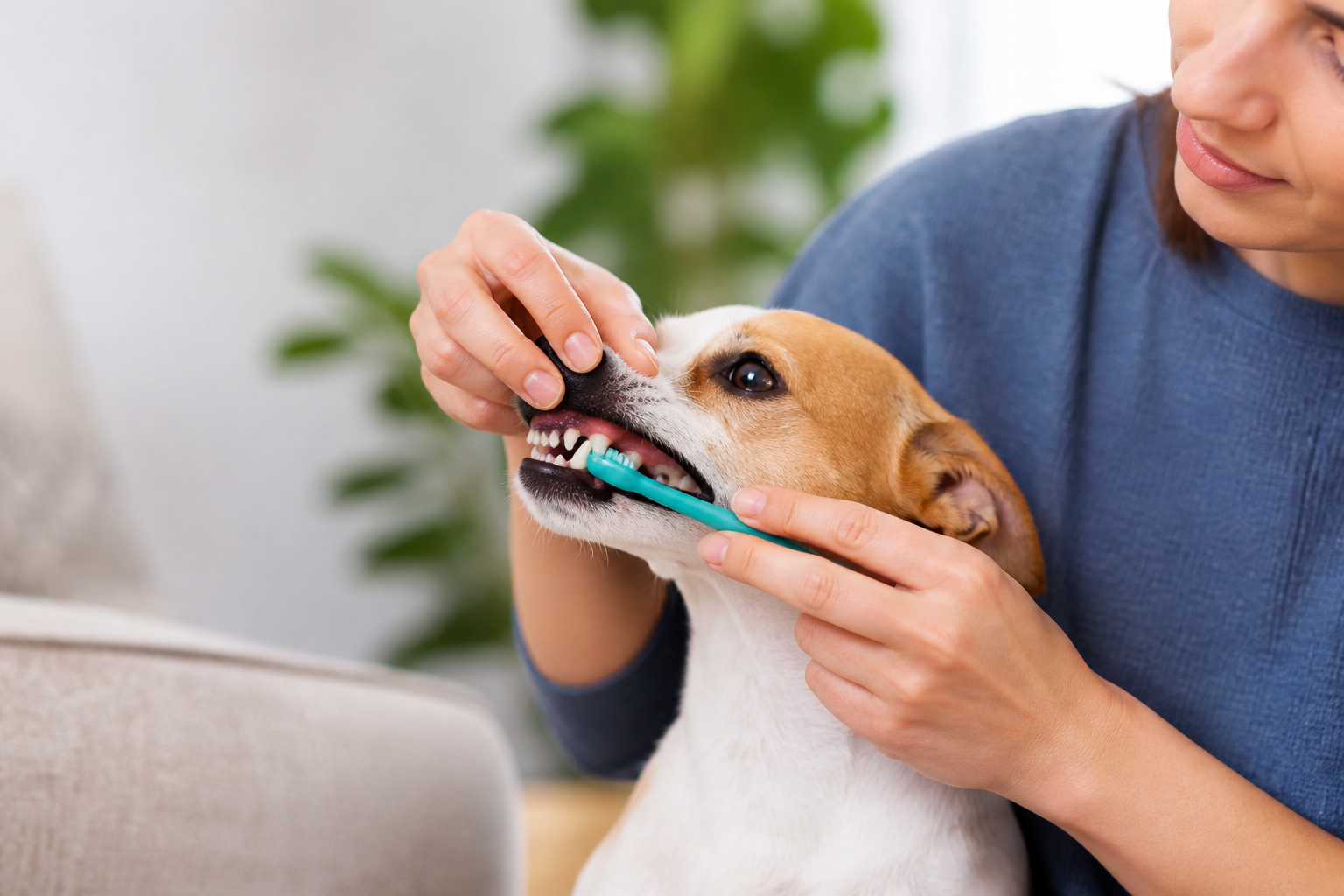
A finger brush is often a great starting point for dogs that are nervous about their mouth being touched. Once they are comfortable, you can move to a long-handled brush with soft bristles. This allows you to reach the very back molars where tartar usually accumulates the most.
Enzymatic Gels and Sprays
For dogs that simply will not tolerate a brush, enzymatic gels are a solid alternative. You apply a small amount to the gums, and the enzymes work with the saliva to coat the teeth. These products help neutralize the bacteria that lead to plaque formation.
Water Additives
Water additives are the easiest way to support dental health. You simply add a capful to your dog's water bowl. These solutions are formulated to reduce the bacterial load in the mouth and freshen breath. They are most effective when used as part of a multi-step routine.
For more ideas, see these pet dental care tips.
The Role of Dental Chews and Toys
Chewing is a natural behavior that provides mechanical cleaning. As the dog bites down, the friction of the chew scrapes against the surface of the tooth. However, not all chews are created equal.
Look for products that carry the Veterinary Oral Health Council (VOHC) seal. This seal indicates that the product has been tested and proven to reduce plaque or tartar by a certain percentage. Brands like Greenies are popular for this reason.
Hard rubber toys, like those from KONG, are also excellent. They are durable and provide enough resistance to help clean the teeth without being so hard that they break them. Avoid items like natural bones or cow hooves, which are often harder than the tooth enamel itself and can cause painful fractures.
Dietary Strategies for Cleaner Teeth
What your dog eats can impact how much plaque stays on their teeth. While there is a myth that all dry kibble cleans teeth, most standard kibble is too small and brittle. It shatters instantly when the dog bites it, providing very little cleaning action.
Specialized dental diets are different. The kibble pieces are much larger and have a specific fibrous texture. Instead of shattering, the tooth sinks into the kibble, which scrubs the surface as the dog chews.
Some of these specialized diets are available through our pet pharmacy. We partner with Pet's Choice to provide FDA-approved medications and prescription pet foods. If your veterinarian recommends a prescription dental diet like Royal Canin Dental or Farmina Vet Life, you can fulfill that need through our pharmacy services.
Bottom line: Mechanical friction from specialized dental kibble or VOHC-approved chews is far more effective than standard dry food.
When to Schedule a Professional Cleaning
How do you know when home care is no longer enough? You should look for specific red flags that indicate a trip to the vet is necessary.
- Extreme bad breath that does not improve with brushing.
- Visible brown or grey buildup that looks like stone.
- Gums that look bright red, puffy, or bleed when touched.
- A dog that drops food or stops playing with chew toys.
- Excessive drooling or pawing at the mouth.
A professional cleaning is a medical procedure. Your dog will be placed under general anesthesia so the veterinarian can clean under the gum line safely. This is the most important part of the process because that is where the most damaging bacteria hide.
The vet will use an ultrasonic scaler to vibrate the tartar off the teeth. After the scaling is done, they will polish the teeth. Polishing smooths out any tiny scratches so the teeth stay cleaner for longer. They may also take x-rays to ensure there are no abscesses or bone loss happening beneath the surface.
Step-by-Step: Starting a Brushing Routine
If your dog is not used to having their teeth cleaned, do not try to do the whole mouth at once. It should be a gradual process that builds trust.
Step 1: Introduce the paste.
Let your dog lick a small amount of pet-safe toothpaste off your finger. Do this for a few days so they associate the flavor with a treat.
Step 2: Touch the teeth.
Gently lift your dog's lip and rub your bare finger over their teeth and gums. Keep this very brief and follow up with praise.
Step 3: Introduce the brush.
Put a little paste on a finger brush or a soft toothbrush. Let the dog sniff it. Gently brush just the front teeth in a circular motion for a few seconds.
Step 4: Gradually increase the time.
Over the next two weeks, slowly work your way toward the back of the mouth. Focus on the outside surfaces of the teeth, as that is where tartar usually forms.
Natural Remedies and Their Limits
You may see suggestions online for using items like coconut oil or apple cider vinegar to clean teeth. While coconut oil has some mild antimicrobial properties, it cannot remove hardened tartar. Similarly, crunchy vegetables like carrots or apple slices can provide a bit of mechanical scrubbing, but they are not a replacement for brushing.
Some owners use a paste made of baking soda and water. While this is a mild abrasive, many dogs dislike the taste. It also does not contain the beneficial enzymes found in commercial pet pastes. Stick to products designed specifically for canine oral chemistry for the best results.
Summary of Best Practices
Caring for your dog's teeth requires a combination of daily habits and professional oversight. You cannot expect one dental chew a week to undo the effects of a high-carbohydrate diet and no brushing.
- Brush daily if possible, or at least three times per week.
- Use VOHC-approved treats and toys to provide mechanical cleaning.
- Check your dog's mouth regularly for signs of redness or heavy buildup.
- Use water additives or dental gels as supplements to brushing.
- Schedule an annual dental exam with your veterinarian.
Key Takeaway: Consistency is more important than intensity when it comes to preventing tartar at home.
Conclusion
Managing tartar is an ongoing commitment, but the payoff is a happier, healthier dog with fresher breath. While you can do a lot at home with the right brushes, pastes, and chews, remember that hardened tartar is a job for the professionals. At BaxterBoo, we offer a wide range of dental care products for dogs to help you stay ahead of plaque. From specialized toys to enzymatic sprays, we have the tools you need to support your dog's oral health. If your vet suggests a prescription approach, remember that our pharmacy is here to help with specialized diets and medications. By starting a routine today, you are protecting your dog from pain and helping them live a longer life. We recommend checking out our Dental Care category to find the right start for your pup's new routine.
FAQ
How often should I brush my dog's teeth to prevent tartar?
Ideally, you should brush your dog's teeth every day to remove plaque before it can harden into tartar. If daily brushing is not possible, aim for at least three times per week to significantly reduce buildup. Consistency is the most important factor in keeping the gum line healthy and preventing periodontal disease.
Can I use a human dental scaler to remove tartar from my dog?
No, you should never use a metal scaler on your dog's teeth at home. Using these tools can easily cause painful injuries to the gums if your dog moves suddenly. Additionally, scaling leaves tiny scratches on the enamel that actually encourage more plaque and tartar to grow back faster than before.
Are dental chews enough to keep my dog's teeth clean?
While dental chews are a helpful tool, they should not be the only part of your dog's dental care routine. Chews provide mechanical cleaning on the chewing surfaces but often miss the areas near the gum line where bacteria do the most damage. For the best results, use chews as a supplement to regular brushing and professional veterinary exams.
Why does my dog need anesthesia for a dental cleaning?
Anesthesia is necessary because a thorough cleaning requires scaling beneath the gum line, which would be stressful and painful for an awake dog. It also allows the veterinarian to perform a full exam and take x-rays without the dog moving. This ensures all tartar is removed safely and any hidden health issues are properly identified and treated.






