
 Save 15% on your 1st Autoship learn more

 Email us
 Live Chat
 FAQs
FAQs





Introduction
You are playing a game of fetch when your dog lets out a wide yawn. In the afternoon light, you notice a thick, yellow crust coating their upper back molars. This is not just a bit of leftover dinner. It is dental tartar, and it is a signal that your dog’s oral health needs immediate attention. At BaxterBoo, we talk to pet owners every day who are surprised by how quickly this buildup happens.
This guide explains the difference between soft plaque and hardened tartar. We will cover the specific tools you can use at home and explain why some cases require a professional hand. You will learn about the health risks associated with dental neglect and how to establish a routine that keeps your dog’s breath fresh and their body healthy. Taking care of your dog’s teeth is a foundational part of responsible pet ownership.
Understanding the Difference Between Plaque and Tartar
Many owners use the terms plaque and tartar as if they mean the same thing. They are actually two different stages of dental buildup. Plaque is a sticky, colorless film of bacteria and food particles that forms on the teeth within hours of eating. It is soft and can be easily removed with a toothbrush or a textured chew toy. If you do not remove it, the minerals in your dog’s saliva begin to harden the plaque.
This hardening process is called mineralization. It can happen in as little as 24 to 72 hours. Once plaque mineralizes, it becomes tartar, which is also known as calculus. Tartar is porous and rough. This texture makes it the perfect surface for more plaque to latch onto, creating a cycle of buildup. Unlike plaque, tartar is bonded strongly to the tooth enamel. It usually requires specialized tools to remove safely.
Quick Answer: Plaque is a soft bacterial film that you can brush away at home. Tartar is plaque that has mineralized into a hard, cement-like substance that usually requires professional veterinary scaling to remove.
Why Tartar Is a Health Concern
Tartar is more than an aesthetic issue. It is a reservoir for bacteria. These bacteria do not stay on the surface of the tooth. They work their way under the gumline, leading to inflammation known as gingivitis. You might notice your dog’s gums look red or swollen where they meet the teeth. This is the first stage of periodontal disease.
If the inflammation continues, the structures supporting the teeth begin to break down. This leads to bone loss, receding gums, and loose teeth. The bacteria in the mouth can also enter the bloodstream through the inflamed gum tissue. Once in the blood, these bacteria can travel to major organs.
- Heart: Bacteria can cause inflammation of the heart valves.
- Kidneys: Chronic dental infection is a known risk factor for kidney disease.
- Liver: The liver must filter the bacteria and toxins coming from the mouth, leading to strain.
Vet Tip: If your dog has persistent bad breath, bleeding gums, or seems hesitant to eat hard kibble, consult your veterinarian. These are signs of advanced dental disease that a toothbrush cannot fix.
Can You Remove Tartar at Home?
A common question we hear is whether an owner can scrape tartar off themselves. While there are dental scrapers available for purchase, we generally advise against using them. Dog enamel is thinner than human enamel. If the dog moves suddenly, you could scratch the tooth surface. These scratches create even more places for bacteria to hide. You also risk poking the sensitive gum tissue, which causes pain and can lead to an infection.
At-home care is most effective for removing plaque before it turns into tartar. If your dog already has a heavy layer of brown or orange calculus, the goal of home care shifts. At that stage, you are trying to soften the buildup and prevent it from getting worse until you can get a professional cleaning.
The Best Tools for Home Dental Care
We carry a variety of products designed to manage dental health. The effectiveness of these tools depends on your dog’s personality and the current state of their teeth. Explore our dog dental care category for toothpaste, oral gels, dental chews, and other options.
Enzymatic Toothpastes
Enzymatic toothpaste is the gold standard for home care. These pastes contain enzymes like glucose oxidase that help break down the chemical bonds of plaque. They do not require the same vigorous scrubbing that human toothpaste does. Most formulas come in flavors dogs love, such as poultry or beef.
Dental Wipes and Finger Brushes
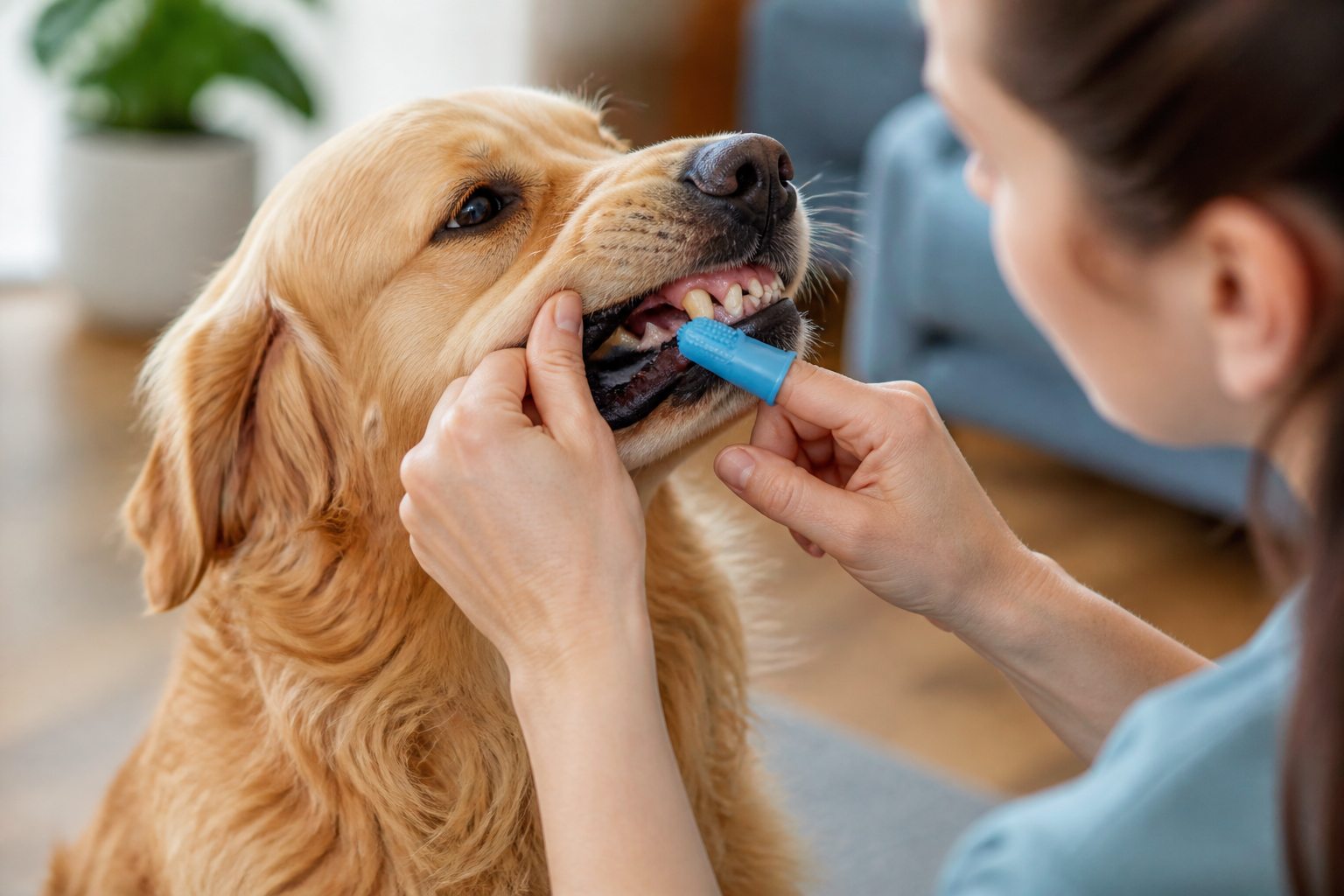
If your dog is intimidated by a traditional toothbrush, dental wipes are an excellent bridge. These are textured pads soaked in a cleaning solution. You wrap the wipe around your finger and rub the surface of the teeth. Finger brushes are another option. They are small rubber caps with bristles that fit over your fingertip, giving you more control and a better feel for where you are cleaning.
Water Additives and Oral Sprays
For dogs that will not allow any handling of their mouth, water additives are a helpful supplement. These are tasteless liquids you add to the water bowl. They contain ingredients that help neutralize bacteria and slow down the mineralization of plaque. Oral sprays work similarly but are applied directly to the gums and teeth. These are not as effective as brushing, but they are better than doing nothing.
Using Toys and Chews to Clean Teeth
Mechanical action is one of the best ways to keep teeth clean. When a dog chews on a textured object, the surface of the item scrapes against the tooth. This acts like a natural toothbrush. For additional guidance, read our pet dental care tips.
- Rubber Toys: Brands like Kong offer toys with specialized ridges designed to clean teeth. You can even smear a bit of dog-safe toothpaste into the grooves to increase the benefits.
- Dental Chews: Products like Greenies are formulated to be highly digestible while providing a specific texture that helps scrub the teeth.
- Natural Chews: Dried sweet potato or rawhide can provide long-lasting chewing sessions. Always supervise your dog with these items to prevent choking.
Key Takeaway: Home dental care is about consistency. Brushing three times a week is much more effective than a deep cleaning once a month.
How to Start a Brushing Routine
You cannot expect a dog to sit still for a full cleaning on the first day. It takes time and positive reinforcement. We suggest a gradual approach to make the experience stress-free for both of you.
Step 1: Let them taste the paste. / Put a small amount of flavored enzymatic toothpaste on your finger and let them lick it off. Do this for a few days so they associate the paste with a treat.
Step 2: Rub the gums. / Once they like the paste, start rubbing your finger along their gums and teeth while they lick the paste. Keep the sessions short, about thirty seconds.
Step 3: Introduce the brush. / Put the paste on a soft-bristled dog toothbrush. Let them lick it off the bristles. Gradually start using small, circular motions on the outside of the front teeth.
Step 4: Move to the back. / The back molars are where most tartar accumulates. Slowly work your way back as your dog becomes more comfortable. You do not need to brush the inside of the teeth, as the tongue does a decent job of cleaning that area.
The Role of Specialized Dental Diets
Sometimes, a standard kibble is not enough. Some dogs are genetically predisposed to heavy tartar buildup. In these cases, a veterinarian might recommend a prescription dental diet. These foods are designed with a specific fiber matrix. Instead of crumbling immediately when bitten, the kibble stays together longer, allowing the tooth to sink into it. This creates a scrubbing effect on the tooth surface.
Our pharmacy provides access to these specialized diets through our partnership with Pet's Choice. We carry brands like Royal Canin Dental and Farmina Vet Life for various health needs. Because these are therapeutic diets, they require a prescription from your veterinarian. This ensures that the food is appropriate for your dog’s specific health profile.
Professional Veterinary Cleanings
Even with perfect home care, most dogs will eventually need a professional cleaning. This is the only way to remove tartar from under the gumline safely. A veterinary dental procedure is much more involved than a human cleaning.
Dogs must be under general anesthesia for a dental cleaning. This is for their safety and comfort. It allows the vet to perform a thorough exam, take X-rays, and use an ultrasonic scaler without the dog moving. X-rays are vital because a large portion of dental disease happens below the visible surface. Without X-rays, a vet might miss a painful abscess or a rotting root.
After the tartar is scaled away, the vet will polish the teeth. Polishing smooths out the microscopic scratches left by the scaling process. A smooth tooth is much harder for plaque to stick to in the future.
Signs Your Dog Needs a Professional Cleaning
It can be hard to tell when home care is no longer enough. Keep an eye out for these specific signs. If you see them, it is time to schedule a vet visit. This guide to warning signs of bad teeth in dogs can help you recognize changes in your dog’s mouth.
- Discoloration: Teeth that look brown, orange, or grey near the gums.
- Bad Breath: A healthy dog’s breath should not be offensive. A foul or "rotting" smell indicates high bacterial levels.
- Altered Eating Habits: If your dog drops food, chews on only one side, or suddenly refuses dry food, they may be in pain.
- Physical Changes: Look for bleeding gums, loose teeth, or swelling under the eye. Swelling under the eye often indicates an abscessed tooth root.
Vet Tip: Do not wait for your dog to stop eating before addressing dental issues. Dogs have a high pain tolerance and will often continue to eat even with significant oral infections.
Managing Dental Health in Senior Dogs
As dogs age, their dental needs change. Senior dogs often have thinner enamel and a lifetime of wear on their teeth. They may also have underlying health conditions that make anesthesia more of a concern. For older pets, we recommend more frequent, less invasive check-ups.
If your senior dog has joint issues that make it hard for them to sit for brushing, try using oral gels. These can be applied with a quick swipe of the finger and do not require brushing. We also carry supplements like Cosequin to support general senior wellness, which helps keep them comfortable during grooming and handling.
The Value of Prevention
Investing in dental care now saves you money and stress later. A professional cleaning is an investment, but it is far less expensive than oral surgery to remove multiple infected teeth. By using toys from Kong or treats like Greenies, you are actively lowering the risk of future problems.
Our MVP Rewards program is a great way to save on these recurring needs. You can earn points on every purchase of toothpaste, brushes, and dental chews. If you use a specific dental treat regularly, our Autoship program ensures you never run out while providing extra savings.
Bottom line: While you cannot safely scrape tartar off at home, you can use enzymes, mechanical chewing, and regular brushing to prevent it from forming and to manage your dog's oral health.
Conclusion
Cleaning tartar off your dog's teeth is a partnership between you and your veterinarian. While home care is primarily about prevention, it is the most important thing you can do to extend the time between professional cleanings. At BaxterBoo, we want to help you find the right combination of tools, from enzymatic pastes to durable chew toys.
Remember to start slowly and keep the experience positive. If your dog already has significant tartar buildup, use the products we have discussed to keep the mouth as clean as possible while you coordinate with your vet. A healthy mouth leads to a healthy dog and many more years of happy barks and fresh-smelling cuddles. Check out our dog healthcare category to find the dental supplies your dog needs to thrive.
FAQ
Can I use human toothpaste on my dog?
No, you should never use human toothpaste for your dog. Human formulas often contain xylitol, which is highly toxic to dogs, or fluoride, which can be harmful if swallowed. Dog toothpastes are designed to be swallowed and come in flavors that appeal to their palate.
How often should I brush my dog's teeth?
Ideally, you should brush your dog’s teeth every day to prevent plaque from mineralizing into tartar. If daily brushing is not possible, aim for at least three times a week. Consistency is more important than the length of the brushing session.
Will dry kibble keep my dog's teeth clean?
While some people believe dry food scrapes teeth clean, most standard kibble crumbles too quickly to provide a significant benefit. Specialized dental diets are the exception, as they are engineered to stay intact longer and provide a mechanical scrubbing action.
Is it safe for my dog to have a professional cleaning under anesthesia?
Modern veterinary anesthesia is very safe. Your vet will perform blood work before the procedure to ensure your dog’s organs are functioning well. The risks of untreated dental infection, such as heart and kidney disease, are often much higher than the risks of a supervised anesthetic procedure.






