
 Save 15% on your 1st Autoship learn more

 Email us
 Live Chat
 FAQs
FAQs





Introduction
You lean in for a morning cuddle or a happy greeting, and instead of a sweet pup kiss, you get hit with a wave of foul breath. This is a moment most dog owners know well. It is often the first sign that plaque and tartar are moving into your dog’s mouth. While we often focus on coat care or exercise, oral hygiene is a cornerstone of your pet’s overall health. At BaxterBoo, we believe that a healthy mouth leads to a longer, happier life for your dog.
This guide will show you exactly how to manage your dog's dental care from your own living room. We will cover the best brushing techniques and the tools you need. We will also explore alternatives like dental chews, water additives, and specialized diets. Proper at-home care can prevent painful gum disease and help you avoid high costs at the vet later. By the end of this article, you will have a clear plan to keep those canine teeth clean and strong.
Why At-Home Dental Care Is Vital
Many owners think that "dog breath" is just a natural part of being a dog. In reality, healthy dogs should not have a strong or offensive odor coming from their mouths. Bad breath is usually caused by bacteria that live in plaque. If plaque is not removed, it hardens into tartar within about 48 hours. Tartar is much harder to remove and provides a rough surface where even more bacteria can grow.
This cycle leads to periodontal disease. This is an infection and inflammation of the tissues surrounding the teeth. If left alone, it can lead to tooth loss and bone decay. The bacteria in the mouth can also enter the bloodstream. This puts your dog’s heart, liver, and kidneys at risk. Regular cleaning at home is the best way to break this cycle before it starts.
Quick Answer: The most effective way to clean your dog’s teeth at home is daily brushing with dog-specific toothpaste. You can also use VOHC-approved dental chews, water additives, and rubber chew toys to reduce plaque buildup between professional cleanings.
The Gold Standard: Brushing Your Dog’s Teeth
Brushing is the single most effective way to remove plaque before it turns into tartar. It may seem like a big task if your dog is not used to it. However, most dogs can learn to accept and even enjoy the process if you take it slow. You do not need to spend twenty minutes on it. Even a quick 30-second session once a day can make a massive difference.
Choosing the Right Tools
You should never use human toothpaste for your dog. Human versions often contain xylitol, which is a sweetener that is highly toxic to dogs. They also contain foaming agents that can upset a dog’s stomach when swallowed. Dog toothpaste comes in flavors like poultry, beef, or peanut butter. This makes the experience feel more like a treat than a chore.
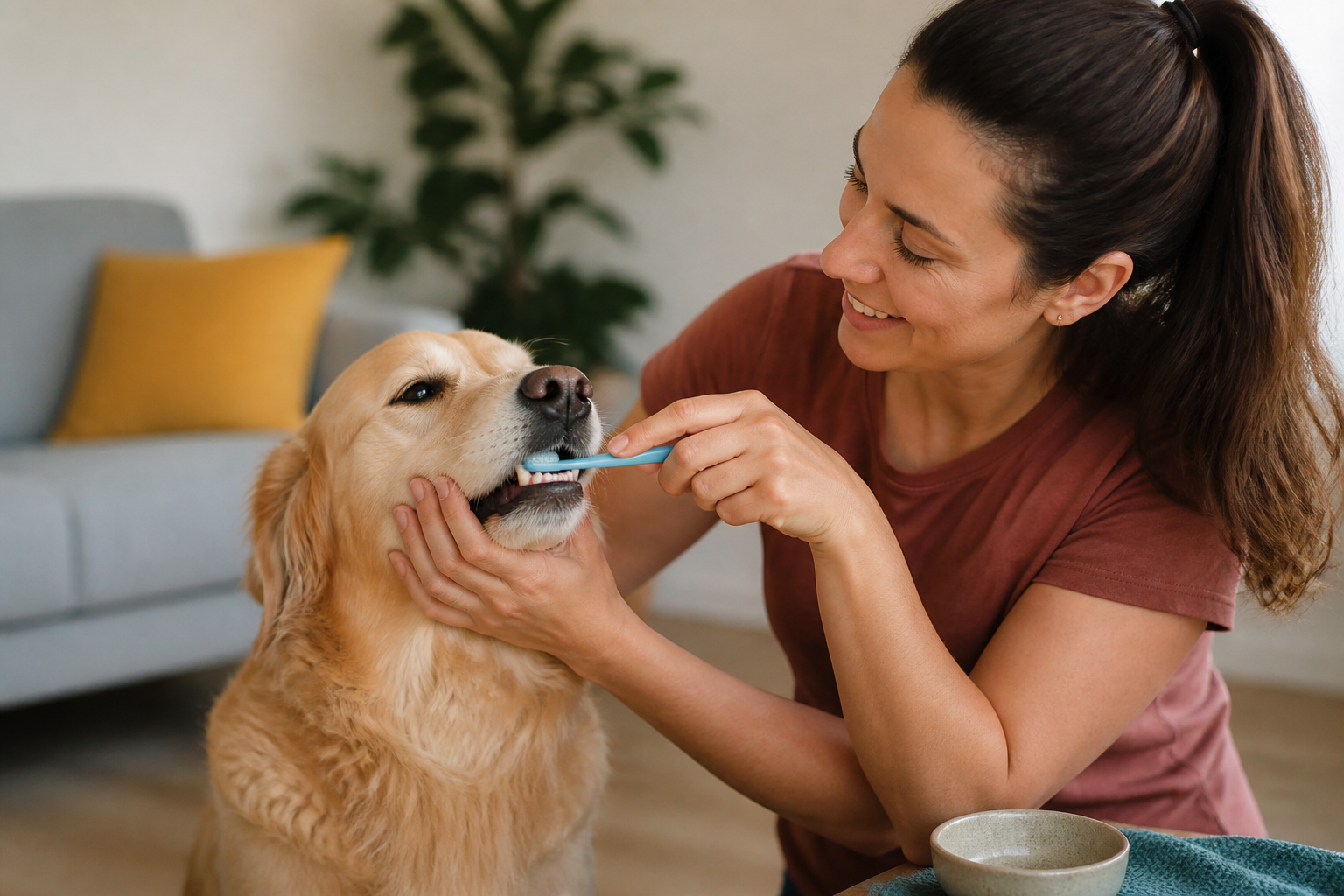
For the brush, you have two main options. A long-handled dog toothbrush allows you to reach the back molars easily. A finger brush is a small silicone cap that fits over your finger. This can give you better control and may be less intimidating for a puppy or a nervous dog. For additional ideas on introducing oral care, read these pet dental care tips.
Step-by-Step Brushing Guide
Step 1: Introduce the paste. / Let your dog lick a small amount of dog toothpaste off your finger. This helps them associate the flavor with a positive experience.
Step 2: Get them used to mouth handling. / Gently lift your dog’s lips and rub your finger over their teeth and gums. Do this for a few days before introducing a brush.
Step 3: Start with the brush. / Apply a small amount of paste to the brush. Focus on the outside surfaces of the teeth. These are the areas where the most plaque tends to build up.
Step 4: Use circular motions. / Aim the bristles at a 45-degree angle toward the gum line. Use gentle, circular motions to clean the surface.
Step 5: Reward and praise. / Always end the session with a treat or a favorite game. This ensures your dog looks forward to the next cleaning.
Vet Tip: If you notice bleeding gums, loose teeth, or significant swelling while brushing, stop and contact your veterinarian. These can be signs of advanced dental disease that requires professional treatment rather than just at-home maintenance.
Alternatives for Dogs Who Hate Brushing
Some dogs simply will not tolerate a toothbrush. If you find yourself in this situation, do not give up on their oral health. There are several effective alternatives that work to reduce plaque through mechanical action or chemical enzymes. You can explore our dog dental care collection for brushes, gels, wipes, chews, and water additives.
Dental Chews and Treats
Dental chews are a popular choice because they are easy to use. These treats are designed with a specific texture that helps scrub the teeth as the dog chews. Some brands, like Greenies, are formulated to be highly digestible while providing a deep clean. Look for the Veterinary Oral Health Council (VOHC) seal on the packaging. This seal means the product has met specific standards for reducing plaque or tartar.
Water Additives
A water additive is essentially a drinkable mouthwash for your pet. You simply add a small amount to your dog's water bowl each day. These additives contain enzymes or ingredients that help break down the biofilm on the teeth. They are also excellent for freshening breath. This is a "hands-off" method that works well for busy owners or very stubborn dogs.
Dental Toys
Chewing is a natural behavior for dogs. You can use this to your advantage by choosing toys designed for dental health. Rubber toys with nubs or ridges, like those from Kong, help scrape away plaque. Some toys can even be filled with dog-safe toothpaste or dental gels to increase their effectiveness.
Key Takeaway: While brushing is the most effective method, combining dental chews, toys, and water additives creates a multi-layered defense against plaque and tartar.
Understanding Plaque vs. Tartar
It is helpful to know exactly what you are fighting. Plaque is a soft, sticky film that forms on the teeth every time your dog eats. It is full of bacteria. Because it is soft, it can be wiped away with a brush or a cloth.
If plaque stays on the tooth for more than 48 hours, it mixes with minerals in the saliva. This process creates tartar, also known as calculus. Tartar is hard and usually yellow or brown. You cannot brush tartar away at home. Once it forms, it requires a professional dental cleaning under anesthesia to remove it safely. This is why daily attention is so important.
Signs of Dental Trouble
Check your dog’s mouth at least once a week. Look for these warning signs:
- Persistent bad breath that does not go away.
- Yellow or brown deposits on the teeth near the gum line.
- Red, swollen, or bleeding gums.
- Difficulty eating or dropping food.
- Pawing at the mouth or face.
- Missing or loose teeth.
For more guidance on recognizing these symptoms, review warning signs of dental problems in dogs.
The Role of Diet in Dental Health
What your dog eats can affect how fast plaque builds up. There is a common belief that all dry kibble cleans teeth. While kibble is better than soft canned food for dental health, most standard kibble is too small and brittle to provide a real cleaning effect. It usually shatters before it can scrub the tooth.
However, there are specific therapeutic dental diets designed for this purpose. These kibbles are larger and have a fibrous texture that does not crumble. The tooth sinks into the kibble, allowing the fibers to scrub the surface. We carry various high-quality foods that support overall wellness. For specific dental conditions, our pharmacy partnership with Pet's Choice offers access to prescription diets like those from Royal Canin or Farmina Vet Life.
Natural Cleaning Aids
Some fresh vegetables can provide a mild cleaning effect. Raw carrots or apple slices (without seeds) require a lot of chewing. This mechanical action can help rub away some surface debris. These are great low-calorie snacks, but they should never be the only method of dental care you use.
Dangerous Myths About Cleaning Dog Teeth
There are many misconceptions about how to keep a dog's mouth clean. Using the wrong methods can lead to broken teeth or internal injuries.
The Problem with Hard Bones and Antlers
Many owners believe that giving a dog a very hard bone or an elk antler is the best way to "scrape" the teeth. This is often dangerous. These materials are frequently harder than the tooth enamel itself. Chewing on them can cause "slab fractures," where a piece of the tooth breaks off. This is extremely painful and usually requires an extraction.
Bottom line: If you cannot make a dent in a chew with your fingernail, it is likely too hard for your dog’s teeth and could cause a fracture.
Human Dental Products
As mentioned before, human toothpaste is a no-go. You should also avoid using human mouthwashes or dental picks. Dogs do not know how to spit, so they will ingest whatever you put in their mouths. Professional dental tools should only be used by trained veterinary staff while the dog is under anesthesia to avoid accidental injury to the gums.
The Importance of Professional Vet Visits
At-home care is like brushing and flossing for humans. Even if you do it perfectly, you still need to see a dentist for deep cleanings. Your veterinarian can see things that you might miss. They can check for oral tumors, hidden infections under the gum line, and jaw issues.
A professional dental cleaning involves scaling the teeth with ultrasonic tools and polishing the enamel. This can only be done safely while the dog is anesthetized. This allows the vet to clean deep under the gums where the most dangerous bacteria live. Our Autoship programme is a great way to ensure you always have the dental supplies you need between these professional visits.
Dental Care for Different Life Stages
The way you handle dental health will change as your dog grows. Starting early is the best strategy, but it is never too late to begin a routine.
Puppies
Puppies lose their baby teeth and get their adult teeth between four and six months of age. This is the perfect time to get them used to having their mouth touched. You do not need to scrub hard, but gentle handling now will make your life much easier later. Check their mouth regularly to ensure baby teeth are falling out properly and not crowding the adult teeth.
Adult Dogs
For adult dogs, the goal is maintenance and prevention. This is the stage where you should be most consistent with daily brushing and the use of dental chews. If your dog has a high drive for chewing, focus on rubber toys that provide mechanical cleaning.
Senior Dogs
Senior dogs are the most likely to have existing dental issues. Their immune systems may also be less effective at fighting off oral infections. If your senior dog has lost teeth, you may need to switch to softer dental treats or gels. Always have a senior dog's teeth checked before starting a new, vigorous brushing routine if they have not had dental care in the past.
How to Handle a Stubborn Dog
If your dog runs away the moment they see the toothbrush, you need to change your approach. The key is to make the process invisible or very rewarding.
- Use a flavored gel: Some dental gels can just be smeared on the outside of the gums. The dog’s tongue will spread it around as they lick.
- The "Treat Sandwich" method: Give a small piece of high-value treat, do five seconds of brushing, and then give another treat immediately.
- Switch to a cloth: Sometimes a piece of gauze wrapped around your finger is less scary than a plastic brush.
- Timing matters: Try brushing when your dog is tired after a long walk. They will be less likely to struggle.
Setting a Routine That Sticks
Consistency is more important than perfection. If you can only manage to brush three times a week, that is still far better than once a month. To make it a habit, tie it to an existing routine. Maybe you brush your dog's teeth right after you brush your own at night. Or, give them their dental chew every morning after their first walk.
Keeping a small dental kit near the couch can also help. If you are sitting together while watching TV, you can easily spend a minute rubbing a dental wipe over their teeth. The more convenient you make it, the more likely you are to keep up with it.
Key Takeaway: Small, consistent actions are the key to preventing major dental disease. A few minutes a week can save your dog from significant pain and save you from the cost of oral surgery.
Summary Checklist for Home Care
- Select a dog-specific toothpaste in a flavor they enjoy.
- Choose a brush style that fits your comfort level and your dog’s mouth size.
- Establish a daily or every-other-day schedule for brushing.
- Provide VOHC-approved dental chews for days when brushing is not possible.
- Add a dental water additive to their bowl to help control bacteria.
- Inspect your dog’s gums and teeth weekly for any signs of redness or decay.
- Schedule a veterinary dental exam at least once a year.
Professional Care and the BaxterBoo Pharmacy
Even with the best at-home care, some dogs are genetically prone to dental issues. Smaller breeds, in particular, often have crowded teeth that trap more food and plaque. When at-home care is not enough, or when your dog needs specific medical support, our pet pharmacy is here to help.
Through our partnership with Pet's Choice, we offer FDA-approved medications and prescription diets. If your vet prescribes a specific therapeutic food for weight or dental management, you can easily fulfill that need through us. Our pharmacy provides a reliable way to manage chronic conditions, including the oral health needs of your pet.
Conclusion
Cleaning your dog's teeth at home is one of the most proactive things you can do as a pet owner. It starts with finding the right tools and building a routine that works for your lifestyle. Whether you use a toothbrush, dental chews, or a combination of methods, your efforts will pay off in fresher breath and a healthier pet. Remember to always use products designed specifically for dogs and to keep an eye out for signs of pain or infection.
Regular at-home care is a partnership between you and your dog. By taking these steps, you are protecting them from the hidden dangers of periodontal disease. For all your dental needs, from finger brushes to VOHC-approved treats, we invite you to explore our Dental Care category. You can also save on your recurring dental supplies by joining our Autoship programme, which ensures you never run out of the essentials.
FAQ
Can I use baking soda to clean my dog’s teeth?
It is not recommended to use baking soda for your dog. While it is not as toxic as human toothpaste, baking soda has a high salt content that can upset a dog’s stomach if swallowed. It also has an unpleasant taste that may cause your dog to resist future brushing attempts.
How often should I actually brush my dog's teeth?
Ideally, you should brush your dog's teeth every day. Plaque can begin to harden into tartar in as little as 24 to 48 hours. If daily brushing is not possible, aiming for at least three times a week will still provide significant benefits for their oral health.
My dog’s gums bleed a little when I brush. Is this normal?
Small amounts of bleeding can occur if your dog has mild gingivitis or if you are starting a new routine. However, persistent or heavy bleeding is a sign of inflammation and gum disease. You should consult your veterinarian to ensure there is not an underlying infection that needs medical attention.
Are dental chews enough to keep teeth clean without brushing?
Dental chews are a helpful tool, but they are not a complete replacement for brushing. Chews mostly clean the chewing surfaces of the teeth and may not reach the gum line where plaque causes the most damage. For the best results, use dental chews as a supplement to a regular brushing routine.






