
 Save 15% on your 1st Autoship learn more

 Email us
 Live Chat
 FAQs
FAQs





Introduction
You lean in for a happy morning nuzzle, but instead of sweet puppy breath, you are met with a scent that is undeniably foul. That "dog breath" we often joke about is actually the first sign that your pet needs better oral hygiene. Most dogs show signs of periodontal disease by the time they reach age three. At BaxterBoo, we know that keeping those pearly whites clean is about more than just a fresh-smelling greeting. It is a vital part of protecting your dog from pain, tooth loss, and even systemic health issues. This guide will walk you through the exact steps to clean your dog's teeth at home, the tools you need, and when it is time to call in the professionals. Taking a proactive approach to dental care today can prevent expensive and painful procedures down the road.
Why Dental Hygiene Is Vital for Dogs
Dental health is one of the most overlooked aspects of pet care. When a dog eats, a sticky film called plaque begins to form on their teeth. Within 48 to 72 hours, this plaque hardens into tartar, also known as calculus. Tartar is much harder to remove and provides a perfect home for bacteria to thrive.
If left alone, these bacteria migrate under the gumline. This leads to gingivitis, which causes red, swollen, and bleeding gums. Eventually, the infection can destroy the bone and ligaments that hold the teeth in place. This process is painful for your dog, even if they do not show it. Dogs are experts at hiding chronic pain to avoid showing weakness.
The risk goes beyond the mouth. Bacteria from infected gums can enter the bloodstream. This allows the bacteria to travel to major organs like the heart, liver, and kidneys. Maintaining a clean mouth is essentially a way to protect your dog's entire body.
Key Takeaway: Oral health is systemic health. Preventing tartar buildup protects your dog's vital organs and prevents chronic pain.
Gathering Your Dental Care Supplies
Before you start, you need the right gear. Never use human dental products on a pet. Human toothpaste often contains xylitol, an artificial sweetener that is highly toxic to dogs. It also contains foaming agents that are meant to be spit out. Since dogs swallow everything, these agents can cause severe stomach upset.
When you shop with us at BaxterBoo, you will find several options in our dog dental care category. Look for these essentials:
- Dog-specific toothpaste: These come in flavors like poultry, beef, or peanut butter. They are safe to swallow and often contain enzymes that help break down plaque.
- A soft-bristled toothbrush: You can use a standard dog toothbrush with a long handle or a finger brush. Finger brushes are great for beginners because they give you more control.
- Dental wipes: These are useful for dogs that absolutely refuse a brush. They allow you to wipe away surface plaque manually.
- Water additives: These are liquids you add to your dog's bowl. they help reduce the bacterial load in the mouth throughout the day.
Quick Answer: The most effective way to clean a dog's teeth is daily brushing with dog-safe enzymatic toothpaste. While chews and wipes help, the mechanical action of brushing is the gold standard for removing plaque.
A Step-By-Step Guide to Brushing Your Dog's Teeth
Do not expect to do a full cleaning on the first day. The goal is to make this a positive experience so your dog cooperates long-term.
Step 1: Get Them Used to Your Touch
Choose a time when your dog is calm and relaxed. Spend a few minutes gently rubbing your fingers over their muzzle and lifting their lips. Do this for a few days until they do not pull away.
Step 2: Introduce the Taste
Put a small dab of dog toothpaste on your finger. Let your dog lick it off. Because these pastes are flavored like treats, most dogs will enjoy the taste. This creates a positive association with the process.
Step 3: Start with a Finger or Wipe
Before using a brush, rub your finger or a dental wipe along the outside of their teeth. Focus on the area where the tooth meets the gumline. This is where most plaque accumulates.
Step 4: Introduce the Brush
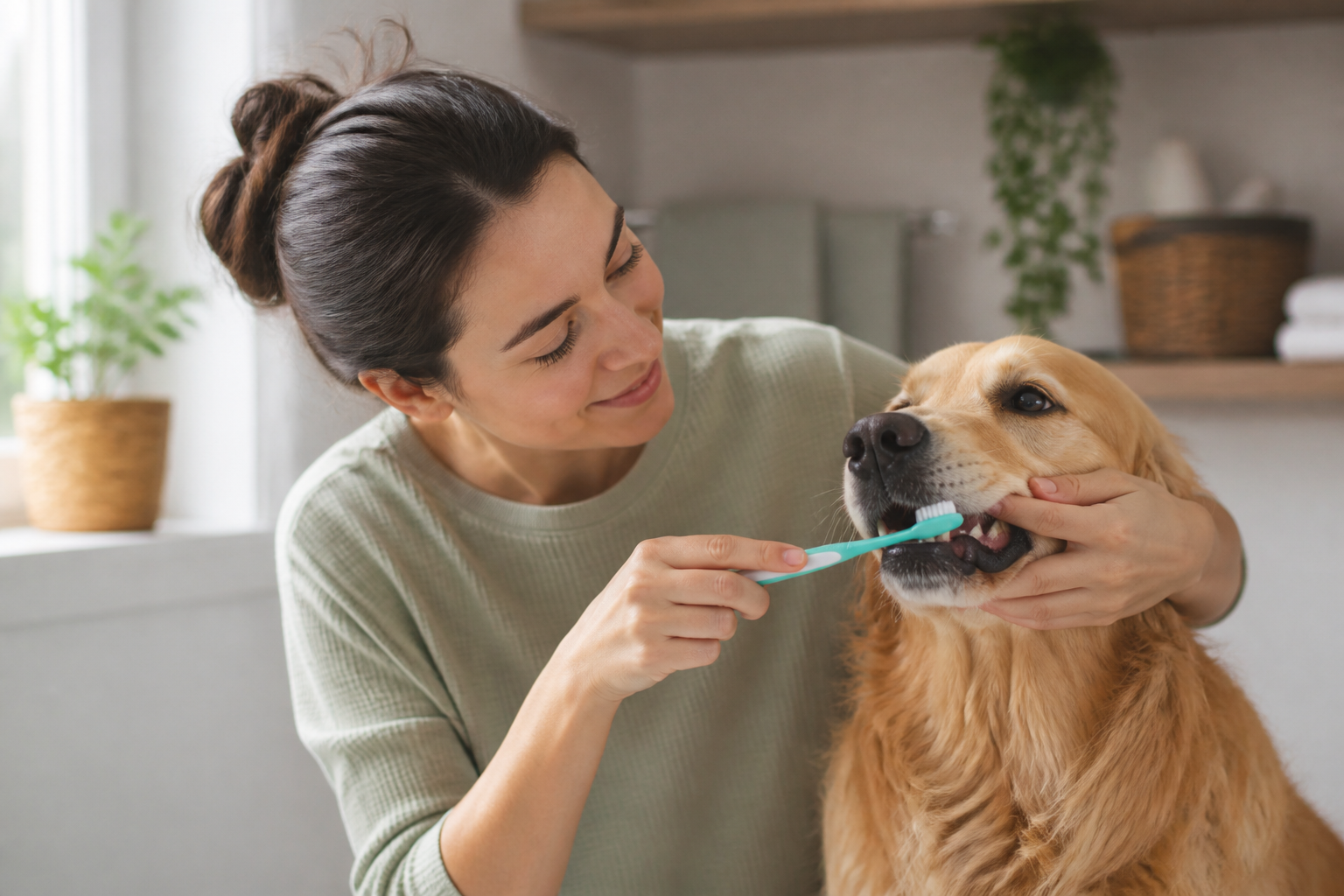
Once they are comfortable with your finger, move to the toothbrush. Apply the paste and hold the brush at a 45-degree angle to the gums. Use small, circular motions. Focus on the outer surfaces of the teeth first. Most dogs do not have much buildup on the inside of their teeth because their tongue helps keep that area clean.
Step 5: Reward and Praise
Always end the session on a high note. Give them a favorite toy or a dental treat immediately after you finish. This reinforces that sitting still for a cleaning leads to something good.
Vet Tip: If you notice your dog's gums bleeding heavily or if they yelp when you touch a specific tooth, stop brushing and schedule a veterinary exam. These can be signs of advanced periodontal disease or a fractured tooth that requires medical attention.
For more guidance on introducing brushing, read these pet dental care tips.
Alternatives to Traditional Brushing
We realize that not every dog will tolerate a toothbrush. If your dog becomes aggressive or extremely stressed, do not force the issue. You can still maintain their oral health using alternative methods.
Dental chews are a popular choice. Brands like Greenies or products with the VOHC (Veterinary Oral Health Council) seal are designed to scrape the teeth as the dog chews. The texture is specifically engineered to rub away plaque. However, keep an eye on the calories. Dental treats should be factored into your dog's daily food intake to prevent weight gain.
Dental toys are another great tool. Kong toys and other textured rubber toys help massage the gums and scrape the teeth during play. Look for toys with ridges or "nubs" that can get into the gaps between teeth.
Water additives and oral gels are passive ways to fight bacteria. You simply add them to the water bowl or apply them to the gums. While they do not provide the scrubbing action of a brush, they can significantly slow down the rate of plaque formation.
Bottom line: A combination of brushing, dental chews, and water additives provides the best defense against dental disease.
Explore our dog dental treats for brushing alternatives, including products from our selection of Greenies products.
The Role of Diet in Dental Health
What your dog eats affects how fast plaque builds up. There is a common belief that dry kibble cleans teeth better than wet food. While kibble does provide some mechanical scraping, most dogs swallow it too quickly for it to make a major difference.
However, specific dental diets are formulated with larger, fibrous kibbles. These do not shatter when the dog bites down. Instead, the tooth sinks into the kibble, allowing the fibers to scrub the surface.
Our pet pharmacy offers prescription dental diets. Brands like Royal Canin and Farmina Vet Life offer specialized formulas for dogs prone to rapid tartar buildup. These diets often include minerals that bind calcium in the saliva, preventing it from hardening into tartar. If your dog has a history of poor dental health, a prescription diet might be the right choice.
Vet Tip: Consult your veterinarian before switching to a prescription dental diet. They can determine if your dog has underlying conditions that might require a different nutritional approach.
Recognizing the Signs of Dental Disease
Even with the best home care, problems can arise. You should check your dog's mouth once a week for any changes. Common warning signs include:
- Persistent bad breath: While "dog breath" is normal, a truly foul, rotting smell is not.
- Discolored teeth: Look for yellow or brown crust near the gumline.
- Red or swollen gums: Healthy gums should be a soft pink color.
- Excessive drooling: This can indicate mouth pain or an inability to swallow properly.
- Changes in eating habits: If your dog starts dropping food or only chewing on one side, they may have a painful tooth.
- Pawing at the mouth: This is a clear sign of discomfort.
If you see these symptoms, it is time for a professional assessment. Home brushing cannot remove hardened tartar. Once the tartar has formed, it must be removed with professional scaling equipment.
For additional warning signs, see this guide to bad teeth in dogs.
Professional Cleanings: What to Expect
A professional veterinary cleaning is much more thorough than what you can do at home. These procedures are performed under general anesthesia for several reasons. First, it allows the vet to clean deep under the gumline where the most damage occurs. Second, it allows for a full set of dental X-rays.
X-rays are essential because most dental disease is hidden beneath the surface. A tooth might look healthy on the outside but have a painful abscess or bone loss at the root. Without anesthesia, a vet cannot safely use sharp instruments or take the necessary images while a dog is moving.
Some facilities offer "anesthesia-free" cleanings. While these might make the teeth look white, they are largely cosmetic. They do not address the bacteria under the gumline, and they do not allow for X-rays. This can give owners a false sense of security while disease continues to progress out of sight.
Managing Senior Dog Dental Care
As dogs age, their dental needs become more complex. Senior dogs are more likely to have gum recession and fragile teeth. They may also have underlying health issues that make anesthesia a bigger concern.
For older pets, consistency is even more important. Daily brushing can help them keep their remaining teeth for longer. If your senior dog needs a professional cleaning, your vet will likely perform bloodwork first. This ensures their organs are healthy enough to process the anesthesia.
We carry several supplements designed for seniors that support overall gum health. Ingredients like Omega-3 fatty acids can help manage inflammation in the mouth. Always talk to your vet about the safest options for an aging pet.
The Cost of Neglect vs. Prevention
Many owners hesitate at the cost of dental supplies or professional cleanings. However, prevention is significantly cheaper than treatment. A basic kit of a brush and paste lasts for months and costs very little.
In contrast, treating advanced periodontal disease can be expensive. This often involves multiple extractions, oral surgery, and long courses of antibiotics and pain medications. Beyond the financial cost, the physical toll on your dog is high. Frequent infections and chronic pain can significantly decrease their quality of life and longevity.
Using our Autoship programme for your dog's dental treats and toothpaste is a great way to stay consistent. You save money on every order and never run out of the supplies you need to keep their mouth healthy.
Making Dental Care a Habit
The hardest part of cleaning your dog's teeth is remembering to do it. Try to link it to an existing habit. You might brush your dog's teeth right after you brush your own at night. Or, make it a part of their grooming routine after their weekly bath.
If you have a new puppy, start today. Puppies that are handled frequently and have their mouths touched from a young age are much easier to care for as adults. Even if they still have their baby teeth, the goal is to build the habit.
For adult dogs, remember that it is never too late to start. Even if they already have some tartar, brushing can prevent the condition from getting worse. Be patient, stay calm, and keep the sessions short.
Summary of Best Practices
Maintaining a healthy mouth takes a multi-pronged approach. No single product is a "magic bullet" that eliminates the need for effort.
- Brush Daily: Even 60 seconds of brushing can make a massive difference.
- Use the Right Tools: Only use dog-safe paste and soft brushes.
- Check Weekly: Look for redness, swelling, or broken teeth.
- Schedule Exams: Annual dental checks with your vet are mandatory.
- Support with Diet: Use VOHC-approved treats and consider prescription diets if needed.
Keeping your dog's teeth clean is one of the best things you can do for their long-term wellness. By following these steps and using the right supplies from BaxterBoo, you can ensure your dog enjoys a pain-free life and much fresher breath.
Key Takeaway: Consistent home care combined with regular veterinary checkups is the only way to truly prevent advanced dental disease in dogs.
FAQ
How often do I really need to brush my dog's teeth?
Ideally, you should brush your dog's teeth every single day. Plaque begins to harden into tartar within 48 hours, so brushing every few days is the minimum requirement to prevent buildup. If daily brushing is not possible, aim for at least three times a week to maintain basic oral hygiene.
Can I use baking soda to clean my dog's teeth?
It is best to avoid using baking soda for your dog's dental care. While it is not strictly toxic in tiny amounts, it has a very high alkaline content that can upset a dog's stomach if swallowed. Furthermore, dogs generally hate the taste, which can make them resist future attempts at tooth brushing.
What should I do if my dog's gums are bleeding?
If you see a small amount of blood when you first start a brushing routine, it may just be a sign of mild gingivitis. However, if the bleeding is heavy, persistent, or accompanied by a foul odor, you should stop and see a veterinarian. This usually indicates that the infection has moved below the gumline and requires professional treatment.
Are dental chews enough to keep teeth clean?
While high-quality dental chews are helpful, they are not a replacement for brushing. Chews mostly clean the chewing surfaces of the back teeth and may miss the canine teeth or the gumline where most disease starts. Think of dental chews as a supplement to a routine that includes manual brushing and regular veterinary exams.






