
 Save 15% on your 1st Autoship learn more

 Email us
 Live Chat
 FAQs
FAQs





Introduction
You are sitting on the rug playing tug-of-war when your dog lets out a big yawn. Instead of the usual puppy breath, you notice a sharp, sour odor. You take a closer look and see a film of yellow buildup along the gumline. This is the moment many owners realize that a simple dental chew once a week might not be enough. At BaxterBoo, we know that keeping your dog's mouth healthy is about more than just fresh breath. It is a vital part of their overall wellness that can add years to their life. This guide covers how to perform a thorough cleaning at home, the tools you need, and when it is time to call in a professional. Consistent home care is the most effective way to prevent painful dental disease.
Quick Answer: Deep cleaning your dog's teeth at home involves daily brushing with enzymatic toothpaste and a pet-specific brush. You can supplement this with dental wipes, water additives, and VOHC-approved chews to reduce plaque. However, only a veterinarian can remove hardened tartar from below the gumline during a professional cleaning.
The Importance of Routine Oral Care
Dental disease is one of the most common health issues in dogs. Most pets show some sign of periodontal disease by the time they are three years old. This starts with plaque, which is a sticky film of bacteria that forms on the teeth after eating. If you do not remove plaque within twenty-four to forty-eight hours, it hardens into tartar. Tartar is a cement-like substance that traps bacteria against the gums.
Once tartar forms, it causes inflammation known as gingivitis. You might see a thin red line along the gums. If left alone, this leads to infection, tooth loss, and even bone damage. The bacteria in the mouth can also enter the bloodstream. From there, it may travel to the heart, liver, and kidneys. This is why a clean mouth is a cornerstone of a healthy body. For more guidance, read about warning signs of bad teeth in dogs.
Choosing the Right Dental Supplies
You cannot use human products for your dog. Human toothpaste contains fluoride and often xylitol. Xylitol is a sweetener that is highly toxic to dogs. Fluoride can cause severe stomach upset if swallowed. Since dogs cannot spit, they need a paste specifically formulated for them.
Enzymatic Toothpaste
The best dog toothpastes are enzymatic. These contain enzymes that help break down food particles and plaque even if you do not scrub every single surface. Most come in flavors dogs love, such as poultry, beef, or peanut butter. This makes the experience feel like a treat rather than a chore. A pet-specific enzymatic dog toothpaste can help you begin a consistent routine.
Selecting a Brush
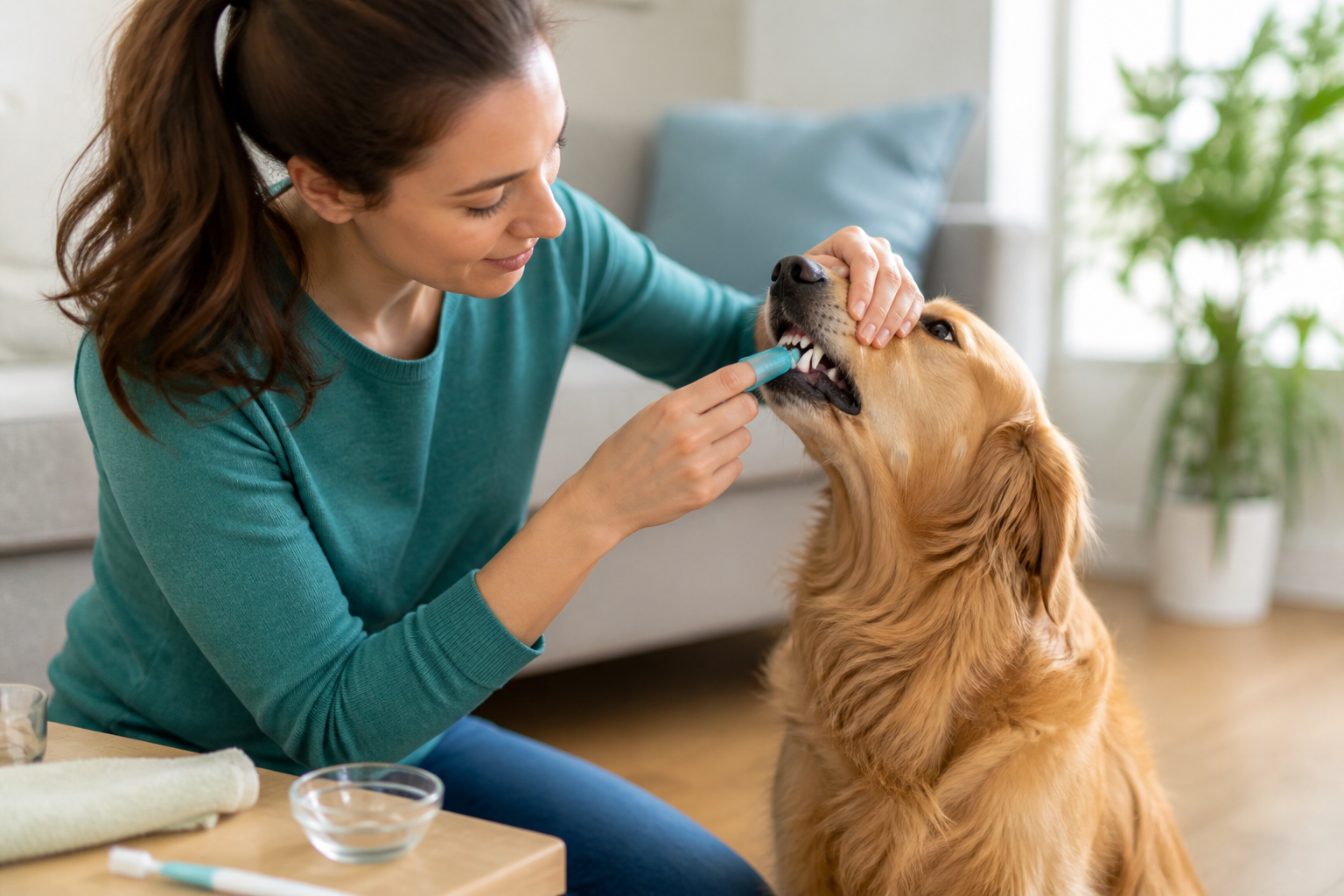
There are several types of brushes available. A long-handled brush with angled heads helps you reach the back molars. These often have a large head on one end and a smaller head on the other for tiny teeth. Finger brushes are made of soft silicone and fit over your fingertip. These are great for puppies or dogs who are nervous about a long plastic object in their mouth. You can compare brushes, toothpaste, and other options in our dog dental care collection.
Dental Wipes
If your dog flatly refuses a brush, dental wipes are a helpful middle ground. They are textured pads treated with cleaning solution. You wrap the wipe around your finger and rub the surface of each tooth. While they do not reach into the crevices as well as bristles, they are excellent for removing daily plaque film.
Key Takeaway: Always use pet-specific toothpaste and a soft-bristled brush to avoid toxicity and gum irritation. Consistency matters more than the specific brand of brush you choose.
Step-by-Step Guide to Brushing at Home
Deep cleaning at home is a process that requires patience. Do not expect to brush every tooth on the first try. Your goal is to make this a positive experience so your dog cooperates long-term. These gradual steps are also covered in our pet dental care tips.
Step 1: Introduce the paste / Put a small dab of dog toothpaste on your finger. Let your dog lick it off. Do this for a few days until they get excited when they see the tube.
Step 2: Touch the teeth and gums / While your dog licks the paste, gently lift their lip. Rub your finger along their gums and teeth. This gets them used to the sensation of having their mouth handled.
Step 3: Introduce the brush / Put toothpaste on the brush and let your dog lick it. Slowly start to move the brush in a circular motion on the front canines. Keep the session under thirty seconds and give a high-value treat afterward.
Step 4: Focus on the outside surfaces / Most plaque builds up on the cheek side of the teeth. Lift the lip and brush in small circles along the gumline. You do not usually need to brush the inside surfaces by the tongue, as the tongue naturally cleans those areas.
Step 5: Reach the back molars / Slide the brush back toward the jaw. This is where the heaviest tartar often hides. Be gentle and move quickly. If your dog gets restless, stop and try again the next day.
Vet Tip: If you notice bleeding gums during brushing, do not panic. Small amounts of blood can occur if the gums are slightly inflamed. However, if the bleeding is heavy or the gums look very red, stop and consult your veterinarian for an exam.
Using Dental Chews and Toys
Brushing is the gold standard, but it is not the only tool. Chewing is a natural behavior that helps scrape plaque off the teeth through mechanical action. BaxterBoo carries a wide range of toys from brands like Kong that are designed with ridges and textures to clean teeth during play.
Dental chews are also helpful. Look for products with the VOHC seal. This means the Veterinary Oral Health Council has verified that the product effectively reduces plaque or tartar. These chews often contain ingredients that help freshen breath and slow down the hardening of plaque. You can explore dental chews for dogs for additional ideas.
Note: Avoid hard items like real bones, cow hooves, or hard plastic toys. These are often harder than the tooth enamel. They can cause painful fractures that require expensive extractions.
Water Additives and Rinses
For dogs that are particularly difficult to handle, water additives offer a hands-off approach. These are liquid solutions you pour into your dog's water bowl. They contain enzymes and zinc that help kill oral bacteria. While they cannot replace the mechanical scrubbing of a brush, they are a great way to keep bacteria levels low throughout the day. This is especially helpful for senior dogs or pets with crowded teeth. Dental supplements and oral care products can provide additional options.
The Role of Diet in Oral Health
What your dog eats affects their teeth. Some owners believe that kibble naturally cleans teeth because it is crunchy. Most kibble actually crumbles too quickly to provide much cleaning benefit. However, there are specific therapeutic dental diets available.
These diets use larger kibble pieces with a specific fiber matrix. The tooth sinks into the kibble rather than the kibble shattering. This wipes the tooth surface as the dog chews. Our pharmacy at BaxterBoo provides access to these prescription diets. If your veterinarian recommends a specific dental food, we can help you get it delivered to your door.
Bottom line: A combination of brushing, dental toys, and a proper diet provides the most thorough protection against dental disease.
Professional Cleaning vs. At-Home Care
It is important to understand the limits of at-home cleaning. You can remove plaque, which is soft. You cannot safely remove tartar at home. Tartar is bonded to the tooth. Trying to scrape it off with metal tools can scratch the enamel and cause more bacteria to grow.
A professional cleaning at a veterinary clinic involves anesthesia. This allows the vet to clean under the gumline and take X-rays. X-rays are crucial because a large portion of dental disease happens where you cannot see it.
| Aspect | At-Home Cleaning | Professional Cleaning |
|---|---|---|
| Primary Goal | Prevention of plaque and tartar | Treatment of existing disease |
| Frequency | Daily or 3 times per week | Usually once per year |
| Tools | Toothbrush, paste, chews | Ultrasonic scalers, X-rays |
| Anesthesia | None required | Required for safety and depth |
| Cost | Very low | Moderate to high |
Identifying Signs of Dental Pain
Dogs are very good at hiding pain. They will often continue to eat even if they have a broken tooth or an abscess. You must be observant to catch problems early. If you see any of the following signs, schedule a veterinary visit.
- Persistent bad breath that does not go away after brushing.
- Drooling more than usual.
- Pawing at the mouth or rubbing the face on the carpet.
- Dropping food while eating or chewing on only one side.
- Visible brown or grey buildup on the teeth.
- Gums that are swollen, bleeding, or receding.
Our pharmacy offers various medications and treatments that your vet might prescribe for oral infections or pain management. Having a prescription on file with us makes it easy to manage your pet's long-term health needs.
Training Tips for a Successful Routine
Making dental care a habit takes about three weeks of daily effort. Try to brush at the same time every day, such as right before bed or after a walk. Use a specific "dental treat" that they only get after a successful brushing session.
If your dog is very resistant, start with just one tooth. Give a treat and walk away. The next day, do two teeth. Building trust is more important than cleaning the whole mouth in one go. If you remain calm and upbeat, your dog will eventually view brushing as just another way to get attention and rewards.
Specific Needs for Small and Flat-Faced Breeds
Small dogs like Chihuahuas and Yorkies are more prone to dental problems. Their teeth are often crowded in their small mouths, which creates many places for bacteria to hide. Flat-faced breeds, such as Pugs or Bulldogs, often have misaligned jaws. This prevents their teeth from cleaning themselves naturally through chewing.
If you own one of these breeds, you must be even more diligent with daily care. They may need professional cleanings more frequently than larger dogs. Regular checks of their mouth should be a part of your weekly grooming routine.
Key Takeaway: Small and brachycephalic breeds require extra attention because their jaw structure makes them high-risk for early-onset periodontal disease.
Managing Senior Dog Dental Health
As dogs age, their immune systems change. A senior dog might have a harder time fighting off oral infections. They may also have sensitive teeth due to years of wear. When cleaning a senior dog's teeth, use extra soft brushes or wipes.
Keep a close eye on their eating habits. If an older dog suddenly stops eating dry food but will eat wet food, it is a major red flag for dental pain. Do not assume they are just becoming "picky" with age. Addressing dental issues in senior dogs can significantly improve their quality of life and energy levels.
Conclusion
Deep cleaning your dog's teeth at home is one of the best things you can do for their longevity. While it may feel daunting at first, the right tools and a slow introduction make it manageable. Remember to use pet-safe toothpaste and aim for consistency over perfection. We are here to support your journey with a wide selection of brushes, toys, and pharmacy services. By combining daily home care with annual veterinary exams, you can keep your dog's smile bright and healthy for years to come. Check out our dental care category for everything you need to get started today.
Bottom line: Brushing is your first line of defense, but a multi-layered approach including toys, chews, and professional checkups is the best way to ensure your dog stays healthy.
FAQ
Can I use baking soda to clean my dog's teeth at home? It is better to avoid using baking soda regularly. While it is not as toxic as human toothpaste, it has a high alkaline content that can upset a dog's stomach if swallowed in large amounts. It also has a bitter taste that might make your dog dislike the brushing process. Enzymatic pet toothpaste is much more effective at breaking down plaque and tastes better to your dog.
How often do I really need to brush my dog's teeth? Ideally, you should brush your dog's teeth every day. Plaque can start to harden into tartar within twenty-four to forty-eight hours. If you cannot manage a daily routine, aim for at least three times per week. Brushing once a week or once a month provides very little benefit because the tartar will have already formed by then.
What should I do if my dog hates the toothbrush? If your dog is terrified of the brush, switch to dental wipes or a silicone finger brush. These feel more like petting and less like a foreign object. You can also focus on using water additives and dental toys to help reduce bacteria until your dog becomes more comfortable with manual cleaning. Patience and positive reinforcement are essential for nervous pets.
Is it safe to scrape tartar off my dog's teeth myself? No, you should never use metal dental scalers on your dog at home. It is very easy to slip and cut the gums or damage the enamel. Furthermore, scaling the visible part of the tooth does nothing for the bacteria hiding under the gumline. Only a trained veterinary professional should perform scaling and polishing to ensure the teeth are cleaned safely and thoroughly.






