Save 15% on your 1st Autoship learn more

 Email us
 Live Chat
 FAQs
FAQs





Introduction
You are relaxing on the sofa with your cat when you notice a dusting of white specks across their back. At first, you might think it is just dust or a bit of litter. When you look closer, you realize these are small flakes of dry skin clinging to their fur. While a few flakes might seem minor, they are often a sign that your cat needs a little extra help with their skin and coat health.
At BaxterBoo, we see this often. Cat owners frequently ask us how to get their pet's coat back to its sleek, shiny self. This post covers the most common causes of feline flakes and provides a clear plan to help you clear them up. We will look at grooming habits, hydration needs, and nutritional changes. Understanding why these flakes appear is the first step toward getting rid of them for good.
Quick Answer: Cat dandruff is usually eliminated by increasing hydration through wet food, using a humidifier in dry months, and brushing your cat daily to distribute natural skin oils. If flakes are accompanied by itching or redness, a vet visit is necessary to rule out parasites or infections.
Understanding Cat Dandruff vs. Cat Dander
It is easy to get these two terms confused. Every cat has dander. Dander consists of microscopic skin cells that shed naturally as part of the body's normal cycle. You cannot see dander with the naked eye, though it is often what triggers allergies in humans.
Dandruff is different. These are larger, visible flakes of dead skin that have clumped together. When a cat's skin becomes too dry, too oily, or irritated, these cells shed more rapidly than usual. This creates the "snow" you see on their fur or in their favorite sleeping spots.
Why the Flakes Appear
The skin is the largest organ of your cat's body. It acts as a barrier against the environment. When that barrier is compromised, the skin loses moisture. This leads to irritation and flaking. In some cases, the skin produces too much oil, which traps the dead skin cells and causes them to flake off in greasy clumps. Both dry and oily dandruff are signs that the skin is out of balance.
Identifying the Common Causes
Before you can fix the problem, you need to know why it is happening. Most cases of cat dandruff fall into three categories: lifestyle factors, environmental conditions, or underlying health issues.
Environmental Dryness
During the winter, many homes have very low humidity due to central heating. This saps moisture from your cat's skin just like it does to yours. If you only notice flakes when the heater is running, the environment is likely the culprit.
Poor Nutrition
A cat's coat requires specific nutrients to stay healthy. If their food is low in essential fatty acids, their skin can become brittle and dry. This is common in low-quality diets or foods that have been stored for too long, causing the fats to go rancid.
Difficulty Grooming
Cats are usually excellent at cleaning themselves. However, if a cat cannot reach certain areas, dead skin and loose hair will build up. This is very common in cats with:
- Obesity (they cannot reach their lower back or tail base)
- Arthritis (pain makes it hard to twist and groom)
- Dental pain (it hurts to use their mouth for cleaning)
Vet Tip: If your cat has suddenly stopped grooming or if the dandruff is localized to the lower back, schedule a check-up. This is often a secondary sign of mobility issues or weight-related problems that require professional management.
Steps to Eliminate Flakes with Better Grooming
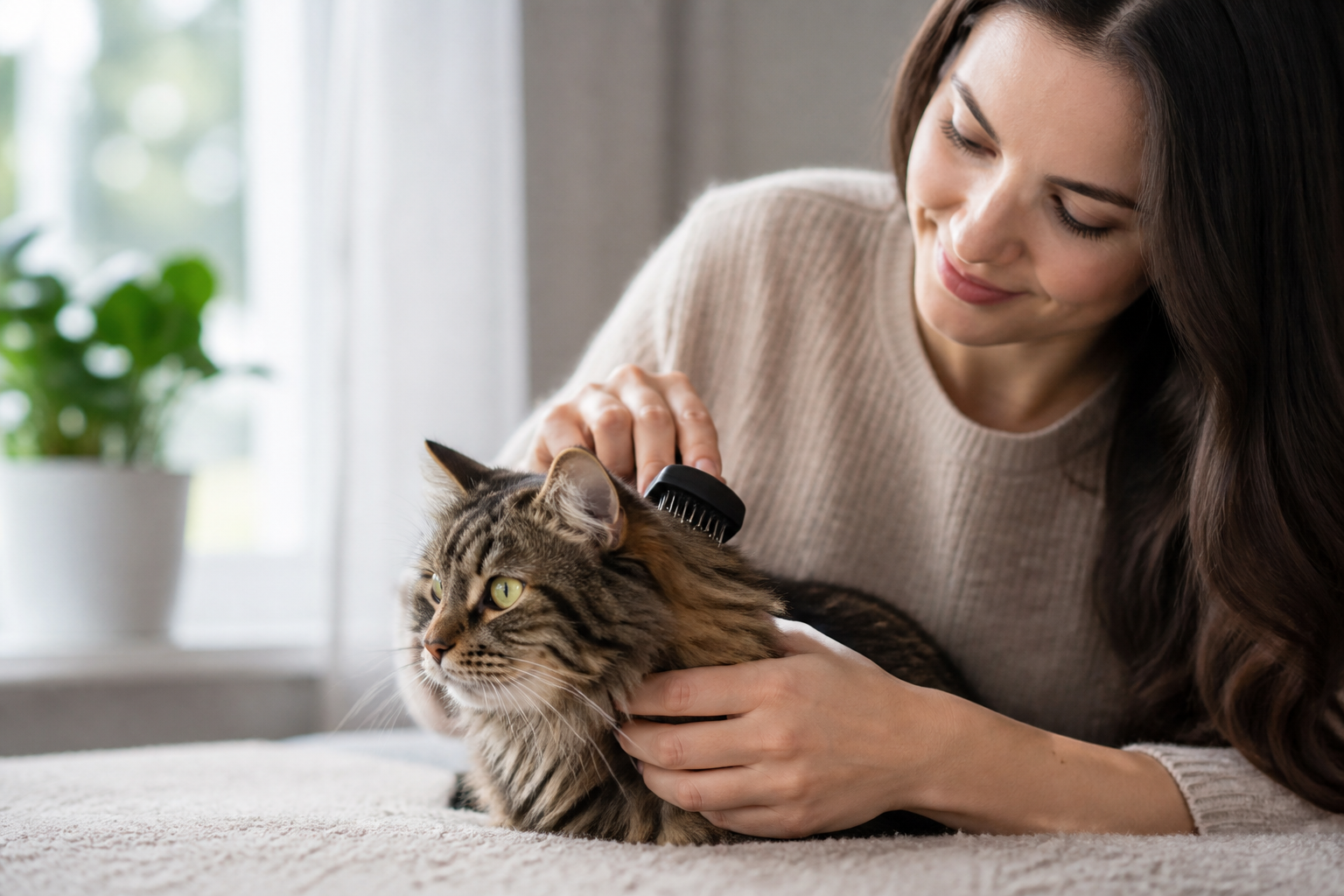
Daily grooming is the most effective way to manage mild dandruff. When you brush your cat, you are doing more than just removing loose fur. You are stimulating the skin and moving natural oils from the skin's surface down the hair shaft. Explore our cat grooming supplies to find brushes and other tools for your routine.
Step 1: Choose the right tool. / For most cats, a soft slicker brush or a rubber grooming mitt works best. These tools are gentle enough not to irritate the skin but effective at grabbing loose flakes.
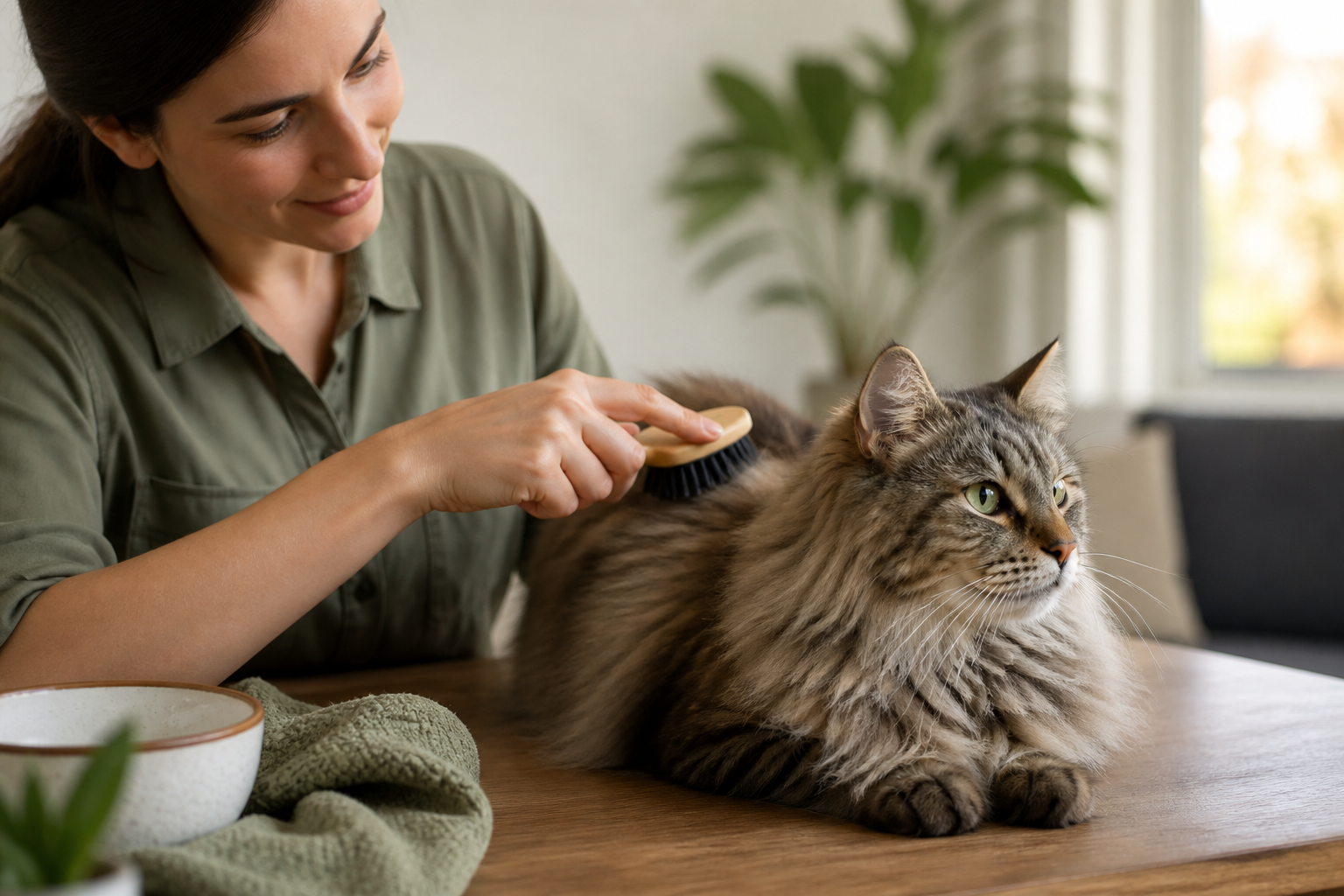
Step 2: Establish a routine. / Brush your cat for five minutes every day. Start at the head and work your way back to the tail. Pay extra attention to the base of the spine, as this is where dandruff tends to accumulate.
Step 3: Check the skin. / As you brush, look for redness, bumps, or "flea dirt." Flea dirt looks like tiny black pepper specks. If you see this, you are dealing with a parasite issue rather than simple dry skin.
Should You Bathe a Cat with Dandruff?
Most experts advise against frequent bathing. Cats find baths stressful, and stress can actually worsen skin conditions. Furthermore, many shampoos can strip away the very oils your cat needs. If you must use a topical product, look for a waterless mousse or a conditioning spray designed specifically for felines. These provide moisture without the trauma of a full bath. Waterless grooming options can be useful for cats that do not tolerate traditional baths.
The Role of Hydration and Diet
Cats have a low thirst drive. In the wild, they get most of their moisture from their prey. If your cat eats only dry kibble, they may be in a state of mild, chronic dehydration. This shows up very quickly in the quality of their skin.
Increasing Water Intake
To help hydrate your cat's skin from the inside out, consider these changes:
- Add wet food to their daily routine.
- Switch to a ceramic or stainless steel water fountain to encourage more drinking.
- Add a splash of tuna juice (unsalted) or plain bone broth to their water bowl.
Essential Fatty Acids
Omega-3 and Omega-6 fatty acids are the building blocks of a healthy coat. Supplements like fish oil or green-lipped mussel oil can make a massive difference in skin elasticity. Brands like Zesty Paws or Honest Paws offer feline-friendly oils that you can pump directly onto their food. It usually takes 3 to 4 weeks of consistent supplementation to see a change in the coat. Consider our cat skin and coat care selection when comparing available options.
Key Takeaway: Skin health starts from within. Increasing moisture in the diet and adding Omega fatty acids is often more effective than any topical spray or shampoo.
Addressing Parasites and "Walking Dandruff"
Sometimes, those white flakes are not actually skin. There is a specific mite called Cheyletiella that looks exactly like dandruff. This condition is nicknamed "walking dandruff" because if you watch closely, the flakes seem to move. These mites are highly contagious and can cause intense itching.
If your cat is scratching more than usual, or if you have multiple pets with flaky skin, you must see a veterinarian. They can perform a skin scraping or use a piece of clear tape to catch a mite and look at it under a microscope.
Regular flea and tick prevention is vital. We carry a wide range of preventives through our cat flea and tick collection, including FDA-approved options like Frontline or NexGard. Our partnership with Pet's Choice ensures you can get both over-the-counter and prescription-strength protections delivered to your door. Keeping your cat on a monthly preventive prevents most parasite-related skin issues before they start.
For more information about parasite prevention, read how flea collars work.
Weight Management and Mobility
If your cat is carrying extra weight, they simply cannot reach the base of their tail or the middle of their back. This leads to a buildup of oils and dead skin in those specific spots. Over time, this can lead to painful matting and skin infections.
Helping your cat lose weight is a long-term solution for dandruff. This might involve switching to a prescription weight management diet, such as Farmina Vet Life. These diets are formulated to keep your cat feeling full while reducing calorie intake. You can also explore Farmina Vet Life feline diets when discussing options with your veterinarian.
If your cat is a senior, dandruff might be a sign of arthritis. When it hurts to move, they will skip their grooming sessions. In these cases, mobility supplements containing glucosamine and chondroitin can help. Brands like Cosequin or Senilife are excellent for supporting joint health. Once your cat feels more comfortable, they will likely return to their normal grooming habits.
Managing the Indoor Environment
Low humidity is a major factor for indoor cats. If your skin feels tight or your hair is static-heavy in the winter, your cat is likely feeling the same thing.
Use a Humidifier
Running a humidifier in the room where your cat spends the most time can significantly improve their skin health. Aim for a humidity level between 40% and 50%. This prevents the air from pulling moisture out of their skin and coat.
Clean Bedding Regularly
Dandruff flakes and oils can accumulate in cat beds. This creates a cycle of irritation. Wash their bedding once a week in a fragrance-free, hypoallergenic detergent. Avoid using dryer sheets, as the chemicals and perfumes can irritate a cat's sensitive skin and lead to more flaking.
| Solution Category | Specific Action | Expected Result |
|---|---|---|
| Grooming | Daily brushing with a slicker brush | Removes dead cells and spreads skin oils |
| Diet | Add wet food or fish oil supplements | Hydrates skin and reduces inflammation |
| Environment | Run a humidifier in winter months | Prevents skin from drying out due to heaters |
| Health | Use monthly flea and tick prevention | Eliminates parasite-related flaking |
When to Seek Veterinary Care
While most cat dandruff is a cosmetic issue, it can sometimes be a red flag for internal health problems. The skin and coat often reflect what is happening inside the body. Chronic conditions like diabetes, kidney disease, or hyperthyroidism can cause the coat to become dull and flaky.
You should make a veterinary appointment if you notice:
- Large patches of hair loss (alopecia)
- Red, raw, or bleeding skin
- An unpleasant odor coming from the skin
- Scabs or crusty lesions
- Changes in thirst or urination habits
- Sudden weight loss despite a good appetite
A veterinarian can run blood work to rule out metabolic issues. They may also suggest a prescription diet. Our cat pharmacy carries many of these specialized foods through our Pet's Choice partnership. Having a prescription on file allows us to ship these medical diets directly to your home through our Autoship programme, which also helps you save on every order.
Vet Tip: Never use human dandruff shampoos on a cat. These often contain zinc or salicylic acid, which can be toxic if your cat licks their fur. Only use products specifically labeled for feline use.
Comparing Feline Grooming Tools
Not all brushes are created equal when it comes to dandruff. The goal is to reach the skin without scratching it.
Slicker Brushes
These have fine wire bristles that are slightly bent at the tips. They are excellent for removing loose undercoat and dander. We recommend brands like Kong for their ergonomic handles and durable designs. Browse our grooming tools for brush and comb options.
Rubber Mitts or Brushes
If your cat is sensitive to wire brushes, a rubber mitt is a great alternative. The rubber creates a small amount of static that pulls loose flakes away from the coat. It also provides a massage-like experience that most cats enjoy.
De-shedding Tools
For long-haired cats, a de-shedding tool can help remove the thick undercoat where dandruff often gets trapped. Use these sparingly, perhaps once a week, as they can be more intense on the skin than a standard brush.
Bottom line: A combination of daily gentle brushing and weekly deep grooming is the best defense against a flaky coat.
Summary of Next Steps
Eliminating cat dandruff is rarely a "quick fix" that happens overnight. It requires a consistent approach to nutrition and care. By focusing on hydration and regular grooming, you can usually see a significant improvement within a month.
- Step 1: Start daily brushing sessions to clear existing flakes.
- Step 2: Increase moisture by adding wet food to their diet.
- Step 3: Add an Omega-3 supplement to support the skin barrier.
- Step 4: Consult your vet if you see signs of itching or skin redness.
At BaxterBoo, we want to help you keep your cat comfortable and flake-free. Our team carefully chooses every product we carry, from the supplements to the grooming tools, to ensure they meet the high standards your pet deserves.
If you are ready to start your cat's skin health journey, browse our Skin and Coat Care section. You might also consider signing up for the MVP Rewards programme to earn points on every purchase of food and grooming supplies. If your cat needs specialized care, remember that our pharmacy is here to provide the medications and prescription diets they need to thrive.
FAQ
Can I use coconut oil to treat my cat's dandruff?
You can apply a very small amount of food-grade coconut oil to dry patches, but be careful. Cats will immediately lick it off, and too much fat in their diet can lead to stomach upset or pancreatitis. It is generally more effective to use a fish oil supplement mixed into their food, which works from the inside out.
Why is my cat's dandruff only at the base of their tail?
This is the most common spot for dandruff because it is the hardest area for a cat to reach. If a cat is overweight or has stiff joints from arthritis, they cannot twist enough to groom this area properly. Daily brushing and weight management are usually the best ways to fix localized flakes in this spot.
Is cat dandruff contagious to humans?
Regular dandruff caused by dry skin or diet is not contagious. However, if the dandruff is caused by parasites like Cheyletiella mites (walking dandruff) or a fungal infection like ringworm, it can be passed to humans and other pets. If you notice skin lesions on yourself or other animals in the house, see a vet and a doctor immediately.
How long does it take for cat dandruff to go away?
It generally takes about 21 to 30 days for a cat's skin cells to completely turn over. This means that even after you start a new supplement or grooming routine, it will take about a month to see the full results. Consistency is key, so do not give up if the flakes do not vanish after the first few days.