
 Save 15% on your 1st Autoship learn more

 Email us
 Live Chat
 FAQs





Introduction
You are relaxing on the sofa when your cat jumps up for a pet. As you stroke their back, you notice tiny white flakes scattered across their fur. It looks a bit like salt or snow against their coat. You might wonder if they are itchy, or if you need to change their shampoo. At BaxterBoo, we help cat owners navigate these small but stressful health moments every day. While a few flakes might seem like a simple cosmetic issue, they often signal that your cat’s skin needs more moisture or better nutrition. This post covers how to identify the cause of those flakes and how to use natural methods to restore a glossy, healthy coat. We will look at hydration, grooming habits, and environmental changes that make a real difference. Finding the right balance of care will help your cat feel comfortable and flake free.
Understanding Feline Dandruff
Cat dandruff is the result of dead skin cells shedding at a higher rate than normal. All cats shed skin, but it is usually microscopic and invisible. This invisible shedding is called dander. When the skin becomes dry, irritated, or oily, those skin cells clump together. This creates the visible white flakes we call dandruff.
It is important to distinguish dandruff from other things you might find in a coat. Flea dirt looks like black pepper and turns red when touched with a wet paper towel. Walking dandruff is actually a type of mite that moves. If the white flakes seem to be crawling, you are dealing with a parasite rather than just dry skin.
Most natural dandruff occurs along the lower back and near the base of the tail. This is often because it is the hardest area for a cat to reach during their daily grooming routine. If you see flakes primarily in these spots, your cat might just need a little help with their beauty regimen.
Quick Answer: Natural ways to eliminate cat dandruff include increasing hydration through wet food, daily brushing to distribute natural oils, and adding Omega-3 supplements to their diet. Using a humidifier in dry environments can also prevent the skin from flaking.
Cat Skin & Coat Care













The Role of Internal Hydration
Cats have a very low thirst drive. In the wild, they get most of their moisture from their prey. Many domestic cats eat a diet of strictly dry kibble. This can lead to a state of chronic mild dehydration. When a cat is not hydrated, their body pulls moisture from the skin to support vital organs. This leaves the skin brittle and prone to flaking.
Switching to Wet Food
One of the most effective natural ways to fix dry skin is to add moisture to the diet. Wet canned food is roughly 75 percent water. Dry kibble is usually only 10 percent water. Even adding one small meal of wet food a day can improve skin elasticity.
If your cat is stubborn about their food, try adding a small amount of warm water or tuna juice to their dry kibble. This creates a gravy that increases their fluid intake without a total diet overhaul. We carry many brands like Tiki Cat and Fussie Cat that focus on high moisture content to support this need.
Encouraging More Drinking
Cats are often finicky about their water bowls. They have a natural instinct to avoid still water, which can harbor bacteria in the wild. If your cat is not drinking enough, consider a water fountain. The moving water is more attractive to them.
Keep water bowls away from the litter box and the food bowl. Some cats do not like the smell of their food near their water source. Providing multiple water stations throughout the house can also encourage more frequent sipping.
Key Takeaway: Proper skin health starts from the inside. Increasing moisture through wet food and moving water sources is often the fastest way to reduce flakes naturally.
Nutritional Support with Essential Fatty Acids
The quality of the fats in your cat's diet directly impacts the quality of their coat. Specifically, Omega-3 and Omega-6 fatty acids are vital. These fats help build the skin’s natural barrier. This barrier keeps moisture in and irritants out.
The Benefits of Fish Oil
Adding a high quality fish oil to your cat's food can yield visible results in just a few weeks. Look for oils derived from wild caught salmon or small fish like sardines. These are rich in EPA and DHA. These nutrients reduce inflammation in the skin.
If your cat has sensitive skin, they may be reacting to a lack of these healthy fats. Brands like Zesty Paws or Honest Paws offer targeted supplements that are easy to mix into a daily meal. Always start with a small dose to ensure your cat's stomach handles the change well. Explore our cat vitamins and supplements for additional options.
Checking the Ingredient Label
Sometimes the cause of dandruff is a low quality diet. If a food is full of fillers and lacks animal based fats, the coat will suffer. Check your cat’s current food for specific meat sources. Foods that use "animal by products" or "meat meal" without naming the species may lack the consistent nutrient profile your cat needs.
Switching to a premium brand like Acana, Orijen, or Open Farm can make a massive difference. These brands prioritize whole ingredients that naturally contain the fats needed for skin health. Browse our cat food selection to compare wet, dry, and specialty recipes.
Mastering the Grooming Routine
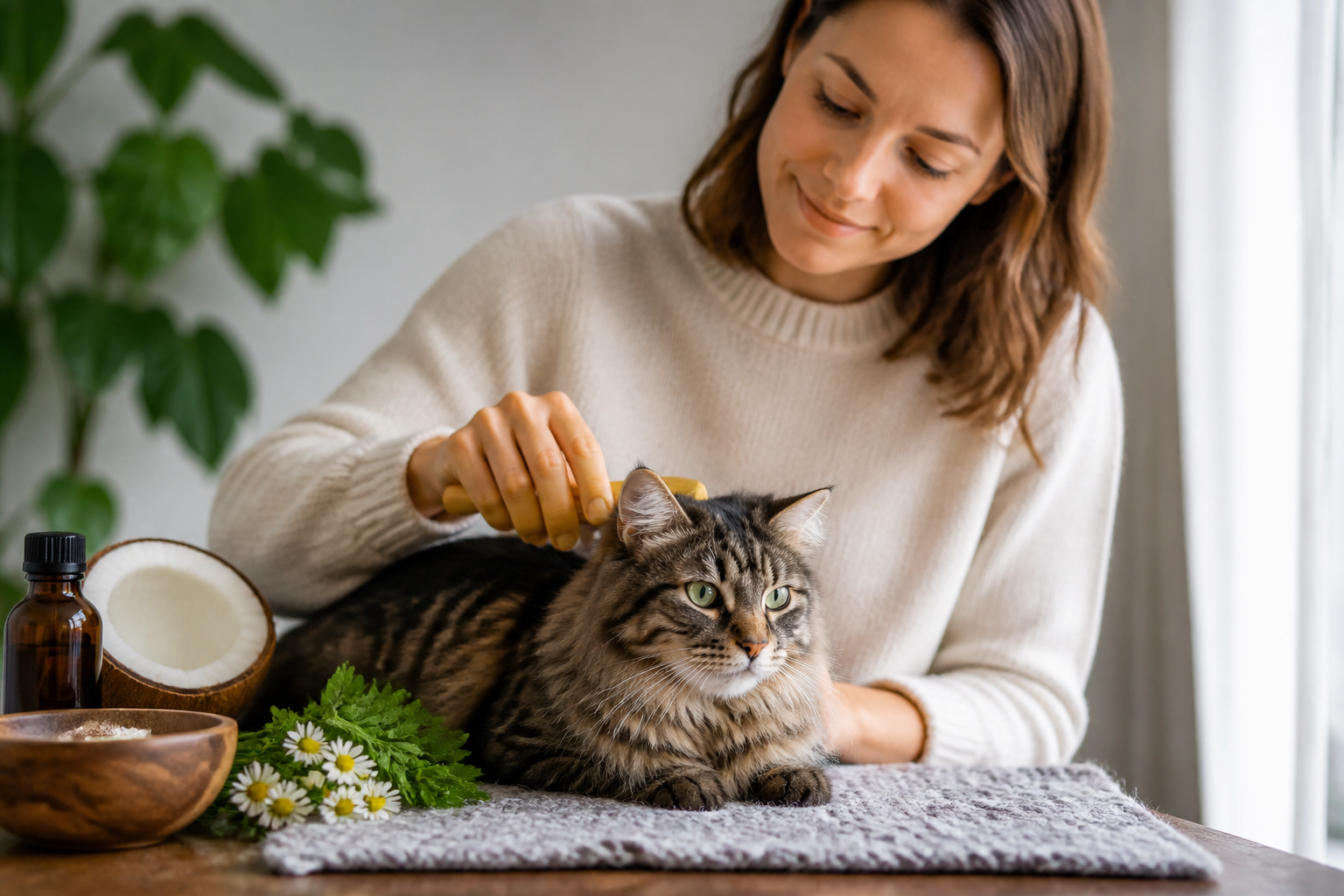
Brushing is not just about removing loose hair. It is a vital part of skin health. When you brush your cat, you stimulate the blood flow to the skin surface. You also help distribute sebum. Sebum is the natural oil produced by the skin that keeps the coat waterproof and shiny.
Choosing the Right Tools
The type of brush you use depends on your cat's coat. A slicker brush is great for removing loose undercoat in long haired cats. For short haired cats, a rubber curry brush or a soft bristle brush is often better. These tools massage the skin without causing irritation. Our cat grooming supplies include brushes, combs, wipes, and other coat-care tools.
Step 1: Choose a quiet time. / Pick a moment when your cat is relaxed, such as after a meal or during a nap.
Step 2: Start gently. / Use light strokes in the direction of hair growth to get them used to the feeling.
Step 3: Focus on the back. / Spend extra time on the lower back and tail base where dandruff usually clusters.
Step 4: Reward them. / Give a small treat after the session to create a positive association with grooming.
Should You Bathe a Cat with Dandruff?
Many owners assume a bath is the only way to get rid of flakes. However, too much bathing can actually make dandruff worse. Water and soap can strip away the very oils you are trying to preserve. Unless your cat is actually dirty or has a medical skin infection, skip the full bath.
Instead, use a moisturizing grooming wipe or a waterless foam shampoo. These products allow you to target the flaky areas without the stress of a tub. Look for formulas with oatmeal or aloe vera. These ingredients soothe itchy skin naturally.
Vet Tip: If you notice your cat has bald patches, red sores, or is scratching until they bleed, consult your veterinarian. These symptoms often indicate an allergy or infection that natural grooming alone cannot fix.
Environmental and Lifestyle Factors
Your home environment plays a large role in your cat's skin health. This is especially true during the winter months. Heating systems blow dry air through the house, which sucks moisture out of the air and your cat’s skin.
Using a Humidifier
Adding a humidifier to the room where your cat spends the most time can significantly reduce dry skin. Aim for a humidity level between 40 and 50 percent. This keeps the skin supple and prevents the static electricity that often bothers cats in the winter.
Stress and Skin Health
It might sound surprising, but stress can cause a cat to develop dandruff. When a cat is stressed, their body produces cortisol. This can lead to changes in skin cell turnover. If you have recently moved, added a new pet, or changed your schedule, your cat’s flakes might be a physical reaction to anxiety.
Providing plenty of vertical space, scratching posts, and quiet hiding spots can help lower stress. Products like Feliway, which mimic natural calming pheromones, can also support a relaxed environment. We carry a wide range of calming aids in our Anxiety and Calming section.
When Natural Remedies Aren't Enough
Sometimes, dandruff is a symptom of a deeper medical issue. If you have tried hydration and grooming but the flakes persist, it is time to look closer. There are several conditions that require more than just home care.
Obesity and Arthritis
If a cat is overweight, they physically cannot reach their back to groom. This leads to a buildup of dead skin and oils. Similarly, a senior cat with arthritis may find it too painful to twist and clean themselves. In these cases, the dandruff is a mobility issue.
Managing your cat's weight with a specific diet, such as Farmina Vet Life weight management, can help them regain their flexibility. For senior cats, joint supplements like Cosequin can reduce the pain associated with grooming.
Parasites and the Pharmacy
"Walking dandruff" is a common name for the Cheyletiella mite. These mites look like flakes but are actually highly contagious parasites. They require specific medical treatment to eliminate. Fleas can also cause allergic dermatitis, leading to massive flaking and scabbing.
Our pharmacy for cats offers a wide selection of medications through our partnership with Pet's Choice. If your vet diagnoses a parasite or a skin infection, you can find the necessary flea and tick preventives or prescription skin treatments through our service. This is often the most direct way to solve a chronic dandruff problem that has a medical root.
Bottom line: While natural care works for simple dry skin, chronic flakes accompanied by itching or mobility issues usually require a veterinary consultation.
Managing Allergies Naturally
Cats can be allergic to things in their environment just like people. Dust, pollen, or even the scent of your laundry detergent can cause skin irritation. If your cat’s dandruff seems to flare up during specific seasons, it may be an environmental allergy.
Clean Air and Soft Surfaces
Minimize the use of heavy perfumes, scented candles, and harsh cleaning chemicals in your home. Use unscented, natural laundry detergents for your cat's bedding. Regularly vacuuming your carpets and cleaning air filters can also reduce the allergen load on your cat's skin.
Food Sensitivities
Food allergies often manifest as skin problems rather than stomach issues. Many cats are sensitive to common proteins like chicken or beef. If you suspect a food allergy, talk to your vet about a limited ingredient diet. These diets use unique proteins like duck, rabbit, or venison to reduce the chance of a reaction.
Weight Control as a Skin Solution
Maintaining a healthy weight is one of the best things you can do for your cat's skin. Overweight cats often have a greasy coat in addition to dandruff. This is because they cannot properly distribute their natural skin oils through grooming.
If your cat is carrying extra pounds, focus on active play. Use interactive toys like wands or laser pointers to get them moving for ten minutes twice a day. A slight reduction in their daily calorie intake can also lead to more successful grooming sessions.
Key Takeaway: A cat who can groom themselves efficiently is far less likely to suffer from chronic dandruff or matted fur.
Natural Support Through Supplements
Beyond fish oil, there are other natural supplements that support skin health. Biotin and Zinc are often included in skin and coat formulas. These minerals help strengthen the hair shaft and improve the skin's resilience.
You might also consider probiotics. A healthy gut often leads to a healthy immune system, which in turn leads to better skin. Many modern cat foods now include prebiotics and probiotics to support this connection. If your cat’s food doesn't have them, you can add a powder supplement like those from Honest Paws.
Applying Natural Oils Topically
Some owners find success by applying a tiny amount of organic coconut oil to the flaky areas. Coconut oil has Lauric acid, which has mild antimicrobial properties. However, use very little. Cats will lick it off, and too much oil can lead to an upset stomach or weight gain. It is generally safer to focus on internal supplements rather than topical oils.
Summary of Natural Dandruff Solutions
Managing cat dandruff naturally is a multi step process. It rarely comes down to just one change. By combining better hydration, targeted nutrition, and consistent grooming, you can significantly improve your cat's skin quality.
- Hydration: Increase water intake with fountains and wet food.
- Nutrition: Add Omega-3 fish oils to the daily meal.
- Grooming: Brush daily to move oils from the skin to the fur.
- Environment: Use a humidifier to combat dry winter air.
- Health: Watch for signs of mites or obesity that prevent self grooming.
The goal is to create a lifestyle that supports natural moisture and health. Most cats will show improvement within three to four weeks of consistent care. If the condition worsens or if you see signs of discomfort, your veterinarian should be your first point of contact to rule out underlying illnesses.
At BaxterBoo, we are committed to helping you find the best products for your pet's specific needs. Whether you need a high moisture food, a specialized grooming tool, or a prescription treatment through our pharmacy, we are here to support your journey toward a flake free cat. Our Autoship programme also helps make recurring food and supplement orders easier to manage, while the MVP Rewards program can help you save on essential care items over the long term.
Bottom line: A healthy coat is a reflection of overall wellness, and small natural changes can lead to a much happier, more comfortable cat.
FAQ
Can I use my own dandruff shampoo on my cat?
No, you should never use human dandruff shampoo on a cat. These products contain chemicals like zinc pyrithione or salicylic acid that are toxic if licked and too harsh for feline skin. Always use a shampoo specifically formulated for cats to ensure it has the correct pH balance.
Why does my cat only have dandruff on their lower back?
Dandruff usually appears on the lower back because it is the hardest area for a cat to reach during grooming. If a cat is slightly overweight or has stiff joints, they may stop cleaning this area entirely. Regular brushing by the owner can help clear these flakes and distribute natural oils.
Is coconut oil good for cat dandruff?
Coconut oil can be helpful when given in very small amounts as a dietary supplement or applied sparingly to dry spots. However, it is high in fat and can cause diarrhea if your cat licks too much of it off their fur. It is usually more effective to use a fish oil supplement for internal skin support.
When should I take my cat to the vet for dandruff?
You should see a vet if the dandruff is accompanied by hair loss, intense itching, redness, or an unpleasant smell. These are signs of a potential infection, allergy, or parasite infestation. You should also consult a vet if your cat seems lethargic or has a sudden change in appetite.






- Site & Contents BaxterBoo.com. BaxterBoo is located in the United States.
- Privacy & Security
- Terms of Use
- Accessibility Statement
