Save 15% on your 1st Autoship learn more

 Email us
 Live Chat
 FAQs
FAQs





Introduction
Petting your cat is usually a relaxing way to bond. You might be running your hand along their back when you notice tiny white flakes dusting their fur. These flakes often cluster near the base of the tail or along the spine. It can be a bit of a shock to see your sleek, clean cat looking suddenly dusty. At BaxterBoo, we hear from many cat owners who are worried about these skin changes. This article explains exactly why those flakes appear and provides practical steps to clear them up. We will cover grooming techniques, environmental fixes, and how nutrition plays a role. Most importantly, we will help you identify when flaky skin is a sign of a deeper health issue. Managing cat dandruff is about more than just looks. It is about keeping your cat comfortable and healthy.
Quick Answer: Cat dandruff is often managed by increasing humidity, improving nutrition with omega fatty acids, and daily brushing to distribute natural oils. If the dandruff is severe or accompanied by itching, a veterinarian should check for parasites or underlying medical conditions like diabetes.
Understanding Cat Dandruff versus Dander
It is important to know the difference between dander and dandruff. Every cat has dander. These are microscopic skin cells that shed naturally as part of the normal skin renewal process. You cannot see dander with the naked eye. It is the material that often triggers allergies in humans, but it is a healthy sign of a functioning body.
Dandruff is different. These are visible flakes of dead skin that have clumped together. When the skin becomes too dry or too oily, the shedding process speeds up or becomes uneven. This creates the white specks you see on your cat's coat or on your dark furniture. While dander is normal, dandruff usually suggests that something in the environment or the cat's body is out of balance.
Key Takeaway: Dander is a microscopic and healthy part of skin shedding, while dandruff consists of visible flakes that indicate a skin imbalance or health concern.
Common Reasons for Flaky Feline Skin
Identifying the cause of dandruff is the first step toward fixing it. Several factors can lead to a flaky coat. Some are simple environmental issues, while others are related to the cat's physical ability to care for themselves.
Low Humidity and Dry Air
This is one of the most common causes in US households, especially during the winter. When you turn on the heater, the air inside your home loses moisture. This saps the hydration right out of your cat's skin. Since cats spend most of their time indoors, they are very sensitive to these changes. You might notice the dandruff appearing only when the weather turns cold.
Obesity and Mobility Issues
A healthy cat is a master groomer. They spend a large portion of their day cleaning their fur. If a cat is overweight, they simply cannot reach every spot. The lower back and the base of the tail are the hardest areas to reach. When a cat stops grooming these spots, dead skin cells and natural oils build up. This leads to heavy flaking and even matting. Senior cats with arthritis face a similar problem. The pain in their joints makes it difficult to twist and turn for a full-body bath.
Nutritional Deficiencies
The skin is the largest organ of the body. It requires specific nutrients to stay supple. If a cat's diet is low in essential fatty acids, the skin barrier weakens. This leads to moisture loss and flaking. Many budget-friendly cat foods are high in fillers and lower in the high-quality fats found in premium brands like Acana or Orijen. Browse our cat food selection when reviewing your cat's everyday diet.
When Dandruff Signals a Medical Problem
Sometimes, those white flakes are not just dry skin. They can be a symptom of a health condition that needs professional attention. It is important to look at the big picture of your cat's health.
Parasites and Walking Dandruff
There is a specific mite called Cheyletiella that causes a condition known as "walking dandruff." To the naked eye, it looks like regular skin flakes. However, if you watch closely, you might see the flakes moving. These are actually tiny mites crawling under the scales of the skin. This condition is highly contagious to other pets.
Other parasites like fleas can also cause skin irritation. Some cats have an extreme allergy to flea saliva. A single bite can cause a massive breakout of red skin, itching, and dandruff. Our pharmacy carries FDA-approved flea and tick preventives through our partnership with Pet's Choice. Many of these require a prescription from your veterinarian to ensure they are the right fit for your cat's specific health profile. You can also review our cat flea and tick collection for available preventive options.
Systemic Health Conditions
Chronic illnesses can affect the quality of a cat's coat. Conditions like diabetes, hyperthyroidism, and kidney disease often cause changes in skin hydration and grooming habits. If your cat is drinking more water than usual, losing weight, or acting lethargic, the dandruff might be a secondary symptom of one of these issues.
Vet Tip: If your cat's dandruff is accompanied by excessive thirst, changes in appetite, or a sudden lack of energy, schedule a veterinary exam. These can be early warning signs of systemic diseases like diabetes or hyperthyroidism.
Step-by-Step Grooming for Dandruff Relief
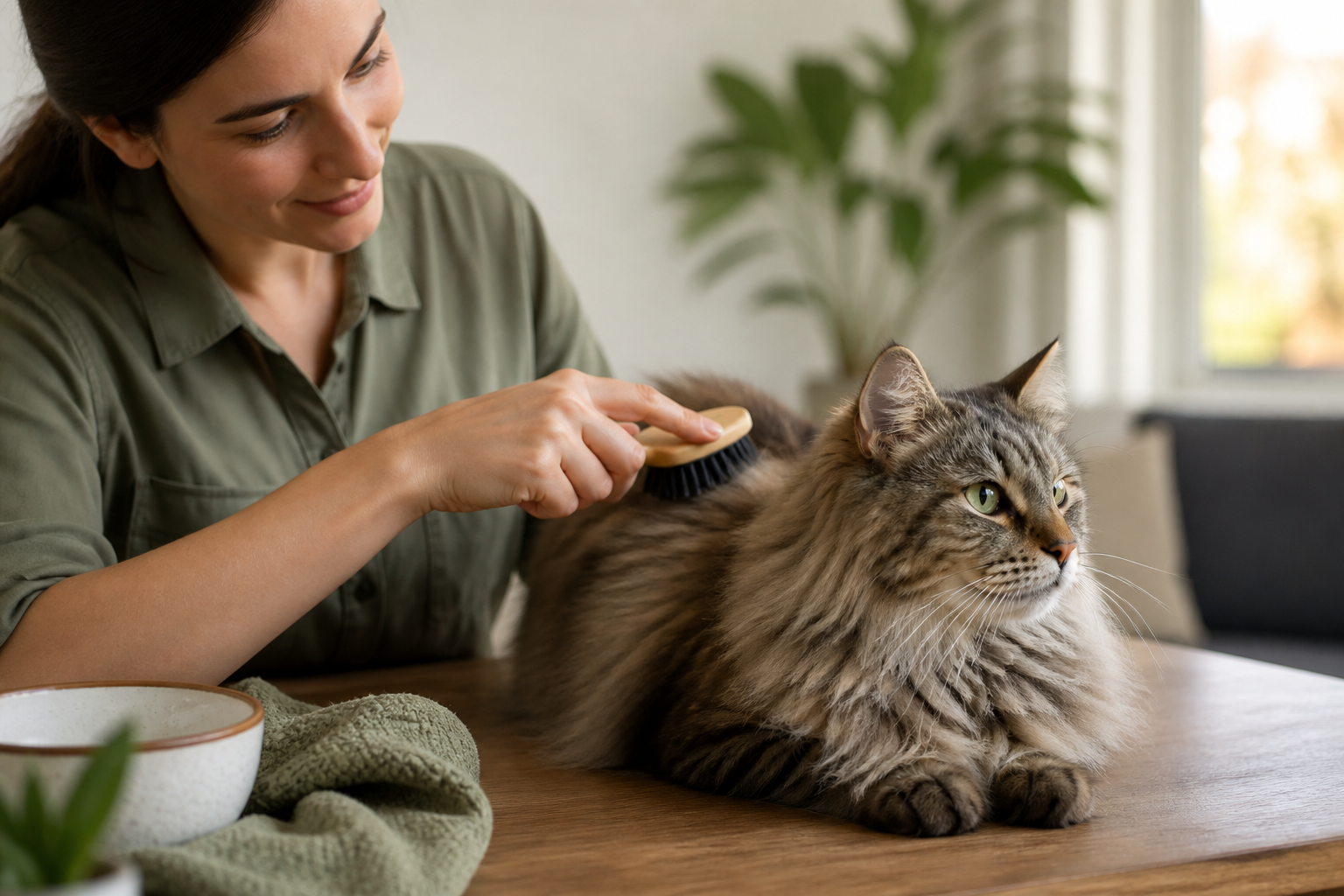
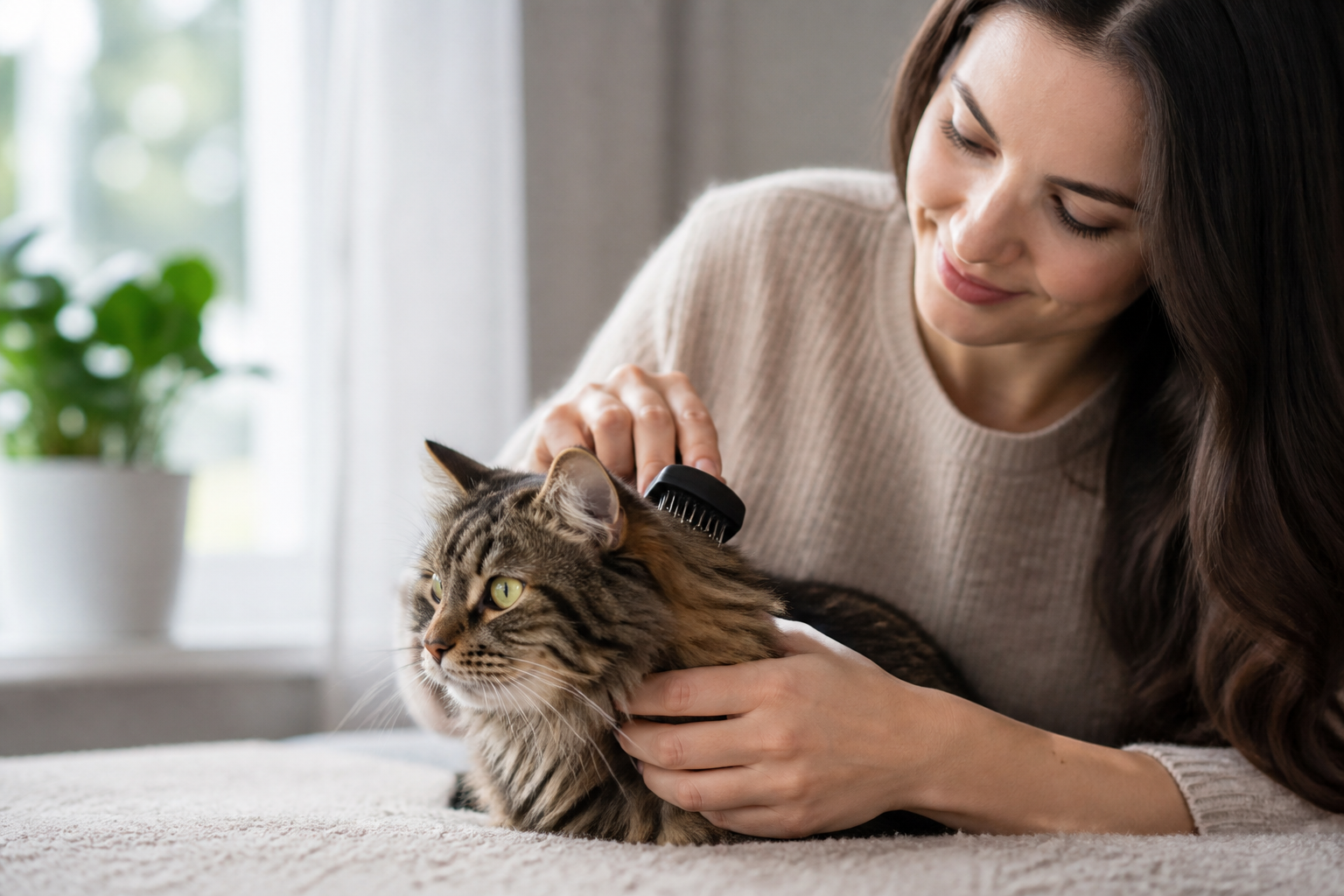
Regular grooming is one of the most effective ways to manage dandruff at home. It does more than just move the hair around. It stimulates the skin and helps the body heal itself. The right cat grooming supplies can make this routine easier.
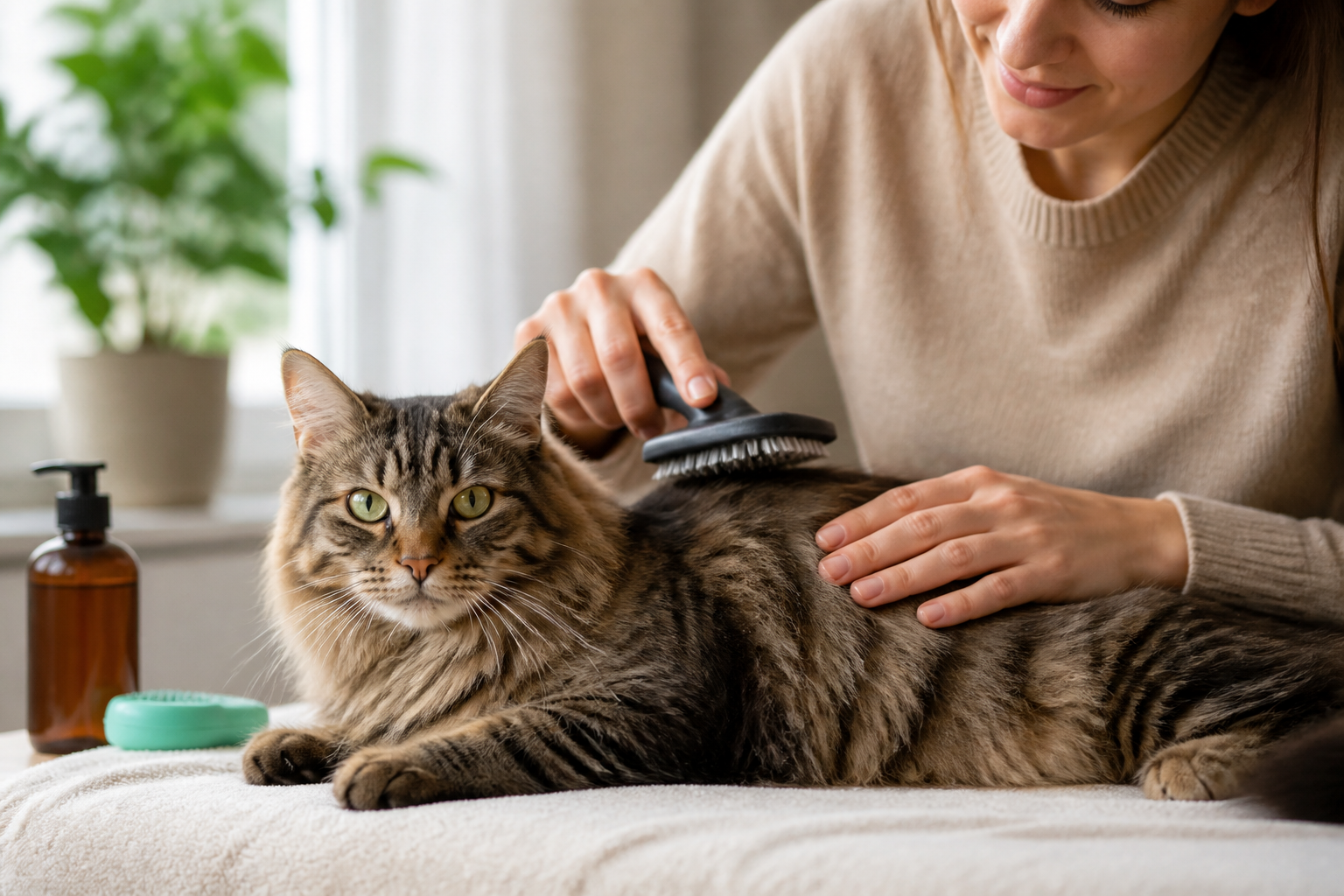
Step 1: Choose the right tool. / For cats with dandruff, a soft slicker brush or a rubber grooming mitt is ideal. Avoid harsh metal combs that might scratch already irritated skin.
Step 2: Establish a routine. / Brush your cat for five to ten minutes every day. Consistency is better than one long session once a week.
Step 3: Focus on hard-to-reach areas. / Pay special attention to the lower back and the base of the tail. These are the areas where flakes accumulate the most.
Step 4: Distribute the oils. / Use long, gentle strokes from the head toward the tail. This movement moves the natural sebum from the skin down the hair shaft. This acts as a natural moisturizer.
Step 5: Clean the equipment. / Remove the hair and skin flakes from the brush after every session. This prevents you from brushing old dander back onto the clean coat.
For a specific daily grooming tool, the U-Groom Combo Brush for Dogs and Cats is designed for at-home coat care and helps move natural oils along the hair shaft.
Nutrition and Hydration Strategies
What goes into your cat's body is just as important as how you treat their fur. Skin health starts from the inside out. Improving the diet is often the most sustainable way to get rid of cat dandruff.
The Power of Omega Fatty Acids
Omega-3 and Omega-6 fatty acids are vital for skin health. They help strengthen the skin's moisture barrier. We carry several supplements from brands like Zesty Paws or Honest Paws that are formulated specifically for feline skin and coat support. These are often available as oils that you can pump directly onto their food.
Increasing Moisture Intake
Cats are notorious for not drinking enough water. They evolved from desert animals and have a low thirst drive. If your cat only eats dry kibble, they may be perpetually slightly dehydrated. This shows up first in their skin.
Try these tips to increase hydration:
- Switch some or all of their meals to wet food. Brands like Tiki Cat or Fussie Cat offer high-moisture options that cats love.
- Add a splash of water or plain, unsalted bone broth to their dry food.
- Use a pet water fountain. Many cats prefer running water over standing water in a bowl.
- Place multiple water bowls throughout the house to encourage frequent sipping.
Bottom line: A combination of high-quality proteins, essential fatty acids, and increased water intake is the nutritional foundation for flake-free skin.
Environmental Adjustments at Home
You can change the environment to help your cat's skin stay hydrated. This is especially helpful during the winter months or if you live in a very dry climate.
A humidifier is a great investment for both you and your cat. Placing one in the room where your cat sleeps most often can make a big difference. Aim to keep the humidity in your home between 40 and 50 percent. This prevents the air from pulling moisture out of your cat's skin.
Be mindful of the cleaners you use. Strong chemicals on floors or bedding can cause contact dermatitis. This is a type of skin irritation that leads to redness and flaking. We recommend using pet-safe, non-toxic cleaning products to ensure your cat is not laying on harsh residues that could dry out their coat.
Bathing and Topical Treatments
Most cats do not need regular baths. In fact, bathing a cat too often can actually cause dandruff by stripping away essential oils. However, in some cases, a medicated bath is necessary. This is usually the case if the dandruff is caused by a fungal infection like ringworm or a bacterial overgrowth.
If your vet recommends a bath, use a shampoo specifically formulated for cats. Never use human dandruff shampoo. These products often contain zinc or salicylic acid, which can be toxic if your cat licks their fur after the bath. Look for ingredients like oatmeal, aloe vera, or honey to soothe the skin.
If your cat is terrified of water, consider waterless shampoo foams or grooming wipes. These allow you to clean the fur and add a bit of moisture without the stress of a full bath. Stress can cause a cat to sweat or over-groom, which only makes skin issues worse. You can compare cat shampoos and conditioners when selecting cat-specific products.
Managing Weight for Better Grooming
Since obesity is a leading cause of dandruff, weight management is a primary solution. If a cat can reach their own back, they will often solve the dandruff problem themselves.
At BaxterBoo, we offer specialized weight management tools and foods to help your cat reach a healthy size. Our pharmacy partnership with Pet's Choice provides access to prescription weight loss diets like Farmina Vet Life for cats who need a controlled caloric intake under veterinary supervision.
Helping your cat lose weight requires a slow and steady approach. Rapid weight loss in cats can lead to serious liver issues. Work with your vet to determine the right daily calorie count. Combine this with increased play using interactive toys from Kong or Jackson Galaxy to get your cat moving.
Identifying Parasites versus Simple Dryness
It can be hard to tell if your cat has dry skin or an active infestation. Fleas are small and fast. You might not see the bugs themselves, but you can look for "flea dirt." These are small black specks that look like black pepper. If you put these specks on a wet white paper towel and they turn red, it is flea dirt.
Walking dandruff mites are harder to see. They usually require a skin scraping or a "tape test" at the vet's office. If you see your cat scratching constantly or if the skin looks red and bumpy, do not wait. Parasites will not go away on their own and will likely spread to every pet in your home. For additional prevention ideas, read our guide to flea and tick prevention.
Key Takeaway: White flakes with black specks usually indicate fleas, while white flakes that seem to move indicate Cheyletiella mites. Both require veterinary-approved parasite control.
The Role of the BaxterBoo Pharmacy
When home remedies like brushing and humidifiers are not enough, it is time to look at medical options. Our pharmacy is a core part of how we help pet owners. We offer a wide range of FDA-approved medications that address the root causes of skin issues. You can explore our cat pharmacy when your veterinarian recommends prescription care.
Through our partnership with Pet's Choice, we provide:
- Prescription flea and tick treatments that are more powerful than over-the-counter options.
- Antifungal medications for conditions like ringworm.
- Prescription diets designed to manage allergies or metabolic diseases.
- Medicated topical treatments for severe dermatitis.
Because we are a hybrid retailer with a physical warehouse in Illinois and an online store, we make it easy to get these items. You can have your vet send a prescription directly to our pharmacy team. This ensures your cat gets exactly what they need without a stressful trip to a traditional pharmacy.
Maintaining Long-Term Skin Health
Once you get the dandruff under control, the goal is to keep it from coming back. This requires a lifestyle approach rather than a one-time fix. Stick to your daily brushing routine even when the coat looks great. This keeps the skin stimulated and the hair free of mats.
Keep a close eye on the weather. As soon as the temperature drops, turn on your humidifier and consider adding an extra pump of fish oil to your cat's dinner. Check your cat's weight monthly. A small gain can quickly lead to grooming difficulties for a cat.
Our MVP Rewards program is a great way to save on the high-quality food and supplements needed for this ongoing care. You can earn points on every purchase of skin-supporting treats and premium kibble. Setting up an Autoship order for your cat's favorite wet food ensures they never miss the hydration they need for a healthy coat.
Final Thoughts on Feline Flakes
Cat dandruff is usually a manageable condition. Whether it is caused by the dry winter air, a few extra pounds, or a need for better nutrition, most cases respond well to consistent care. Start with the basics: more brushing, better hydration, and a boost of omega fatty acids.
If the flakes do not clear up or if your cat seems uncomfortable, do not hesitate to seek professional help. Your vet can rule out more serious issues and provide the prescriptions needed through our pharmacy. With the right approach, you can get back to those relaxing petting sessions without the worry of white flakes.
Bottom line: Consistent grooming, proper hydration, and a high-quality diet are the most effective ways to eliminate and prevent cat dandruff.
FAQ
Can I use my own dandruff shampoo on my cat?
No, you should never use human dandruff shampoo on a cat. Many of the active ingredients in human products, such as zinc pyrithione or high levels of salicylic acid, are toxic to cats if ingested during grooming. Always use a shampoo specifically formulated for felines or one recommended by your veterinarian.
Why does my cat only have dandruff at the base of their tail?
The base of the tail and the lower back are the most common spots for dandruff because they are the hardest areas for a cat to reach. If a cat is overweight, senior, or arthritic, they may stop grooming these areas entirely. This allows dead skin cells and oils to build up and flake off.
Is cat dandruff contagious to humans?
Regular dandruff caused by dry skin or nutrition is not contagious. However, if the dandruff is caused by parasites like the Cheyletiella mite (walking dandruff) or a fungal infection like ringworm, these can be passed to humans. If you or your cat have skin lesions or intense itching, consult a doctor and a vet immediately.
Will switching to wet food really help with my cat's dandruff?
Yes, switching to wet food can significantly help because it increases your cat's overall hydration. Many cats live in a state of mild dehydration when eating only dry kibble, which shows up as dry, flaky skin. The extra moisture in wet food helps hydrate the skin from the inside out.