
 Save 15% on your 1st Autoship learn more

 Email us
 Live Chat
 FAQs
FAQs





Introduction
You are relaxing on the couch when your dog hops up to give you a friendly nuzzle. Suddenly, a cloud of breath hits you that smells less like your best friend and more like a swamp. Most dog owners have been there. While we often focus on shiny coats and healthy weights, oral hygiene is a part of pet care that is easy to let slide until the smell becomes impossible to ignore. At BaxterBoo, we see many pet parents looking for ways to handle bad breath and yellowing teeth before they turn into expensive vet bills. This guide covers everything from daily brushing techniques to the best dental chews and professional options. Maintaining your dog's mouth is a lifelong commitment that protects their heart, kidneys, and overall comfort.
Quick Answer: Getting your dog's teeth clean requires a multi-step approach involving daily brushing with pet-safe toothpaste, dental chews, and water additives. For tartar that has already hardened, a professional veterinary cleaning under anesthesia is necessary to clean below the gumline where disease starts.
Why Dental Health is More Than Just Fresh Breath
Many owners think of yellow teeth as a cosmetic issue or a sign of getting older. In reality, oral health is a window into your dog's internal wellness. When food particles and bacteria sit on the teeth, they form a sticky film called plaque. If you do not remove this plaque within a few hours, it mixes with minerals in the saliva and hardens into tartar. Tartar is much harder to remove and provides a perfect home for even more bacteria.
This bacteria does not just stay in the mouth. It can enter the bloodstream through inflamed gums. Once it is in the blood, it can travel to major organs. Studies show a strong link between periodontal disease and damage to the heart valves, liver, and kidneys. By keeping your dog's teeth clean, you are literally protecting their vital organs.
Beyond internal health, dental disease is painful. Dogs are experts at hiding pain. They might continue to eat even if they have a loose tooth or a gum infection. You might notice them dropping kibble, chewing on one side of their mouth, or suddenly losing interest in hard toys. Keeping the mouth clean ensures your dog can enjoy their meals and playtime without hidden discomfort.
Key Takeaway: Oral bacteria can travel through the bloodstream to the heart and kidneys, making dental hygiene a critical part of long-term health rather than just a way to fix bad breath.
Brushing Your Dog's Teeth at Home
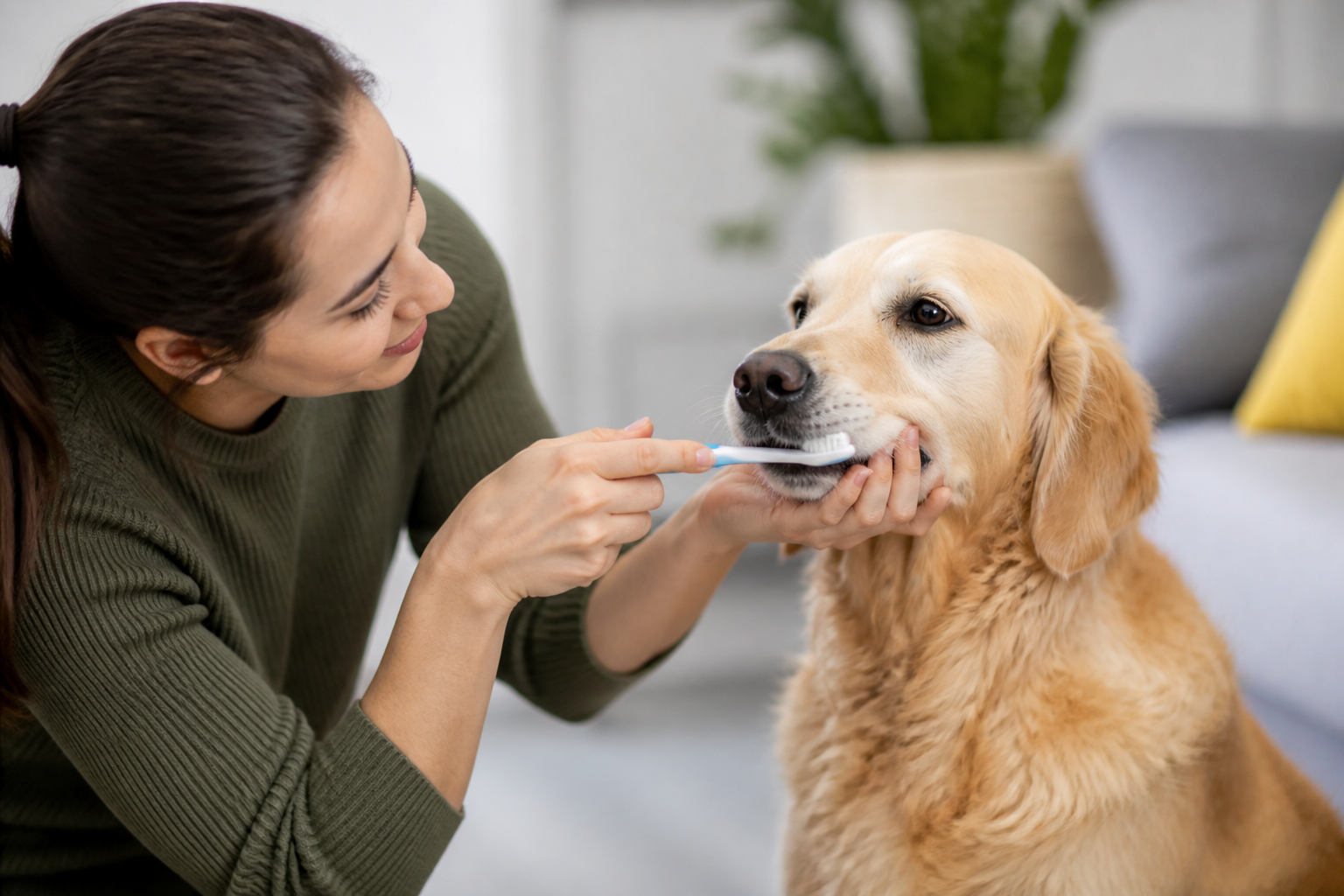
Brushing is the gold standard for oral care. No treat or toy can replace the mechanical action of a brush moving along the gumline. If you are starting with a puppy, you have a great opportunity to make this a normal part of their day. If you have an adult dog who is suspicious of the brush, you will need to take it slow.
Choosing the Right Supplies
Never use human toothpaste for your dog. Our toothpaste contains fluoride and often xylitol, both of which are toxic to dogs. Human paste also foams, which can upset a dog's stomach since they cannot spit it out. Pet-safe toothpastes are enzymatic, meaning they help break down plaque chemically. They also come in flavors dogs actually like, such as poultry, beef, or peanut butter. A poultry-flavored option is Virbac C.E.T. Enzymatic Pet Toothpaste for Dogs and Cats - Poultry.
For the brush, you have options based on your dog's size and comfort:
- Standard pet toothbrushes: These look like human brushes but have angled heads to reach back molars.
- Finger brushes: These silicone caps fit over your finger. They are great for small dogs or pets who are nervous about a long plastic handle.
- Gauze or dental wipes: These are good for dogs who will not tolerate a brush yet. They allow you to wipe away surface plaque manually.
A Step-by-Step Guide to Brushing
Step 1: Introduce the flavor. / Let your dog lick some toothpaste off your finger. Do this for a few days so they associate the supplies with a tasty treat.
Step 2: Touch the teeth. / Gently lift your dog's lip and rub your finger along their gums. Reward them immediately with praise or a small training treat.
Step 3: Introduce the brush. / Put a small amount of paste on the brush and let them lick it. While they are licking, gently move the brush against their front teeth.
Step 4: Focus on the outside. / Most plaque builds up on the cheek side of the teeth. You do not need to worry about the inside surfaces as much because the tongue helps keep those clean.
Step 5: Increase the time. / Start with just ten seconds and work your way up to a full minute. Focus on the back molars where tartar loves to hide.
Vet Tip: If your dog shows any signs of aggression or extreme stress during brushing, stop immediately. It is better to use additives or professional cleanings than to risk a bite or damage your bond with your pet.
Using Dental Chews and Toys
Not every dog will sit still for a toothbrush. This is where our dog dental care category and textured toys become valuable tools. These products work through mechanical abrasion. As your dog chews, the edges of the treat or toy scrape against the tooth surface to rub away plaque.
When shopping for chews, look for the Veterinary Oral Health Council seal. This seal means the product has been tested and proven to reduce plaque or tartar by at least twenty percent. We carry several brands with this seal, such as Greenies dental chews, which are specifically designed with a texture that allows the tooth to sink in for maximum cleaning.
Toys can also help. Brands like Kong offer rubber toys with grooves and ridges. When you stuff these with a bit of pet-safe peanut butter or wet food, your dog's tongue and teeth work against the rubber for a long period. This constant contact helps keep the tooth surfaces smooth.
Bottom line: Dental chews and toys are excellent supplements to brushing but should not be the only method used for oral hygiene.
Additives and Powders for Easy Maintenance
If you have a busy schedule or a very stubborn dog, water additives and food powders are useful. These are designed to be tasteless or have a mild flavor that dogs enjoy. For an easy-to-use option, Synergy Labs Dental Fresh Water Additive Dog Original Formula can be added to your dog's water bowl. Water additives work by altering the chemistry of the mouth. They often contain enzymes or minerals that prevent bacteria from sticking to the teeth. You simply add a capful to your dog's water bowl each time you refill it.
Food powders, like those from VetriScience, are sprinkled over your dog's kibble. These often contain probiotics that encourage healthy bacteria in the mouth while crowding out the bad bacteria that cause odor. While these do not provide the scraping action of a brush, they are very effective at keeping breath fresh and slowing down the formation of new plaque.
The Role of Diet in Dental Health
What your dog eats every day has a direct impact on their mouth. There is a common belief that all dry kibble cleans teeth simply because it is crunchy. However, many types of kibble actually crumble too easily to provide any real cleaning. For dogs with significant dental concerns, a prescription dental diet might be necessary.
These diets, such as those from Royal Canin or Farmina Vet Life, use a specific kibble structure. The fibers are aligned in a way that the kibble does not shatter when the dog bites it. Instead, the tooth sinks into the piece, and the fibers scrape the tooth all the way to the gumline. These foods also often include calcium-binding agents that prevent plaque from mineralizing into tartar.
Our pharmacy carries these specialized prescription pet foods through our partnership with Pet's Choice. Because these diets are formulated for specific health needs, you will need a prescription from your veterinarian to order them. Once you have that, we can help you set up a regular delivery so your dog never misses a meal that supports their oral health.
Key Takeaway: Not all dry food cleans teeth. Specialized dental diets use unique kibble shapes and fiber patterns to mechanically scrub the teeth during every meal.
When to Seek Professional Cleaning
Even with perfect at-home care, most dogs will eventually need a professional cleaning. This is similar to how humans still go to the dentist even if they brush and floss daily. Professional cleanings are the only way to remove hardened tartar and clean the area beneath the gumline.
Why Anesthesia is Necessary
A common question pet owners ask is why dogs have to be put under anesthesia for a cleaning. While some places offer anesthesia-free cleanings, these are mostly cosmetic. They can scrape the tartar off the visible part of the tooth, but they cannot get under the gums where the real disease happens.
Anesthesia allows the veterinarian to:
- Perform a full exam of every tooth without the dog moving.
- Take dental X-rays to check for bone loss or infected roots.
- Use ultrasonic scalers to remove tartar safely.
- Polish the teeth to smooth out microscopic scratches where bacteria could hide.
- Probe the gums for deep pockets that indicate infection.
Without anesthesia, the process is stressful and potentially dangerous for the dog. A sharp tool could easily slip and cut the gums if the dog flinches.
Recognizing the Signs of Trouble
You should check your dog's mouth once a week. Look for these warning signs that mean a vet visit is needed:
- Persistent bad breath that does not go away after brushing.
- Red, swollen, or bleeding gums.
- Yellow or brown crust near the gumline.
- Loose or broken teeth.
- Excessive drooling or dropping food.
- A swelling under one eye, which can indicate a root abscess.
Vet Tip: Annual wellness exams should always include an oral checkup. Your vet can tell you if your dog is a candidate for a professional cleaning or if a change in home care is enough to manage current plaque levels.
Managing Dental Care for Different Life Stages
Your approach to getting your dog's teeth clean will change as they age. Puppies, adults, and seniors all have different requirements.
Puppies and Young Dogs
For puppies, the goal is education. They will lose their baby teeth and get their adult teeth between four and six months of age. This is the time to get them used to having their mouth handled. You do not need to worry about tartar yet, but you do want to make the toothbrush a fun and normal object.
Adult Dogs
This is the maintenance phase. Most dogs start showing signs of dental disease by age three. During these years, consistency is your best tool. Establishing a daily routine of brushing or using dental wipes can save you thousands of dollars in extractions later in their life.
Senior Dogs
Senior dogs often have existing dental issues. They may have missing teeth or sensitive gums. For these dogs, soft dental wipes or water additives might be more comfortable than a firm brush. If your senior dog needs a professional cleaning, your vet will likely run blood work first to ensure their liver and kidneys can handle the anesthesia. Keeping a senior dog's mouth clean is vital because their immune systems are less equipped to handle a constant influx of oral bacteria.
| Method | Best For | Level of Effort |
|---|---|---|
| Brushing | Removing plaque daily | High |
| Dental Chews | Scraping back molars | Low |
| Water Additives | Freshening breath | Very Low |
| Prescription Diet | Mechanical cleaning | Low |
| Professional Cleaning | Removing tartar and infections | Professional only |
Making Dental Care Affordable
We know that maintaining a pet's health can add up. That is why we offer several ways to save on the supplies you need for your dog's dental routine. Our Autoship programme is a great way to ensure you never run out of toothpaste, chews, or dental diets. You get a discount on your first order and stay enrolled in our MVP Gold membership.
If you are buying dental treats like Greenies regularly, our Frequent Buyer Program can help you earn free products faster. These small steps in preventative care at home are much more affordable than the cost of treating advanced periodontal disease, which often involves surgery and multiple extractions.
Conclusion
Getting your dog's teeth clean is not a one-time task. It is a combination of daily habits, the right tools, and professional support. By starting a brushing routine, choosing high-quality dental chews, and watching for signs of discomfort, you are giving your dog a better quality of life. Remember that bad breath is not just a nuisance; it is a sign that your dog's body is fighting off bacteria. Taking action today can prevent pain and serious health complications in the future.
- Brush at least three times a week with enzymatic pet toothpaste.
- Use VOHC-approved chews to help scrape away plaque.
- Monitor your dog's gums for redness or swelling.
- Schedule annual vet exams to catch issues before they require surgery.
The best place to start is by picking up a pet-safe toothbrush and paste to begin the training process. You can find everything you need in our Dental Care section, from finger brushes to breath-freshening additives.
FAQ
Can I use baking soda to clean my dog's teeth?
You should avoid using baking soda for your dog's oral care. While it can help scrub teeth, it has a high alkaline content that can upset your dog's stomach if swallowed. Most dogs will swallow a significant amount of whatever you put in their mouth, so stick to flavored, enzymatic pet toothpastes that are specifically formulated to be safe for ingestion.
How often should I really be brushing my dog's teeth?
Ideally, you should brush your dog's teeth every single day. Plaque can begin to turn into hard tartar in as little as twenty-four to forty-eight hours. If a daily routine is not possible, aiming for at least three times a week can still make a significant difference in their oral health. Consistency is more important than the length of each brushing session.
Are bones safe for cleaning my dog's teeth?
Feeding bones is a controversial topic among veterinarians and pet owners. While raw, meaty bones can help scrape teeth, they also carry risks like fractured teeth, choking, or digestive blockages. Cooked bones are even more dangerous because they can splinter and cause internal damage. Many experts recommend using rubber chew toys or VOHC-approved dental treats as a safer alternative to bones.
What if my dog already has thick brown tartar on their teeth?
If you can see thick brown or orange deposits on your dog's teeth, brushing will no longer be enough. Brushing removes soft plaque, but it cannot remove hardened tartar. At this stage, you should schedule a visit with your veterinarian for a professional cleaning. Once the vet removes the tartar under anesthesia, you can start a home brushing routine to keep the teeth clean and prevent the buildup from returning.






