Save 15% on your 1st Autoship learn more

 Email us
 Live Chat
 FAQs
FAQs





Swimming can be a great way to help your dog get exercise and stay cool during the summer months. However, it isn't a good idea to just toss your dog in the pool without any training. These tips can help you safely introduce your dog to swimming.
Not All Dogs are Natural Swimmers
Some breeds of dogs, such as Labrador Retrievers, are natural swimmers because they were bred to do jobs in the water. Other breeds, such as bulldogs, have a tough time swimming without floatation devices because of their weight distribution. Dogs that have long bodies and short legs, such as dachshunds, may also have trouble swimming. However, with appropriate training and safety gear, most dogs can learn to swim.
Consider Safety Gear
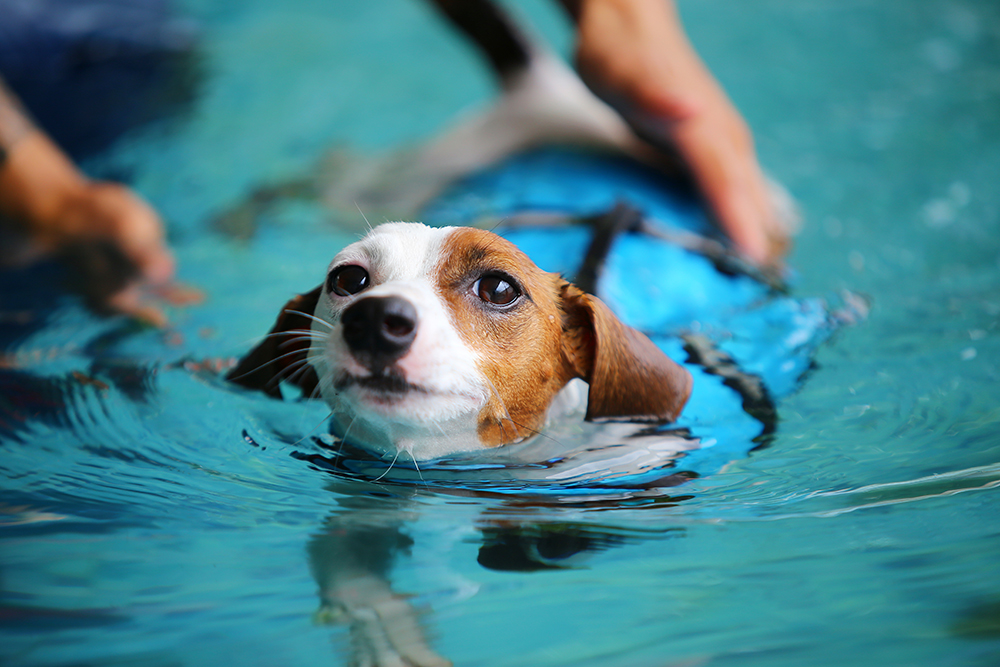
If your dog is nervous about swimming, consider using a life jacket. A life jacket provides buoyancy that makes it easier for your dog to stay afloat. This can improve your dog's confidence. It also provides extra safety. A dog who is very enthusiastic about swimming may tire before she wants to come out of the water. Tired dogs may have trouble staying afloat. A life jacket protects against drowning due to fatigue. Additionally, life jackets have other safety features, such as handles and rings for attaching a leash that can help you keep your dog safe.
Even confident dogs can benefit from a life jacket. Some dogs will run into the water without realizing the surface has changed. These dogs may panic which can lead to drowning. Life jackets give dogs a chance to get accustomed to being in the water and learn how to swim in a safe way which helps build your dog's confidence. Additionally, many dogs who are new to swimming only paddle with their front legs. A life jacket keeps your dog's back level, which encourages her to paddle with all four legs.
Choose a Floatation Device
Choose a life jacket that is durable and constructed from waterproof materials. The jacket needs to be adjustable so that you can fit it correctly to your dog. If you plan to swim during the evening or nighttime, purchase a vest with reflective materials and brightly colored fabric. A jacket with a flotation piece under the chin can help keep your dog's head above water.
Start Small
Not all dogs naturally love to get in the water. Some dogs may be fearful or timid. Don't make your dog's first swimming experience a large swimming pool or body of water. Instead, purchase a small children's pool or wading pool intended for dogs. Put your dog on a leash and toss a pool-friendly toy into the water. If your dog doesn't go in the water to get the toy, try luring your dog into the pool with a high-value treat. Be sure to offer your dog plenty of praise for any attempts to step into the water. If you have a small dog, you may need to provide a ramp or other means to help your dog get into the pool.
Move Up To a Larger Pool or Calm Body of Water
Once your dog is comfortable with splashing around in a wading pool, you can introduce her to a larger swimming pool or a calm, clean body of water that does not have any currents. Some dogs may be more comfortable with a pond or a lake because pool water can look unnatural to them. There should be a gentle slope for your dog to enter the water, or if you are using a swimming pool there should be steps that your dog can walk down into the water.
Get in the water, face your dog and encourage her to enter the water. You should wear a life vest when teaching your dog to swim. If your dog gets scared, she may try to climb on you and this could put you at risk of drowning. You may need to toss a toy or offer a treat. If your dog is nervous about getting in the water, work with her on the shore or pool deck before getting in the water. Offer lots of praise and treats for any progress towards the water. Never just throw your dog in the water. Not all dogs are comfortable in the water and if your dog will not enter the water on her own, you may need to accept that your dog does not want to learn to swim.
Start in shallow water and allow your dog to get comfortable with having wet feet. When your dog seems comfortable in the shallows, gradually move into deeper water. Use praise and treats to encourage your dog to follow you. If your dog gets scared, move back to shallow water or dry land. Allow your dog some time to recover before trying again.
Teach Your Dog How To Exit the Water
When it is time to get out of the water, stay near the ramp, steps or slope where your dog needs to get out. You may need to demonstrate by getting out of the water yourself, but stay near the exit and encourage your dog to follow you. You may need to get back in the water and repeat this step several times.
Even if your dog is not a natural swimmer, she may learn to enjoy the water with proper training and safety gear. However, if your dog doesn't like to be wet, don't try to force it. There are lots of other fun activities you can do instead.