Save 15% on your 1st Autoship learn more

 Email us
 Live Chat
 FAQs
FAQs





Introduction
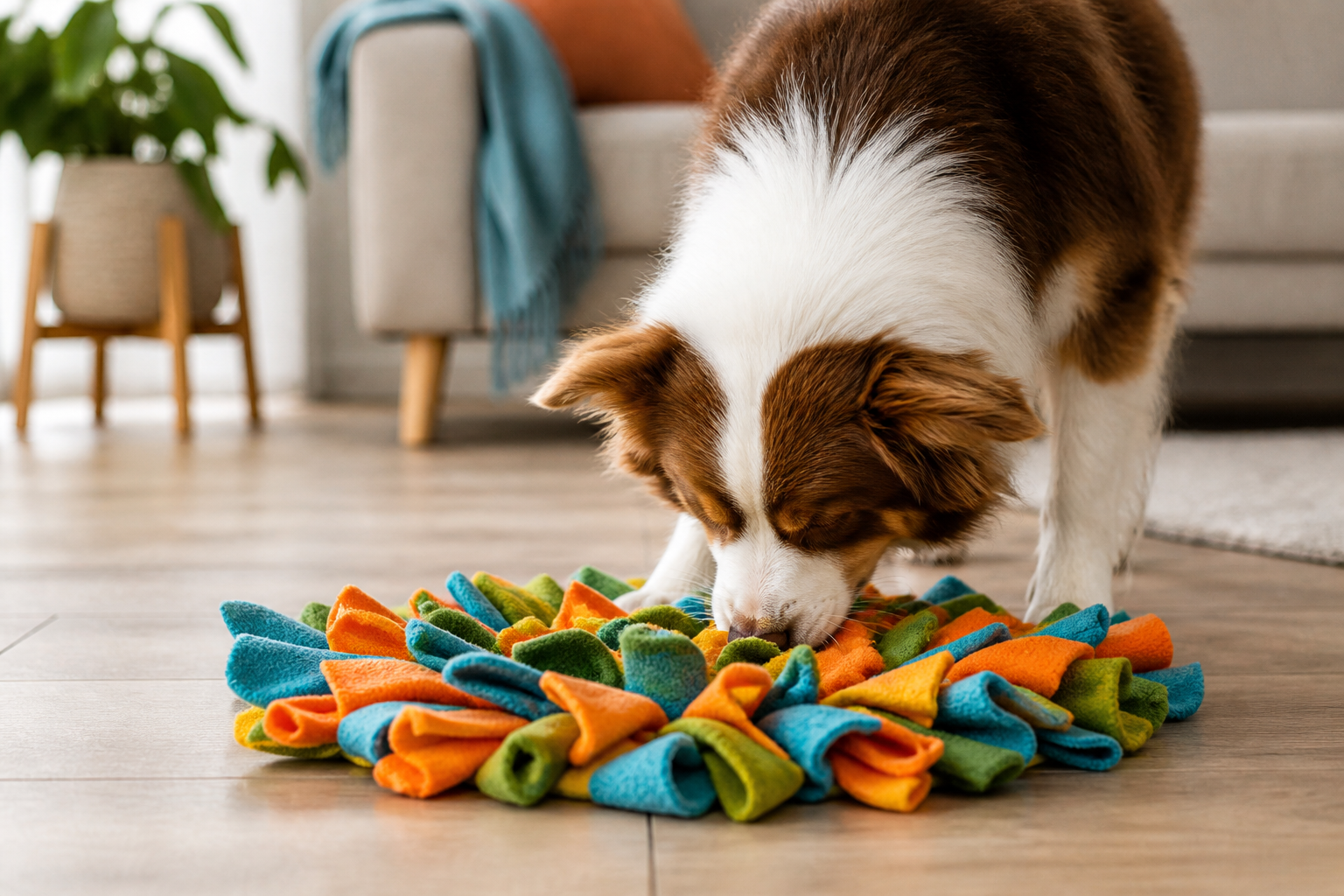
You watch your dog finish a bowl of kibble in under thirty seconds and wonder if they even tasted it. Or perhaps you have a high-energy pup who paces the living room even after a long walk. These moments of mealtime "snarfing" or restless energy are exactly why pet owners search for mental enrichment tools. At BaxterBoo, we believe that a busy nose leads to a happy brain. A snuffle mat is a simple DIY project that turns mealtime into a rewarding foraging game. This guide covers everything you need to create a durable mat from scratch. You will learn the best materials to use, the step-by-step assembly process, and how to introduce the game to your pet. Providing this type of sensory engagement is one of the most effective ways to support your dog's natural instincts.
Understanding the Power of the Nose
Dogs experience the world primarily through their sense of smell. While humans rely on vision, a dog's olfactory system is significantly more complex. They have up to 300 million olfactory receptors in their noses. In comparison, humans only have about six million. The part of a dog's brain that analyzes smells is also about 40 times larger than ours.
When a dog sniffs, they are not just identifying a scent. They are gathering information about their environment, other animals, and even the passage of time. This process is mentally taxing in the best way possible. Experts often say that fifteen minutes of sniffing is as tiring for a dog as an hour-long walk. This is why a snuffle mat is such a valuable tool for modern pet owners. It provides a structured outlet for this natural behavior.
Quick Answer: A snuffle mat is an enrichment toy made of fabric strips tied to a sturdy base. You hide dry food or treats within the fabric. This forces your dog to use their nose to find every morsel, which slows down eating and provides mental stimulation.
Why You Should Make Your Own Snuffle Mat
You might see pre-made enrichment toys at a big-box store. However, building your own version offers several distinct advantages. First, you can customize the size to fit your dog. A Great Dane needs a much larger foraging surface than a Pomeranian. Second, you can choose the density of the fabric strips. If you have a dog who is a "pro" at scent games, you can make the mat extra thick to increase the challenge.
Making your own mat is also a cost-effective solution. Most store-bought mats use thin fabric that can wear out quickly. When you source your own materials, you can choose heavy-duty fleece that stands up to enthusiastic rooting and digging. It is also a great way to recycle old fleece blankets or scraps from other projects. At BaxterBoo, we love seeing pet owners take a hands-on approach to wellness. We carry 500+ brands of high-quality dog treats, but a homemade mat is the perfect way to deliver those items.
The Benefits for Fast Eaters
If your dog inhales their food, they are at a higher risk for digestive upset or a dangerous condition called bloat. A snuffle mat acts as a natural slow feeder. Instead of a pile of kibble in a bowl, the food is scattered across dozens of hiding spots. Your dog must find each piece individually. This naturally extends mealtime from seconds to several minutes.
Solving Boredom and Anxiety
Boredom often leads to destructive behaviors like chewing furniture or excessive barking. Mental enrichment gives your dog a "job" to do. For anxious dogs, the repetitive motion of sniffing and searching can be very self-soothing. It lowers their heart rate and helps them focus on a specific task rather than external stressors like thunderstorms or construction noise.
For more ideas, explore these dog boredom busters and puzzle activities.
Key Takeaway: DIY snuffle mats provide a tailored enrichment experience that supports physical health by slowing down eating and improves mental health by reducing anxiety and boredom.
Necessary Supplies and Tools
You do not need many items to get started. Most of these can be found at a local craft store or a hardware store. Since we have been operating since 2006, we have seen many DIY trends come and go. The rubber-base snuffle mat remains the gold standard for durability and ease of cleaning.
The Base Mat
The most common base is a rubber sink mat. These are usually found in the kitchen aisle. They have pre-drilled holes that are perfect for threading fabric. You want a mat that is flexible but heavy enough to stay on the floor while the dog works.
- Rubber Sink Mat: A standard 12" x 15" size works for most medium dogs.
- Alternative: Heavy-duty rubber doormats with large drainage holes for extra-large breeds.
- Safety Tip: Ensure the rubber is sturdy and does not have a strong chemical odor.
The Fleece Fabric
Fleece is the best material because it does not fray when cut. It is soft on your dog's nose and can withstand the washing machine. You will need approximately 1.5 to 2 yards of fleece for a standard-sized mat.
- Anti-Pill Fleece: This is the highest quality and stays soft after multiple washes.
- Blizzard Fleece: A bit thicker and provides more "structure" to the strips.
- Colors: Dogs see colors differently than we do. Blue and yellow are high-contrast colors for them, which can make the mat more visually interesting.
Cutting Tools
You can use standard fabric scissors, but a rotary cutter will save you a lot of time. If you use a rotary cutter, you will also need a self-healing cutting mat and a straight-edge ruler.
Vet Tip: If your dog is a "power chewer" who tends to eat non-food items, supervise them closely during the first few uses. If they start chewing the rubber base or the fabric strips, remove the mat immediately. Consult your vet if your dog has a history of pica or ingesting fabric.
Step-by-Step Assembly Guide
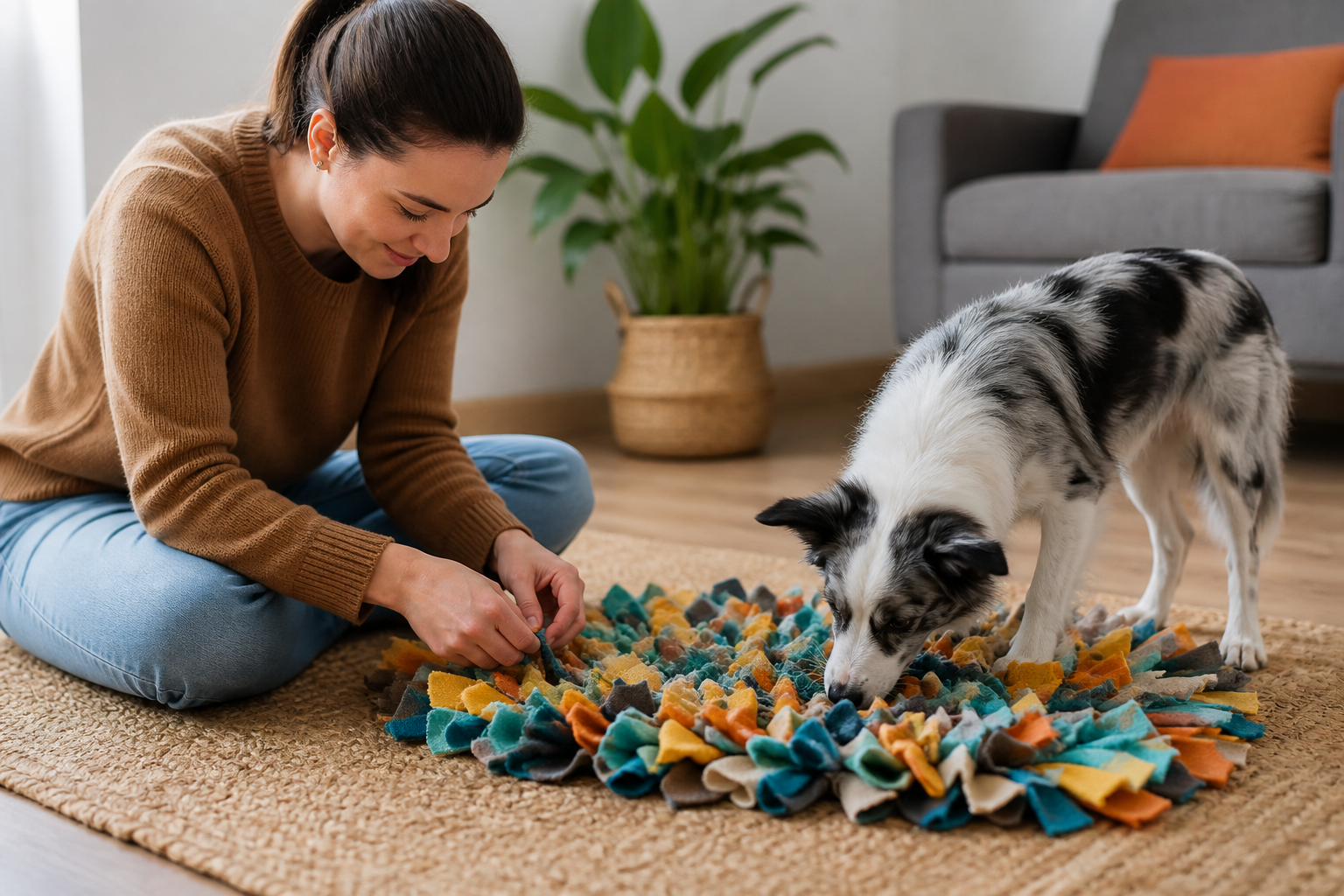
Once you have your supplies, set aside about two hours for the project. This is a great activity to do while watching a movie. The process is repetitive but very satisfying once the mat starts to look "fluffy."
Step 1: Prepare Your Strips
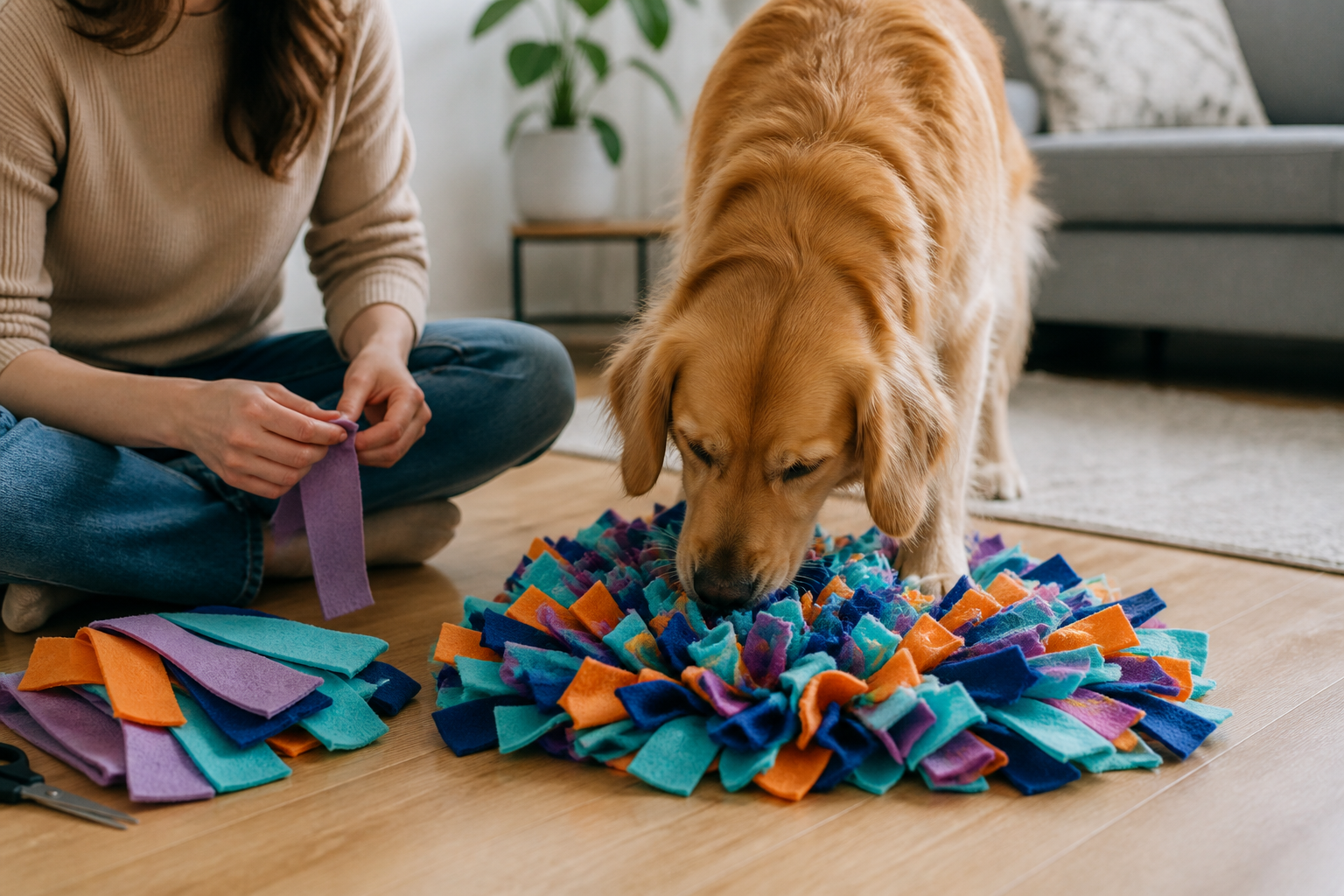
Cut your fleece into strips that are roughly 1 inch wide and 7 to 8 inches long. You do not need to be perfectly precise. Variations in length can actually make the mat more challenging for the dog. If you are using a rotary cutter, you can fold the fleece to cut multiple strips at once.
Step 2: Thread the First Row
Start at one corner of your rubber mat. Take a single fleece strip and push one end through the first hole. Push the other end through the hole directly next to it. Flip the mat over and tie the ends in a simple overhand knot. You only need one knot. Double-knotting makes the base too bulky and uses up too much fabric.
Step 3: Fill the Horizontal Holes
Continue this process across the entire first row. Then, move to the second row and repeat. When you finish, every horizontal "bridge" between the holes should have a fleece strip tied to it. At this point, the mat will look a bit sparse.
Step 4: Add the Vertical Strips
To create a truly dense mat, you must tie strips vertically as well. Go back to the first and second rows. Tie a strip around the rubber bridge that runs between the first hole of row one and the first hole of row two. This "cross-tying" creates a thick forest of fleece that hides treats much better than a simple grid.
Step 5: The Final Inspection
Flip the mat over and look for any large gaps. If you see empty rubber sections, add more strips. Once you are finished, give the mat a good shake. The strips should stand up and look like a thick shag rug.
- Checklist for a successful mat:
- Strips are at least 7 inches long.
- No empty holes visible on the base.
- Knots are pulled tight.
- Fabric is clean and free of loose threads.
How to Introduce the Mat to Your Dog
Do not just drop a fully loaded mat in front of your dog for the first time. They might get frustrated or try to pick up the whole mat and shake it. You want to teach them that "snuffling" is the goal. Our team at BaxterBoo suggests a gradual introduction to ensure they understand the game.
Level 1: The Beginner Phase
Scatter a few high-value treats directly on top of the fleece. Do not hide them yet. Let your dog see you put the treats down. Use a command like "Find it!" or "Search!" When they eat the treats, give them verbal praise. This builds a positive association with the mat.
Level 2: The Intermediate Phase
Once your dog is excited to see the mat, start tucking the treats slightly under the top layer of fleece. They will have to move the fabric with their nose to find the food. If they try to dig with their paws, gently redirect them to use their nose.
Level 3: The Advanced Phase
For a seasoned snuffler, push the treats deep into the knots and the vertical intersections. You can even use smaller, less smelly kibble to make the search harder. This level of difficulty is great for rainy days when you cannot get outside for physical exercise.
Read more about engaging brain games for dogs for additional enrichment ideas.
Bottom line: Start with treats on top and slowly move them deeper as your dog gains confidence and skill in using their nose.
Selecting the Best Treats for Foraging
The success of a snuffle mat depends heavily on what you put inside it. You want something that motivates your dog but does not create a mess. Avoid wet or greasy treats that will soak into the fleece.
Dry, crunchy treats are the best option. Brands like Stella & Chewy's or The Honest Kitchen offer freeze-dried options that crumble easily and have an intense aroma. You can also use standard kibble for regular mealtime enrichment. If your dog is on a weight management plan, remember to subtract the calories used in the snuffle mat from their daily total.
If you are managing a health condition like allergies or obesity, our pet pharmacy can help. Through our partnership with Pet's Choice, we offer prescription diets and FDA-approved medications. For dogs who need specific nutrition to stay healthy while enjoying enrichment, a prescription diet can often be fed through a snuffle mat just like regular kibble.
High-Value Suggestions:
- Freeze-Dried Liver: Strong scent, very motivating.
- Broken Biscuits: Easy to tuck deep into the fabric.
- Air-Dried Meats: Brands like Ziwi Peak work perfectly because the pieces are small and firm.
- Carrot Bits: A great low-calorie option for dogs watching their weight.
Cleaning and Maintenance
A snuffle mat will eventually get dirty. Saliva, treat crumbs, and floor dust will accumulate in the fleece. Because you used a rubber mat and fleece strips, cleaning is straightforward.
Machine Washing
Most DIY mats can go in the washing machine. Place the mat inside a large pillowcase or a laundry bag to prevent the strips from getting tangled in the agitator. Use a gentle cycle with cold water and a pet-safe, scent-free detergent. Avoid fabric softeners, as the strong scent can be off-putting to a dog's sensitive nose.
Drying the Mat
Do not put the snuffle mat in the dryer. The high heat can warp or melt the rubber base. Instead, hang it up or lay it flat to air dry. It may take 24 hours to dry completely because of the density of the fabric.
Routine Checks
Every few weeks, inspect the mat for wear and tear. If your dog has managed to untie a knot or chew through a strip, replace it immediately. Small pieces of fleece can be a choking hazard if swallowed. Keeping the mat in good repair ensures it remains a safe part of your enrichment routine.
Snuffle Mats for Senior Pets and Special Needs
Enrichment is not just for puppies. Senior dogs often face mobility issues that make long walks difficult. A snuffle mat allows them to engage their brain and satisfy their instincts without putting stress on their joints. It is a low-impact activity that provides a high level of satisfaction.
If your senior dog struggles with cognitive decline or anxiety, scent work can be particularly grounding. We carry many supplements for joint health and cognitive support, but physical and mental activities like snuffling are the other half of the wellness equation. For dogs recovering from surgery who are on "crate rest," a snuffle mat is a lifesaver. it keeps them occupied and calm while their body heals.
Expanding Your Enrichment Routine
A snuffle mat is a fantastic start, but it should be part of a larger variety of activities. You can rotate the mat with other puzzles to keep things fresh. At BaxterBoo, we pride ourselves on being a hybrid warehouse and online store. You can visit us in Vernon Hills to see our full range of enrichment toys for dogs or browse 500+ brands online.
Consider adding these to your rotation:
- Lick Mats: Great for wet food or peanut butter.
- Stuffable Rubber Toys: Like those from Kong, which provide a different type of challenge.
- Puzzle Boards: These require sliding or lifting pieces to find treats.
- Nose Work Kits: For owners who want to take scent games to the next level.
Key Takeaway: Variety is the spice of life for dogs. Rotating a snuffle mat with other toys prevents "boredom with the toy" and keeps your dog's problem-solving skills sharp.
Troubleshooting Common Issues
Not every dog takes to a snuffle mat immediately. If your pet seems confused or uninterested, do not give up.
The "Flipping" Problem
If your dog tries to flip the mat over to dump out the treats, it means the challenge is a bit too hard, or they are frustrated. Go back to the beginner phase. Hold the mat flat on the floor with your hand while they search. Once they learn that sniffing works better than flipping, they will stop the behavior.
Lack of Interest
If your dog walks away, the treats might not be smelly enough. Try using something with a stronger aroma, like salmon treats or high-quality freeze-dried beef. You can also try using the mat when they are naturally hungry, such as right before their normal dinner time.
The "Digger"
Some dogs will try to use their paws to "dig" through the fleece. This can damage the mat and does not provide the same mental benefits as sniffing. If this happens, cover the mat with your hand and wait for them to stop. As soon as they use their nose, remove your hand and praise them.
Safety and Supervision
While snuffle mats are generally safe, they are not chew toys. They should only be used under supervision. When the mat is empty, pick it up and put it away. This serves two purposes. First, it prevents the dog from chewing the mat out of boredom. Second, it keeps the mat "special." If the mat is always on the floor, it becomes part of the furniture. If it only appears for games, your dog will be much more excited to engage with it.
If your dog ever swallows a piece of the mat, contact your veterinarian. Our pharmacy and partnership with Pet's Choice are here to support your pet's long-term health, but emergency situations always require immediate professional care.
Final Thoughts on DIY Enrichment
Creating a snuffle mat is a rewarding project that pays off every time you see your dog happily foraging. It is an affordable, durable, and effective way to manage common behavioral issues like fast eating and boredom. By following this guide, you have the tools to build a custom enrichment toy that supports your pet's natural instincts.
We are proud to serve the pet community from our Vernon Hills warehouse and through our online store. Whether you need the perfect treats to hide in your new mat or professional guidance on senior pet care, we are here to help.
Bottom line: A homemade snuffle mat is a simple tool that delivers significant benefits for a dog's mental and physical health.
FAQ
How long does it take to make a snuffle mat?
For a standard 12" by 15" mat, expect to spend about two hours on the project. The most time-consuming part is cutting the 150 to 250 fleece strips needed for a dense mat. Once the strips are cut, the tying process is repetitive and can be done while you relax or listen to a podcast.
Can I use a different fabric besides fleece?
Fleece is strongly recommended because it is the only common fabric that does not fray. If you use cotton or polyester blends, the edges will unravel, creating long threads that can wrap around your dog's tongue or be swallowed. Fleece is also soft on the nose and highly absorbent for washing.
Is a snuffle mat good for cats too?
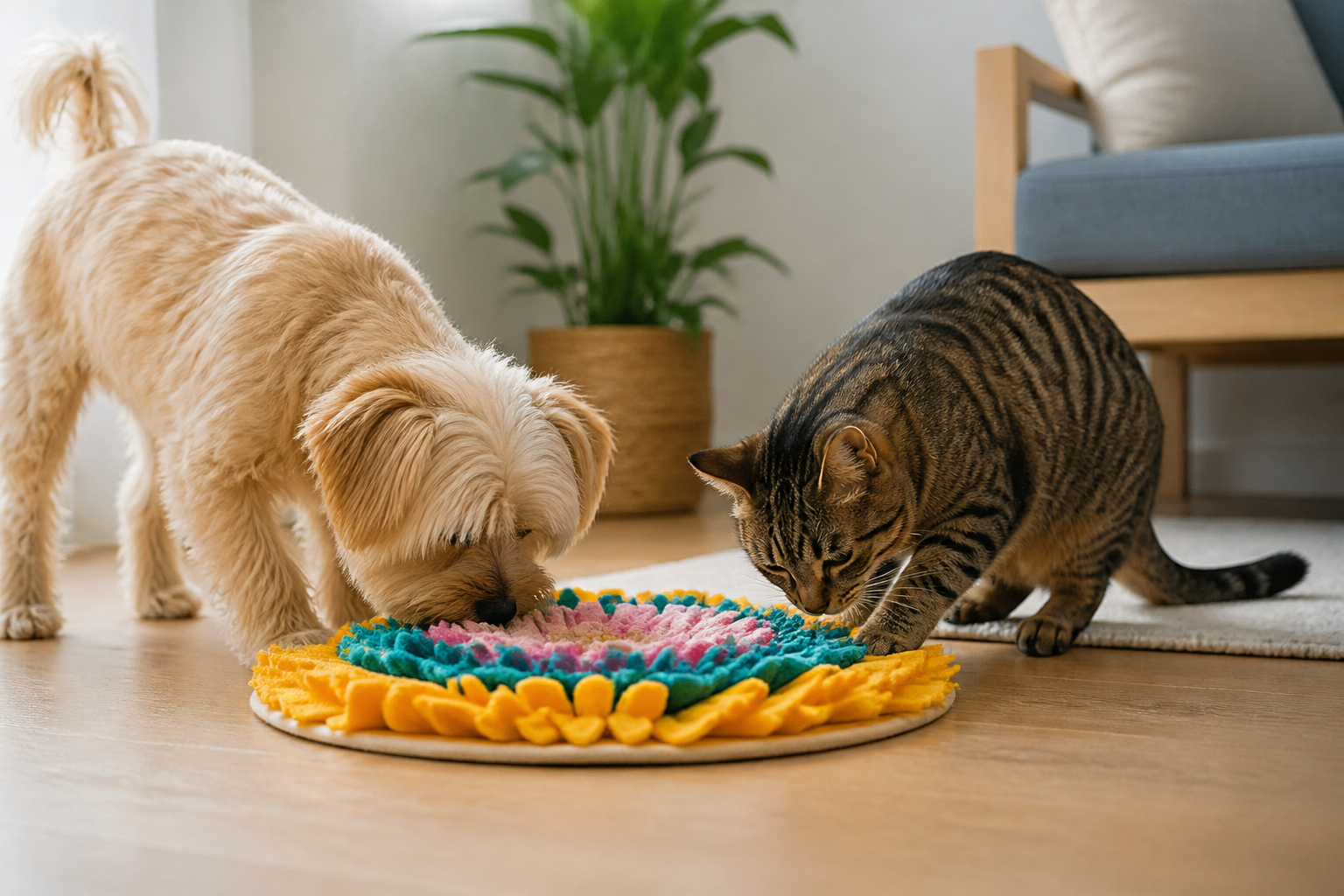
Yes, cats are also natural foragers and benefit greatly from scent-based enrichment. You may want to make a smaller version for a cat and use high-quality cat treats or even a bit of silvervine or catnip. It is a great way to keep indoor cats active and mentally engaged.
How often should I wash the snuffle mat?
You should wash the mat every two to four weeks depending on how often it is used. If you use "dusty" treats that leave a lot of residue, you may need to wash it more frequently. Always air dry the mat to protect the rubber base from heat damage.