
 Save 15% on your 1st Autoship learn more

 Email us
 Live Chat
 FAQs
FAQs





Introduction
You lean in for a happy morning nuzzle only to be met with a cloud of breath that smells like a damp basement. You know you should probably be brushing those teeth, but your dog treats the toothbrush like a personal enemy. Maybe you have tried every flavored paste on the market, but the wrestling match that follows leaves you both stressed and the teeth just as dirty as before. At BaxterBoo, we understand that while brushing is the gold standard, it is not the only way to protect your dog from dental disease. This guide covers practical, evidence-based methods to reduce plaque and tartar without the daily struggle. By combining the right chews, additives, and diets, you can keep your dog’s mouth healthy and their breath fresh.
Quick Answer: You can keep a dog’s teeth clean without brushing by using VOHC-approved dental chews, water additives, and systemic seaweed powders. These methods use mechanical scraping and active ingredients to break down plaque before it hardens into tartar.
Understanding the Battle Against Plaque and Tartar
Before choosing an alternative to brushing, it helps to know what you are fighting. Plaque is a sticky film of bacteria that forms on the teeth within hours after a meal. If it is not disrupted, it reacts with minerals in your dog’s saliva and hardens into tartar. This transition happens fast, often within 48 hours. Once tartar forms, it is like concrete. You cannot brush it away, and a chew toy will not scrape it off.
Tartar provides a porous surface where even more bacteria can grow. This leads to gingivitis, which shows up as a red, inflamed line along the gums. If left alone, these bacteria can enter the bloodstream and cause serious issues for the heart, liver, and kidneys.
Key Takeaway: Brushing disrupts plaque before it becomes tartar. If you skip brushing, you must use other daily tools to disrupt that sticky film before it mineralizes.
The Power of Systemic Dental Powders
One of the most effective ways to clean teeth without touching the mouth is using a systemic dental powder. These are typically made from a specific type of seaweed called Ascophyllum nodosum. When your dog eats this powder, the active ingredients are absorbed into the bloodstream and released back into the saliva.
This process changes the chemistry of the saliva. It helps soften existing tartar and prevents new plaque from sticking to the tooth surface. The most well-known version of this is ProDen PlaqueOff Powder Dog and Cat Teeth Care.
- Ease of use: You simply sprinkle a small scoop onto your dog's food once a day.
- No handling required: This is the perfect choice for dogs who snap or flee when their mouth is touched.
- VOHC Seal: Look for the Veterinary Oral Health Council seal on these products to ensure they have clinical proof of efficacy.
Why the VOHC Seal Matters
The Veterinary Oral Health Council (VOHC) is an independent group of dental specialists. They only award their seal to products that provide data from controlled clinical trials. Many products claim to clean teeth, but only those with the VOHC seal have proven they reduce plaque or tartar by at least 20 percent.
Vet Tip: If your dog has a history of thyroid issues, consult your veterinarian before using seaweed-based powders. These products are naturally high in iodine, which can affect thyroid function in sensitive pets.
Using Dental Chews as a Mechanical Tool
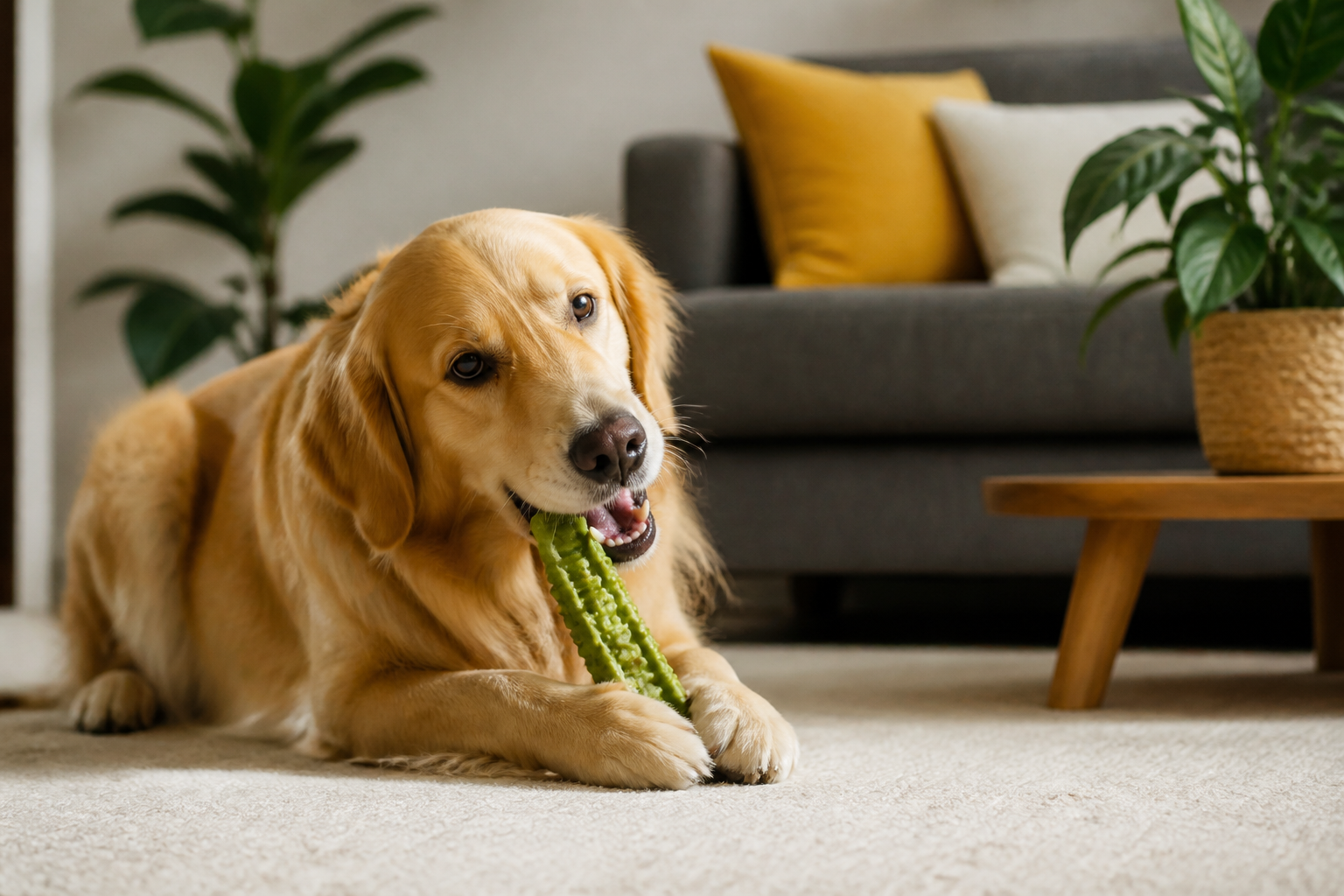
Dental chews are the most popular alternative to brushing. They work through mechanical abrasion. As your dog bites down, the texture of the chew scrapes against the tooth surface to rub away plaque.
However, not all chews are created equal. A chew that is swallowed in two bites will not do much for dental health. To be effective, the chew must be durable enough to encourage several minutes of gnawing.
For more ideas, explore our dog dental chews.
Selecting the Right Dental Chew
- Size it correctly: A chew that is too small is a choking hazard. A chew that is too large might have too many calories for a small dog.
- Check the flexibility: Use the thumbnail test. If you press your thumbnail into the chew and it does not give at all, it is likely too hard. Items like dried antlers or heavy nylon bones can actually fracture a dog’s teeth.
- Look for active ingredients: Some chews, like those from Greenies or Whimzees, combine mechanical scraping with ingredients that freshen breath and limit bacterial growth.
Bottom line: A daily dental chew is a great secondary tool, but it works best when paired with a systemic powder or a dental-specific diet.
Water Additives and Oral Rinses
Water additives are often described as mouthwash for dogs. You add a specific amount of the liquid to your dog’s water bowl each time you refill it. These additives usually contain enzymes or mild antibacterial agents like chlorhexidine.
While these do not provide the mechanical scraping of a chew, they are excellent at killing the bacteria that cause bad breath. They also help to break down the biofilm of plaque that covers the teeth.
- Odorless and tasteless: Most high-quality additives are designed so your dog will not even notice they are there.
- Consistency is key: You must use the additive every single day for it to have a cumulative effect on the oral environment.
- Supplemental care: Most veterinarians view water additives as a supplement rather than a standalone solution for dental hygiene.
Consider a brushless option such as Synergy Labs Dental Fresh Water Additive Dog Original Formula.
Prescription and Therapeutic Dental Diets
What your dog eats for their main meals can significantly impact their oral health. Standard kibble is often small and brittle. It tends to shatter as soon as a tooth touches it, providing zero cleaning benefit.
Prescription dental diets are different. Brands like Royal Canin Dental or Hill’s t/d use a specific kibble architecture. The pieces are larger and have a fibrous matrix. Instead of shattering, the tooth sinks into the kibble, and the fibers scrub the tooth surface all the way to the gumline.
We carry several therapeutic options through our partnership with Pet's Choice. Because these diets are formulated for specific health needs, they require a prescription from your vet. Our pharmacy makes it easy to have these specialized foods delivered right to your door alongside your other supplies.
Key Takeaway: Therapeutic dental diets turn every meal into a mini-cleaning session, making them one of the most effective "set it and forget it" methods for busy owners.
Dental Toys and Natural Scrapers
Playtime can also serve as a cleaning session if you provide the right toys. Rubber toys with nubs or ridges are designed to massage the gums and scrape the teeth as the dog chews.
Some owners prefer natural options like raw carrots. Carrots are low in calories and provide a firm texture that offers mild mechanical cleaning. While they are a healthy snack, they do not contain the active plaque-fighting ingredients found in clinical dental products.
Toys to Avoid
- Tennis balls: The fuzz on a tennis ball is surprisingly abrasive. Over time, it can actually wear down the enamel on your dog’s teeth, a condition known as "blunting."
- Heavy bones: Natural marrow bones are very hard. They often lead to slab fractures on the large upper premolars.
- Antlers: These are a common cause of broken teeth in aggressive chewers.
Identifying the Signs of Dental Trouble
No matter how many chews or powders you use, you should still check your dog's mouth regularly. Catching a problem early can save your dog from pain and save you from a massive vet bill.
For additional guidance, read our article about warning signs of bad teeth in dogs.
- Bad Breath: "Dog breath" is common, but it should not be foul or rotten. A strong odor usually indicates a bacterial infection.
- Bleeding Gums: You might notice a small amount of blood on a chew toy or in the water bowl.
- Difficulty Eating: If your dog drops food or only chews on one side of their mouth, they may have a painful tooth.
- Discoloration: Healthy teeth should be white. Yellow or brown buildup near the gumline is a sign of advanced tartar.
Vet Tip: If you notice your dog pawing at their face or if they have sudden swelling under one eye, seek veterinary care immediately. These are common signs of a tooth root abscess, which is an agonizing and serious infection.
The Role of Professional Cleanings
It is important to be realistic. At-home methods like powders and chews are preventive. They are designed to keep a clean mouth clean. They are not a substitute for a professional dental cleaning performed by a veterinarian.
Even with the best care, some dogs are genetically prone to dental issues. Smaller breeds, like Yorkies or Chihuahuas, have crowded mouths that trap plaque easily. These dogs may need a professional cleaning every year.
A professional cleaning is done under anesthesia. This allows the vet to clean under the gumline where the real damage happens. It also allows them to take X-rays to see if the roots are healthy.
For more preventive guidance, see our pet dental care tips.
Bottom line: Use no-brush methods to maintain health between visits, but never skip your annual veterinary dental exam.
Creating a No-Brush Dental Routine
The best dental routine is the one you will actually do. For most owners at BaxterBoo, a layered approach works best. This ensures you are attacking plaque from multiple angles.
Step 1: The Daily Base
Add a VOHC-approved dental powder to your dog’s breakfast. This provides 24-hour systemic protection and changes the chemistry of the saliva to keep plaque from sticking.
Step 2: The Afternoon Reward
Give your dog one dental chew in the afternoon. This provides the mechanical scraping needed to rub away any plaque that formed during the day. It also keeps them occupied while you finish your workday.
Step 3: The Passive Support
Use a water additive in their main water bowl. This helps keep bacteria levels low and ensures their breath stays fresh between chews.
Step 4: The Monthly Check
Once a month, lift your dog's lips. Look at the back molars for any new brown spots and check the gums for redness. If things look worse despite your routine, it is time for a vet visit.
Why Consistency Trumps Everything
A single dental chew once a week will do almost nothing for your dog’s long-term health. Because plaque mineralizes so quickly, dental care must happen every single day. If you miss a few days, that plaque becomes tartar, and your at-home tools lose their effectiveness.
This is why "no-brush" methods are so valuable. They are easy to turn into a habit. It takes five seconds to scoop powder onto food or drop a chew on the floor. When dental care is easy, it actually gets done.
Note: Many of our customers use our Autoship program for their dental supplies. This ensures you never run out of chews or powders, keeping your dog's dental routine consistent and effective all year long.
Conclusion
Keeping your dog's teeth clean without brushing is entirely possible with the right strategy. By using a combination of systemic powders, mechanical chews, and specialized diets, you can significantly reduce the risk of periodontal disease. While these methods do not replace the need for professional veterinary checkups, they provide a powerful defense against plaque and tartar buildup.
- Use VOHC-approved products for proven results.
- Combine mechanical scraping with systemic powders.
- Monitor your dog's mouth for redness or foul odors.
- Consult your vet for prescription dental diets if needed.
The easiest way to stay consistent is to have your dog’s favorite dental supplies delivered automatically. Check out our dog dental care collection to find the right fit for your dog’s needs.
FAQ
Can I just give my dog a bone instead of brushing their teeth?
While some raw bones provide mechanical cleaning, they carry risks like tooth fractures and intestinal blockages. It is much safer to use VOHC-approved dental chews that are designed to dissolve safely and provide the right level of abrasion without breaking the teeth.
Are dental water additives actually safe for dogs?
Yes, high-quality water additives are safe when used as directed. They typically use pet-safe enzymes or antibacterial agents to freshen breath and disrupt plaque. Always choose a reputable brand and follow the dosing instructions on the bottle based on your dog's water intake.
How do I know if a dental chew is working?
The best sign that a dental routine is working is fresh breath and pink, healthy gums. You should also see a lack of new yellow or brown buildup on the teeth near the gumline. If you notice the teeth are getting darker despite the chews, you may need to add a systemic powder or schedule a professional cleaning.
Does dry kibble really clean a dog's teeth?
Standard dry kibble provides very little dental benefit because it crumbles easily. However, specific prescription dental diets are engineered with a larger, fibrous kibble that does not shatter. These therapeutic diets are designed to scrub the tooth as the dog bites down and are much more effective than regular dry food.






