
 Save 15% on your 1st Autoship learn more

 Email us
 Live Chat
 FAQs
FAQs





Introduction
You lean in for a happy morning nuzzle only to be met with a cloud of breath that smells like a damp basement. Most of us have been there. While we often joke about dog breath, that lingering odor is usually the first sign of a health issue that needs attention. Keeping your dog’s mouth healthy is about much more than just a fresh-smelling greeting. It is a fundamental part of their overall wellness that can add years to their life. At BaxterBoo, we have spent years helping pet owners navigate the world of canine oral care, from the first puppy toothbrush to specialized senior diets. This guide will walk you through the most effective ways to manage plaque and tartar at home while knowing when it is time to call in the professionals.
Why Dental Care Is Not Optional
Many pet owners are surprised to learn that by the age of three, the vast majority of dogs show some sign of periodontal disease. This is not just a cosmetic issue. When bacteria sit on the teeth, they form a sticky film called plaque. If that plaque is not removed, it hardens into tartar within about 48 hours. Tartar is porous and provides the perfect home for even more bacteria to thrive.
The real danger happens when those bacteria move under the gumline. From there, they can enter the bloodstream and travel to major organs. This puts a significant strain on the heart, liver, and kidneys. Routine dental care is one of the most effective ways to protect your dog from these systemic issues.
Quick Answer: The most effective way to keep a dog's teeth clean is through daily brushing with dog-specific toothpaste. This mechanical action removes plaque before it can harden into tartar, which can only be removed by a veterinarian.
Brushing the Gold Standard
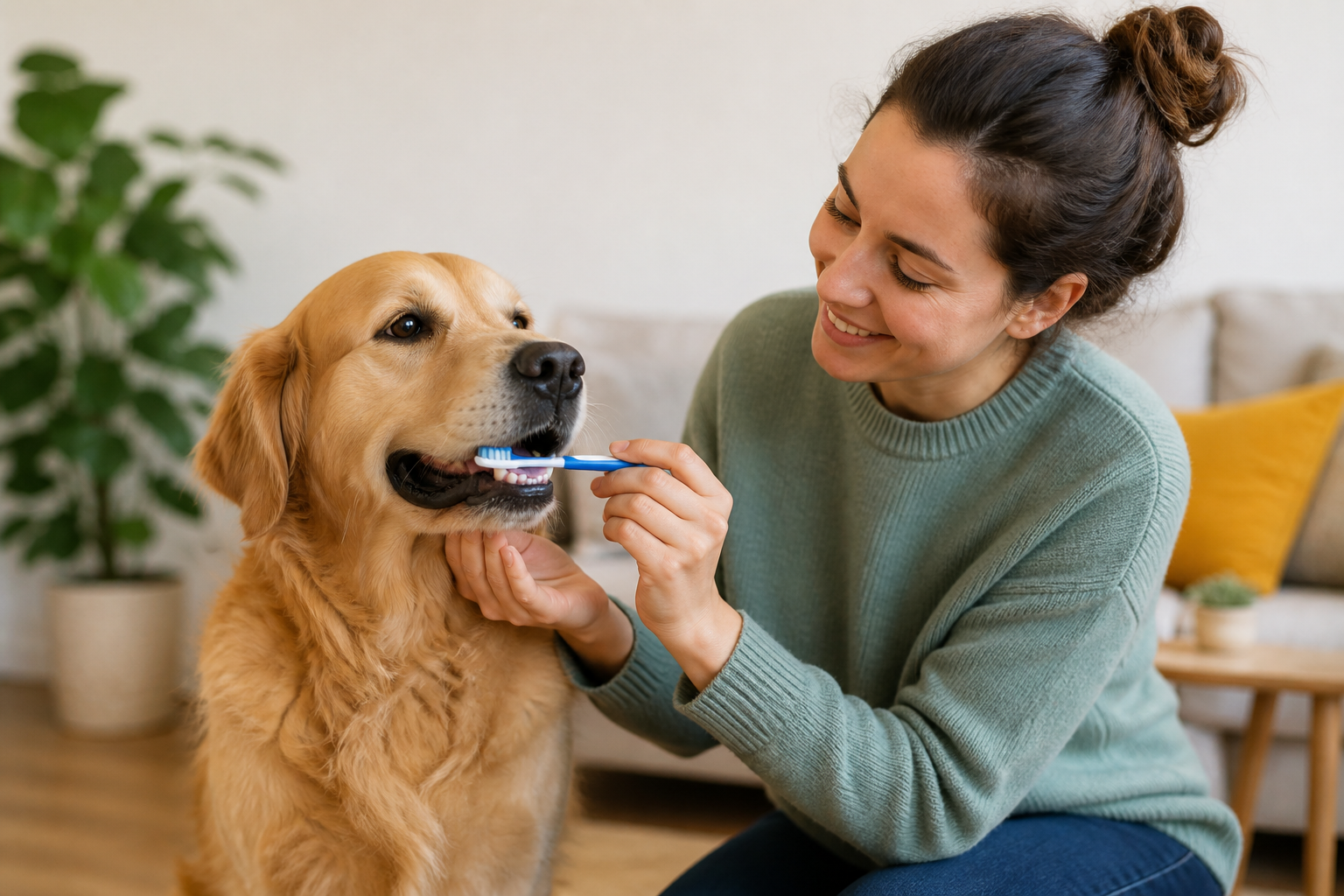
Brushing your dog’s teeth is the single most effective thing you can do for their oral health. It might feel a bit awkward at first, but most dogs can learn to tolerate or even enjoy the process if you start slowly.
Choosing the Right Tools
Never use human toothpaste for your dog. Our toothpaste contains foaming agents and sweeteners like xylitol that are toxic to pets. Canine toothpaste is formulated to be swallowed and comes in flavors like poultry, beef, or peanut butter to make the experience more pleasant.
You have a few options for the brush itself. A standard dog toothbrush with a long handle and angled bristles is great for reaching the back molars. For smaller dogs or those who are nervous about long objects in their mouth, a silicone finger brush can feel more natural.
The Brushing Process
Do not aim for a full cleaning on day one. Start by letting your dog lick a bit of toothpaste off your finger. Once they like the taste, gently rub your finger along their gums. Gradually introduce the brush, focusing on the outside surfaces of the teeth where the most plaque accumulates.
Step 1: Introduce the flavor. Let your dog taste the toothpaste so they associate the brush with a treat.
Step 2: Lift the lip. Gently lift the side of the mouth to expose the teeth without forcing the jaws open.
Step 3: Circular motions. Aim the bristles at a 45-degree angle toward the gumline and move in small circles.
Step 4: Reward and praise. Always end the session with a high-value treat or a favorite game to build a positive association.
For additional brushing guidance, read our guide to pet dental care tips.
Vet Tip: If you notice bleeding gums, loose teeth, or if your dog pulls away in pain during brushing, stop immediately and schedule a veterinary exam. These are signs of existing dental disease that brushing alone cannot fix.
Dental Chews and Treats
Not every dog will sit still for a toothbrush. While brushing is the best method, dental chews are a fantastic supplement or alternative. These treats are designed to be hard enough that the dog has to gnaw on them, creating a scrubbing action that scrapes away plaque.
When shopping at BaxterBoo for dental treats, look for the Veterinary Oral Health Council (VOHC) seal. This seal means the product has been independently tested and proven to reduce plaque or tartar by at least 20 percent. Brands like Greenies and OraVet are popular choices because they provide that necessary mechanical friction. You can browse our dental and breath care collection for chews, treats, powders, and other oral-care products.
Selecting the Right Size
It is vital to choose a chew that matches your dog’s size. A chew that is too small can be swallowed whole, posing a choking risk and providing zero dental benefits. A chew that is too large or too hard can actually fracture a tooth. As a general rule, you should be able to make a slight indentation in the chew with your thumbnail. If it is as hard as a rock, it might be too much for your dog's enamel.
- Select the correct weight category on the packaging.
- Supervise your dog while they enjoy their chew.
- Factor the calories of these treats into your dog's daily intake to avoid weight gain.
For more ideas, explore our roundup of dental chews for dogs.
The Role of Diet in Dental Health
There is a long-standing debate about whether dry kibble cleans teeth better than wet food. While the crunch of standard kibble provides a tiny bit of scraping, most of it crumbles too quickly to make a significant difference. However, specialized dental diets are a different story.
Prescription Dental Diets
For dogs prone to heavy tartar buildup, your veterinarian might recommend a prescription dental diet. These kibbles are much larger and have a fibrous structure that does not shatter when bitten. Instead, the tooth sinks into the kibble, allowing the fibers to scrub the tooth all the way to the gumline.
Through our partnership with Pet's Choice, our pharmacy carries prescription diets like Royal Canin Vet Diet Adult Dental or Hill’s Prescription Diet t/d. These foods often include minerals that bind to calcium in the saliva, preventing it from hardening into tartar. Because these are medical grade foods, you will need a valid prescription from your vet to order them.
Key Takeaway: Routine at-home care like brushing and dental chews can prevent new plaque, but they cannot remove existing tartar. Only a professional cleaning under anesthesia can safely remove hardened deposits from under the gumline.
Water Additives and Dental Powders
If your dog is particularly resistant to having their mouth touched, water additives and dental powders are helpful "hands-off" options. These products usually contain enzymes that break down the biofilm of plaque before it can calcify.
Water additives are tasteless and odorless solutions you mix into your dog's daily water bowl. They work every time your dog takes a drink. Dental powders, like VetriScience Perio Support, are sprinkled directly onto their food. These are especially useful for multi-pet households where individual brushing is a major time commitment.
Bottom line: While water additives and powders help reduce the bacterial load in the mouth, they are most effective when used as part of a multi-step routine that includes some form of mechanical cleaning.
Dental Toys and Enrichment
The act of chewing is a natural behavior for dogs that also happens to be great for their teeth. Toys made from durable rubber or thick cotton rope can help massage the gums and clean the surfaces of the teeth during play. Browse our dog toys for options that support chewing and enrichment.
We carry a wide variety of toys from brands like Kong and RC Pets that are designed with ridges and nubs. These textures reach into the gaps between teeth as the dog chews. For an added dental boost, you can even smear a little dog-safe toothpaste into the grooves of a rubber chew toy. This encourages the dog to do the "brushing" work for you.
- Rope toys act like floss to clean between teeth.
- Rubber toys with nubs help stimulate blood flow in the gums.
- Nylon chews provide long-lasting scraping for aggressive chewers.
For help choosing playthings by chewing style, see our guide to the best dog toys.
Professional Veterinary Cleanings
No matter how diligent you are at home, most dogs will eventually need a professional cleaning. Think of it like your own visits to the dentist. Even if you brush and floss perfectly, a hygienist still finds things to clean.
A professional dental cleaning for a dog, also called a prophylaxis, must be done under general anesthesia. This is the only way a veterinarian can safely scale the inside of the teeth and, most importantly, clean out the pockets under the gumline where the most damage occurs. They will also take X-rays to check for abscesses or bone loss that are not visible to the naked eye.
Frequency of Professional Care
How often your dog needs a cleaning depends on several factors:
- Breed: Small breeds and flat-faced breeds like Pugs or Chihuahuas often have crowded teeth, which traps more debris. They may need yearly cleanings.
- Age: Senior dogs may require more frequent check-ups as their immune systems change.
- Genetics: Some dogs simply have "stickier" saliva that leads to faster tartar formation.
- Home Care: The more you brush at home, the longer you can typically go between professional sessions.
Vet Tip: Schedule a dental check-up at least once a year during your dog's regular wellness exam. Catching a small pocket of infection early is much easier (and less expensive) than dealing with a full-blown extraction later.
Recognizing Signs of Dental Trouble
It is important to regularly lift your dog's lips and look at what is happening inside their mouth. Early detection of dental disease can prevent significant pain for your pet.
Look for these warning signs:
- Persistent Bad Breath: A "doggy" smell is normal, but a foul, rotting, or metallic odor is not.
- Discolored Teeth: Healthy teeth are white. Yellow or brown buildup near the gumline is tartar.
- Red or Swollen Gums: This is a sign of gingivitis and inflammation.
- Changes in Eating Habits: If your dog starts dropping food, chewing on one side, or suddenly refuses hard kibble, they may be in pain.
- Pawing at the Face: This often indicates a toothache or something stuck in the gums.
- Bloody Saliva: You might see pink tinges on their chew toys or in their water bowl.
Read about warning signs of dental problems in dogs to learn what changes deserve prompt attention.
Managing Health with Our Pharmacy
When dental issues become chronic or lead to infections, your vet may prescribe medications. This could include antibiotics to clear up an abscess or anti-inflammatories to manage pain after a tooth extraction.
Our pharmacy at BaxterBoo, operating through our partnership with Pet's Choice, provides a convenient way to get these FDA-approved medications delivered to your door. We also carry specialized flea and tick preventives and other health aids that help keep your dog in peak condition. A healthy dog is better equipped to fight off the bacteria that cause oral decay. Visit our pet pharmacy when your veterinarian recommends prescription medication.
Key Takeaway: Dental health is a lifelong commitment. Combining daily brushing, dental-friendly treats, and regular veterinary check-ups is the best way to ensure your dog stays comfortable and healthy well into their senior years.
Conclusion
Keeping your dog's teeth clean is one of the kindest things you can do for them. While it takes a little bit of effort to establish a routine, the payoff is a happier dog with a much longer life expectancy. Start small by introducing a flavored toothpaste and build up to a regular brushing schedule. Supplement that effort with VOHC-approved treats and durable chew toys from our collection. Remember that your veterinarian is your best partner in this journey. Whether you need a professional cleaning or a prescription diet from our pharmacy, taking proactive steps today prevents painful problems tomorrow.
Next Steps for Your Dog's Dental Health:
- Check your dog's mouth for redness or brown tartar today.
- Explore our selection of dental treats and toys.
- Talk to your vet about whether a prescription dental diet is right for your pet.
- Sign up for our Autoship programme to ensure you never run out of dental chews or toothpaste.
FAQ
How often should I brush my dog's teeth?
Ideally, you should brush your dog's teeth every day to remove plaque before it hardens into tartar. If daily brushing is not possible, aiming for three times a week still provides significant health benefits. Consistency is more important than perfection, so find a schedule that works for both you and your pet.
Can I use human toothpaste on my dog?
No, you should never use human toothpaste on a dog because it contains ingredients that are harmful to them. Xylitol, a common sweetener in human paste, is highly toxic to dogs, and the foaming agents can cause significant stomach upset. Always use a toothpaste specifically formulated for canines, which is safe to be swallowed.
Do dental treats actually work to clean teeth?
Yes, many dental treats are effective at reducing plaque and tartar, especially those with the VOHC seal of approval. They work through mechanical scraping as the dog chews and often contain ingredients that help freshen breath. However, they should be used as a supplement to brushing rather than a total replacement.
Why does my dog need anesthesia for a dental cleaning?
Anesthesia is necessary because a thorough cleaning requires scaling under the gumline and on the inner surfaces of the teeth, which a dog will not sit still for while awake. It also allows the veterinarian to take dental X-rays and perform extractions safely without causing the dog stress or pain. Modern veterinary anesthesia is very safe and includes constant monitoring of your pet's vitals.






