
 Save 15% on your 1st Autoship learn more

 Email us
 Live Chat
 FAQs
FAQs





Introduction
You lean in for a happy morning snuggle, but the scent that greets you is anything but fresh. That "dog breath" we often joke about is actually a major indicator of your pet's overall health. At BaxterBoo, we see many owners who are surprised to learn that dental care is just as important for dogs as it is for humans. Left untreated, dental issues can lead to pain, tooth loss, and even systemic infections that affect the heart and kidneys. This post covers everything from daily brushing techniques to the best dental chews and professional care. We want to help you build a routine that keeps those pearly whites shining and your dog feeling their best. Consistent oral care is the foundation of a long, healthy life for your canine companion.
Quick Answer: The most effective way to keep dog teeth clean is daily brushing with pet-safe toothpaste. Complement this with VOHC-approved dental treats, water additives, and annual professional veterinary cleanings to manage plaque and prevent tartar.
The Difference Between Plaque and Tartar
Understanding how dental disease starts helps you fight it more effectively. It all begins with plaque. This is a soft, sticky film of bacteria that forms on the teeth within hours of eating. At this stage, it is very easy to remove with simple mechanical action. If you do not remove plaque, it reacts with the minerals in your dog's saliva. Within 24 to 48 hours, it hardens into tartar, also known as calculus.
Tartar is a hard, yellowish or brown substance that sticks firmly to the tooth enamel. You cannot brush tartar away at home. Once it forms, it provides a rough surface where even more plaque can grow. This cycle leads to gingivitis, which is the inflammation of the gums. Eventually, the bacteria move under the gumline. This destroys the bone and tissues that hold the teeth in place.
Key Takeaway: Plaque is a soft film you can brush away, but tartar is a hard mineral deposit that requires professional removal. Consistency is vital because plaque turns into tartar in less than two days.
Brushing Your Dog's Teeth at Home
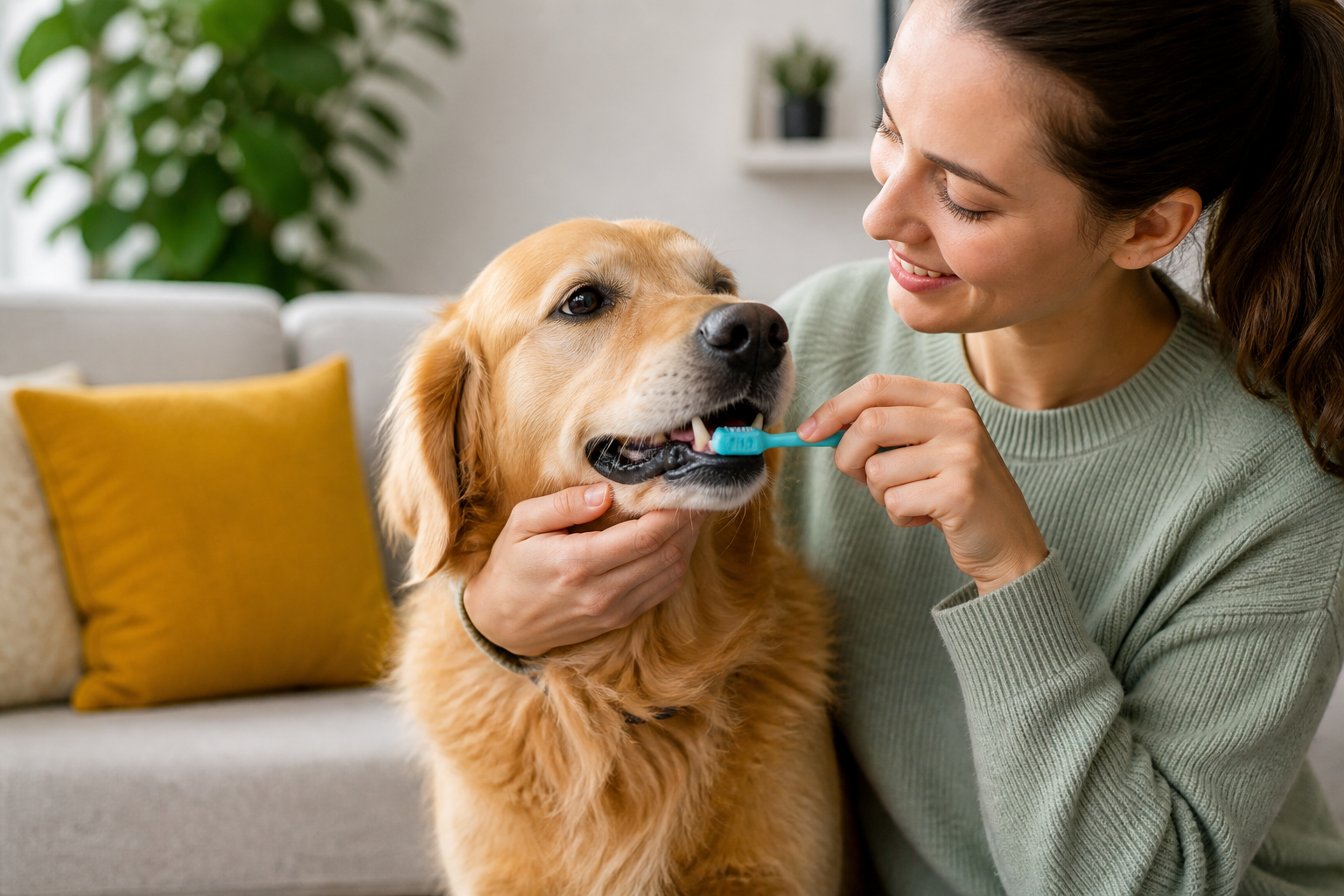
Brushing is the gold standard for oral hygiene. It is the only way to physically scrub away plaque before it mineralizes. Many owners feel intimidated by the idea of sticking a brush in their dog's mouth, but most dogs can learn to accept it with patience.
Choosing the Right Tools
Never use human toothpaste for your dog. Our toothpaste contains fluoride and often xylitol, both of which are toxic to dogs. Pet-specific toothpastes come in flavors like poultry, beef, or peanut butter to make the experience more enjoyable. You also need a brush designed for a dog's mouth.
- Finger brushes: These are silicone sleeves that fit over your fingertip. They are great for puppies or dogs who are new to brushing.
- Long-handled brushes: These have angled heads to reach the back molars.
- Small-breed brushes: These have tiny heads for dogs with crowded mouths.
For a toothpaste made specifically for dogs, consider Nutri-Vet Dog Toothpaste.
A Step-by-Step Brushing Routine
Step 1: Introduce the paste. / Let your dog lick a small amount of pet toothpaste off your finger. This builds a positive association with the flavor.
Step 2: Touch the mouth. / Gently lift your dog's lips and touch their teeth and gums with your finger. Do this for several days until they are comfortable.
Step 3: Introduce the brush. / Put a little paste on the brush and let them lick it. Gently move the brush against the front teeth in a circular motion.
Step 4: Reach the back. / Most plaque accumulates on the outside surfaces of the upper back molars. Gently slide the brush along the cheek to reach these areas.
Vet Tip: Focus your brushing efforts on the outside surfaces of the teeth near the cheeks. This is where the most tartar builds up. If your dog only tolerates a few seconds of brushing, prioritize these upper back molars.
For additional guidance, read The Top 10 Pet Dental Care Tips.
Dental Treats and Chews
Not every dog will sit still for a toothbrush. This is where dental treats and chews become valuable tools. These products work through mechanical scraping. As your dog chews, the texture of the treat rubs against the tooth surface to wipe away plaque.
Look for the Veterinary Oral Health Council (VOHC) Seal of Acceptance on packaging. This seal means the product has been scientifically tested and proven to reduce plaque or tartar by a significant margin. We carry several trusted brands that offer these benefits, including our selection of Greenies products and certain types of Kong toys.
Choosing the Right Size
Size matters when it comes to dental treats. If a treat is too small, your dog might swallow it whole. This eliminates the cleaning benefit and creates a choking hazard. If it is too large, they might struggle to chew it properly. Always supervise your dog when they are enjoying a chew to ensure they are breaking it down into manageable pieces.
Ingredient Considerations
Some dental treats contain enzymes that help break down bacteria. Look for ingredients like glucose oxidase or lactoperoxidase. These are natural antiseptics that help keep the mouth clean. If your dog has a sensitive stomach, look for limited-ingredient dental chews.
Bottom line: Dental treats are a great supplement to brushing, but they should be sized correctly and ideally carry the VOHC seal.
Using Water Additives and Dental Powders
If your dog is very resistant to having their mouth touched, water additives and powders offer a hands-off approach. These products are designed to be easy for the owner and stress-free for the pet.
Water additives are tasteless and odorless liquids. You simply add a capful to your dog's water bowl each time you refill it. These solutions contain enzymes or zinc gluconate. These ingredients help kill the bacteria that cause bad breath and plaque. They are an excellent option for multi-dog households where brushing everyone daily is a challenge.
Dental powders work similarly but are sprinkled over your dog's food. Many of these powders use a specific type of brown algae called ProDen PlaqueOff. This seaweed has been shown to change the chemistry of the saliva. It makes plaque softer and easier to remove through normal chewing.
ProDen PlaqueOff Powder Dog and Cat Teeth Care is one option designed to be added to your pet's food.
Key Takeaway: Water additives and powders are effective "passive" cleaning methods. They are ideal for senior dogs or pets with high anxiety about grooming.
For more product options, browse our dog dental and breath care category.
The Role of Specific Diets
The food your dog eats every day has a significant impact on their oral health. While some believe that all dry kibble cleans teeth, most standard kibble actually shatters too quickly to provide much scrubbing action.
Specific dental diets are engineered differently. The kibble is larger and has a fiber matrix that does not crumble immediately. Instead, the tooth sinks into the piece of food, allowing the fibers to scrub the tooth surface all the way to the gumline.
We carry premium brands like Royal Canin and Farmina that offer specialized nutrition. Some of these formulas are prescription-only and are designed for dogs with advanced dental needs. Our pharmacy can fulfill these prescriptions through our partnership with Pet's Choice. If your veterinarian recommends a specific dental diet like Royal Canin Vet Life, you can easily manage your orders through our site.
For prescription medications or veterinarian-recommended products, visit our pet pharmacy.
Vet Tip: If your dog has a history of rapid tartar buildup, ask your vet about a prescription dental diet. These are formulated to provide a mechanical cleaning effect that standard grocery store kibble cannot match.
Interactive Dental Toys
Chewing is a natural instinct for dogs. It helps relieve stress and keeps their jaws strong. You can use this instinct to your advantage by providing toys designed for dental health.
Rubber toys with nubs or ridges are excellent for massaging the gums. As your dog gnaws on the toy, the ridges get into the gaps between the teeth. Rope toys can also act like a natural floss. The cotton fibers rub against the teeth as the dog plays tug or chews.
At BaxterBoo, we recommend rotating toys to keep your dog interested. A dog who is bored with a toy will not chew on it, and if they do not chew, they do not get the dental benefits. Look for durable brands like Kong or RC Pets that can withstand heavy chewing sessions.
- Rubber toys with deep grooves for dental gel
- Nylon chews with textured surfaces
- Cotton rope toys for flossing action
- Interactive treat-dispensing toys that encourage prolonged chewing
Explore our dog toys category for options that encourage interactive chewing and play.
Professional Veterinary Cleanings
Home care is essential, but it is not a replacement for professional veterinary care. Even with daily brushing, some plaque will eventually mineralize into tartar in hard-to-reach places.
A professional dental cleaning is a medical procedure performed under general anesthesia. This is the only way a veterinarian can safely and thoroughly clean under the gumline. This is where the most dangerous bacteria live. During the procedure, the vet will:
- Perform a full oral exam to look for loose or fractured teeth.
- Take dental X-rays to check for abscesses or bone loss below the surface.
- Use ultrasonic scalers to remove tartar from every tooth surface.
- Polish the teeth to smooth out any microscopic scratches.
Our pharmacy provides access to FDA-approved medications your dog might need after a dental procedure. This includes pain relief or antibiotics if an extraction was necessary. Working with our pharmacy through Pet's Choice ensures you get the exact medication your vet prescribed for a smooth recovery.
Vet Tip: Small breeds like Pugs, Yorkies, and Chihuahuas often need more frequent professional cleanings. Their teeth are crowded together, which traps more food and bacteria compared to larger breeds.
Signs of Dental Problems to Watch For
Between vet visits, you should perform a weekly "mouth check" at home. Early detection of dental disease can save your dog from pain and save you from expensive surgery.
Watch for these warning signs:
- Extremely foul breath that does not go away.
- Red, swollen, or bleeding gums.
- Yellow or brown crust (tartar) on the teeth.
- Difficulty eating or dropping food from the mouth.
- Pawing at the face or mouth.
- Loose or missing teeth.
- Unexplained nasal discharge or swelling under the eye.
If you notice any of these symptoms, schedule a veterinary exam immediately. Persistent bad breath is not just a cosmetic issue. It is often a sign of an active infection.
For a closer look at warning signs, read Is Your Dog Hiding Bad Teeth? Warning Signs and What to Do.
Creating a Sustainable Routine
The key to success is not doing everything at once. It is about finding a routine you can actually stick to. If you cannot brush every day, aim for three times a week. Complement that with a dental chew on the days you skip brushing.
We suggest using our Autoship programme for your dental supplies. This ensures you never run out of toothpaste, treats, or dental diets. Plus, you get savings on your recurring orders and a free MVP Gold membership. Having the supplies on hand makes it much easier to stay consistent with your dog's care.
Bottom line: A combination approach is best. Use brushing as your primary tool, supported by dental treats, toys, and regular veterinary checkups.
Conclusion
Keeping your dog's teeth clean is one of the most impactful things you can do for their long-term health. By combining daily brushing with the right dental chews and toys, you can prevent the painful progression of periodontal disease. Remember that home care works best alongside professional veterinary cleanings to address tartar below the gumline. We are here to support your journey with a wide selection of dental care products and a full-service pharmacy for your prescription needs. Check out our Medical & Mobility section to find the dental tools your dog needs for a healthier smile.
FAQ
How often should I really brush my dog's teeth?
Ideally, you should brush your dog's teeth every single day to remove plaque before it hardens into tartar. If daily brushing is not possible, aiming for at least three times a week can still significantly reduce the risk of dental disease. Consistency is more important than duration, so even a quick thirty-second scrub is better than skipping it entirely.
Can I use a human toothbrush for my dog?
You can use a soft-bristled human toothbrush, especially for medium or large dogs, but a pet-specific brush is often better. Dog toothbrushes are angled to reach the back molars more easily and have softer bristles to protect sensitive gums. For very small dogs, a baby toothbrush or a finger brush is usually the most comfortable and effective option.
Are dental chews enough to keep teeth clean without brushing?
While dental chews are helpful, they are not a complete substitute for brushing. Chews primarily clean the chewing surfaces of the teeth and may not reach the gumline where periodontal disease begins. Think of dental treats as a supplement to brushing, similar to how humans use mouthwash in addition to brushing and flossing.
Why does my dog need anesthesia for a dental cleaning?
Anesthesia is necessary because it allows the veterinarian to perform a thorough cleaning without causing the dog stress or pain. It also ensures the vet can clean under the gumline and take accurate X-rays. Without anesthesia, it is impossible to safely use sharp instruments near the gums or address issues hidden beneath the surface of the teeth.






