
 Save 15% on your 1st Autoship learn more

 Email us
 Live Chat
 FAQs
FAQs





Introduction
Coming home with a dog that has just had a professional dental cleaning is a great feeling. Their breath is fresh, and their teeth are sparkling white. However, that professional cleaning is only the beginning of a long term commitment to their oral health. Without a plan for at home care, plaque can start to accumulate again in as little as 24 hours.
At BaxterBoo, we understand that maintaining those results can feel overwhelming once you are back in your own kitchen. This post covers exactly how to transition from the recovery phase into a sustainable daily routine. We will look at brushing techniques, dental treats, and the role of specialized diets in keeping those pearly whites clean. By following these steps, you can extend the time between professional cleanings and support your dog's overall wellness.
Immediate Post-Op Care and Recovery
The first few days after a professional cleaning require a gentle approach. Your dog has likely been under anesthesia and their gums may be sensitive. If the veterinarian performed extractions, the recovery process is even more delicate. You must prioritize healing before you worry about scrubbing away new plaque.
During the first 24 to 48 hours, focus on rest. Your dog may be a bit groggy or less interested in their usual activities. Provide a quiet space for them to recover. If your vet prescribed pain medication or antibiotics, ensure you follow the dosing schedule exactly as directed. These medications are crucial for preventing infection and keeping your pet comfortable.
Quick Answer: Wait at least 48 hours after a standard cleaning before brushing your dog's teeth. If your dog had extractions, wait 7 to 14 days or until your veterinarian confirms the surgical sites have fully healed.
Transitioning to Soft Food
If your dog underwent oral surgery or had several teeth removed, their mouth will be sore. Hard kibble can poke at sensitive gums or dislodge sutures. Most veterinarians recommend a soft food diet for three to ten days following a procedure. You can use canned wet food or soften their regular kibble with warm water.
If you soak the kibble, let it sit for at least 15 minutes until it reaches a sponge-like consistency. This allows your dog to eat without needing to apply significant pressure with their jaws. Avoid giving any hard chew toys or crunchy treats during this initial window.
Vet Tip: If your veterinarian prescribes a specific recovery diet or post-surgical medication, you can often find these through our pet pharmacy. Always finish the entire course of antibiotics even if your dog seems to be feeling better.
Establishing a Brushing Routine
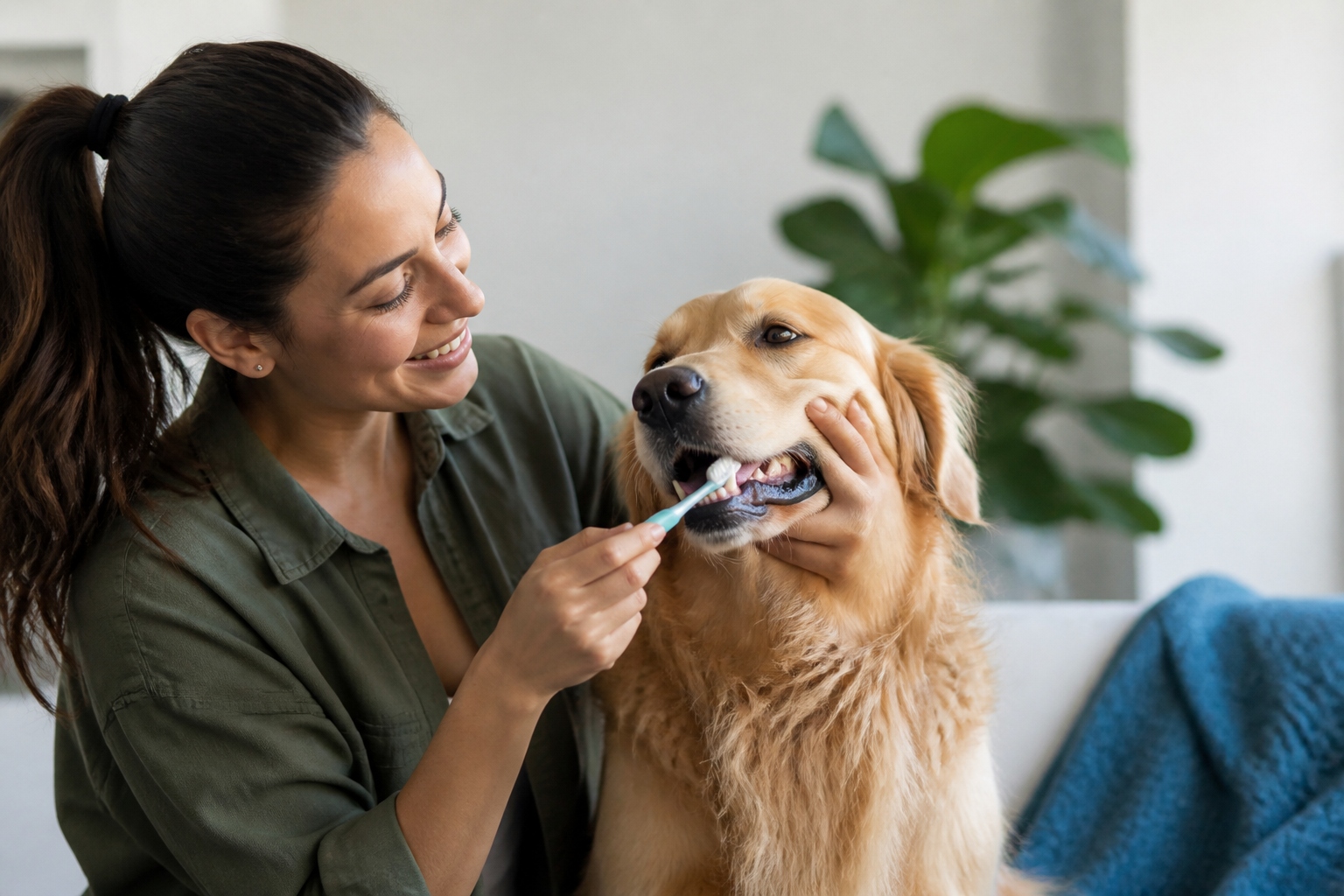
Once the mouth has healed, brushing is the single most effective way to keep teeth clean. It is the gold standard of pet dental care. While it might seem intimidating, most dogs can learn to accept and even enjoy the process if you start slowly.
The goal of brushing is to remove plaque before it hardens into tartar. Plaque is a soft film of bacteria that is easy to wipe away. Tartar is a hard mineral deposit that only a professional cleaning can remove. Brushing two to three times a week is good, but daily brushing is the best way to prevent future dental disease.
For additional guidance, review these pet dental care tips before beginning a new routine.
Choosing the Right Tools
Never use human toothpaste for your dog. Human toothpaste contains fluoride and detergents that can upset a dog's stomach. Some even contain xylitol, which is highly toxic to pets. Always choose a dedicated canine toothpaste. These are often flavored like beef, chicken, or peanut butter to make the experience rewarding.
You have a few options for the brush itself:
- Standard pet toothbrushes with long handles to reach the back molars.
- Fingertip brushes that slip over your finger for better control.
- Small, soft-bristled baby toothbrushes for tiny mouths.
You can find toothbrushes and toothpaste in our dog dental care collection.
A Step-by-Step Guide to Brushing
Step 1: Introduce the taste. / Let your dog lick a small amount of pet toothpaste off your finger for a few days without any brushing.
Step 2: Get them used to mouth handling. / Gently lift your dog's lips and touch their teeth and gums with your finger while praising them.
Step 3: Introduce the brush. / Put toothpaste on the brush and let them lick it off while it is in your hand.
Step 4: Start brushing. / Aim for a 45 degree angle toward the gumline. Use gentle circular motions on the outside surfaces of the teeth.
Step 5: Focus on the back. / Most plaque builds up on the upper back molars, so make sure to spend time in those hard to reach areas.
Key Takeaway: Consistency matters more than perfection. Even a 30 second session that covers the most important teeth is better than not brushing at all.
The Role of Dental Chews and Treats
Not every dog will tolerate a toothbrush. For those pets, dental chews and treats offer a helpful alternative. These products work through mechanical action. As the dog chews, the texture of the treat scrapes against the tooth surface to wipe away plaque.
Some treats also contain enzymatic ingredients that help break down the bacteria that cause bad breath. When shopping for treats, look for the Veterinary Oral Health Council (VOHC) seal of acceptance. This seal indicates that the product has been rigorously tested and proven to reduce plaque or tartar by at least 20 percent.
Browse our dog dental treats and chews for options that can complement your brushing routine.
How to Use Dental Chews Safely
While chews are helpful, they are also a source of calories. If you give a dental chew every day, you may need to slightly reduce your dog's meal portions to prevent weight gain. Always supervise your dog while they are enjoying a chew. If a dog swallows a large chunk of a hard treat, it can cause a choking hazard or an intestinal blockage.
We carry several trusted brands like Greenies and Kong that offer various textures for different chewing styles. Some dogs are "gulpers" who try to swallow treats whole. For these dogs, choose larger chews that force them to slow down and work for their reward.
For more ideas, see these dental chews for dogs.
Bottom line: Dental treats are a supplement to oral care, not a replacement for brushing or professional cleanings.
Water Additives and Dental Powders
If you have a busy schedule or a very stubborn pet, water additives and powders can be helpful "passive" dental care tools. These products are designed for ease of use. You simply add them to your dog's daily routine without any extra scrubbing or handling.
Explore our dental supplements and powders for convenient additions to your dog's oral care routine.
Understanding Water Additives
Water additives are liquid solutions you pour into your dog's water bowl. Most are tasteless and odorless so they do not discourage your dog from drinking. These solutions often contain enzymes or zinc gluconate. These ingredients help kill oral bacteria and freshen breath throughout the day.
An OxyFresh Pet Dental Water Additive is one option designed to be added to your dog's water bowl.
Using Dental Powders
Dental powders are usually flavored and designed to be sprinkled directly onto your dog's food. Many of these products, like VetriScience Perio Support, contain probiotics that help maintain a healthy balance of bacteria in the mouth. As your dog eats, the powder mixes with their saliva and coats the teeth, providing a layer of protection against plaque.
- Additives work best for dogs who drink frequently.
- Powders are ideal for food motivated dogs.
- Both options help manage "dog breath" effectively.
- These tools are great for senior dogs who may have sensitive gums.
Prescription Dental Diets
Sometimes, standard kibble is not enough to keep a dog's mouth healthy. This is especially true for small breeds like Chihuahuas or Pugs. Their teeth are often crowded, which creates more nooks and crannies for plaque to hide. In these cases, your veterinarian might recommend a prescription dental diet.
Brands like Hill’s Science Diet, Royal Canin, and Purina Pro Plan Veterinary Diets offer specific dental formulas. These kibbles are much larger than standard food. They have a specific fiber matrix that does not shatter immediately when the dog bites down. Instead, the tooth sinks into the kibble, allowing the fibers to scrub the tooth surface all the way to the gumline.
Because these are specialized formulas, they require a veterinarian's authorization. Our pharmacy at BaxterBoo makes it easy to manage these prescriptions. You can have these bags of food delivered directly to your door through our Autoship programme. This ensures you never run out of the food that is keeping your dog's mouth healthy.
Dental Toys for Daily Play
Toys can be more than just a way to burn energy. The right toy can serve as a functional tool for oral hygiene. Textured rubber toys with nubs or ridges are excellent for massaging the gums and scraping teeth during a game of fetch or a solo chew session.
Rope toys can also be effective. The cotton fibers act like a natural floss as the dog bites down on the rope. However, you must inspect these toys regularly. If a rope toy starts to fray, your dog might swallow the strings, which can lead to serious digestive issues.
What to Avoid
Avoid toys that are too hard. A good rule of thumb is the "knee cap test." If you would not want to be hit in the knee with the toy, it is probably too hard for your dog's teeth. Items like cow hooves, elk antlers, and real bones are common culprits for fractured teeth. Even a dog with very strong jaws can snap a premolar on an unforgiving surface.
Stick to durable rubber or high quality nylon that has some "give" to it. We recommend checking toys daily for signs of wear. If a toy is small enough to be swallowed or is missing large chunks, it is time to replace it.
Monitoring Your Dog's Oral Health at Home
Even with a perfect routine, you should regularly check your dog's mouth. Early detection of dental issues can prevent the need for more invasive and expensive procedures later. Try to do a "flip the lip" check once a week.
Look for these signs of concern:
- Red or swollen gums (gingivitis).
- Brown or yellow crusty buildup near the gumline.
- Persistent bad breath that does not go away after brushing.
- Broken or loose teeth.
- Excessive drooling or dropping food while eating.
If you notice your dog is only chewing on one side of their mouth or is suddenly shy about having their face touched, they may be in pain. Dogs are experts at hiding discomfort. Often, a change in behavior is the only sign that something is wrong deep in the tooth root.
For additional warning signs, read how to recognize bad teeth in dogs.
Vet Tip: Schedule a wellness exam at least once a year. Your vet can perform a thorough oral exam and let you know if it is time for another professional cleaning. Some small breeds may even require checkups every six months.
Making the Most of Your BaxterBoo Experience
Maintaining your dog's health should be rewarding for both of you. When you shop for your dental supplies with us, you can take advantage of programs designed to save you money while providing the best care possible.
Our MVP Rewards programme allows you to earn points on every purchase of toothpaste, treats, and toys. If you find a dental chew your dog loves, setting up an Autoship order ensures it arrives on your schedule. This also grants you a free MVP Gold membership, giving you even better savings.
Remember that dental care is a lifelong journey. Every time you brush your dog's teeth or give them a VOHC approved chew, you are investing in their longevity. A clean mouth supports a healthy heart and healthy kidneys, giving you more happy years together.
Conclusion
Keeping your dog's teeth clean after a professional cleaning requires a multi-faceted approach. While brushing is the most effective tool, combining it with dental treats, water additives, and appropriate toys creates a comprehensive defense against plaque. Always start slowly and keep the experience positive with plenty of praise.
Key Takeaways:
- Prioritize healing for the first week if extractions were performed.
- Use only pet-safe toothpaste and soft-bristled brushes.
- Look for the VOHC seal when selecting treats and chews.
- Monitor for signs of gum disease or discomfort between vet visits.
Our pet pharmacy is here to support you with prescription diets and medications. Whether you are looking for a new toothbrush or a veterinarian-recommended diet, we have the expert-curated selection you need to keep that smile bright.
FAQ
How long after a dental cleaning can I brush my dog's teeth?
If your dog had a routine cleaning without any extractions, you can usually resume brushing after 48 hours. However, if your dog had teeth removed, you must wait until the surgical sites have completely healed, which usually takes 7 to 14 days. Always follow the specific timeline provided by your veterinarian to avoid causing pain or damaging sutures.
Can I use a human toothbrush on my dog?
Yes, a human toothbrush is generally safe to use as long as it has soft bristles. For large dogs, a standard adult toothbrush works well, while for small dogs, a soft-bristled baby toothbrush is often a better fit. The most important thing is to never use human toothpaste, as it contains ingredients that are toxic to dogs.
Do dental treats really work as well as brushing?
Dental treats are helpful for mechanical cleaning, but they are not as effective as manual brushing. Brushing allows you to target the gumline and the back molars where the most significant plaque buildup occurs. Think of dental treats as a supplement to a routine that should ideally include regular brushing and professional veterinary exams.
Why does my dog still have bad breath after a cleaning?
While a cleaning removes existing tartar, bad breath can return quickly if bacteria are allowed to grow in the mouth. It can also be a sign of an underlying health issue, such as a localized infection or a problem with digestion. If the bad breath persists despite daily brushing and home care, consult your veterinarian to rule out other medical concerns.






