
 Save 15% on your 1st Autoship learn more

 Email us
 Live Chat
 FAQs
FAQs





Introduction
You lean in for a happy morning nuzzle only to be met with a cloud of breath that smells like a damp basement. Most dog owners have experienced that "stinky dog breath" moment, but it is more than just a social nuisance. It is often the first sign that bacteria are taking hold in your pet’s mouth. At BaxterBoo, we see thousands of pet parents looking for ways to protect those canine smiles before minor plaque turns into a major health issue. Keeping your dog’s teeth clean requires a multi-pronged approach that fits into your daily routine. This guide will cover the best tools for home care, the importance of diet, and how to work with your veterinarian to prevent systemic health problems. A consistent dental plan is the best way to ensure your dog stays comfortable and healthy for years.
Quick Answer: The most effective way to keep your dog’s teeth clean is daily brushing with pet-safe toothpaste. You can supplement this with VOHC-approved dental treats, water additives, and professional veterinary cleanings to remove tartar below the gumline.
Why Canine Dental Health Matters
Many owners view dental care as a cosmetic issue. In reality, oral health is a window into your dog’s overall physical condition. When food particles and bacteria sit on the teeth, they form a sticky film called plaque. If this is not brushed away, it reacts with minerals in the saliva to harden into tartar, also known as calculus. Tartar is incredibly difficult to remove at home and provides a porous surface where even more bacteria can thrive.
This bacteria does not stay in the mouth. It can enter the bloodstream through inflamed gums, potentially leading to infections in the heart, liver, and kidneys. Periodontal disease is also a leading cause of chronic pain in older dogs. Because dogs are experts at hiding discomfort, they may continue to eat even while dealing with a painful abscess or loose tooth. Taking a proactive stance on oral hygiene is about much more than just fresh breath. It is about protecting their vital organs and ensuring they live a pain-free life.
The Gold Standard: Brushing Your Dog's Teeth
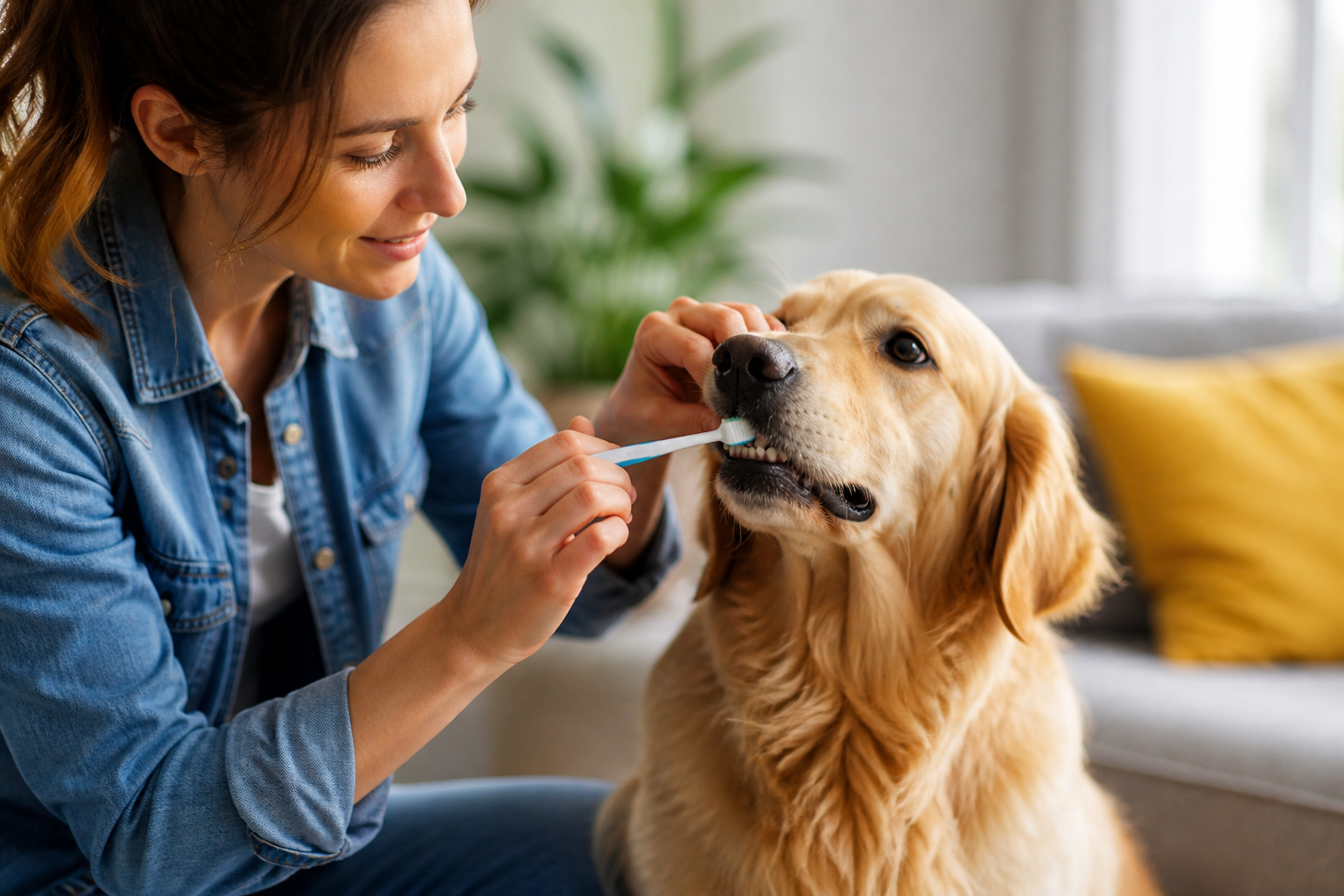
Brushing is the single most effective thing you can do at home. While it might seem daunting if your dog is not used to it, most pets can learn to accept the process with patience and positive reinforcement. You should never use human toothpaste for this task. Human formulas often contain xylitol, which is highly toxic to dogs, and foaming agents that can upset their stomachs. Dog-specific toothpaste comes in flavors like poultry, beef, or peanut butter to make the experience a treat rather than a chore.
Choosing the Right Tools
The type of brush you use depends on your dog’s size and temperament. For large breeds, a long-handled toothbrush with angled bristles helps you reach the back molars where tartar likes to hide. For smaller dogs or puppies, a finger brush made of soft silicone can be less intimidating. It allows you to feel the teeth as you work, making it easier to navigate a tiny mouth. Explore our dog dental and breath care collection for toothpaste, toothbrushes, water additives, and dental chews.
Step 1: Introduce the paste. / Let your dog lick a small amount of poultry or beef-flavored toothpaste off your finger so they associate the taste with a reward.
Step 2: Get them used to mouth handling. / Gently lift their lips and rub your finger along their gums for a few seconds each day.
Step 3: Introduce the brush. / Add toothpaste to the brush and focus on the outside surfaces of the teeth using circular motions.
Step 4: Reward the progress. / Always end the session with praise or a small healthy treat to build a positive association.
Vet Tip: If you notice bleeding gums, loose teeth, or a sudden reluctance to eat, schedule a veterinary exam before starting a brushing routine. Brushing an already infected or painful mouth can cause your dog to develop a negative association with dental care.
For additional guidance, read these pet dental care tips.
Utilizing Dental Treats and Chews
Not every dog will sit still for a daily brushing session. If you are struggling with the toothbrush, dental treats can be a helpful secondary line of defense. These products are designed to provide mechanical scrubbing as the dog chews. The texture is usually firm but flexible, allowing the tooth to sink into the treat so the edges can scrape away plaque.
When shopping for dental treats, look for the Veterinary Oral Health Council (VOHC) Seal of Acceptance. This seal means the product has undergone independent testing to prove it effectively reduces plaque or tartar by a certain percentage. Brands like Greenies are well-known for this, providing a tasty way to manage oral health between more thorough cleanings. You can compare options in our dental and breath care selection.
How Chewing Helps
The act of chewing also stimulates saliva production. Saliva contains natural enzymes that help break down food particles and protect the enamel. Durable rubber toys from brands like Kong can be stuffed with healthy snacks to encourage prolonged chewing. This mechanical action is especially important for the back teeth, which do most of the heavy lifting during mealtime.
Key Takeaway: Dental treats and chew toys are excellent supplements but should not be the only part of your dog’s dental plan. They work best when used in combination with regular brushing and professional checkups.
For more ideas, browse this guide to dental chews for dogs.
The Role of Diet in Oral Hygiene
What your dog eats every day has a significant impact on their teeth. There is a long-standing debate about whether dry kibble is better for teeth than wet food. While some kibble is designed to be crunchy, most standard biscuits shatter too easily to provide much cleaning. However, specific dental diets are formulated with a larger kibble size and a fibrous texture that does not crumble immediately. This forces the dog to chew more thoroughly, providing a scrubbing effect.
Prescription Dental Diets
For dogs prone to rapid tartar buildup, your veterinarian might recommend a prescription dental diet. Brands like Royal Canin and Farmina Vet Life offer specialized formulas that contain minerals to bind calcium in the saliva, preventing it from hardening into tartar. These diets are often only available through a pharmacy.
Our pharmacy at BaxterBoo offers these FDA-approved prescription diets. If your vet determines that a medical-grade food is necessary for your dog’s oral health, you can easily manage those orders through our pet pharmacy. This ensures your pet gets the exact nutrition they need to manage chronic dental issues.
Water Additives and Oral Sprays
For the busiest pet owners, water additives and dental sprays offer a low-effort way to fight bacteria. Water additives are usually tasteless and odorless solutions that you mix into your dog’s daily water bowl. They contain enzymes or antiseptic ingredients that help kill the bacteria responsible for plaque and bad breath.
Oral sprays work similarly but are applied directly to the teeth and gums. These are particularly useful for dogs that are sensitive to the texture of a brush but will allow you to quickly lift their lip for a spray. While these products are great for freshening breath and slowing plaque formation, they cannot remove existing tartar that has already hardened onto the enamel.
Bottom line: Water additives and sprays are excellent "gap-fillers" for busy schedules, but they work best as a preventative measure rather than a cure for existing dental disease.
Learn more about warning signs of dental problems in dogs.
Professional Veterinary Cleanings
No matter how diligent you are at home, most dogs will eventually need a professional cleaning. Just like humans visit the dentist for a deep clean, dogs need a veterinarian to remove tartar from difficult spots. This is especially true for the area below the gumline, which is where the most damaging bacteria live.
Professional cleanings are performed under general anesthesia. This is a common concern for pet owners, but it is a vital part of the process. Anesthesia allows the vet to perform a full exam, take dental X-rays to look for bone loss, and scale every surface of the tooth without causing the dog stress or pain. It also prevents the dog from accidentally inhaling water or debris during the procedure.
When to Schedule a Professional Cleaning
The frequency of these cleanings depends on your dog’s age, breed, and genetics. Small breeds, such as Chihuahuas and Poodles, often have crowded mouths that trap food easily. These dogs may need a professional cleaning every year. Larger dogs with well-spaced teeth might go two or three years between visits if their owners are consistent with home care.
Key Takeaway: Annual wellness exams are the best time to ask your vet for a "dental report card." They can help you decide when the transition from home care to professional intervention is necessary.
Signs of Dental Problems to Watch For
Being a proactive pet owner means keeping a close eye on your dog’s mouth. You do not need to be an expert to spot the warning signs of dental distress. If you notice any of the following symptoms, it is time to consult your veterinarian:
- Persistent bad breath that does not improve with brushing
- Yellow or brown deposits on the teeth near the gumline
- Red, swollen, or bleeding gums
- Difficulty picking up food or dropping kibble while eating
- Pawing at the mouth or face
- Sudden preference for soft food over hard treats
- Loose or missing teeth
Addressing these issues early can prevent the need for more invasive procedures like tooth extractions. Early intervention also keeps veterinary costs lower in the long run.
Building a Sustainable Routine
The key to success is consistency. It is better to brush your dog’s teeth three times a week every week than to do it daily for a month and then give up. Start by picking one or two methods that work for your lifestyle. Perhaps you brush their teeth on Monday, Wednesday, and Friday, and give a VOHC-approved dental chew on the other days.
You can make the process easier by using our Autoship program. By setting up recurring deliveries for your favorite dental treats, toothpaste, and specialty diets, you never have to worry about running out. This consistency helps keep your dog on track and ensures their oral health remains a priority. Plus, our MVP Rewards program allows you to earn points on every dental care purchase, helping you save money while caring for your pet.
Summary of Home Dental Care
Managing your dog's oral hygiene does not have to be an overwhelming task. By combining mechanical cleaning, nutritional support, and regular veterinary checkups, you can significantly extend the life of your dog's teeth.
- Brush at least three times a week using canine-specific toothpaste.
- Provide VOHC-approved treats and durable chew toys for mechanical plaque removal.
- Monitor the mouth for redness, swelling, or heavy tartar buildup.
- Utilize prescription diets if your dog is prone to rapid dental decay.
- Schedule professional cleanings as recommended by your veterinarian.
Bottom line: A little bit of daily effort prevents a lifetime of dental pain and expensive medical procedures.
Conclusion
Keeping your dog's teeth clean is one of the most impactful things you can do for their long-term wellness. From the simple act of daily brushing to choosing the right dental-friendly diet, every step you take helps prevent the progression of periodontal disease. Remember that while home care is essential, it works hand-in-hand with professional veterinary expertise. Our pharmacy is always here to help you fulfill prescriptions for medicated dental diets or antiseptic oral rinses. By staying consistent with your routine and utilizing the high-quality products we carry at BaxterBoo, you are giving your dog the best chance at a bright, healthy smile. Explore our Medical and Mobility category to find the dental tools and supplements your dog needs to thrive.
FAQ
Can I use baking soda to brush my dog’s teeth?
While baking soda is not toxic in small amounts, it has a very salty taste that most dogs find unpleasant. It is also quite abrasive and can damage the enamel if used too frequently. It is much better to use a flavored pet toothpaste that your dog actually enjoys, which will make the brushing process much easier for both of you.
How do I know if a dental treat actually works?
The best way to verify a treat's effectiveness is to look for the VOHC Seal of Acceptance on the packaging. This indicates that the product has met specific scientific standards for reducing plaque and tartar. You should also ensure the treat is the correct size for your dog to prevent it from becoming a choking hazard.
Why does my dog still have bad breath even after brushing?
If brushing does not improve your dog’s breath, there may be an underlying issue like a tooth infection, gum disease, or even an internal health problem. Tartar that has already hardened cannot be removed by a toothbrush and will continue to harbor smelly bacteria. In this case, a professional cleaning by a veterinarian is usually required to reset their oral health.
Are raw bones safe for cleaning a dog’s teeth?
Raw bones can help scrape teeth, but they come with significant risks including broken teeth, gum injuries, and intestinal blockages. Many veterinarians recommend safer alternatives like VOHC-approved dental chews or synthetic rubber toys. If you do choose to give bones, always supervise your dog and consult your vet about the safest options for your dog’s specific chew style.






