
 Save 15% on your 1st Autoship learn more

 Email us
 Live Chat
 FAQs
FAQs





Introduction
You are sitting on the couch when your small dog jumps up to give you a lick. Suddenly, you notice a smell that is far from fresh. While many owners assume bad breath is just a part of owning a dog, it is often the first sign of dental trouble. Small breeds are particularly prone to oral health issues because they have the same number of teeth as large dogs but much smaller mouths. This crowding creates perfect hiding spots for plaque and bacteria. At BaxterBoo, we know that keeping those tiny teeth clean is about more than just a bright smile. It is a critical part of your dog's overall wellness. This post covers practical ways to manage dental hygiene at home through brushing, treats, and supplements. We want to help you build a routine that prevents pain and keeps your companion healthy for years to come.
The Unique Challenge of Small Dog Dental Health
Small dogs like Yorkies, Chihuahuas, and Pugs face a specific set of dental hurdles. Their teeth are often crowded or misaligned because their jaws are so small. This crowding means food particles get trapped easily between teeth. When food stays in the mouth, it combines with saliva to form plaque. If plaque is not removed within a couple of days, it hardens into tartar. Tartar is a rock-hard substance that you cannot brush away at home.
The problems do not stop at the teeth. Bacteria from the mouth can enter the bloodstream through the gums. Once in the blood, these bacteria can travel to the heart, liver, and kidneys. This can lead to serious systemic health issues over time. Small dogs also tend to live longer than larger breeds. This means their teeth have more years to accumulate wear and tear. Starting a routine early in their life is the best way to ensure they do not suffer from tooth loss or chronic pain in their senior years.
Key Takeaway: Small dogs have crowded mouths that trap plaque quickly, making daily dental care essential to prevent systemic health problems.
The Gold Standard: Brushing Tiny Teeth
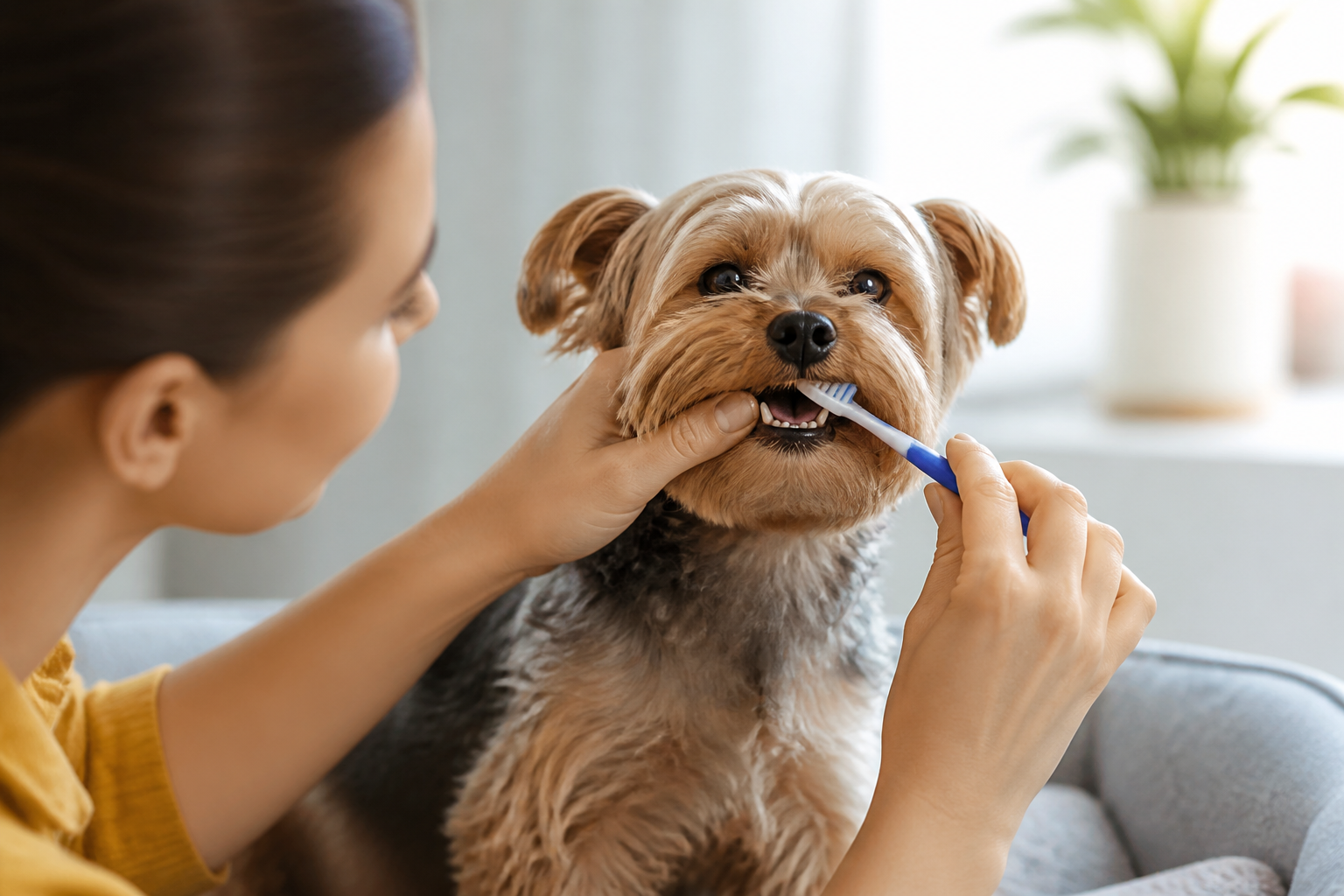
Brushing is the most effective way to remove plaque before it turns into tartar. While it might seem daunting to brush the teeth of a wiggly small dog, most can learn to accept it. You must use a toothpaste specifically formulated for dogs. Human toothpaste often contains xylitol, which is highly toxic to pets. It also contains foaming agents that dogs should not swallow. Dog toothpaste comes in flavors like poultry, beef, or peanut butter to make the experience more pleasant. For additional guidance, read these pet dental care tips.
For a small dog, a standard adult toothbrush is usually too large. You should look for a tiny, soft-bristled brush designed for cats or toy breeds. A fingertip brush is another excellent option. These silicone brushes fit over your index finger and allow you to feel exactly where you are cleaning. This can be less intimidating for a dog that is nervous about long objects in its mouth.
Step 1: Introduce the paste. / Let your dog lick a small amount of flavored toothpaste off your finger for several days.
Step 2: Touch the teeth. / Gently lift your dog's lip and rub your finger along the gums and teeth without a brush.
Step 3: Introduce the brush. / Put a small amount of paste on the brush and focus only on the front teeth for a few seconds.
Step 4: Move to the back. / Gradually work your way toward the back molars over the course of two weeks.
Vet Tip: If your dog shows signs of extreme distress or tries to bite, stop immediately. Consult your veterinarian for a professional assessment and alternative cleaning methods.
Using Dental Powders for Passive Care
If your dog absolutely refuses to have their mouth handled, dental powders are a fantastic alternative. These are designed to be sprinkled directly onto your dog's food once a day. Many of these products contain a specific type of seaweed called Ascophyllum nodosum. This ingredient works systemically through the saliva to help break down existing tartar and prevent new plaque from sticking. You can browse our dog dental supplements for powder-based options.
One of the most trusted names in this category is ProDen PlaqueOff. It carries the Veterinary Oral Health Council seal. This seal is only given to products that have been proven in clinical trials to reduce plaque and tartar. Because the powder works through the saliva, it reaches every part of the mouth. This includes the tiny gaps between crowded teeth that are hard to reach with a brush.
Quick Answer: Dental powders work by changing the chemistry of the saliva to soften tartar and prevent plaque. They are an ideal "hands-off" solution for dogs that resist brushing.
The Role of Dental Chews and Treats
Small dogs love to chew, and you can use this natural instinct to keep their teeth clean. Dental chews are formulated with a specific texture that helps scrape plaque off the surface of the teeth as the dog chews. Some also contain ingredients that help freshen breath and kill bacteria. When choosing a chew, size is the most important factor. A chew that is too large can be a choking hazard or contain too many calories for a tiny dog. Explore our dog dental care collection to find options suited to your routine.
Look for treats that are specifically labeled for small or toy breeds. These are sized to fit their jaws comfortably and provide the right amount of resistance. Brands like Greenies and ProDen PlaqueOff offer mini versions of their dental bones. You should always supervise your dog while they are enjoying a chew. If they tend to swallow large pieces whole, the chew will not have time to clean their teeth and could cause an intestinal blockage.
- Check for the VOHC seal on the packaging.
- Ensure the chew is appropriately sized for your dog's weight.
- Account for the calories in the treat to avoid weight gain.
- Watch for signs of splintering or gulping.
Key Takeaway: Dental chews provide mechanical cleaning through abrasion, but they must be size-appropriate and monitored for safety.
Water Additives and Sprays
Water additives and dental sprays offer another layer of protection. These products usually contain enzymes or antibacterial agents that help reduce the bacterial load in the mouth. Additives are tasteless and odorless liquids that you pour into your dog's water bowl. Every time they take a drink, they are coating their mouth with a protective solution.
Sprays are applied directly to the teeth and gums. They are often used after a meal to help neutralize food particles. While these products are convenient, they should not be the only part of your dental routine. They are most effective when used alongside brushing or dental chews. If your dog is a picky drinker, introduce water additives slowly to ensure they continue to stay hydrated. For more ideas, review these dog dental care products.
Prescription Dental Diets and the BaxterBoo Pharmacy
In some cases, your veterinarian may recommend a prescription dental diet. These foods are different from standard kibble. The individual pieces are usually larger and have a fibrous structure that does not crumble immediately when bitten. Instead, the tooth sinks into the kibble, allowing the fibers to scrub the tooth surface. These diets also contain minerals that help bind calcium in the saliva, which prevents it from hardening into tartar.
We carry a range of premium food brands that focus on oral health. For dogs with advanced dental needs, our pharmacy offers prescription diets through our partnership with Pet's Choice. If your vet prescribes a specific food like Royal Canin Dental Small Breed, you can fulfill that requirement through the BaxterBoo pharmacy. This partnership allows us to provide FDA-approved medications and therapeutic diets for chronic conditions directly to your door.
Vet Tip: Prescription dental diets are formulated for long-term use, but they require a veterinary consultation to ensure they meet your dog's specific nutritional needs.
Professional Cleanings and Veterinary Exams
Even with the best home care, most small dogs will eventually need a professional dental cleaning. At-home methods are great for maintenance, but they cannot clean beneath the gumline. This is where the most dangerous bacteria live. A professional cleaning at the vet's office is performed under general anesthesia. This allows the vet to perform a full exam, take X-rays, and use ultrasonic scalers to remove tartar from every surface.
Small dogs may need these cleanings more frequently than large dogs. Some toy breeds require a professional cleaning every year. Your vet can also identify teeth that are loose or infected. Removing a painful tooth can significantly improve a dog's quality of life. During your annual wellness exam, ask your vet for a "dental score" to see how your home routine is working. You can also read about professional dental cleanings and veterinary checkups.
Identifying Dental Pain and Problems
Small dogs are experts at hiding pain. By the time a dog stops eating because of a toothache, the problem is usually very advanced. You should inspect your dog's mouth once a week to look for changes. Use a small flashlight to get a clear view of the back molars.
- Red or bleeding gums (gingivitis).
- Yellow or brown buildup on the teeth.
- Extreme bad breath that persists after cleaning.
- Pawing at the mouth or face.
- Dropping food or chewing on only one side.
- Nasal discharge or swelling under the eye.
If you notice any of these signs, it is time for a veterinary visit. Dental disease is progressive, meaning it only gets worse without treatment. Catching an infection early can save your dog from unnecessary pain and keep the cost of veterinary care lower. For more warning signs, see how to recognize dental problems in dogs.
Bottom line: Regular home inspections are the best way to catch dental disease before it leads to tooth loss or systemic illness.
Conclusion
Keeping a small dog's teeth clean requires a consistent, multi-layered approach. Brushing remains the best way to protect their oral health, but supplements like dental powders and chews are valuable tools for maintenance. By combining regular at-home care with annual veterinary exams, you can prevent the most common complications of periodontal disease. We are here to support your journey with a wide selection of dental treats, specialized toys, and high-quality food. Our pharmacy and Pet's Choice partnership ensure you have access to prescription dental diets and medications when your dog needs professional support. Start a small daily habit today, and your dog will benefit from a healthier mouth and a longer life. The best next step is to explore our dog dental care category to find the right brush and paste for your small companion.
FAQ
How often should I brush my small dog's teeth?
Ideally, you should brush your dog's teeth every day to remove plaque before it mineralizes into tartar. If daily brushing is not possible, aiming for three times a week can still provide significant health benefits. Consistency is more important than the length of the brushing session.
Can I use a human toothbrush for my toy breed dog?
An adult human toothbrush is much too large and stiff for a small dog's mouth. It can cause gum irritation or even bleeding. It is better to use a soft-bristled baby toothbrush or a specialized pet fingertip brush designed for tiny mouths.
Why does my small dog have bad breath even though they chew toys?
Chewing toys provides some mechanical cleaning, but it often misses the gumline and the spaces between crowded teeth. Bad breath is frequently a sign of bacteria or tartar buildup that toys cannot reach. You likely need to add brushing or a dental additive to their routine.
Are dental treats enough to keep my dog's teeth clean?
While dental treats help reduce plaque, they are rarely enough as a standalone solution for small breeds. Because small dogs have crowded teeth, they often need the direct action of brushing or the systemic support of a dental powder. Treats should be used as one part of a larger hygiene plan.






