
 Save 15% on your 1st Autoship learn more

 Email us
 Live Chat
 FAQs
FAQs





Introduction
You lean in for a morning nuzzle from your favorite pup only to be met with a puff of breath that smells like a wet basement. Most of us have been there. We often joke about dog breath, but that lingering odor is usually the first sign that your dog needs a better dental routine. At BaxterBoo, we know that keeping those pearly whites clean is about more than just fresh kisses. It is a vital part of your dog's long term wellness. Clean teeth help prevent pain, tooth loss, and even serious systemic infections that can impact the heart and kidneys. This guide covers everything from the basics of brushing to the role of specialized diets and professional care. By the end of this article, you will have a practical plan to maintain your dog's oral hygiene at home.
Quick Answer: The most effective way to keep your dog's teeth clean is a combination of daily brushing with pet-safe toothpaste and providing VOHC-approved dental chews. These methods work together to mechanically remove plaque before it hardens into permanent tartar.
The Importance of Dental Hygiene for Dogs
Many owners assume that dogs simply have naturally "dirty" mouths. In reality, dogs are prone to the same dental issues as humans. When your dog eats, food particles and bacteria mix to form a sticky film called plaque. If you do not remove this film, it reacts with minerals in your dog's saliva. Within 24 to 48 hours, that soft plaque hardens into tartar. You cannot brush tartar away at home. Only a professional cleaning under anesthesia can remove it.
Left unchecked, tartar buildup leads to periodontal disease. This is an infection of the tissues surrounding the teeth. It causes the gums to recede and eventually destroys the bone that holds the teeth in place. For many dogs, this process is quite painful. However, dogs are experts at hiding discomfort. They may continue to eat and play even while dealing with a throbbing toothache. For additional guidance, read about warning signs of bad teeth in dogs.
Key Takeaway: Dental disease is the most common health issue in adult dogs. Regular home care can prevent the majority of these cases and save your dog from chronic pain.
The Gold Standard: Brushing Your Dog's Teeth
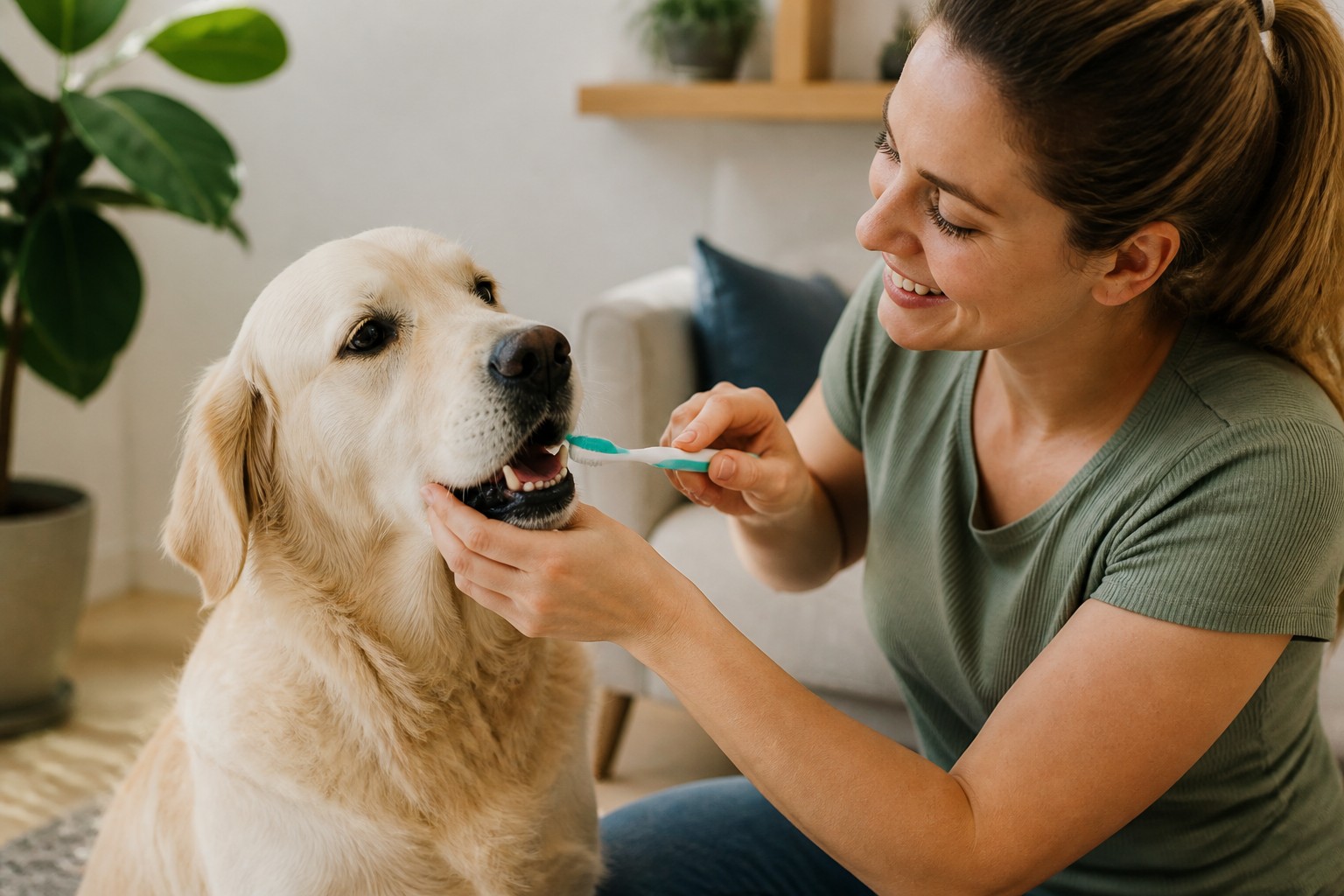
If you can only do one thing for your dog's mouth, let it be brushing. It is the most effective way to break up plaque. You should aim to brush your dog's teeth every single day. If that is not possible, three times a week is the minimum for effective prevention.
Choosing the Right Supplies
Never use human toothpaste for your dog. Our toothpaste contains fluoride and often xylitol. Both are toxic to dogs. Human paste also foams, which can upset a dog's stomach since they cannot spit it out.
Dog-specific toothpastes come in flavors like poultry, beef, and peanut butter. These flavors make the experience more like a treat. You have a few choices for brushes too. You can find pet-safe toothpaste and toothbrushes in our dog dental care collection.
- Standard dog toothbrushes: These have long, angled handles to reach the back molars.
- Finger brushes: These silicone caps fit over your fingertip. They offer more control and are less intimidating for small dogs or puppies.
- Child-sized soft toothbrushes: A soft, small human toothbrush can work in a pinch for medium to large breeds.
A Step-by-Step Brushing Guide
Do not expect to brush every tooth on the first day. It takes time to build trust.
Step 1: Let them taste it. / Put a small dab of pet toothpaste on your finger and let your dog lick it off. Do this for a few days to create a positive association.
Step 2: Touch the mouth. / While they lick the paste, gently lift their lip. Rub your finger along their gums and teeth. Stop if they seem stressed.
Step 3: Introduce the brush. / Apply toothpaste to the brush. Let them lick the brush. Gently move the bristles in a circular motion on the front teeth.
Step 4: Focus on the outside. / You do not need to pry the mouth open. Most plaque builds up on the outside of the teeth, near the cheeks. Spend most of your time there.
Step 5: Reward and repeat. / Give them a treat or a favorite toy immediately after you finish. This helps them look forward to the next session.
Vet Tip: If your dog resists brushing, do not force it. This can lead to a fear of being handled or even a bite. Instead, talk to your veterinarian about alternative cleaning products or a professional assessment to ensure there is no existing pain making the process difficult.
Using Dental Chews and Treats Effectively
Brushing is great, but many dogs need extra help. Dental chews are a fantastic supplement to your routine. These treats are designed with specific textures that scrape the surface of the teeth as the dog chews. Explore our dog dental treats for options designed to complement regular brushing.
When shopping at BaxterBoo, look for the Veterinary Oral Health Council (VOHC) Seal of Acceptance on the packaging. This seal means the product has been tested and proven to reduce plaque or tartar by a significant percentage. Brand names like Greenies are famous for this. You can browse our selection of Greenies products to compare available dental chews.
The mechanical action of chewing is what does the work. As your dog gnaws on the treat, it rubs against the tooth all the way down to the gumline. Many of these treats also contain enzymes that help break down bacteria.
Bottom line: Dental chews are a helpful tool, but they should supplement brushing rather than replace it entirely.
The Role of Dental Toys
Toys are more than just a distraction. The right toy can act like a natural toothbrush. Rubber toys with nubs or ridges are excellent. As your dog bites down, the rubber "scrubs" the tooth surface. Browse our dog toys for options that can add chewing and play to your dog's daily routine.
Rope toys can also be effective. They act like dental floss by sliding between the teeth. However, you must supervise your dog with rope toys. If they start to shred the rope, they might swallow the strands. This can cause a dangerous intestinal blockage.
Avoid toys that are too hard. A good rule of thumb is the "fingernail test." If you cannot make a small dent in the toy with your fingernail, it might be too hard. Items like real bones, cow hooves, and hard plastic bones can actually fracture your dog's teeth. A broken tooth is a direct path for bacteria to enter the bloodstream.
Water Additives and Oral Sprays
If your dog is particularly stubborn about brushing, you might consider water additives or oral sprays. These are relatively easy to use.
Water additives are tasteless liquids you pour into your dog's water bowl. They usually contain enzymes or ingredients like chlorhexidine that kill bacteria. This helps freshen breath and slows down the formation of plaque.
Oral sprays work similarly. You spray them directly into the dog's mouth or onto their gums. They are a good "middle ground" for dogs that do not like the sensation of a brush but will tolerate a quick spritz. For more ideas, review these pet dental care tips.
Dietary Choices for Better Oral Health
What your dog eats every day has a significant impact on their teeth. There is a long standing debate about wet food versus dry food.
While it was once believed that all dry kibble cleaned teeth, we now know that is not quite true. Most standard kibbles are small and brittle. They shatter as soon as the dog bites them, providing very little cleaning action. However, specialized dental diets are different.
Prescription Dental Diets
For dogs prone to heavy tartar, a veterinarian might prescribe a specific dental diet. Brands like Royal Canin, Hill's, and Farmina Vet Life offer these formulas. These kibbles are usually much larger than standard food. They are also made with a fiber matrix that does not crumble immediately. Instead, the tooth sinks into the kibble, allowing the fibers to scrub the tooth surface.
These diets are often sold through specialized pharmacies. Our pharmacy partnership with Pet's Choice allows you to order these prescription foods and have them delivered to your door. If your dog has already been diagnosed with early stage dental disease, these diets can be a vital part of their management plan. Visit our pet pharmacy when your veterinarian recommends prescription medication or a specialized diet.
Nutrients for Strong Teeth
A balanced diet supports the immune system, which in turn helps the body fight off gum infections. Look for foods that meet AAFCO standards. Avoid diets high in simple sugars or starches, as these can contribute to plaque formation.
Understanding Breed-Specific Needs
Not all dogs are created equal when it comes to dental health. Breed and size play a massive role in how quickly issues develop.
Small breeds, such as Chihuahuas, Pugs, and Yorkies, are notorious for dental problems. This is often because they have the same number of teeth as a large dog but in a much smaller mouth. This crowding creates tiny crevices where food and bacteria hide. Small dogs also tend to live longer, meaning their teeth have more years to accumulate wear and tear.
Greyhounds and other sighthounds also seem to have a genetic predisposition to early periodontal disease. If you own one of these breeds, you must be extra vigilant with your home care routine.
Key Takeaway: Small and toy breeds often require twice-yearly dental checkups to stay ahead of rapid plaque buildup and crowding issues.
Recognizing the Signs of Dental Disease
Since dogs are so good at hiding pain, you need to be a bit of a detective. Check your dog's mouth once a week for these warning signs.
- Bad breath: This is not just "dog breath." It is a foul, rotting smell.
- Discolored teeth: Look for yellow or brown crust near the gumline.
- Red or bleeding gums: Healthy gums should be a pale, bubblegum pink.
- Drooling: Excessive drooling can indicate mouth pain or an abscess.
- Changes in eating: If your dog drops food or suddenly prefers soft food over kibble, their mouth might be hurting.
- Pawing at the face: This is a sign of acute discomfort.
If you notice any of these signs, it is time for a vet visit. Do not try to scrape tartar off your dog's teeth at home with metal tools. You can easily scratch the enamel or slip and injure the gums.
The Importance of Professional Cleaning
Home care is about prevention. Professional cleaning is about treatment. Even with perfect brushing, most dogs will eventually need a professional cleaning. This procedure is called a dental prophylaxis.
A veterinarian must perform this while the dog is under general anesthesia. This is the only way to safely clean under the gumline where the real damage happens. During the cleaning, the vet will scale the teeth to remove tartar and then polish the enamel. Polishing is crucial because it smooths out the microscopic scratches left by scaling. Without polishing, plaque would stick to the tooth even faster.
The vet will also take X-rays. Since more than 60 percent of a dog's tooth is hidden below the gumline, X-rays are the only way to see if the roots are healthy. If a tooth is dead or infected, the vet may need to remove it. Dogs actually feel much better after a painful tooth is extracted.
Prescription Medications and the Pharmacy
Sometimes, dental health requires more than just a cleaning. If your dog has a severe gum infection, your vet may prescribe antibiotics before or after a dental procedure. They might also prescribe pain medication to keep your pup comfortable during recovery.
Our pharmacy provides access to these FDA-approved medications. Through our partnership with Pet's Choice, we can help you manage your dog's ongoing health needs, from specialized prescription diets to the medications required for chronic oral conditions. This is a practical way to ensure your dog gets exactly what the vet ordered without extra trips to the clinic.
Creating a Sustainable Dental Routine
The secret to success is consistency. It is better to do a quick brush three times a week than a deep clean once a month.
- Set a reminder: Link tooth brushing to another habit, like your dog's evening walk or your own tooth brushing.
- Keep supplies handy: Don't hide the toothbrush in a drawer. Keep it where you will see it.
- Monitor progress: Take a photo of your dog's teeth every few months to track any changes.
- Stay positive: If you are stressed, your dog will be stressed. Keep the sessions light and fun.
For regularly used dental supplies, our Autoship programme can help make routine replenishment easier.
Summary of Home Care Options
| Method | Effort Level | Effectiveness | Best For |
|---|---|---|---|
| Daily Brushing | High | Excellent | All dogs; the gold standard. |
| Dental Chews | Low | Good | Busy owners; supplementing brushing. |
| Water Additives | Very Low | Fair | Difficult dogs; breath freshening. |
| Dental Toys | Low | Fair | Natural chewers; puppies. |
| Prescription Diet | Low | High | Dogs with chronic dental issues. |
Bottom line: A multi-modal approach is always best. Combine brushing with a dental-friendly diet and regular vet checkups for the best results.
Conclusion
Keeping your dog's teeth clean is one of the kindest things you can do for them. It prevents unnecessary pain and helps them live a longer, more comfortable life. While it might seem like a chore at first, most dogs eventually learn to enjoy the extra attention and the tasty toothpaste. Remember to start slow, stay consistent, and use the right tools for the job.
- Brush regularly with dog-safe paste.
- Provide VOHC-approved chews and treats.
- Schedule annual dental exams with your veterinarian.
- Watch for signs of pain or infection.
If your vet has recommended a specific diet or medication for your dog's oral health, we can help. Visit our pharmacy section to learn how our partnership with Pet's Choice makes it easy to get prescription dental diets and medications delivered right to your home.
FAQ
Can I use baking soda to brush my dog's teeth?
It is best to avoid using baking soda regularly. While it can help scrub the teeth, it has a high alkaline content and a salty taste that many dogs dislike. If swallowed in large amounts, it can also upset the balance of acids in your dog's stomach. A flavored pet toothpaste is much safer and more effective because it contains enzymes specifically designed to break down canine plaque.
How do I know if a dental chew is safe for my dog?
Always check for the VOHC Seal of Acceptance to ensure the chew actually works to reduce plaque and tartar. Additionally, choose a size that matches your dog's weight. A chew that is too small can be a choking hazard if swallowed whole, while a chew that is too large or hard might be difficult for your dog to process. Always supervise your dog when they are working on a new treat or chew.
Why does my dog need anesthesia for a dental cleaning?
Anesthesia is necessary for a thorough and safe cleaning. A dog will not sit still while a vet uses sharp tools to scrape under their gums or takes dental X-rays. Anesthesia allows the veterinarian to perform a deep cleaning without causing the dog stress or pain. It also protects the dog's airway from the water and debris generated during the cleaning process.
Are "anesthesia-free" dental cleanings a good alternative?
Anesthesia-free cleanings are generally not recommended by veterinary dental experts. These cleanings only address the tartar you can see on the surface of the tooth. They do not allow for cleaning under the gumline where the most damaging bacteria live. They also do not include X-rays, meaning hidden infections and painful root issues often go undetected and untreated.






