
 Save 15% on your 1st Autoship learn more

 Email us
 Live Chat
 FAQs
FAQs





Introduction
You have the toothpaste ready. Your dog sees the brush and suddenly vanishes under the sofa. We have all been there. At BaxterBoo, we know that for many pets, the daily brushing ritual feels like a wrestling match that neither of you wants to win. While veterinarians call brushing the gold standard, the reality of life with a wiggly or resistant dog often requires a different approach. This post covers practical, evidence-based ways to maintain your dog's oral health without the struggle of a toothbrush. You can protect those pearly whites and keep your dog's breath fresh while keeping your stress levels low. Consistent daily care is the secret to a healthy mouth.
The Reality of Canine Dental Health
Dental health is about much more than just a bright smile. When food particles and bacteria sit on the teeth, they form a sticky film called plaque. If you do not remove this film within 48 hours, it mineralizes into tartar. Tartar is the hard, yellow or brown buildup you see near the gumline. You cannot brush tartar away at home. Once it forms, only a professional cleaning under anesthesia can safely remove it.
Left unchecked, this buildup leads to periodontal disease. This causes pain and tooth loss. Even worse, the bacteria from infected gums can enter the bloodstream. From there, it can affect the heart, liver, and kidneys. This is why a daily routine is so important. If brushing is not an option for your dog, you must find another way to disrupt that plaque every single day.
Quick Answer: You can keep a dog's teeth clean without brushing by using VOHC-approved dental chews, water additives, and dental powders. These products work through mechanical scraping or natural enzymes to reduce plaque and tartar buildup daily.
1. Dental Powders and Seaweed Supplements
One of the easiest ways to manage dental health is by adding a supplement to your dog's food. Many pet owners find this to be the most effective "no-brush" method because it requires zero mouth handling. The most popular and well-researched options use a specific type of seaweed called Ascophyllum nodosum.
This seaweed works systemically. Once your dog eats it, the active components are absorbed into the bloodstream and then released back into the saliva. This change in saliva chemistry helps soften existing tartar and prevents new plaque from sticking to the teeth. It is a passive way to fight dental disease during every meal.
How to Use Dental Powders
- Measure the correct dose based on your dog's weight.
- Sprinkle it directly onto their dry or wet food once a day.
- Be patient, as it typically takes three to eight weeks to see a visible difference.
Key Takeaway: Dental powders are the best option for dogs that refuse to let you touch their mouths. They work through the saliva to keep the entire mouth cleaner without any physical scrubbing.
2. Dental Chews and Functional Treats
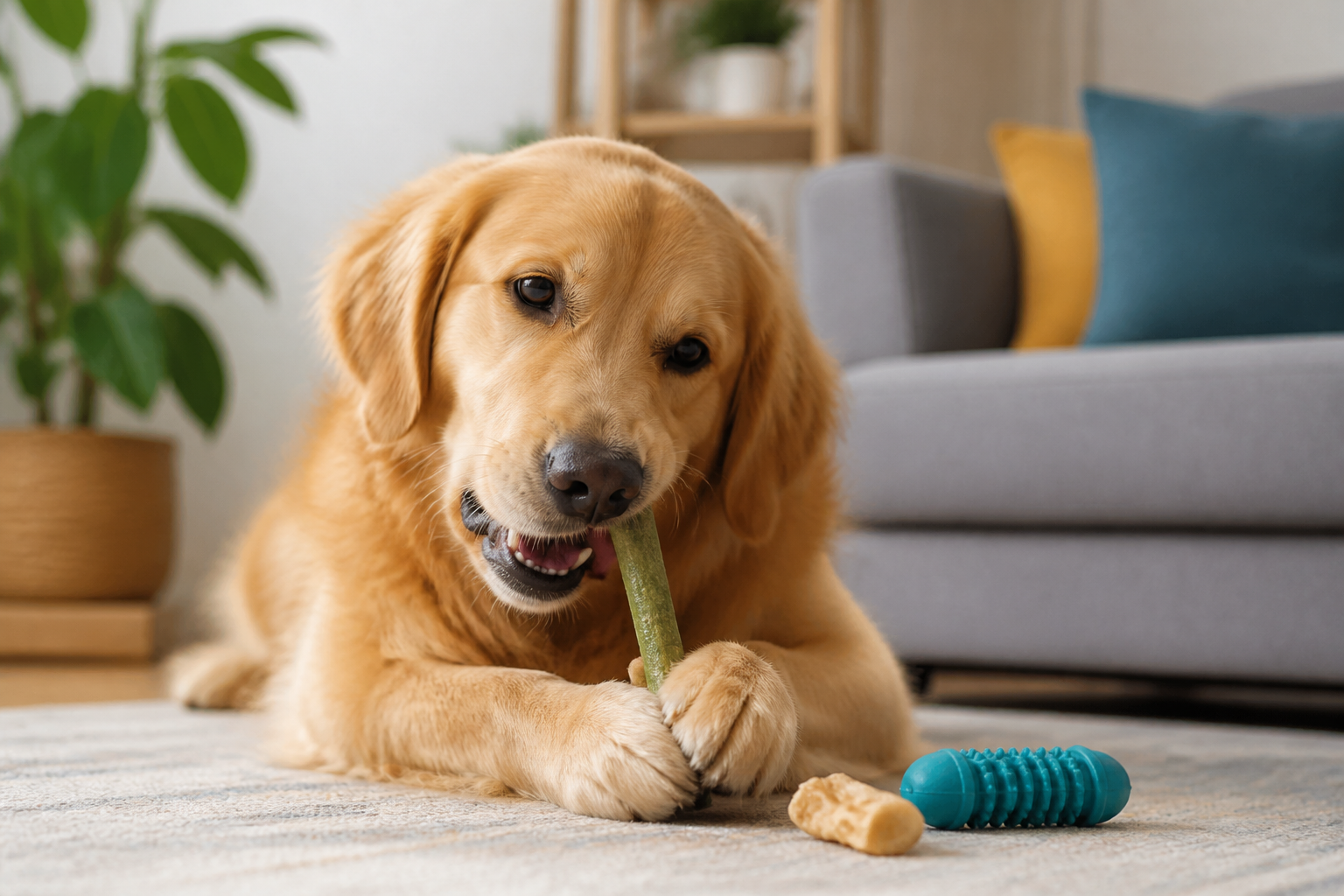
Dogs have a natural instinct to chew. You can use this behavior to your advantage. High-quality dental chews like Greenies use mechanical abrasion to scrub the surface of the teeth. As your dog bites down, the texture of the chew scrapes away plaque before it can harden into tartar.
Not all treats are created equal. Look for the Veterinary Oral Health Council (VOHC) seal on the packaging. This seal means the product has undergone clinical testing to prove it actually reduces plaque or tartar. Some chews also contain ingredients like hexametaphosphate to help prevent mineral buildup.
Choosing the Right Chew
- Select the correct size for your dog to prevent choking.
- Look for "VOHC Accepted" labels for guaranteed results.
- Monitor your dog while they chew to ensure they do not swallow large chunks.
- Consider the calorie count, as dental treats add to your dog's daily intake.
Vet Tip: Always supervise your dog when giving them a dental chew. If your dog is a "gulper" who swallows treats whole, the chew will not have enough time to scrub the teeth. In these cases, a dental powder or water additive may be safer and more effective.
3. Water Additives for Fresh Breath
Water additives are often described as mouthwash for dogs. They are flavorless, odorless liquids that you add to your pet's water bowl. These solutions usually contain enzymes or antibacterial agents that kill the germs responsible for bad breath and plaque. You can compare available options in our dental and breath care collection.
This is a great supplemental tool. It works every time your dog takes a drink throughout the day. While it might not provide the same heavy-duty cleaning as a dental chew, it is excellent for maintenance. It is especially helpful for dogs with crowded teeth where food often gets trapped.
Benefits of Water Additives
- No training or handling required.
- Works for both dogs and cats sharing a water bowl.
- Freshens breath quickly.
- Extremely easy to incorporate into a busy schedule.
4. Prescription Dental Diets
If your dog is prone to rapid tartar buildup, your veterinarian might recommend a prescription dental diet. We carry several of these options through our pet pharmacy and our partnership with Pet's Choice. Brands like Royal Canin and Hill's produce specialized kibble designed specifically for oral care.
Standard kibble often shatters as soon as a dog's tooth hits it. Prescription dental kibble is different. The pieces are larger and have a fibrous texture that does not crumble immediately. Instead, the tooth sinks into the kibble, allowing the fibers to scrub the tooth all the way to the gumline. These diets also contain minerals that bind calcium in the saliva to prevent it from turning plaque into tartar.
Bottom line: Prescription dental diets turn every meal into a cleaning session by using a specialized kibble structure to scrub teeth mechanically.
5. Dental Toys and Safe Play
Playtime can double as a dental cleaning session. Certain toys are designed with ridges, nubs, and grooves that massage the gums and scrape the teeth. Rubber toys from brands like Kong are durable enough to withstand heavy chewing while being gentle on the enamel. For more ideas, browse our selection of dog dental food and treats.
Cotton rope toys can also act like floss. As the fibers slide between the teeth, they help pull away trapped debris. However, you must be careful with the material. Avoid toys that are too hard, such as real bones, antlers, or thick nylon bones. If you cannot indent the toy with your thumbnail, it is likely hard enough to fracture your dog's teeth.
Safe Dental Toy Checklist
- Soft enough to have some "give" when chewed.
- Textured surfaces to increase friction against the teeth.
- Size-appropriate so the dog cannot swallow it.
- Washable to prevent bacteria buildup on the toy itself.
6. Dental Wipes and Finger Brushes
If your dog will tolerate you touching their muzzle but hates the long handle of a toothbrush, wipes are a perfect middle ground. Dental wipes are pre-moistened pads that you wrap around your finger. You simply rub the pad along the outside of the teeth and the gumline.
This provides a level of mechanical cleaning that powders and additives cannot match. It allows you to focus on the back molars and the canine teeth, which are the most common spots for tartar to hide. Because your finger is more flexible and less intimidating than a brush, many dogs accept this method much more readily.
How to Transition to Wipes
- Let your dog sniff the wipe first.
- Gently lift the lip and rub one tooth for a few seconds.
- Give a high-value treat immediately.
- Gradually increase the number of teeth you clean each day.
Understanding the VOHC Seal
When you browse the dental section at BaxterBoo, you will see a wide variety of claims. Some products promise "clinical results" while others claim to "eliminate breath." To cut through the marketing noise, look for the VOHC Seal of Acceptance. For additional guidance, read our tips for choosing dental chews for dogs.
The Veterinary Oral Health Council is an independent group of veterinary dental specialists. They do not do the testing themselves. Instead, they require companies to submit data from rigorous, controlled clinical trials. For a product to earn the seal, it must demonstrate a significant reduction in plaque or tartar. Choosing VOHC-approved products ensures you are spending your money on something that actually works.
When a Professional Cleaning is Necessary
No at-home routine can replace the need for professional veterinary care. Even with daily cleaning, some dogs are genetically predisposed to dental disease. Small breeds like Chihuahuas and Yorkies are particularly at risk because their teeth are crowded into tiny mouths.
If you notice any of the following signs, it is time to schedule a visit with your veterinarian:
- Extreme bad breath that does not improve with home care.
- Red, swollen, or bleeding gums.
- Loose or broken teeth.
- Difficulty eating or dropping food.
- Pawing at the mouth or face.
- Visible brown or grey crust on the teeth.
Your vet can perform a full oral exam and dental X-rays. Since 60 percent of dental disease happens below the gumline, X-rays are the only way to see if your dog is in pain. If your vet prescribes a specific dental food or medication, our dog pharmacy can help fulfill those needs through our Pet's Choice partnership.
Vet Tip: A professional dental cleaning is not a sign of failure in your home care. Think of it like your own visits to the dental hygienist. You brush and floss daily, but you still need a professional to clear the hard-to-reach spots.
Comparing No-Brush Methods
| Method | Effort Level | Primary Benefit | Best For |
|---|---|---|---|
| Dental Powder | Very Low | Systemic plaque prevention | Resistant dogs |
| Dental Chews | Low | Mechanical scrubbing | Food-motivated dogs |
| Water Additives | Very Low | Fresh breath and bacteria control | Multi-pet households |
| Dental Wipes | Moderate | Targeted plaque removal | Training and puppies |
| Prescription Diets | Low | All-day protection | High-risk breeds |
Creating a Sustainable Routine
The best dental routine is the one you can actually stick to every day. You do not have to pick just one method. In fact, layering different approaches often yields the best results. For example, you might use a dental powder in their morning meal and give a dental chew every evening. For repeat-purchase dental supplies, our Autoship programme can help keep your routine on schedule.
Consistency is more important than intensity. Cleaning the teeth once a month does very little. Cleaning them every day, even with a "passive" method like a water additive, makes a massive difference over the life of your dog.
Sample Dental Schedule
- Morning: Add dental powder to breakfast.
- Afternoon: Give a VOHC-approved dental toy for 15 minutes of supervised play.
- Evening: Provide a dental chew as a "before bed" treat.
- Monthly: Do a "flip the lip" check to look for redness or new buildup.
Final Thoughts on Dog Dental Care
Keeping your dog's mouth healthy does not have to be a daily battle. By using tools like dental powders, chews, and water additives, you can significantly reduce the risk of painful dental disease. These methods are practical, effective, and much easier on the bond you share with your pet.
Our team at BaxterBoo is here to help you find the right supplies for your dog's specific needs. Whether you need a specialized diet through our pharmacy or a durable chew toy, we carry over 500 trusted brands to support your pet's wellness.
Next Steps for Your Dog's Smile:
- Check your dog's teeth for visible tartar.
- Look for the VOHC seal on your current treats.
- Explore our dog dental care category for dental care essentials.
- Consult your vet about starting a prescription dental diet.
Key Takeaway: You can effectively manage your dog's oral health without a toothbrush by combining systemic supplements, mechanical chews, and regular veterinary checkups.
FAQ
Can I use human mouthwash in my dog's water?
No, you should never use human mouthwash for a dog. Human products often contain xylitol, which is highly toxic to dogs even in small amounts. They also contain alcohol and detergents that are not safe for pets to swallow. Always use a dedicated pet water additive that is formulated specifically for canine safety.
How often should I give my dog dental chews?
Most dental chews are designed to be given once a day. Giving more than one can lead to stomach upset or excessive calorie intake. Always check the manufacturer's guidelines on the bag. If your dog is overweight, you may need to adjust their main meal portions to account for the calories in the dental treat.
Do raw carrots really clean a dog's teeth?
Raw carrots provide a small amount of mechanical scrubbing because of their firm texture. While they are a healthy, low-calorie snack, they are not a substitute for a dedicated dental routine. They do not contain the enzymes or minerals found in clinical dental products. Think of carrots as a helpful supplement rather than a primary cleaning tool.
Is bad breath normal for dogs?
Contrary to popular belief, "dog breath" should not be foul or rotten. While a dog's breath will not smell like mint, a strong, unpleasant odor is usually a sign of bacteria and decaying matter in the mouth. If the breath is significantly bad, it likely indicates underlying dental disease that needs a veterinarian's attention.






