
 Save 15% on your 1st Autoship learn more

 Email us
 Live Chat
 FAQs
FAQs





Introduction
You lean in for a happy morning nuzzle only to be met with a scent that makes you pull back. Bad breath in dogs is often dismissed as just part of being a canine. However, that lingering odor is usually the first sign of dental disease. We know that keeping up with a dental routine can feel like one more chore on a long list. At BaxterBoo, we believe that oral hygiene is a cornerstone of overall wellness. This guide explains why clean teeth matter and provides practical steps to manage your dog's mouth at home. We will cover brushing techniques, dental treats, and how to work with your veterinarian. A proactive approach helps your dog live a longer, more comfortable life.
Quick Answer: The best way to keep your dog's teeth clean is a combination of daily brushing with canine toothpaste and professional veterinary cleanings. You can support these efforts with VOHC-approved dental treats, water additives, and specialized dental diets to reduce plaque buildup.
Why Dog Dental Care Is Non-Negotiable
Oral health is about much more than avoiding stinky kisses. When food particles and bacteria sit on the teeth, they form a sticky film called plaque. If you do not remove this film, it hardens into tartar within 48 hours. Tartar is much harder to remove and provides a perfect home for more bacteria. This cycle eventually leads to periodontal disease, which affects the structures supporting the teeth.
Bacteria in the mouth do not stay there. They can enter the bloodstream through inflamed gums. Once in the blood, these bacteria can travel to vital organs. This puts your dog at a higher risk for heart disease and kidney issues. Many dogs also suffer in silence with chronic mouth pain. They might drop food or stop playing with toys because their mouth hurts.
Key Takeaway: Dental health is systemic health. Preventing plaque buildup protects your dog's heart, kidneys, and overall comfort level.
The Gold Standard: Brushing Your Dog's Teeth
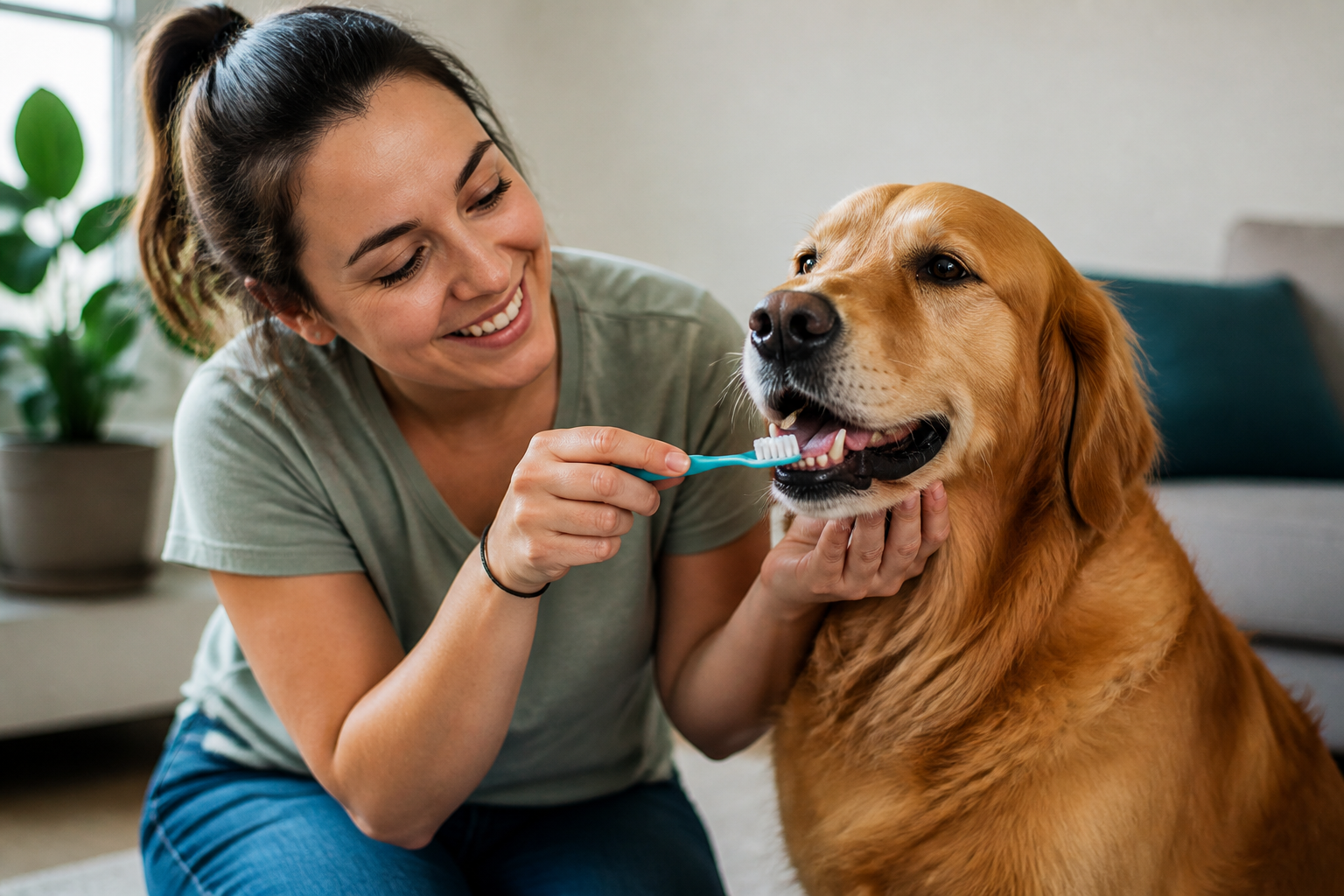
Brushing is the most effective way to remove plaque before it turns into tartar. It might seem like a big task, but most dogs can learn to accept it. You must always use toothpaste specifically formulated for dogs. Human toothpaste contains ingredients like xylitol or fluoride that are toxic to pets. Dog toothpaste comes in flavors like poultry, beef, or peanut butter to make the experience more like a treat. For additional guidance, review these pet dental care tips.
Choosing the Right Tools
The size of your dog determines the best brush. For large dogs, a long-handled toothbrush allows you to reach the back molars. For small dogs or puppies, a finger brush often works better. These are small silicone caps that fit over your fingertip. They give you better control and feel less intimidating to a small pet.
How to Start a Brushing Routine
Do not try to brush the whole mouth on the first day. Start by letting your dog lick some toothpaste off your finger. Once they like the flavor, try rubbing your finger along their gums. Gradually introduce the brush using small, circular motions.
Step 1: Introduce the paste. / Let your dog sniff and taste the canine toothpaste to build a positive association.
Step 2: Touch the mouth. / Gently lift the lips and rub the teeth with your finger for a few seconds.
Step 3: Introduce the brush. / Use a dampened brush with a small amount of paste and focus on the outside of the upper teeth.
Step 4: Reward the effort. / Always give praise or a small dental-friendly treat after a session.
Vet Tip: Focus your brushing efforts on the outside of the teeth. This is where the most plaque tends to accumulate. Your dog's tongue usually does a decent job of cleaning the inside surfaces.
Using Dental Treats and Chews Effectively
Not every dog is a candidate for brushing. Some might be too anxious, and others might have a history of mouth sensitivity. This is where dental treats and chews become very useful. At BaxterBoo, we recommend looking for the Veterinary Oral Health Council seal on packaging. This seal means the product has been tested and proven to reduce plaque or tartar by a specific amount. Browse our dog dental treats to explore options for different chewing styles.
How Dental Treats Work
Most dental treats work through mechanical action. As your dog chews, the texture of the treat scrapes against the tooth surface. This helps scrub away soft plaque. Some treats also contain ingredients like hexametaphosphate. This helps prevent minerals in the saliva from hardening into tartar.
Choosing Safe Chews
Chewing is a natural behavior that supports oral health by stimulating saliva. However, you must choose the right materials. Hard items like cow hooves, stones, or cooked bones can actually fracture teeth. Look for durable dental chew toys with nubs or ridges. These massage the gums and clean the teeth as the dog gnaws on them.
- Select the correct size to prevent choking.
- Monitor your dog while they chew to ensure they do not swallow large pieces.
- Replace worn toys when they start to break down.
- Avoid items that are harder than your dog's teeth.
Bottom line: Dental treats are a great supplement to brushing, but they should not be the only tool you use for oral hygiene.
Water Additives and Dental Powders
If your dog is resistant to handling, water additives are a low-stress option. These are tasteless and odorless liquids you add to the water bowl. They contain enzymes or ions that help break down the biofilm on the teeth. This makes it harder for bacteria to stick to the enamel. You can find water additives and other supplies in our dog dental and breath care category.
Dental powders work in a similar way but are sprinkled over food. Many of these products use a specific type of brown seaweed. When digested, the compounds in the seaweed come out in the saliva and help soften existing tartar. This makes any brushing you do more effective.
Note: Water additives and powders work best when used consistently every single day. If you skip days, the protective barrier in the mouth begins to break down.
Prescription Dental Diets
For dogs prone to rapid tartar buildup, a specific diet may be necessary. Standard kibble often shatters as soon as a tooth hits it. This provides very little cleaning benefit. Prescription dental diets are different. The kibble is usually larger and has a fiber matrix that does not crumble. The tooth actually sinks into the kibble, which wipes the surface clean.
Our pharmacy offers several prescription dental diets through our partnership with Pet's Choice. These foods are formulated to provide complete nutrition while actively fighting dental disease. You will need a prescription from your veterinarian to order these specialized formulas. Brands like Royal Canin and Hill's Prescription Diet offer these options for various dog sizes.
Vet Tip: If your dog has a history of heavy tartar or red gums, ask your vet if a prescription dental diet is right for them. You can easily manage these orders through our pharmacy once you have a script.
Recognizing the Signs of Dental Trouble
You should check your dog's mouth at least once a week. Look for any changes in the color of the teeth or the state of the gums. Healthy gums should be a soft pink. Redness or swelling at the gum line is a sign of gingivitis. For more information about warning signs, read what to do when your dog has bad teeth.
- Heavy brown or yellow buildup on the teeth.
- Bleeding from the gums during play or brushing.
- Excessive drooling.
- Pawing at the mouth or face.
- Loose or missing teeth.
- A sudden change in eating habits.
If you notice these signs, a vet visit is the necessary next step. Home care can prevent disease, but it cannot cure an active infection or remove thick layers of tartar.
The Role of Professional Dental Cleanings
Even with the best home care, most dogs will eventually need a professional cleaning. This is very similar to the cleaning you get at the dentist, but with one major difference. Dogs must be under general anesthesia. This allows the veterinarian to clean under the gum line where the most damage happens.
Anesthesia also allows for dental X-rays. Many dental issues occur in the roots of the teeth where you cannot see them. A tooth might look fine on the outside but have a painful abscess underneath. A professional cleaning includes scaling to remove tartar and polishing to smooth the tooth surface. This smooth surface makes it harder for new plaque to attach.
Key Takeaway: Home care is about maintenance. Professional cleanings are about deep treatment and identifying hidden pain. Both are essential for a healthy dog.
Breed-Specific Dental Considerations
Small breeds and flat-faced dogs often have more dental problems than large dogs. Breeds like Chihuahuas, Pugs, and Yorkies have the same number of teeth as a Great Dane, but in a much smaller mouth. This crowding creates many nooks and crannies where food and bacteria get trapped.
If you own a small breed, you should be especially diligent. They often require more frequent professional cleanings. Some small dogs may need their teeth checked every six months rather than once a year. Starting a brushing routine in puppyhood is critical for these breeds.
Creating a Sustainable Routine
Consistency is more important than perfection. If you can only brush three times a week, that is still better than not brushing at all. Find a time that works for your schedule. Many owners find that brushing right before bed or after the final walk of the day works best.
You can also use our Autoship programme to ensure you never run out of dental supplies. Setting your dental treats and toothpaste on a recurring schedule saves you money and keeps your dog's routine on track. We also offer MVP Rewards, which help you earn points on every dental care purchase.
Conclusion
Keeping your dog's teeth clean requires a multi-layered approach. Brushing is the foundation, but dental treats, additives, and specialized diets all play a supporting role. Regular checks at home and annual exams with your veterinarian will help you catch problems before they become serious health risks. We are here to support your journey with the right products and expert guidance. By investing in your dog's oral health today, you are giving them the gift of a happier, more comfortable future. Visit our dental care category to find the right tools for your pup's unique needs.
Bottom line: A combination of home brushing and professional veterinary care is the only way to truly protect your dog from the dangers of periodontal disease.
FAQ
How often should I really brush my dog's teeth?
Ideally, you should brush your dog's teeth every single day. Plaque can begin to harden into tartar in as little as 24 to 48 hours, so daily cleaning is the best way to stay ahead of buildup. If daily brushing is not possible, aiming for at least three times a week can still provide significant health benefits.
Can I use my own toothpaste on my dog if I run out?
No, you should never use human toothpaste on a dog. Many human toothpastes contain xylitol, which is a sweetener that is highly toxic to dogs and can cause liver failure. Human toothpaste also contains foaming agents and fluoride that can upset a dog's stomach since they do not know how to spit.
Are dental treats enough to keep my dog's teeth clean?
While dental treats are helpful, they are rarely enough to maintain oral health on their own. They work best as a supplement to brushing because they primarily clean the chewing surfaces of the teeth. Brushing is still required to clean the gum line and the crevices where dental disease usually starts.
Why does my dog need anesthesia for a dental cleaning?
Anesthesia is necessary because a thorough cleaning requires scaling deep under the gum line, which would be painful and stressful for an awake dog. It also ensures the dog remains still so the veterinarian can take accurate X-rays and use sharp instruments safely. Without anesthesia, it is impossible to perform a complete and effective dental exam.






