
 Save 15% on your 1st Autoship learn more

 Email us
 Live Chat
 FAQs





Introduction
You are relaxing with your cat when you notice a dusting of white flakes along their lower back. It looks like a light sprinkle of salt against their fur. While you might think it is just a bit of dust, these flakes are actually feline dandruff. At BaxterBoo, we know that a healthy coat is more than just a cosmetic concern. It is often a window into your pet's overall wellness. This article covers the most effective ways to clear those flakes and keep them from coming back. We will look at grooming techniques, nutritional upgrades, and environmental changes. You will also learn when flaky skin might signal a need for a trip to the veterinarian. Our goal is to help you restore that soft, shiny coat your cat deserves.
Quick Answer: To remove cat dandruff, start with daily gentle brushing to distribute natural skin oils. Improve their diet with omega-3 fatty acids and increase hydration through wet food. If flakes persist or the skin is red, consult a vet to rule out parasites or medical conditions.
What Exactly Is Cat Dandruff?
Many owners confuse dandruff with dander, but they are not the same thing. Dander consists of microscopic skin cells that every healthy cat sheds naturally. You usually cannot see it with the naked eye. Dandruff is different. These are larger, visible clumps of dead skin cells that have started to flake off in noticeable amounts.
Dandruff occurs when the skin’s normal shedding process gets interrupted or accelerated. This can happen for many reasons. Sometimes the skin is too dry. Other times, it is too oily. In some cases, the cat simply cannot reach certain spots to groom them away.
When you see these flakes, look closely at the skin underneath. Healthy skin should be pale and smooth. If you see redness, bumps, or patches of hair loss, the dandruff is likely a symptom of a larger issue. Identifying the type of flake can sometimes give you a clue. Small, white flakes often point to dry skin. Greasy, yellowish flakes might suggest an overproduction of skin oils.
Cat Skin & Coat Care













Common Reasons for Feline Flakes
Understanding why the dandruff appeared is the first step toward fixing it. Cats are typically excellent self-groomers. If flakes are building up, it usually means something is interfering with their natural routine or their skin health.
Difficulty With Grooming
If your cat is carrying extra weight, they may struggle to reach their lower back or the base of their tail. This is why dandruff is so common in those specific areas for heavier cats. Arthritis can also make the twisting and reaching required for grooming very painful. When a cat stops grooming an area, dead skin and loose fur build up quickly.
Environmental Factors
Just like humans, cats react to the air around them. During the winter, indoor heating strips moisture from the air. This dries out your cat's skin. Low humidity is a very common culprit for seasonal dandruff. If your cat spends a lot of time near a heater or a sunny window, those spots might show more flakes.
Nutritional Deficiencies
A dull, flaky coat is often a sign that a cat’s diet is lacking. Skin and fur require a lot of protein and specific fats to stay healthy. If a cat is eating a low-quality diet or one that is low in essential fatty acids, their skin barrier can weaken. This leads to moisture loss and flaking. You can explore our cat food selection when reviewing your cat’s daily meals.
External Parasites
Fleas and mites are a major cause of skin irritation. There is a specific mite called Cheyletiella, often known as walking dandruff. These tiny parasites look like moving white flakes. They are highly contagious and require medical treatment. Standard fleas can also cause an allergic reaction called flea allergy dermatitis, which leads to intense itching and flaky skin.
Key Takeaway: Dandruff is a symptom, not a primary disease. It usually stems from an inability to groom, a dry environment, poor nutrition, or parasites.
Step-by-Step: Removing Dandruff Through Grooming
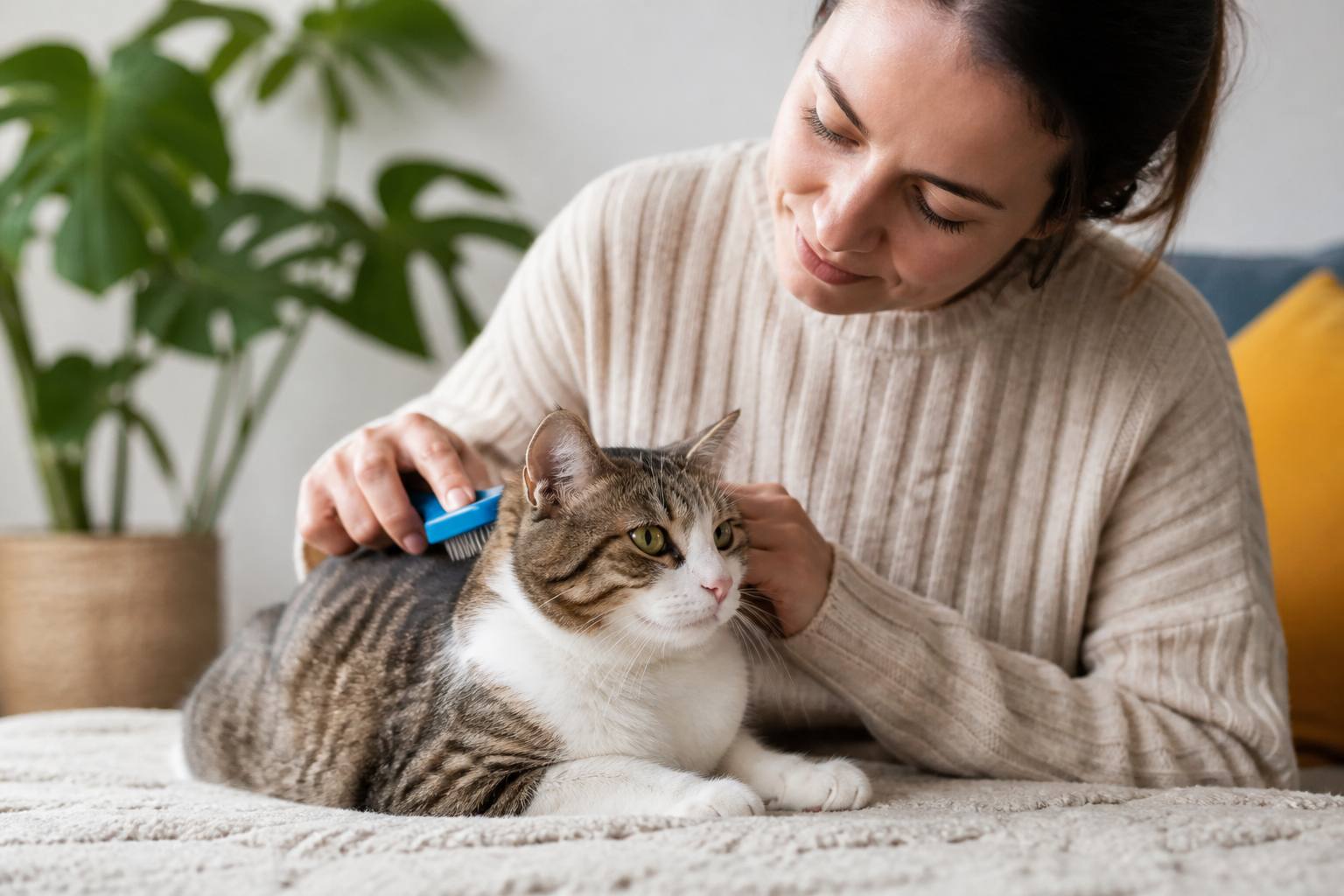
If your vet has ruled out serious medical issues, a consistent grooming routine is your best tool. Brushing does more than just move fur. It stimulates blood flow to the skin and distributes natural oils. A selection of cat grooming supplies can help you build a routine suited to your cat’s coat.
Step 1: Choose the right tools. / Use a soft-bristle brush or a grooming glove for short-haired cats. Use a wide-tooth comb or a slicker brush for long-haired cats to reach the undercoat.
Step 2: Start with a gentle touch. / Brush in the direction of hair growth. Avoid pressing too hard on bony areas like the spine or hips.
Step 3: Target the problem areas. / Focus on the lower back and the base of the tail where flakes tend to accumulate. If your cat is older or overweight, be extra patient with these hard-to-reach spots.
Step 4: Use a damp cloth for a final wipe. / After brushing, wipe the coat with a clean, slightly damp microfiber cloth. This picks up the loose flakes you just brought to the surface.
Step 5: Repeat daily. / Consistency is more important than the length of the session. Five minutes every day is better than thirty minutes once a week.
The Role of Hydration and Nutrition
What goes into your cat’s body shows up on their skin. Hydration is a massive factor in skin elasticity. Many cats live in a state of mild dehydration because they have a low thirst drive. This is especially true for cats that eat only dry kibble.
Switch to Wet Food
Wet food is roughly 75 percent water. Transitioning some or all of your cat's meals to wet food can significantly improve their hydration levels. This extra moisture helps keep the skin cells plump and healthy. If you must stick to dry food, consider adding a splash of plain water or unsalted bone broth to the bowl.
Omega Fatty Acids
Omega-3 and Omega-6 fatty acids are the building blocks of a healthy skin barrier. They help lock in moisture and reduce inflammation. Brands like Zesty Paws or Honest Paws offer supplements specifically designed for skin and coat health. Look for products containing fish oil, such as salmon or pollock oil. These provide EPA and DHA, which are easily used by a cat's body. For additional options, browse our cat healthcare products.
Quality Protein
Your cat's fur is made almost entirely of protein. If their food is high in fillers like corn or wheat, their skin may suffer. Feeding a high-quality, meat-first diet from brands like Farmina, Orijen, or Acana ensures they get the amino acids needed for skin repair.
Vet Tip: Always consult your veterinarian before adding new supplements to your cat's diet. They can help you determine the correct amount of fish oil to avoid digestive upset or weight gain.
When to Use Specialty Shampoos
Bathing a cat is often a stressful experience for both the pet and the owner. In many cases, it is not necessary for treating simple dandruff. However, if the skin is very greasy or if your vet recommends it, a bath might help.
Never use human dandruff shampoo on a cat. Our skin has a different pH level than theirs. Human products often contain ingredients like zinc pyrithione or coal tar, which can be toxic to cats if they lick their fur. Instead, look for a gentle, soap-free cat shampoo. Ingredients like oatmeal, aloe vera, and cucumber are soothing for dry skin.
If you do bathe your cat, make sure the water is lukewarm. Hot water can actually make dry skin worse by stripping away protective oils. Rinse the coat thoroughly. Any leftover soap residue will cause more itching and flaking once the fur dries.
Managing the Home Environment
If the air in your home is dry, your cat's skin will be too. This is a common problem in the US during the winter months. You can make several small changes to your home to help your cat's skin stay hydrated.
Use a Humidifier
Placing a humidifier in the room where your cat spends the most time can make a big difference. Aim for a humidity level between 40 and 50 percent. This keeps the air from pulling moisture out of your cat's skin and nasal passages.
Strategic Water Bowls
Encourage more drinking by placing multiple water bowls around the house. Some cats prefer running water, so a pet fountain can be a great investment. Keeping the water fresh and the bowls clean is essential for encouraging picky drinkers. You can find additional options among our cat bowls and feeders.
Temperature Control
Try to keep your cat away from direct heat sources. If they love sleeping on a radiator or a floor vent, place a bed nearby that is not directly on top of the heat. Constant direct heat will dry out the skin in that specific area very quickly.
Identifying Medical Causes for Dandruff
Sometimes, no amount of brushing or fish oil will fix the problem. This is because dandruff can be a secondary symptom of an internal health issue. If the dandruff is sudden or severe, it is time to call the vet.
Systemic Diseases
Conditions like hyperthyroidism, diabetes, and kidney disease can all change the quality of a cat's skin and coat. These diseases affect how the body processes nutrients and manages hydration. Often, a dull, flaky coat is one of the first outward signs of these conditions.
Skin Infections
Bacterial or fungal infections, such as ringworm, can cause intense flaking. Ringworm usually appears as circular patches of hair loss with red, scaly skin. This is a zoonotic disease, meaning it can spread to humans. If you see these patterns, keep your cat away from other pets and see a vet immediately.
Allergies
Cats can be allergic to ingredients in their food or things in their environment like pollen or dust. Allergic cats often have "miliary dermatitis," which feels like small, crusty bumps under the fur. This irritation leads to scratching and more dandruff.
Vet Tip: If your cat is losing hair, scratching constantly, or has red and inflamed skin, please schedule a veterinary exam. These symptoms often require prescription treatment rather than over-the-counter remedies.
Using the BaxterBoo Pharmacy for Skin Health
If your veterinarian determines that your cat's dandruff is caused by an underlying condition, you may need specific medications. Our pharmacy for cats offers prescription products for veterinary care. This includes prescription-strength flea and tick preventives that can eliminate mites and other parasites.
For cats with severe allergies or chronic skin infections, your vet might prescribe medicated shampoos or oral medications. We carry prescription pet foods from brands like Royal Canin and Farmina Vet Life that are formulated for skin sensitivities. Having these items delivered to your door makes managing a chronic skin condition much simpler.
Bottom line: Medical causes for dandruff require professional diagnosis and targeted treatment from a veterinarian.
Preventive Care and Long-Term Management
Once you have cleared the flakes, the goal is to keep them from returning. Maintaining skin health is an ongoing process. It involves a combination of good hygiene and internal support.
- Keep up with flea prevention: Use a monthly preventive year-round, even for indoor cats.
- Monitor weight: Use a measuring cup for meals to keep your cat at a healthy weight so they can groom themselves.
- Check the coat weekly: Look for new flakes or changes in skin color during your regular petting sessions.
- Provide enrichment: Stress can sometimes lead to over-grooming or a lack of grooming, so keep your cat mentally active.
By staying proactive, you can catch skin issues before they become uncomfortable for your cat. Regular grooming sessions are also a great time to bond with your pet. They will enjoy the attention, and you will enjoy a flake-free lap.
Summary of Dandruff Care
Managing cat dandruff is usually about finding the right balance of hydration and hygiene. Most cases respond well to simple home changes.
Key Takeaway: Combine daily brushing with a high-moisture diet and environmental humidity to effectively manage most cases of feline dandruff.
If your cat's dandruff is accompanied by lethargy, changes in appetite, or excessive thirst, do not wait. These are signs that the skin issue is part of a larger systemic problem. Early intervention by a vet can make a world of difference in your cat's comfort and long-term health.
FAQ
Is cat dandruff the same as dander?
No, cat dander is microscopic skin cells that all cats shed naturally. Dandruff consists of visible white flakes that indicate the skin is dry, irritated, or that the cat is not grooming properly. Dander is what usually triggers human allergies, while dandruff is a sign of a skin issue in the cat.
Can I use my own dandruff shampoo on my cat?
You should never use human dandruff shampoo on a cat. These products are formulated for human skin pH and contain ingredients that can be toxic to cats if ingested. Always use a shampoo specifically designed for felines or follow the recommendation of your veterinarian.
Does my cat have dandruff because they are dehydrated?
Dehydration is a very common cause of dry, flaky skin in cats. Because cats often have a low thirst drive, they may not drink enough water to keep their skin hydrated. Switching to wet food and providing a pet fountain can help improve their hydration and skin health.
When should I worry about my cat's dandruff?
You should see a vet if the dandruff is accompanied by hair loss, intense itching, or red and inflamed skin. If your cat is also acting lethargic, eating less, or drinking significantly more water, the dandruff could be a symptom of an underlying medical condition like diabetes or hyperthyroidism.






- Site & Contents BaxterBoo.com. BaxterBoo is located in the United States.
- Privacy & Security
- Terms of Use
- Accessibility Statement
