Save 15% on your 1st Autoship learn more

 Email us
 Live Chat
 FAQs
FAQs





Introduction
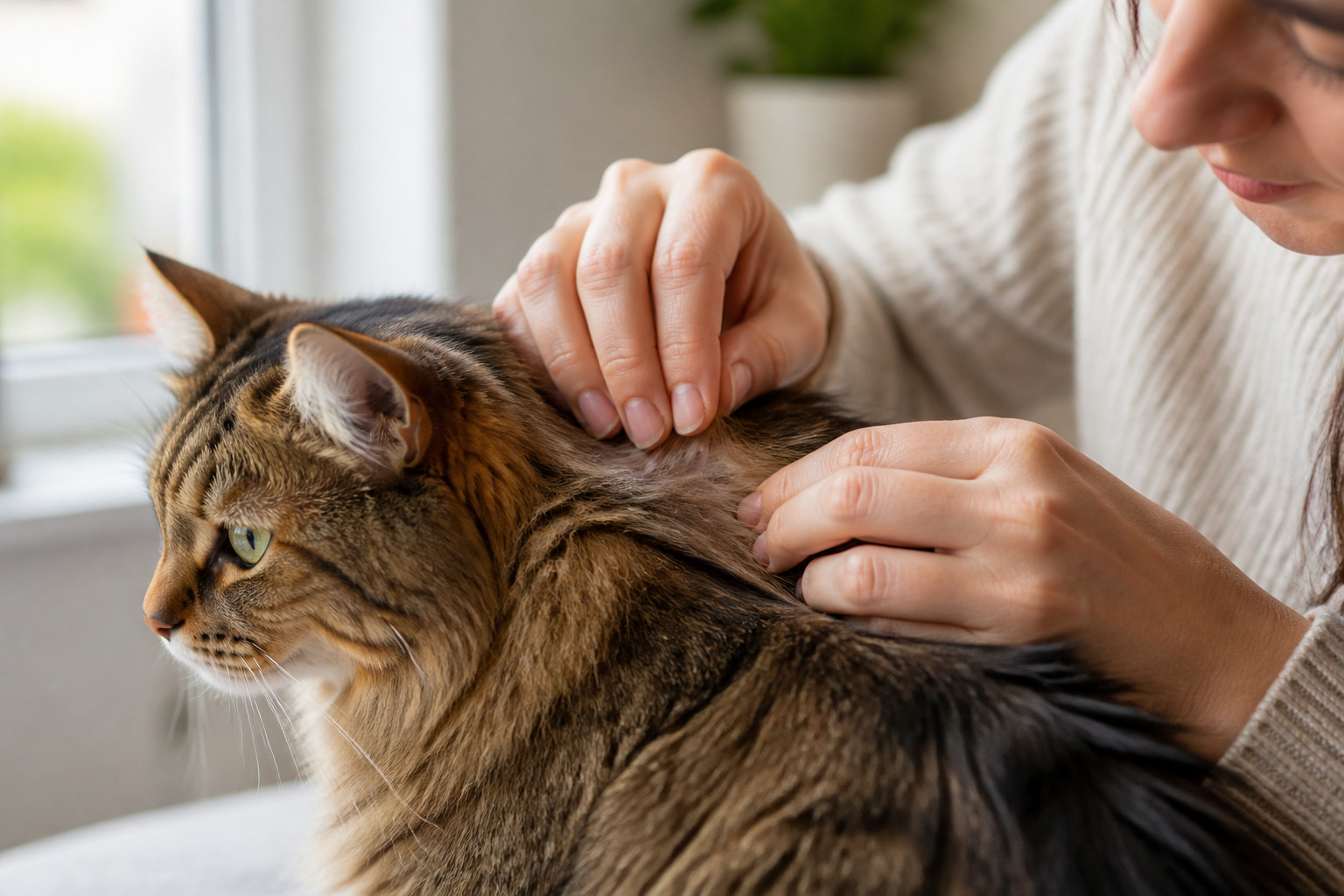
Petting your cat should be a relaxing experience for both of you. You might be running your hand down their back when you notice small white flakes resting on their fur. This is a common sight for many feline owners, especially during the winter months. At BaxterBoo, we understand that a flaky coat can be frustrating to manage. This guide explains why these flakes appear and how you can address the root cause. We will cover environmental triggers, nutritional needs, and grooming habits that help keep skin healthy. You will also learn when a flaky coat indicates a deeper health concern that requires professional care. Finding the right approach helps your cat feel more comfortable and keeps their coat looking its best.
Quick Answer: To stop cat dandruff, increase your pet's hydration by adding wet food to their diet and use a humidifier to combat dry indoor air. Regular brushing and supplements containing Omega-3 fatty acids also support a healthy skin barrier and reduce flaking.
Understanding the Difference Between Dander and Dandruff
It is helpful to know exactly what you are seeing when flakes appear. Many people use the terms dander and dandruff interchangeably, but they are not the same thing. Every cat has dander. Dander consists of microscopic skin cells that shed naturally as part of the body's normal renewal process. You generally cannot see dander with the naked eye. It is the substance that often triggers allergies in humans, but it is a sign of healthy skin turnover.
Dandruff is different because the flakes are large enough to see. These are clumps of dead skin cells that have shed prematurely or in excess. When your cat has dandruff, it usually means the skin is irritated, dry, or unable to shed cells properly. While dander is a sign of health, visible dandruff is a sign that something is out of balance.
Dandruff vs. Fleas and Parasites
Sometimes, owners confuse dandruff with other debris. Flea eggs are small and white, but they are oval and uniform in shape. Flea dirt looks like black pepper flakes. If you see white flakes that look like irregular bits of paper or skin, it is likely dandruff. However, some parasites can cause a condition known as "walking dandruff." This is actually a mite infestation where the movement of the mites makes the skin flakes look like they are moving across the fur.
| Feature | Cat Dander | Cat Dandruff |
|---|---|---|
| Visibility | Microscopic (invisible) | Visible white or gray flakes |
| Normalcy | Normal and healthy | Indicates an underlying issue |
| Texture | Dust-like | Scaly or flaky |
| Location | All over the body | Often concentrated on the lower back |
Environmental Factors and Dry Air
One of the most common reasons for a sudden appearance of flakes is the environment. Indoor heating during the winter months can strip moisture from the air. When the humidity drops, your cat's skin can become dry and brittle. This leads to itching and flaking. If you notice that the dandruff only appears during cold weather, the air in your home is likely the culprit.
Air conditioning can also have a drying effect during the summer. Any environment with low humidity can compromise the skin's natural moisture barrier. Using a humidifier in the rooms where your cat spends the most time can make a significant difference. Keeping the humidity level between 40 and 50 percent is generally ideal for both humans and pets.
Key Takeaway: Environmental dryness is a leading cause of feline skin flakes. Adding moisture back into your home environment through a humidifier is one of the simplest ways to soothe dry skin.
The Role of Hydration and Diet
What your cat eats directly impacts the quality of their skin and coat. Cats have a low thirst drive because their ancestors obtained most of their moisture from prey. If your cat eats only dry kibble, they may be in a state of mild, chronic dehydration. This dehydration often shows up first on the skin. Explore our cat food selection when comparing wet and dry options.
Transitioning to Wet Food
Adding wet food to your cat’s routine is a practical way to boost their water intake. Brands like Tiki Cat, Fussie Cat, and Fancy Feast offer high-moisture options that many cats find irresistible. If your cat is a picky eater, you can start by mixing a small amount of wet food into their dry kibble.
Step 1: Start by mixing 25 percent wet food with 75 percent dry food. / Do this for three days to monitor their digestion. Step 2: Increase the ratio to 50 percent wet food if your cat accepts the change. / Ensure they have access to fresh water at all times. Step 3: Move to a majority wet food diet or add a "topper" to every meal. / Products like Caru stews or Honest Kitchen broths are excellent for adding moisture.
Essential Fatty Acids
A lack of essential fatty acids can also lead to a dull, flaky coat. Omega-3 and Omega-6 fatty acids are vital for maintaining the skin's barrier. We carry several supplements, such as those from Zesty Paws or Honest Paws, that are specifically formulated to support skin health. These can be easily added to your cat's food. These oils help reduce inflammation and keep the skin supple from the inside out.
Vet Tip: If you decide to change your cat's diet or add new supplements, consult your veterinarian first. They can ensure the new food meets your cat's specific life stage and health requirements, especially if your cat has a history of urinary or kidney issues.
Grooming Habits and Physical Limitations
Cats are famous for their grooming habits. They spend a large portion of their day cleaning themselves. This process removes loose hair and dead skin cells. If a cat stops grooming effectively, dandruff will quickly build up and become visible. Our cat grooming supplies include brushes, combs, shampoos, and other tools.
Why Cats Stop Grooming
There are several reasons why a cat might fall behind on their hygiene:
- Obesity: Overweight cats often cannot reach their lower back or the base of their tail. This is why dandruff is frequently found in those specific areas.
- Arthritis: Senior cats may find it painful to twist and reach certain parts of their body. If you notice flakes only on the back half of your cat, joint stiffness may be the cause.
- Dental Pain: If grooming becomes painful due to tooth or gum issues, a cat will stop doing it altogether.
How to Help Your Cat
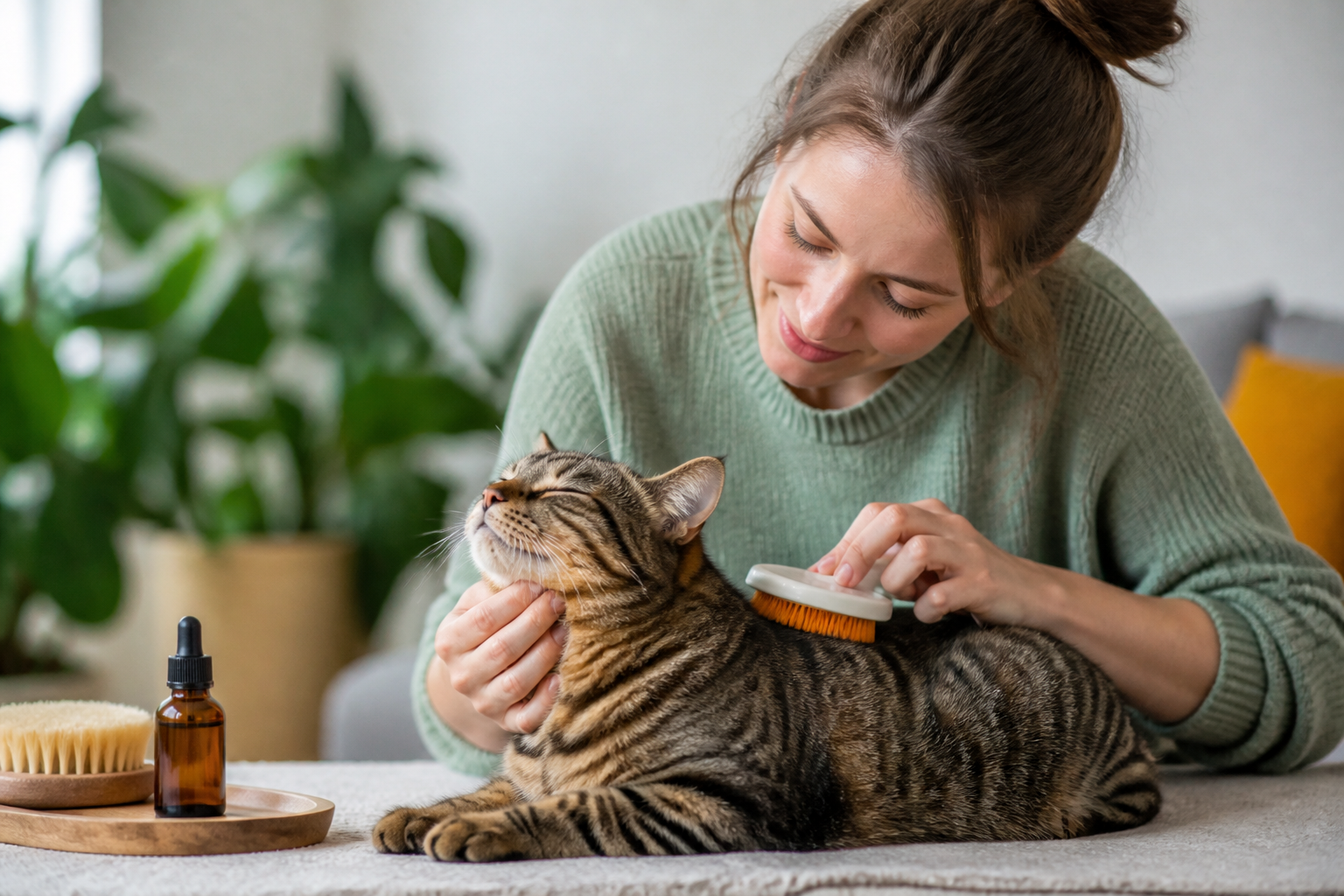
If your cat cannot groom themselves, you must step in. Regular brushing is the best way to stop cat dandruff manually. Brushing distributes the natural oils across the skin and removes the buildup of dead cells. For short-haired cats, a soft bristle brush or a grooming mitt works well. Long-haired cats may require a comb to prevent mats and reach the skin through the thick undercoat. An U-Groom Combo Brush for Dogs and Cats can provide two brushing surfaces for routine grooming.
Bottom line: Regular grooming sessions not only remove dandruff but also allow you to check for lumps, bumps, or parasites like fleas.
Medical Causes and the BaxterBoo Pharmacy
While many cases of dandruff are related to the environment or diet, some indicate a medical condition. Skin infections, fungal issues like ringworm, and endocrine disorders can all cause flaking. Hyperthyroidism and diabetes are two common conditions in cats that often result in a change in coat quality.
If your cat's dandruff is accompanied by redness, sores, hair loss, or a change in appetite, a vet visit is necessary. Your veterinarian can perform skin scrapings or blood work to find the underlying cause.
Our pharmacy provides a reliable way to get the treatments your vet prescribes. Through our partnership with Pet's Choice, we offer FDA-approved medications and prescription diets. If your vet determines that your cat's skin issues are caused by an allergy or a metabolic disorder, you can find the necessary prescription food from brands like Farmina Vet Life or Royal Canin in our cat pharmacy. Having access to professional-grade treatments ensures you are addressing the problem with the most effective tools available.
Parasite Prevention
Fleas and mites are a major source of skin irritation. Even indoor cats can get fleas brought in by humans or other pets. A flea infestation causes the skin to become inflamed, leading to heavy flaking. We carry trusted brands like Frontline and NexGard to help you maintain a consistent prevention schedule. Keeping your cat on a monthly preventative is one of the most effective ways to avoid skin complications. You can also review this guide to flea and tick prevention products.
Practical Steps to Stop Cat Dandruff
Managing a flaky coat requires a multi-step approach. You cannot simply brush the flakes away and expect them to stay gone if the air is dry or the diet is poor.
- Audit the environment: Check the humidity in your home. If it feels dry to you, it is definitely dry for your cat.
- Evaluate the bowl: Look at the moisture content of your cat's food. Consider switching from 100 percent kibble to a mix of wet and dry.
- Schedule grooming: Aim for at least three short brushing sessions per week. This keeps the coat clear and the skin stimulated.
- Check for pests: Use a fine-toothed flea comb to check for "flea dirt" or actual insects.
- Monitor behavior: Watch for signs of stiffness or weight gain that might prevent your cat from reaching their back.
Key Takeaway: Solving dandruff issues usually requires a combination of environmental changes, nutritional support, and regular physical grooming.
When to Consider a Bath
Most cats do not need regular baths. In fact, bathing a cat too often can strip the skin of essential oils and make dandruff worse. However, if your cat has a greasy form of dandruff or a fungal infection, your vet might recommend a medicated shampoo.
If you must bathe your cat, always use a shampoo specifically formulated for felines. Human shampoos have a different pH balance and can cause severe irritation. Look for soothing ingredients like oatmeal or aloe. Ensure you rinse the coat thoroughly, as any soap residue left behind will dry into even more flakes once the fur is dry.
Vet Tip: If your cat finds baths extremely stressful, avoid them unless medically necessary. Stress can trigger a "fight or flight" response that actually increases skin oil production and shedding, potentially making the dandruff problem worse.
Supporting Long-Term Skin Health
Healthy skin is a reflection of overall wellness. By focusing on high-quality nutrition and a stress-free environment, you can prevent most skin issues before they start. Our MVP Rewards program is a great way to save on the premium foods and supplements your cat needs for a glossy coat.
You might also consider our Autoship service for your cat's favorite wet food and flea preventatives. This ensures you never run out of the essentials that keep their skin hydrated and protected. Regular care at home, combined with professional guidance from your vet, is the best way to ensure your cat stays comfortable.
Conclusion
Stopping cat dandruff is usually a matter of improving hydration and maintaining a consistent grooming routine. Whether the cause is dry winter air or a need for more Omega fatty acids, most cases can be managed with simple changes at home. Remember to check for physical limitations like obesity or arthritis that might be preventing your cat from cleaning themselves. If you notice persistent irritation or behavioral changes, reach out to your veterinarian for a professional diagnosis.
- Boost hydration with wet food and water fountains.
- Add Omega-3 supplements to support the skin barrier.
- Use a humidifier to combat dry indoor air.
- Maintain a regular brushing schedule to distribute oils.
Our pharmacy and wide selection of premium cat supplies are here to help you every step of the way. If your vet prescribes a specific diet or medication, visit our cat pharmacy to find exactly what your pet needs for a healthy, flake-free life.
FAQ
Is cat dandruff the same as dander?
No, cat dander consists of microscopic skin cells that shed naturally and are generally invisible. Dandruff consists of larger, visible white flakes that indicate the skin is dry, irritated, or not shedding properly. While all cats have dander, visible dandruff is a sign that your cat may need a change in diet, environment, or grooming.
Can I use human dandruff shampoo on my cat?
You should never use human dandruff shampoo on a cat because the pH balance of feline skin is very different from human skin. Many human products also contain ingredients like zinc pyrithione or salicylic acid that can be toxic if a cat licks their fur after a bath. Always use a shampoo specifically designed for cats, and only bathe them if your vet recommends it.
Why does my cat only have dandruff on their lower back?
Dandruff on the lower back and base of the tail is often a sign that a cat cannot reach those areas to groom themselves. This is common in cats that are overweight or those suffering from arthritis and joint stiffness. When a cat stops grooming a specific area, dead skin cells and oils build up, leading to the visible flakes you see.
Does diet really affect how much my cat flakes?
Yes, nutrition is a primary factor in skin health. Cats require specific levels of protein and healthy fats, especially Omega-3 and Omega-6 fatty acids, to maintain a supple skin barrier. Dehydration from an all-dry-food diet can also cause the skin to become brittle and prone to flaking, making wet food a vital part of a flake-free lifestyle.