Save 15% on your 1st Autoship learn more

 Email us
 Live Chat
 FAQs
FAQs





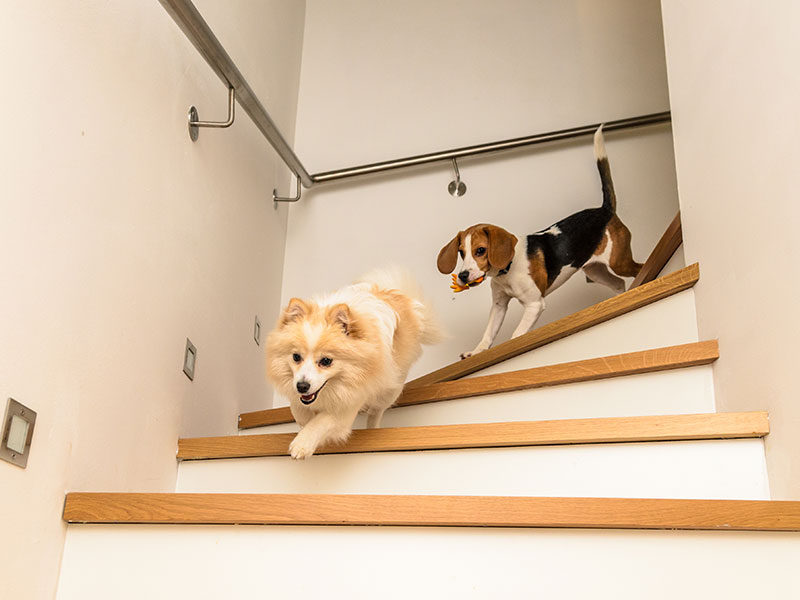
Whether you're bringing home a new puppy or you're moving your adult dog to a home with stairs for the first time, one thing is certain. Eventually, you'll probably need to teach your dog how to go up and down a flight of stairs. Luckily, with a bit of time and practice, teaching your dog to use steps safely is possible.
Teach Your Dog To Stay
Before you teach your dog how to go up or down steps, be sure he's mastered the art of staying when told to. This keeps him from becoming too enthusiastic and knocking you (or himself) down the stairs.
Tell your pet to stay while you take a small step backward. If he stays, use a clicking device , a small treat, or a "good dog" encouragement to show him your approval. Once he's used to staying when there are no distractions in the room, work with him using distractions like his favorite squeaky toys or other people. After he's mastered staying, teach him to come when called using the same methods. Only after he knows these two basic commands is it safe to teach your dog how to use stairs.
Teach Him To Go Up the Stairs First
The first step (haha) to stair training is teaching your dog how to go up. Grab a sturdy leash and collar and hook him to it. You'll use these to keep pressure on the leash and help support your dog. This prevents rushing or jumping.
First, carry him upstairs, stopping to place him two or three steps from the top landing. Set him down, forelegs on one stair and back legs one lower. Use gentle pressure on the leash, standing behind him so you can support his weight and he doesn't worry he will fall. The pressure of you behind him will also encourage him to move forward.
Your dog will likely refuse to move at first. If there is someone else he likes in the house, ask them to stand at the top of the stairs and call for him. If you are alone, you can quietly walk around him and up the stairs. Keeping your back to your pet, use an excited voice to call his name and encourage him to come to you. If your pup still won't budge, gently begin walking away, creating pressure on the leash but never dragging or jerking him up the stairs.
Repeat this process from the top few stairs until he seems to get the hang of it. After that, continue repeating the training, moving down a couple of steps each time until your dog climbs the entire staircase on his own.
Work on Going Down the Stairs
Once your dog can go up the steps, teach him how to go down. Training for down steps is just the same steps in reverse. Place your dog two or three steps from the bottom and use the same process you used for going up. Continue adding steps until he can go down up and then down an entire flight on his own.
Use Encouragement and Rewards
If your dog is like most, he'll need something to entice him to learn a new "trick." For some, encouragement is enough. All you need to do is give him lots of praise in your happiest voice each time he goes up or down a stair.
Other dogs need a little more encouragement, though. Is your pet food motivated? Use some of his favorite treats , placing one on each step as he learns to go up and down them. Perhaps your pet prefers his toys. His favorite toy or another scent that he likes will entice him to move up and down the stairs as needed.
Remember, never pull on the leash in either direction, as this can make him stiffen and refuse to move. It is also important not to provide a lot of petting until training is completely over. This is because some dogs prefer not to be petted when they're on a leash and may even view it as a punishment in their minds.
Know What To Do if Training Is Not Working
Although treats or toys usually work, the occasional dog will simply be too stubborn to go up or down the stairs for them. In these cases, you might need to bring in reinforcement in the form of another dog. If you don't have a second dog yourself, ask a friend whose dog can use steps to come over. Have that dog follow you up and down the stairs, tossing him a treat each time he does. If your dog attempts to follow, give him one as well, even if he doesn't make it far. Eventually, he will probably follow you for the entire flight.
Look for Signs an Older Dog Needs Extra Help
Some dogs, especially smaller breeds, will simply never want to go up or down the stairs. In these cases, you may find it easier to purchase a carrying harness . Lightweight carriers make it easy for you to help your pup up and down a flight of stairs as needed.
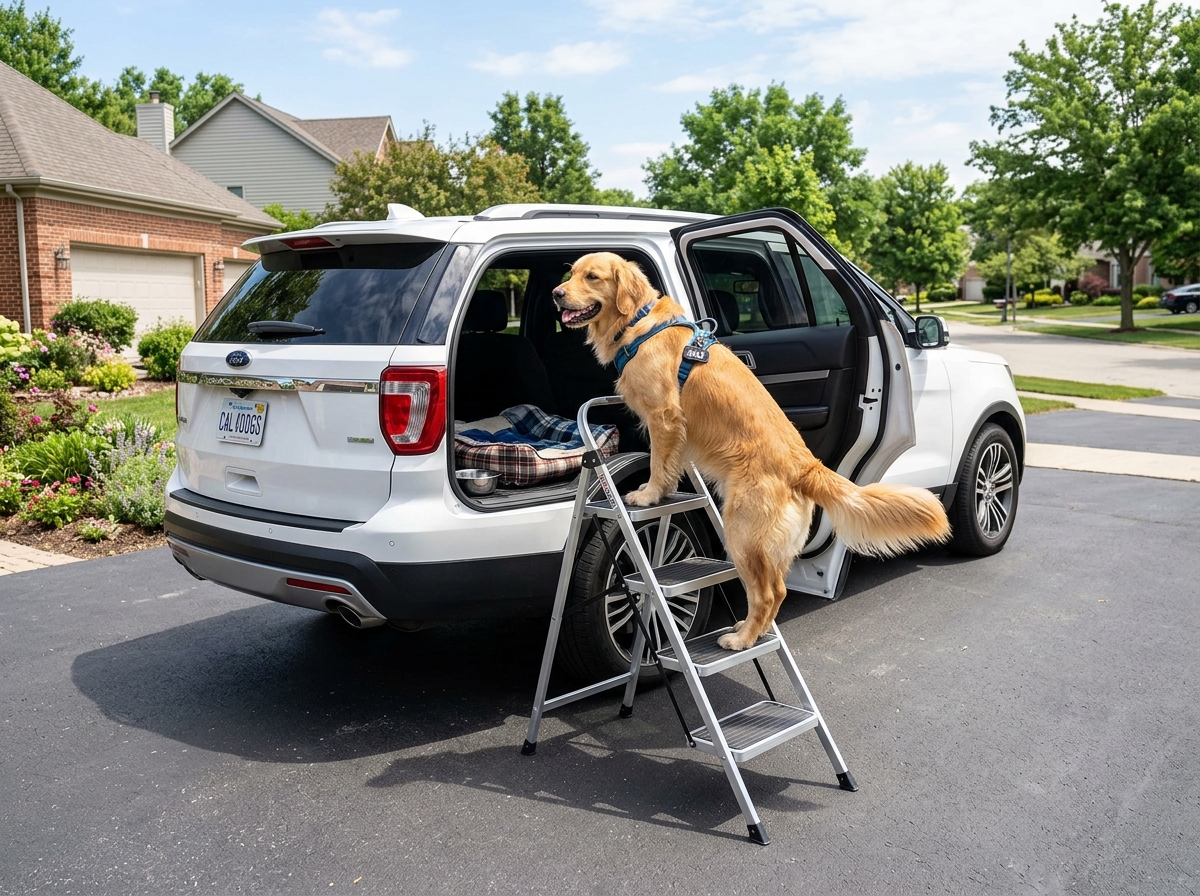
Some dogs have the opposite problem. As your pup ages, he may need more stairs to help him get up and down from couches, beds, or chairs. Dog stairs or ramps make it easier for your aging pup to get around on his own without risking hurting himself.
Training a dog to use stairs safely generally takes only a day or two. If you are diligent in your methods and stick to the routine, your pup will be able to go up and down the steps on his own in no time.