
 Save 15% on your 1st Autoship learn more

 Email us
 Live Chat
 FAQs
FAQs





Introduction
You just finished a long grooming session to get your dog looking their best. Suddenly, you notice they are frantically licking their stomach or legs. The skin looks angry, red, and raw. This is a common situation for pet owners and is often called brush burn or slicker burn. It happens when grooming tools rub the skin too hard or for too long. At BaxterBoo, we see this often when owners are trying to manage thick double coats or stubborn mats.
Understanding how to treat this irritation quickly is essential for your dog’s comfort. This post covers immediate first aid, safe topical treatments, and how to prevent skin damage during future grooming. We want you to feel confident managing minor abrasions at home while knowing exactly when to seek professional medical help. Treating brush burn correctly prevents a simple scratch from turning into a painful skin infection.
What Exactly is Brush Burn on Dogs?
Brush burn is a mechanical friction burn. It occurs when a grooming tool, usually a slicker brush with fine wire bristles, scrapes against the skin repeatedly. This action removes the protective top layers of the skin. It is very similar to a carpet burn or road rash. While the brush is designed to pull through hair, it can easily catch on the skin if you apply too much pressure.
This condition is particularly common in dogs with thin skin or those with thick undercoats that require heavy brushing. When you are focused on removing a mat, it is easy to forget how close the bristles are to the surface. Dogs with sensitive skin or those who have just had a bath are at the highest risk. Wet skin is softer and more prone to tearing and abrasion.
Quick Answer: Brush burn is a skin abrasion caused by friction from grooming tools. Treat it by cleaning the area with cool water, applying a pet-safe soothing ointment, and using a cone to prevent licking.
Identifying the Signs of Skin Irritation
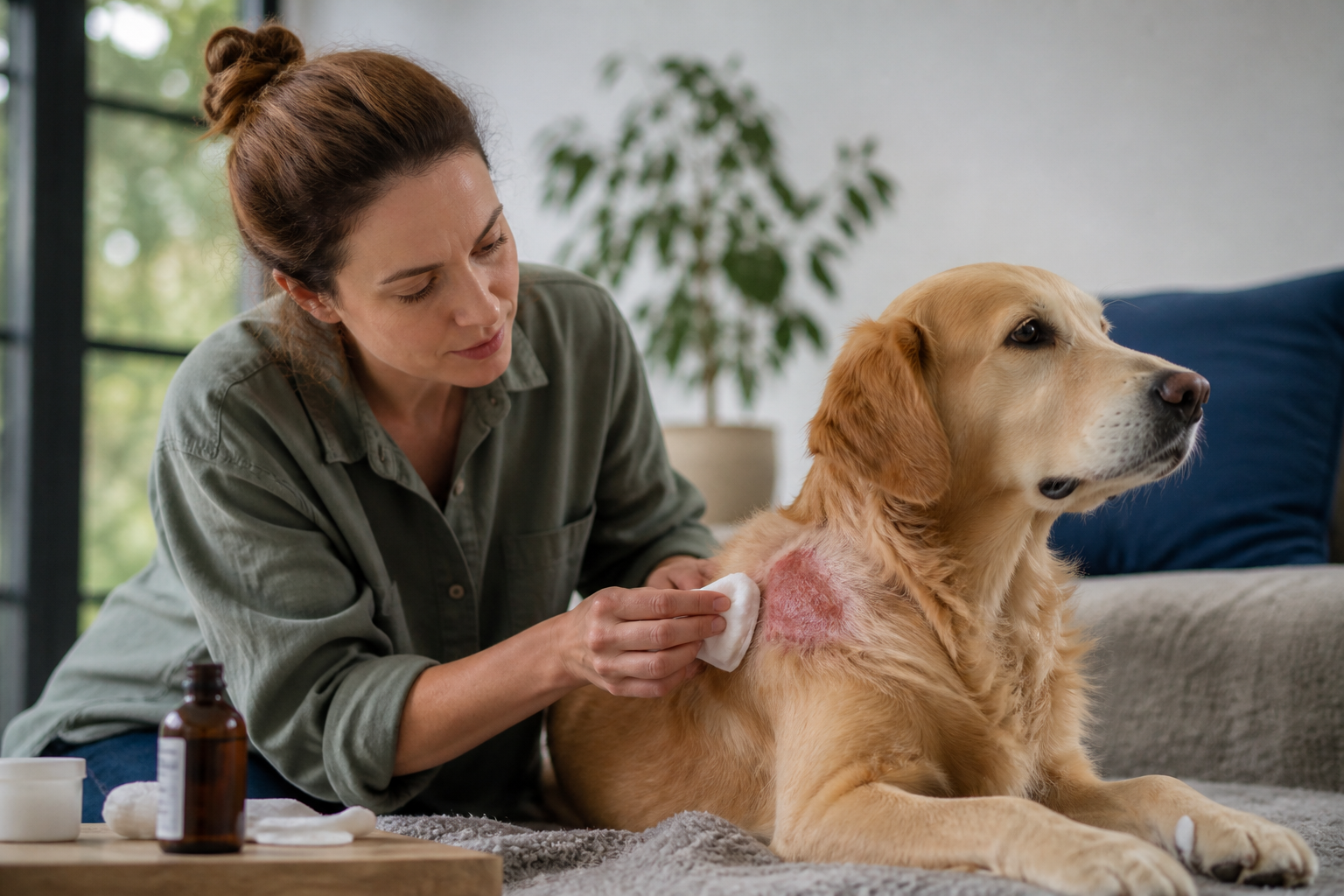
Spotting brush burn early helps you start treatment before your dog makes it worse. The most obvious sign is bright red skin in the area you just groomed. This redness may look like a rash or a solid patch of inflamed tissue. You might also notice small red streaks or dots where the individual wire bristles scraped the skin.
Behavioral changes are often the first clue. Your dog might flinch when you touch the area or seem restless. Most dogs will immediately start licking or chewing the spot to soothe the stinging sensation. If the burn is more severe, you may see clear fluid or a small amount of blood oozing from the skin.
Key Takeaway: Visual redness combined with obsessive licking right after grooming are the hallmark signs of brush burn. Check high-friction areas like the inner thighs, armpits, and neck carefully.
Immediate Steps to Treat Brush Burn at Home
If you notice redness during or after grooming, stop immediately. The goal is to cool the skin and stop the inflammatory process. Follow these steps to provide relief.
Step 1: Cool the skin.
Apply a cold compress to the area for five to ten minutes. You can use a clean cloth soaked in cold water or a gel pack wrapped in a thin towel. Do not put ice directly on the skin. The cold helps constrict blood vessels and numbs the stinging sensation.
Step 2: Clean the area gently.
Use a mild, fragrance-free soap and lukewarm water to wash away any debris or residual grooming products. Do not scrub the area. Pat it dry very gently with a soft, lint-free towel. Avoid using a hairdryer on the area, even on a cool setting, as the moving air can be irritating.
Step 3: Assess the damage.
Look closely at the skin once it is clean. A minor burn will stay pink or red. A more serious burn might show signs of skin loss or deep raw patches. If the skin looks grey, leathery, or charred, this is not a simple brush burn and requires an immediate vet visit.
Safe Topical Remedies and Ointments
Once the skin is clean and dry, you can apply a soothing agent. Not all human products are safe for dogs. Many human ointments contain zinc oxide or lidocaine, which can be toxic if your dog licks them off. Stick to products specifically formulated for pets.
Pure aloe vera gel is a great natural option. It provides a cooling effect and supports skin repair. Ensure the gel does not contain alcohol or artificial fragrances. At BaxterBoo, we carry a variety of dog grooming and skin-care supplies designed for hot spots and minor abrasions. These often contain ingredients like vitamin E or calendula to support the skin barrier.
If the area looks like it might get infected, your veterinarian may suggest a medicated ointment. Our pet pharmacy offers prescription options through our partnership with Pet's Choice. These prescription options are helpful for dogs that are prone to secondary skin infections or have pre-existing allergies.
Vet Tip: Never apply butter, grease, or heavy oils to a fresh burn. These trap heat against the skin and can actually make the tissue damage worse. Always use water-based or pet-specific soothing gels.
Preventing Further Damage from Licking
The biggest obstacle to healing a brush burn is the dog’s own tongue. Dogs have a natural instinct to lick wounds. However, their tongues are rough and covered in bacteria. Constant licking will turn a minor scrape into a deep, infected wound called a hot spot. It also removes any ointment you have applied.
You must prevent your dog from reaching the area for at least 24 to 48 hours. An Elizabethan collar, often called a cone, is the most effective tool for this. If the burn is on the torso, a surgical recovery suit or a snug cotton t-shirt may also work. This physical barrier allows the skin to dry and begin the healing process without interference.
Check the area every few hours. If the redness is spreading or you see yellow discharge, your dog may have introduced bacteria to the site. In these cases, a professional opinion is necessary to prevent the infection from spreading through the skin layers.
When to Call the Veterinarian
Most brush burns are superficial and heal within a few days. However, friction can sometimes cause deeper tissue damage that isn't immediately visible. You should monitor your dog closely for the first 72 hours. Burns are unique because they can actually look worse two or three days after the initial injury.
Call your vet if you notice any of the following:
- The area is hot to the touch or swelling significantly.
- There is a foul odor coming from the wound.
- You see pus or cloudy discharge.
- Your dog becomes lethargic or loses their appetite.
- The redness covers more than ten percent of their body.
Infection is the primary concern with any skin abrasion. If your vet determines the burn is deep, they may prescribe oral antibiotics or stronger pain relief. For chronic skin issues or severe cases, we provide easy access to prescription medications through our dog pharmacy. Managing the pain and the infection simultaneously ensures your dog recovers without permanent scarring.
Common Causes of Post-Grooming Skin Issues
Brush burn is just one reason a dog might itch after grooming. It is helpful to rule out other causes so you can adjust your routine. Clipper burn is another frequent culprit. This happens when the metal blades of electric clippers become too hot and touch the skin. It looks very similar to brush burn but usually appears in areas where the hair was cut very short.
Allergic reactions to shampoos or sprays are also common. If the redness is all over the body rather than in one specific spot, a product allergy is likely. Some dogs are sensitive to the fragrances or preservatives in standard grooming products. Switching to a hypoallergenic, soap-free formula can prevent this.
Finally, over-bathing can strip the skin of natural oils. This leaves the skin dry, flaky, and prone to irritation from the brush. Most dogs only need a bath every four to six weeks. If you must wash them more often, use a moisturizing conditioner to protect the skin barrier from the mechanical action of brushing.
Choosing the Right Tools for Your Dog’s Coat
The best way to treat brush burn is to prevent it from happening. This starts with using the correct brush for your dog's specific coat type. We carry over 500 trusted brands like Kong and Greenies to help you find the right supplies for your pet's needs. Not every dog needs a slicker brush, and using the wrong tool often leads to injury.
Slicker Brushes
These have fine wire pins and are great for removing mats in long-haired or curly-coated breeds. However, they are the most common cause of brush burn. Only use these on the hair, never pressing down to the skin.
Pin Brushes
These look like human hairbrushes but have rounded tips on the pins. They are much gentler and are ideal for medium to long coats that do not have heavy matting. The rounded tips act as a buffer to prevent skin scratches.
Bristle Brushes
These use soft or firm bristles to move natural oils through the coat. They are the safest choice for short-haired dogs. It is almost impossible to cause a brush burn with a soft bristle brush.
Undercoat Rakes
These are designed to reach through the topcoat to pull out dead fur from the undercoat. They should be used with a very light hand. Because the teeth are metal, they can easily scratch the skin if the dog moves suddenly.
Proper Brushing Technique
Your technique is just as important as your tools. Many owners make the mistake of using long, heavy strokes. This increases the heat and friction on the skin. Instead, use short, gentle strokes. Think of it like brushing your own hair when you have a sensitive scalp.
Always place your hand between the brush and the dog's skin when working on a mat. This allows you to feel the tension and prevents the bristles from snapping against the skin. Work in small sections rather than trying to brush the whole dog at once. If your dog has a very thick coat, consider breaking the grooming into several short sessions over two days.
Avoid brushing your dog while they are wet. Wet hair stretches and is more likely to tangle, which leads to more pulling. Wet skin is also much softer and more susceptible to abrasions. Wait until the coat is completely dry before starting any intensive de-matting or brushing routine.
For additional coat-care guidance, read our post on how to groom a dog with curly hair.
Key Takeaway: Proper technique involves short, light strokes on a dry coat. Using your hand as a buffer between the tool and the skin is the best way to prevent accidental scrapes.
The Role of Diet in Skin Health
A dog with healthy, resilient skin is less likely to suffer from severe brush burns. Nutrition plays a massive role in the strength of the skin barrier. Omega-3 fatty acids, often found in fish oil, help keep the skin hydrated and reduce inflammation. If your dog's skin is always dry or flaky, they may be more prone to grooming injuries.
We offer several premium food brands like Farmina, Acana, and Orijen that focus on skin and coat health. Supplements like Cosequin or Zesty Paws can also provide the extra nutrients needed to keep the skin supple. When the skin is healthy, it can better withstand the occasional friction of a grooming session.
If you suspect your dog has a food allergy contributing to their skin sensitivity, talk to your vet. They may recommend a prescription diet. Our pet pharmacy carries a range of veterinary diets, such as Royal Canin and Farmina Vet Life, to help manage chronic skin conditions from the inside out.
Long-Term Management and Prevention
Prevention is a lifelong commitment for dogs with high-maintenance coats. Regularly checking your grooming tools is a good habit. Over time, the tips of wire bristles can lose their protective coating or become bent. A damaged brush is much more likely to cause skin irritation. Replace your brushes every year or as soon as you see signs of wear.
Consider professional grooming if you find it difficult to manage your dog's coat without causing irritation. Professional groomers have the experience to handle difficult mats safely. If you do groom at home, keep a first aid kit ready. Having cooling gels and a recovery cone on hand means you can react the moment you see redness.
Enrolling in our Autoship programme can help you stay stocked on grooming supplies and skin supplements. This ensures you never run out of the hypoallergenic shampoos or soothing conditioners your dog needs. Plus, our MVP Rewards programme lets you earn points on these essentials, making it easier to afford the best care for your dog’s skin.
Summary of Brush Burn Care
Treating brush burn is about acting quickly to stop the sting and prevent infection. By cooling the skin, applying safe ointments, and stopping the licking cycle, most dogs will be back to normal in a few days. Remember that your dog's skin is their first line of defense against the world, and keeping it healthy is a vital part of their overall wellness.
- Cool the area with a cold compress immediately.
- Clean gently with mild soap and water.
- Apply pet-safe aloe or veterinary-approved ointments.
- Use a cone or recovery suit to stop all licking.
- Monitor for 72 hours for signs of infection.
Bottom line: Swift action and preventing licking are the most important factors in healing a grooming-related brush burn.
FAQ
How long does it take for a dog's brush burn to heal?
Most minor brush burns will heal within three to seven days if the dog is prevented from licking the area. The redness should begin to fade within the first 24 hours. If the area is still bright red or looks worse after three days, a vet visit is necessary to check for infection.
Can I put Neosporin on my dog's brush burn?
While Neosporin is generally safe in very small amounts, it is not ideal for dogs because they often lick it off. Ingesting the ingredients can cause stomach upset or interfere with their gut bacteria. It is better to use a pet-specific antimicrobial spray or a plain, high-quality aloe vera gel that is safe if consumed.
Is it okay to brush my dog while their fur is wet?
No, you should avoid brushing a wet dog, especially if they are prone to skin irritation. Wet skin is much softer and more likely to tear or abrade from the friction of the brush. Additionally, wet hair is less elastic and more prone to forming tight knots, which leads to more skin pulling during the grooming process.
Why does my dog keep licking the spot where I brushed them?
Your dog licks the area because it stings or itches, much like a person might rub a scraped knee. However, licking introduces bacteria and keeps the wound moist, which prevents healing. If your dog is obsessively licking after grooming, it is a clear sign that the skin is irritated and they need a physical barrier like a cone to stop.






