
 Save 15% on your 1st Autoship learn more

 Email us
 Live Chat
 FAQs





Introduction
You are relaxing on the sofa with your cat when you notice a dusting of white specks across their dark fur. At first, you might think it is just dust from a recent exploration under the bed. When those flakes do not brush away easily, you realize your feline friend is dealing with dandruff. This is a common sight for us at BaxterBoo, where we help pet owners manage everything from seasonal itchiness to senior pet care. While a few flakes might seem like a cosmetic issue, they often signal that your cat needs a little extra help with their skin health or grooming routine. This post covers the most effective ways to hydrate your cat’s skin and improve their coat quality. Our goal is to help you understand when home care is enough and when a medical checkup is necessary.
Quick Answer: Treating cat dandruff at home involves increasing hydration through wet food, regular gentle brushing to distribute skin oils, and using a humidifier during winter. If flakes are accompanied by redness, itching, or hair loss, a veterinary visit is necessary to rule out parasites or underlying health conditions.
Understanding Feline Dandruff
It is important to distinguish between dander and dandruff. Every cat has dander. These are microscopic skin cells that shed naturally as part of the skin’s regeneration process. You cannot see dander with the naked eye, though it is often what triggers allergies in humans. Dandruff is different because the flakes are large enough to see. These are clumps of dead skin cells that have shed prematurely or accumulated because the cat is not grooming effectively.
You should also be able to spot the difference between dandruff and flea dirt. Flea dirt looks like tiny grains of black pepper. If you place those black specks on a damp white paper towel and they turn red, you are looking at flea waste, not dry skin. True dandruff will always appear white or grayish and will not change color when wet.
There is also a condition nicknamed walking dandruff. This is actually a mite called Cheyletiella. If you look closely at the white flakes and they appear to be moving, your cat has a parasite infestation rather than simple dry skin. This requires specific medical treatment rather than just home grooming.
Key Takeaway: Dandruff is visible white flaking, while dander is microscopic and normal. Visible movement among the flakes suggests a mite infestation that requires veterinary intervention.
Cat Skin & Coat Care












Common Causes of Flaky Skin
Skin is the largest organ of the body and reflects a cat's internal health. When the skin becomes dry and brittle, it flakes off. One of the most common reasons for this in modern homes is low humidity. During the winter months, forced-air heating strips moisture from the air and your cat’s skin.
Nutrition also plays a massive role. Cats require specific fatty acids, like Omega-3 and Omega-6, to maintain a healthy skin barrier. If their diet is low in these fats, the skin cannot retain moisture. Dehydration is another factor. Cats have a low thirst drive and often do not drink enough water from a bowl. If they eat a diet of only dry kibble, they may live in a state of mild, chronic dehydration that shows up first in their coat. Moisture-rich meals are available in our cat food category.
Mobility issues often lead to dandruff in specific areas. If a cat is overweight, they might not be able to reach their lower back or the base of their tail. This leads to a buildup of oils and dead skin in those spots. Similarly, senior cats with arthritis may find the twisting and stretching required for grooming to be painful. In these cases, the dandruff is a symptom of a mechanical problem rather than a skin disease.
Environmental Adjustments for Skin Health
Your home environment is the first place to look when addressing dry skin. If you notice your own skin feeling tight or itchy during the winter, your cat is likely feeling the same way. Placing a humidifier in the rooms where your cat spends the most time can make a significant difference. Aim for a humidity level between 40 and 50 percent to keep their skin supple.
You should also consider the cleaners you use. Strong chemical fragrances in floor cleaners or laundry detergents can irritate a cat’s skin. Since cats spend so much time lying on the floor and grooming their fur, they ingest and touch these residues. Switching to pet-friendly, non-toxic cleaning products can reduce contact dermatitis that mimics dandruff.
Stress is another environmental factor that people often overlook. When a cat is stressed by a new pet, a move, or changes in the household, their body may produce more cortisol. This can affect the health of their skin and lead to sudden flaking. Providing vertical space, scratching posts, and a predictable routine can help lower stress levels and improve coat health over time.
The Role of Brushing and Grooming
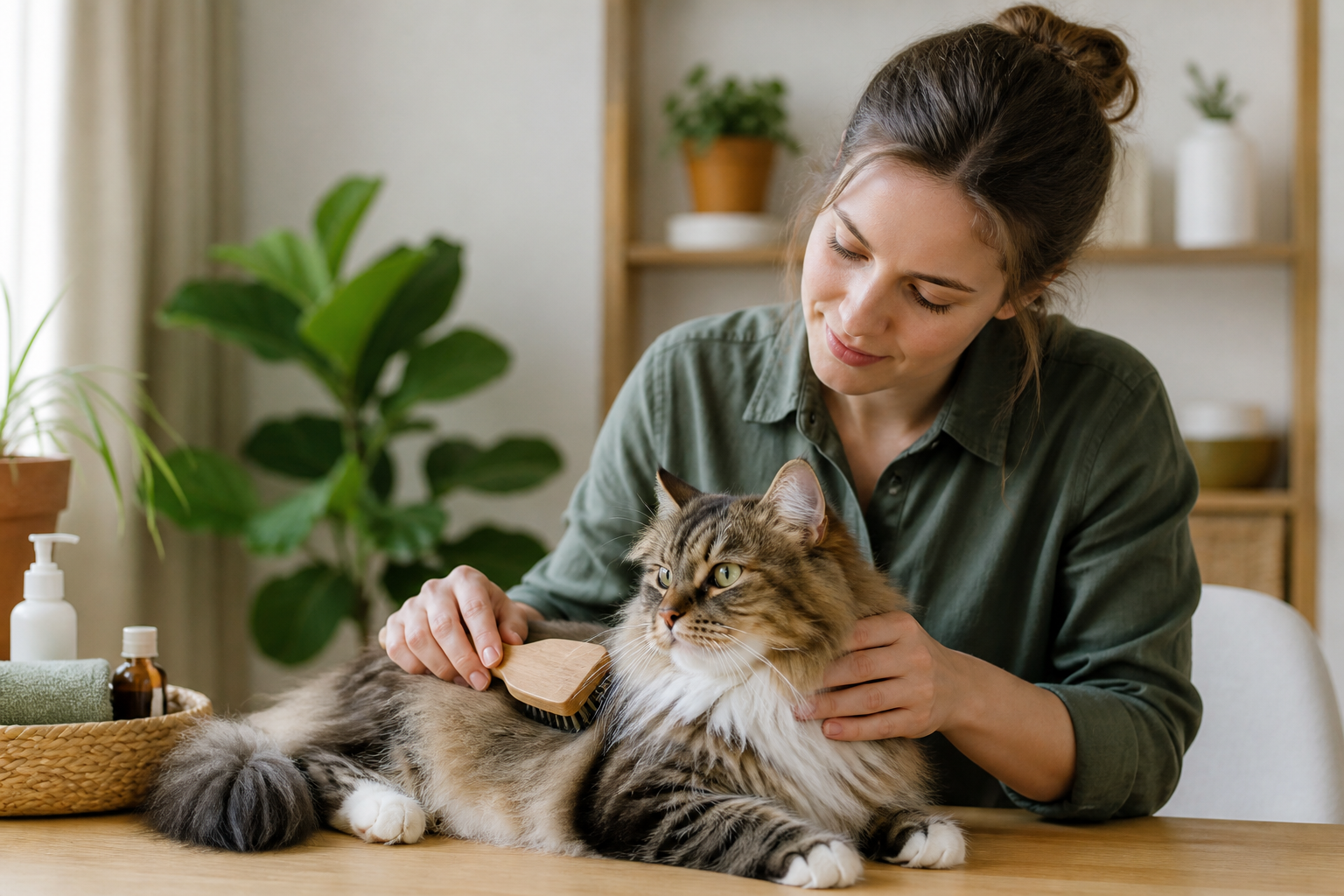
Brushing is the most effective manual way to treat dandruff at home. When you brush your cat, you are doing more than just removing loose fur. You are stimulating the skin to produce natural oils. The bristles then help distribute those oils from the base of the hair shaft down to the tips. This creates a natural waterproof barrier that keeps moisture in the skin.
For cats with short hair, a soft slicker brush or a rubber grooming mitt works best. These tools are gentle enough not to irritate the skin but effective enough to pull up dead flakes. For long-haired cats, you will need a wide-tooth comb to get through the undercoat. If your cat has developed mats along with the dandruff, do not try to cut them out with scissors. This can easily lead to skin tears. Instead, use a specialized de-matting tool or explore our cat grooming supplies.
If your cat is older or overweight, they need you to be their primary groomer. Focus on the hard-to-reach areas like the middle of the back and the rump. A daily five-minute brushing session can prevent the buildup that leads to heavy flaking. It also serves as a great bonding time and allows you to check for new lumps, bumps, or parasites.
Step 1: Choose the right tool. / Pick a soft-bristled brush or a silicone mitt that your cat enjoys.
Step 2: Start in a favorite spot. / Begin brushing where your cat likes to be petted, such as the chin or neck.
Step 3: Work toward the problem areas. / Move slowly toward the back and tail where dandruff is most common.
Step 4: Keep sessions short. / Stop before your cat becomes overstimulated or annoyed.
Step 5: Reward with a treat. / Create a positive association with grooming by offering a high-value snack afterward.
Hydration and Dietary Changes
Dietary moisture is often the missing piece of the puzzle for cats with dandruff. In the wild, cats get most of their water from their prey. Domestic cats often struggle to drink enough water to compensate for a dry kibble diet. One of the simplest home remedies is to incorporate wet food into their daily routine.
Brands like Tiki Cat, Fussie Cat, or Weruva offer high-moisture options that can significantly improve skin elasticity. If your cat is a "kibble addict" and refuses wet food, try adding a little warm water or plain, unsalted bone broth to their dry food. This increases their overall fluid intake without forcing a total diet change.
Another trick is to use a pet water fountain. Cats are instinctively drawn to running water because it signals freshness. Many cats who ignore a stagnant water bowl will drink frequently from a bubbling fountain. Better hydration leads to better blood flow to the skin and more efficient shedding of dead cells.
Vet Tip: If your cat is drinking and urinating significantly more than usual in addition to having dandruff, consult your veterinarian. These can be early signs of systemic issues like diabetes or kidney disease, which often affect coat quality.
Supplements for a Shiny Coat
Sometimes, even a high-quality diet needs a boost. Omega-3 fatty acids are the gold standard for treating dry, flaky skin in pets. These healthy fats reduce inflammation and help strengthen the skin barrier. Fish oils, such as salmon or pollock oil, are highly palatable for most cats and can be drizzled directly onto their food.
We carry several trusted supplement brands like Zesty Paws and Honest Paws that offer targeted skin and coat support. When choosing a supplement, look for one that includes EPA and DHA. These are the specific types of Omega-3s that provide the most benefit for skin health. You may also see supplements containing biotin or zinc, which support the production of keratin, the protein that makes up the hair and outer skin layer.
Always start with a small dose to ensure the supplement does not cause an upset stomach. It usually takes four to six weeks of consistent supplementation before you see a visible change in the coat. This is because it takes time for new, healthier skin cells to grow and replace the old, dry ones.
The Debate Over Cat Baths
A common instinct when seeing dandruff is to put the cat in the bathtub. For most cats, this is not the best approach. Water can actually strip away the natural oils that the skin is already struggling to produce. Furthermore, the stress of a bath can trigger more flaking.
Bathing should only be used if the cat is physically dirty, has a greasy coat, or if your vet has prescribed a specific medicated shampoo. If you must bathe your cat, use a soap-free, moisturizing shampoo formulated specifically for felines. Human shampoos have a different pH balance and can make dandruff much worse.
Instead of a full bath, consider using grooming wipes or a damp washcloth. This allows you to spot-clean areas with heavy flaking without the trauma of a full dunking. Wipes containing aloe or vitamin E can provide a quick boost of moisture to the surface of the skin without disrupting the natural oil balance.
Managing Weight and Mobility
If the dandruff is concentrated on the lower back, your cat might be struggling with their weight. Obesity prevents a cat from reaching the back half of their body during grooming. As the oils and dead skin sit on the surface, they clump together into visible flakes.
Helping your cat lose weight is a long-term solution for dandruff. This involves strict portion control and increasing activity through play. In the meantime, you must take over the grooming duties for those hard-to-reach spots. Using a fine-tooth comb in these areas once a day will do the work that your cat currently cannot.
For senior cats, the issue is often joint pain. Arthritis makes the "pretzel" shapes cats make during grooming very uncomfortable. If you notice your older cat has a dull, flaky coat along their spine, they might be protecting a sore back. We offer various mobility aids and joint supplements, like Cosequin, which can help a senior cat feel flexible enough to groom themselves again.
Parasite Prevention and Skin Health
Fleas are a major driver of skin irritation. Even a single flea bite can trigger an allergic reaction in some cats, leading to intense scratching and secondary dandruff. Keeping your cat on a monthly preventative is the best way to ensure that parasites are not the root cause of their skin issues. You can compare options in our cat flea and tick collection.
Our pharmacy provides a wide selection of FDA-approved flea and tick preventatives through our partnership with Pet's Choice. Many of these options, such as NexGard or Frontline, are easy to apply at home and provide a full month of protection. If your cat is scratching constantly or you see small red bumps on their skin, parasites are likely the culprit.
It is a common myth that indoor cats do not need flea protection. Fleas can hitch a ride into your home on your clothes or through window screens. If your cat has dandruff and spends any time scratching, a round of flea treatment is a sensible first step. Our pharmacy staff can help coordinate with your veterinarian to get the right prescription preventatives delivered to your door. For more information about prevention options, read our guide to flea and tick prevention products.
When to See a Veterinarian
While home remedies can fix many cases of dry skin, dandruff can sometimes be a red flag for internal health problems. If the dandruff is accompanied by a change in appetite or energy levels, a professional evaluation is necessary.
Specific signs that require a vet visit:
- Patches of total hair loss or thinning fur
- Skin that looks red, inflamed, or has sores
- The flakes appear to be moving (mites)
- A greasy or matted coat that does not improve with brushing
- The cat is over-grooming one specific area until it is raw
A veterinarian can perform a skin scraping to look for mites or fungi like ringworm. They may also suggest blood work to check for hyperthyroidism or feline diabetes. Both of these conditions are known to cause significant changes in a cat's coat and skin.
Key Takeaway: Home care is for simple dryness. If the skin itself looks damaged or the cat is acting unwell, the dandruff is likely a secondary symptom of a condition that needs medical diagnosis.
Summary of Home Treatment Steps
To effectively manage cat dandruff at home, you should take a multi-pronged approach. Address the environment, the diet, and the physical coat simultaneously for the best results. Most cats will show improvement within a month of starting these changes.
- Add moisture to the air with a humidifier in the winter.
- Incorporate wet food or a water fountain to boost hydration.
- Brush your cat daily to distribute natural skin oils.
- Add an Omega-3 fish oil supplement to their meals.
- Ensure they are on a consistent flea preventative from a trusted source.
- Maintain a healthy weight to allow for proper self-grooming.
Bottom line: Consistent grooming and high-quality hydration are the most effective ways to eliminate non-medical cat dandruff.
Long-Term Maintenance and Prevention
Once you have cleared up the flakes, the goal is to prevent them from returning. This means keeping up with the habits you have established. Do not stop the daily brushing just because the coat looks better. Think of it as a maintenance routine rather than a one-time fix.
Regularly check your cat's skin during your petting sessions. Feel for any new bumps or areas of heat. If you catch a flare-up of dry skin early, you can often fix it by simply increasing the humidity or adding an extra spoonful of wet food to their diet.
Our MVP Rewards program is a great way to save on the supplies you need for this ongoing care. From grooming tools to premium food and supplements, you can earn points on every purchase. Managing your cat's health is a journey, and we are here to provide the expertise and products you need to keep their coat shining and flake-free.
FAQ
Can I use human dandruff shampoo on my cat?
No, you should never use human products on your cat's skin. Human skin has a different pH level than feline skin, and many human shampoos contain ingredients that are toxic to cats if ingested during grooming. Always use a shampoo specifically formulated for cats, or stick to water-dampened cloths for cleaning.
Why does my cat have dandruff only on the base of their tail?
Dandruff concentrated at the base of the tail is often a sign of a mobility issue. This is a common "blind spot" for cats who are overweight or suffering from arthritis, as it requires significant stretching to reach. It can also be a sign of flea allergy dermatitis, as fleas frequently congregate in that area.
Does olive oil help with cat dandruff?
While some people suggest putting olive oil on a cat's food, it is not the most efficient way to help their skin. Fish oils provide more bioavailable Omega-3 fatty acids that cats can use more effectively. You should avoid rubbing oil directly onto their fur, as this will result in a greasy coat and may lead to the cat ingesting too much fat when they clean themselves.
Can stress cause a cat to get dandruff?
Yes, stress can cause a sudden onset of dandruff. When a cat is stressed, their blood vessels may constrict and their skin can become dry and tight. Stress can also cause a cat to stop grooming themselves, leading to a quick buildup of dead skin cells that would normally be licked away.






- Site & Contents BaxterBoo.com. BaxterBoo is located in the United States.
- Privacy & Security
- Terms of Use
- Accessibility Statement
