Save 15% on your 1st Autoship learn more

 Email us
 Live Chat
 FAQs
FAQs





Introduction
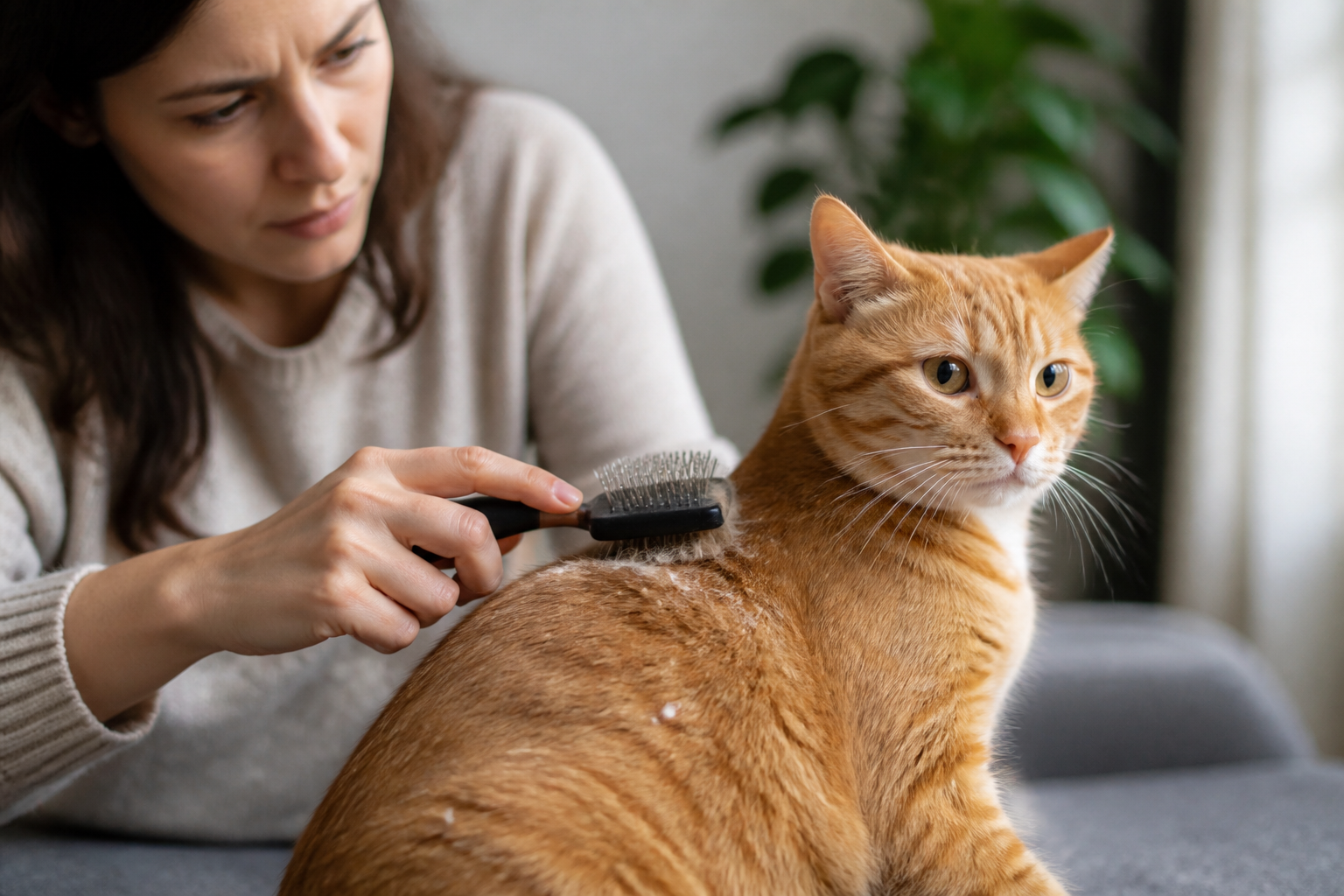
You are petting your cat and notice small white flakes scattered across their dark fur. It looks like a dusting of snow on their back or near the base of their tail. This is a common moment for many cat owners. While a few flakes might seem like a minor grooming slip, they often signal that your cat needs a little extra help with their skin health. At BaxterBoo, we see many pet parents looking for ways to restore their cat's glossy coat and soothe itchy skin. This guide covers the common causes of feline flakes and the best ways to provide relief at home. We will also look at when those flakes mean it is time to call the veterinarian. Understanding how to treat cat dry skin and dandruff starts with identifying whether the issue is environmental, nutritional, or medical.
Quick Answer: Treating cat dandruff involves increasing hydration through wet food, using a humidifier in dry months, and regular brushing to distribute natural oils. If flakes are accompanied by intense itching or hair loss, a veterinary visit is necessary to rule out parasites or skin infections.
What Is Cat Dandruff?
Dandruff occurs when the outer layer of your cat's skin sheds dead cells too quickly. These cells clump together and become visible to the naked eye. It is important to distinguish between dander and dandruff. Every cat has dander. Dander consists of microscopic skin cells that shed naturally as part of the skin’s renewal process. You usually cannot see it, but it is often what triggers allergies in humans.
Dandruff is different because the flakes are large enough to see. It often appears as white specks that may be oily or dry. You might notice them more during certain times of the year or as your cat ages. While dandruff is a symptom rather than a disease itself, it tells a story about your cat's internal health or their environment.
Dandruff Versus Flea Dirt
Before you start a treatment plan, look closely at the flakes. If the specks are white, it is likely dandruff. If the specks are black and look like ground pepper, you might be looking at flea dirt. Flea dirt is actually flea waste. You can test this by placing some of the black specks on a wet white paper towel. If they turn red, it is flea dirt. In that case, you need to focus on parasite treatment rather than just dry skin. You can review our cat flea and tick collection for species-appropriate options.
Common Causes of Flaky Skin in Cats
Identifying the "why" behind the flakes is the first step in finding a solution. Several factors can disrupt the balance of your cat's skin.
Low Humidity and Environment
During the winter, indoor heating systems strip moisture from the air. This dry air pulls moisture from your cat's skin. This is a very common cause of seasonal dandruff in US homes. If you notice the flakes only appear when the heater is running, the environment is likely the culprit.
Nutritional Deficiencies
A cat's skin and coat require specific nutrients to stay supple. Omega-3 and Omega-6 fatty acids are essential for maintaining the skin's moisture barrier. If a cat's diet is low in these fats, the skin can become brittle and prone to flaking. Poor quality proteins can also lead to a dull, dry coat. Browse our cat healthcare products for supplements and skin-support items.
Dehydration
Cats are notorious for having a low thirst drive. In the wild, they get most of their moisture from their prey. If your cat eats only dry kibble and does not drink much water, they can live in a state of mild, chronic dehydration. This shows up quickly in the quality of their skin. Adding moisture-rich meals from our cat food selection may help support better hydration.
Grooming Challenges
A healthy cat spends a large portion of their day grooming. This process removes dead skin and spreads natural oils across the fur. If a cat stops grooming effectively, dandruff builds up. This often happens for two reasons:
- Obesity: If a cat is overweight, they cannot reach their middle or lower back. Flakes will often accumulate in these "blind spots."
- Arthritis: Older cats with joint pain find it difficult to twist and turn to clean themselves.
Parasites and Infections
Certain mites cause a condition known as "walking dandruff." These mites are white and move across the skin, making it look like the dandruff is alive. Ringworm, a fungal infection, can also cause localized dry, scaly patches and hair loss.
Key Takeaway: Feline dandruff is usually a sign of an underlying issue like poor hydration, a lack of fatty acids, or a physical inability to groom properly.
How to Treat Cat Dry Skin and Dandruff Through Nutrition
The most effective way to treat dry skin is often from the inside out. What your cat eats directly affects the oil production in their skin.
Transitioning to Wet Food
If your cat currently eats only dry food, consider adding wet food to their daily routine. Wet food contains significantly more moisture than kibble. This helps hydrate the skin cells from the deeper layers. You do not have to switch entirely. Even replacing one meal a day with a high quality canned food can make a difference.
Adding Omega Fatty Acids
Supplements are a powerful tool for skin health. Look for fish oil or green-lipped mussel supplements. These are rich in EPA and DHA. These fatty acids reduce inflammation in the skin and help lock in moisture.
Improving Water Intake
Since cats like moving water, a pet fountain can encourage more drinking. The sound of running water often triggers a cat's curiosity and thirst. You can also try adding a tablespoon of water or unsalted tuna juice to their food to increase their daily fluid intake.
Vet Tip: If your cat has chronic skin issues that do not improve with diet changes, ask your veterinarian about a prescription skin support diet. Our pharmacy carries specialized prescription foods through our partnership with Pet's Choice that are formulated specifically for feline dermatological health.
Grooming Strategies for Flake-Free Fur
While diet handles the internal side, grooming manages the surface. Regular brushing is one of the easiest ways to reduce visible dandruff. For additional ideas about maintaining a clean, comfortable home for your cat, read our guide to cleaning a litter box.
The Power of Brushing
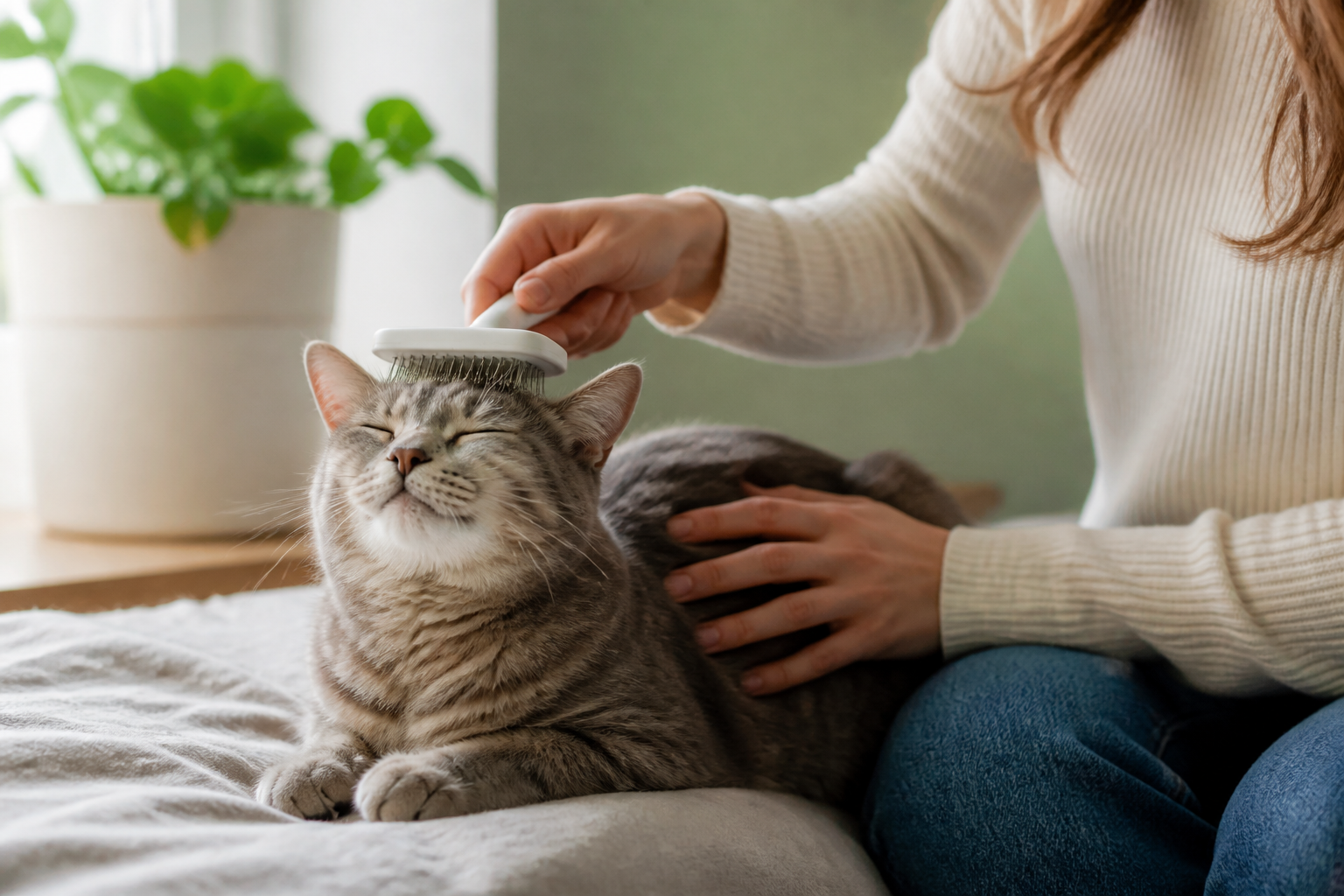
Brushing does more than just remove loose fur. It stimulates the skin and encourages the production of natural sebum. These oils are the best moisturizer for a cat's skin. Use a soft bristle brush or a grooming glove for cats with sensitive skin.
Choosing the Right Tools
Not all brushes are equal. For dandruff, you want a tool that reaches the skin without scratching it.
- Slicker brushes: Good for removing the dead undercoat where flakes hide.
- Grooming gloves: Excellent for cats who are wary of traditional brushes.
- Fine-tooth combs: Helpful for "walking dandruff" or checking for fleas.
We carry a wide variety of grooming tools at our warehouse to suit different coat types. Regular sessions, even just five minutes a day, can significantly reduce the amount of dandruff you see on your furniture and your cat. Explore our cat grooming supplies to find brushes, combs, and feline-safe bathing products.
Should You Bathe a Cat with Dandruff?
In most cases, the answer is no. Frequent bathing can actually make dry skin worse by stripping away those essential oils. However, if your cat has a specific skin infection or is too oily, a medicated bath might be necessary. Always use a shampoo specifically formulated for cats. Human shampoos have a different pH level and can cause severe irritation.
Environmental and Lifestyle Adjustments
Sometimes the solution is as simple as changing the air in your home or your cleaning habits.
Use a Humidifier
If your skin feels dry in the winter, your cat’s skin definitely does too. Placing a humidifier in the room where your cat sleeps most often can prevent the air from stealing moisture from their coat. Aim for a humidity level between 40 and 50 percent.
Stress Management
Stress can manifest as skin issues in cats. If a cat is anxious, they may over-groom or stop grooming altogether. Both lead to skin problems. Ensure your cat has plenty of vertical space, hiding spots, and mental stimulation through toys.
Switch Cleaning Products
Cats spend a lot of time on the floor and then lick their paws. Harsh floor cleaners or strong laundry detergents on their favorite blankets can cause contact dermatitis. This leads to redness and flaking. Try switching to pet-safe, unscented cleaning products to see if your cat's skin improves.
Bottom line: A combination of increased humidity, stress reduction, and gentle grooming can resolve most cases of environmental dandruff.
When to Visit the Veterinarian
While many cases of dandruff are managed at home, some require professional intervention. It is important to know when flakes are a symptom of a larger medical problem.
Signs of Medical Issues
Schedule a vet visit if you notice any of the following:
- Intense itching or biting at the skin.
- Bald patches or thinning fur.
- Red, inflamed, or bleeding skin.
- A foul odor coming from the coat.
- A sudden change in thirst or urination.
- Lethargy or weight loss.
Potential Underlying Conditions
Dandruff can be a "canary in the coal mine" for systemic diseases. Diabetes and hyperthyroidism often cause changes in skin elasticity and coat quality. Kidney disease can lead to dehydration that shows up as dry, flaky skin. A veterinarian can run blood tests to rule out these conditions.
The Role of the Pharmacy
If your vet diagnoses a skin infection, parasites, or a chronic condition, they may prescribe medication. This is where our cat pharmacy becomes a vital resource. Through our partnership with Pet's Choice, we offer FDA-approved medications and prescription diets. This includes flea and tick preventives that require a prescription, which are often more effective than over-the-counter options for stubborn infestations like mites or "walking dandruff."
Step-by-Step: Managing a Flaky Flare-Up
If you notice a sudden increase in dandruff, follow these steps.
Step 1: Inspect the skin. / Part the fur and look for redness, sores, or moving mites. This helps you decide if this is a home-care situation or a vet-care situation.
Step 2: Increase hydration. / Add wet food to the diet and ensure water bowls are fresh. Consider a fountain if your cat is a picky drinker.
Step 3: Start a daily brushing routine. / Use a soft brush to move oils from the base of the hair to the tips. This manually removes the flakes and prevents matting.
Step 4: Supplement the diet. / Add a high-quality fish oil supplement to their food. This usually takes 3 to 4 weeks to show visible results in the coat.
Step 5: Monitor the environment. / Turn on a humidifier and check for potential irritants in your cleaning routine.
Conclusion
Treating cat dry skin and dandruff is a process that requires patience and a multi-pronged approach. By focusing on high-quality nutrition, proper hydration, and a consistent grooming routine, most owners can restore their cat's coat to its natural shine. Remember that your cat's skin is a reflection of their overall well-being. Keeping them at a healthy weight and ensuring they can groom comfortably are just as important as the food they eat.
At BaxterBoo, we are committed to helping you provide the best care for your feline friends. Whether you need a new grooming tool, a skin-supporting supplement, or a prescription diet from our pharmacy, we have the expertise to guide you. If your cat's skin issues persist or seem painful, please consult your veterinarian for a professional diagnosis.
- Check for parasites like fleas or mites.
- Increase moisture through wet food and water fountains.
- Use a daily grooming routine to spread natural oils.
- Add Omega-3 fatty acids to support the skin barrier.
- Consult a vet if you see hair loss or inflammation.
Key Takeaway: Most feline dandruff is manageable at home with improved hydration and grooming, but persistent or painful skin changes always require a veterinary evaluation.
FAQ
Can I use human dandruff shampoo on my cat?
No, you should never use human dandruff shampoo on a cat. Human products are formulated for a different skin pH and often contain ingredients like zinc or salicylic acid that can be toxic if your cat licks them. Always use a shampoo specifically labeled for feline use or one recommended by your veterinarian.
Does my cat have dandruff because they are dirty?
Not necessarily. Cats are generally very clean animals. Dandruff usually indicates that the skin is too dry, the cat is dehydrated, or they are physically unable to reach certain spots to groom. It is rarely about the cat being "dirty" in the traditional sense, but rather a sign that their skin's natural renewal process is out of balance.
How long does it take for a cat's dry skin to improve?
Skin cells take time to regenerate, so you should not expect an overnight fix. If you change your cat's diet or add a supplement, it typically takes 3 to 6 weeks to see a significant difference in the coat. Consistency with brushing and hydration is key to seeing long-term results.
Is "walking dandruff" contagious to humans?
Yes, the mites that cause walking dandruff (Cheyletiella) can occasionally jump to humans and cause a temporary, itchy rash. They can also spread easily to other pets in the household. If you suspect your cat has mites, it is important to treat all animals in the home and consult a vet for the appropriate parasiticidal medication.