Save 15% on your 1st Autoship learn more

 Email us
 Live Chat
 FAQs
FAQs





Introduction
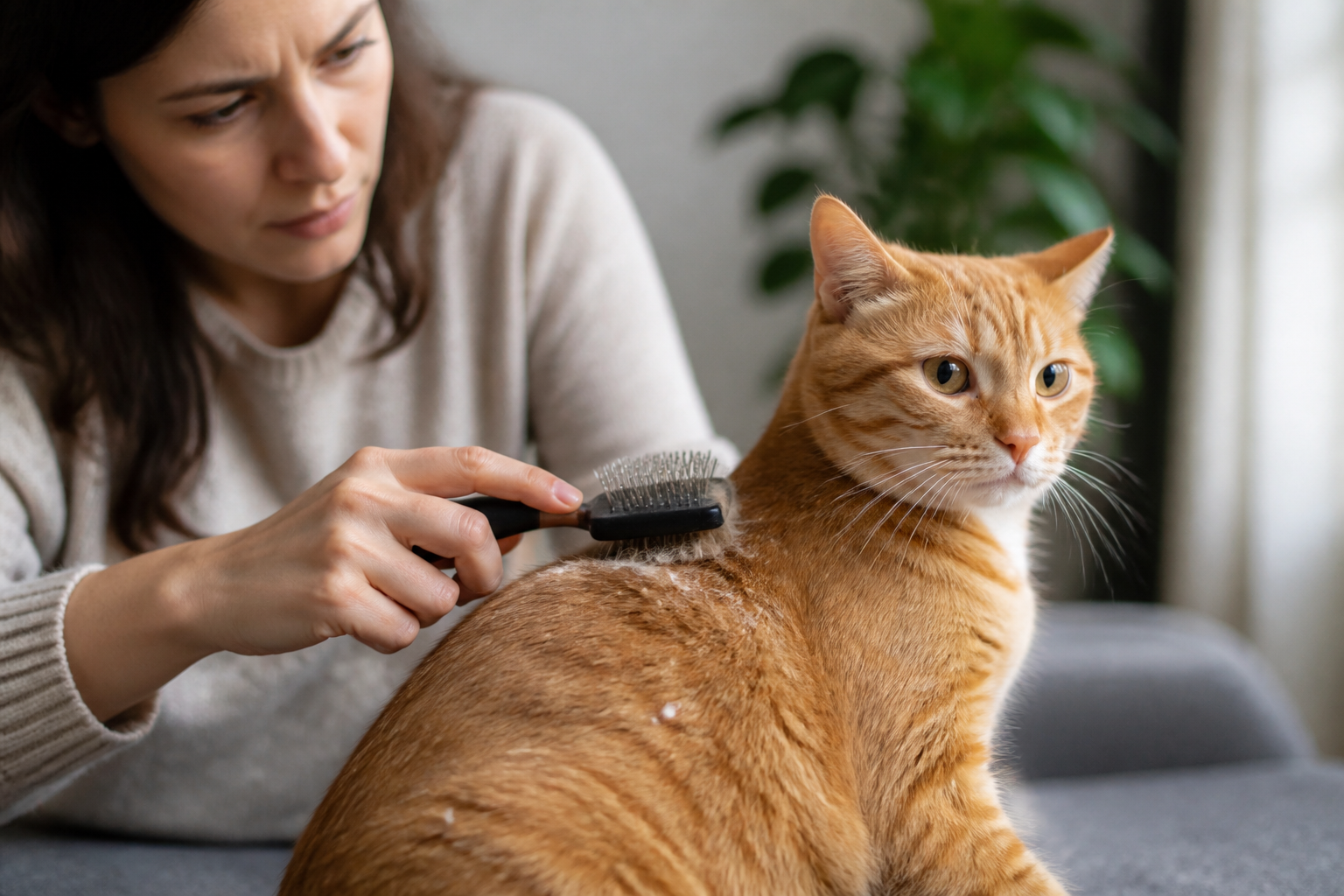
You are sitting with your cat and enjoying a quiet grooming session. You pull the brush through their soft fur, but instead of just loose hair, you see a flurry of white flakes. It is frustrating to see your cat look dusty or dirty right after you finish cleaning them. At BaxterBoo, we know these flakes often signal more than just a messy coat. This post covers why those flakes appear, what causes them, and how you can help your cat achieve a glossy finish. Seeing dandruff after brushing usually means the skin needs more support or there is an underlying issue that needs your attention.
Quick Answer: Brushing brings existing dead skin cells from the surface of the skin to the top of the fur. While some shedding is normal, excessive flakes often point to dry air, poor nutrition, or health issues like obesity and parasites.
Understanding Cat Dandruff versus Dander
Many pet owners use the terms dandruff and dander interchangeably, but they are different things. Dander consists of microscopic skin cells that every healthy cat sheds naturally. You cannot see dander with the naked eye. It is the protein on these tiny cells that typically triggers human allergies.
Dandruff is different because the flakes are large enough to see. These are clumps of dead skin cells that have dried out and detached. While every cat produces dander, not every cat should have visible dandruff. If you see white or gray flecks on your cat’s back or tail, you are looking at dandruff.
Why Brushing Makes Dandruff More Visible
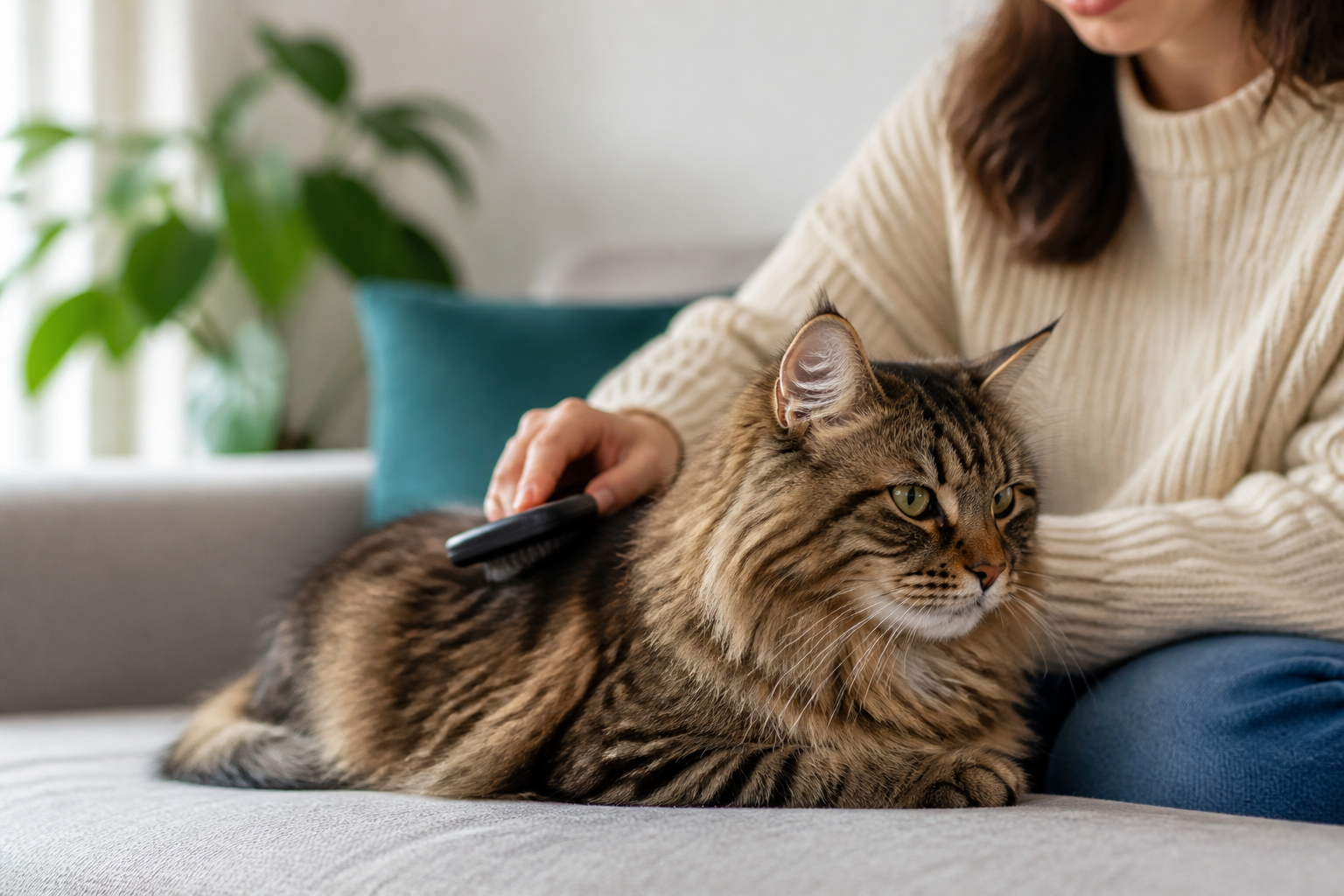
It might seem like the brush is causing the dandruff, but the tool is simply uncovering it. Cats have dense coats that trap shed skin cells near the surface of the skin. When you use a brush or comb, you pull those trapped cells through the hair and deposit them on top of the fur.
Brushing is actually a vital part of the solution. It helps distribute natural skin oils that keep the coat hydrated. If you stop brushing because you see flakes, those oils will stay near the skin and the undercoat will continue to trap dead cells. This leads to matting and further irritation. For additional grooming ideas, see our guide to tips for keeping your cat comfortable during grooming.
Key Takeaway: Brushing does not create dandruff. It pulls trapped dead skin cells to the surface where they become visible to the eye.
Common Reasons for Flaky Skin
Feline skin health often acts as a mirror for a cat's internal wellness. If your cat has a sudden increase in flakes, it is worth looking at their daily habits and environment.
Difficulty with Self-Grooming
Healthy cats are meticulous groomers. They spend hours using their rough tongues to remove loose hair and skin cells. If a cat stops grooming, dandruff builds up quickly. This often happens for two specific reasons:
- Obesity: If a cat is overweight, they simply cannot reach their lower back or the base of their tail. You will see a concentrated area of dandruff and greasy fur in these spots.
- Arthritis: Senior cats often suffer from joint pain. Bending or twisting to clean their hindquarters becomes painful, so they skip those areas entirely.
Environmental Factors and Dry Air
Just like humans, cats experience dry skin when the humidity drops. This is most common during the winter months when home heating systems strip moisture from the air. This environmental dryness makes the skin brittle and prone to flaking.
Nutritional Deficiencies
A dull, flaky coat is often the first sign that a cat is not getting enough essential fatty acids. Omega-3 and Omega-6 fatty acids are crucial for maintaining the skin's moisture barrier. If their food is low quality or not balanced for their life stage, their skin will suffer. You can explore our cat skin and coat health collection for food supplements and supportive care products.
Vet Tip: If your cat has dandruff along with weight loss, increased thirst, or lethargy, schedule a veterinary exam. Conditions like hyperthyroidism, diabetes, and kidney disease can all cause changes in skin and coat quality.
Health Conditions That Mimic Simple Dandruff
Sometimes what looks like simple dry skin is actually a more complex medical issue. It is important to distinguish between dry flakes and other parasitic or fungal concerns.
Walking Dandruff (Cheyletiellosis)
This is caused by a specific type of mite. If you look closely at the white flakes and notice they seem to be moving, your cat may have an infestation. These mites are highly contagious and require medical treatment.
Fleas and Allergies
Flea bites cause intense itching and inflammation. A cat that scratches constantly will damage their skin, leading to more flaking. Some cats also have environmental or food allergies that manifest as red, itchy, and scaly skin. Read more about flea and tick prevention options before discussing treatment with your veterinarian.
Fungal Infections
Ringworm is a common fungal infection in cats. It often causes circular patches of hair loss and crusty, flaky skin. Because ringworm can spread to humans and other pets, it requires prompt diagnosis from a veterinarian.
Managing Cat Dandruff at Home
If your vet has ruled out serious medical conditions, you can take several steps to improve your cat's skin health. Consistency is the most important part of any grooming routine. Our cat grooming collection includes brushes, combs, shampoos, and other tools for regular coat care.
Step-By-Step: Improving the Grooming Routine
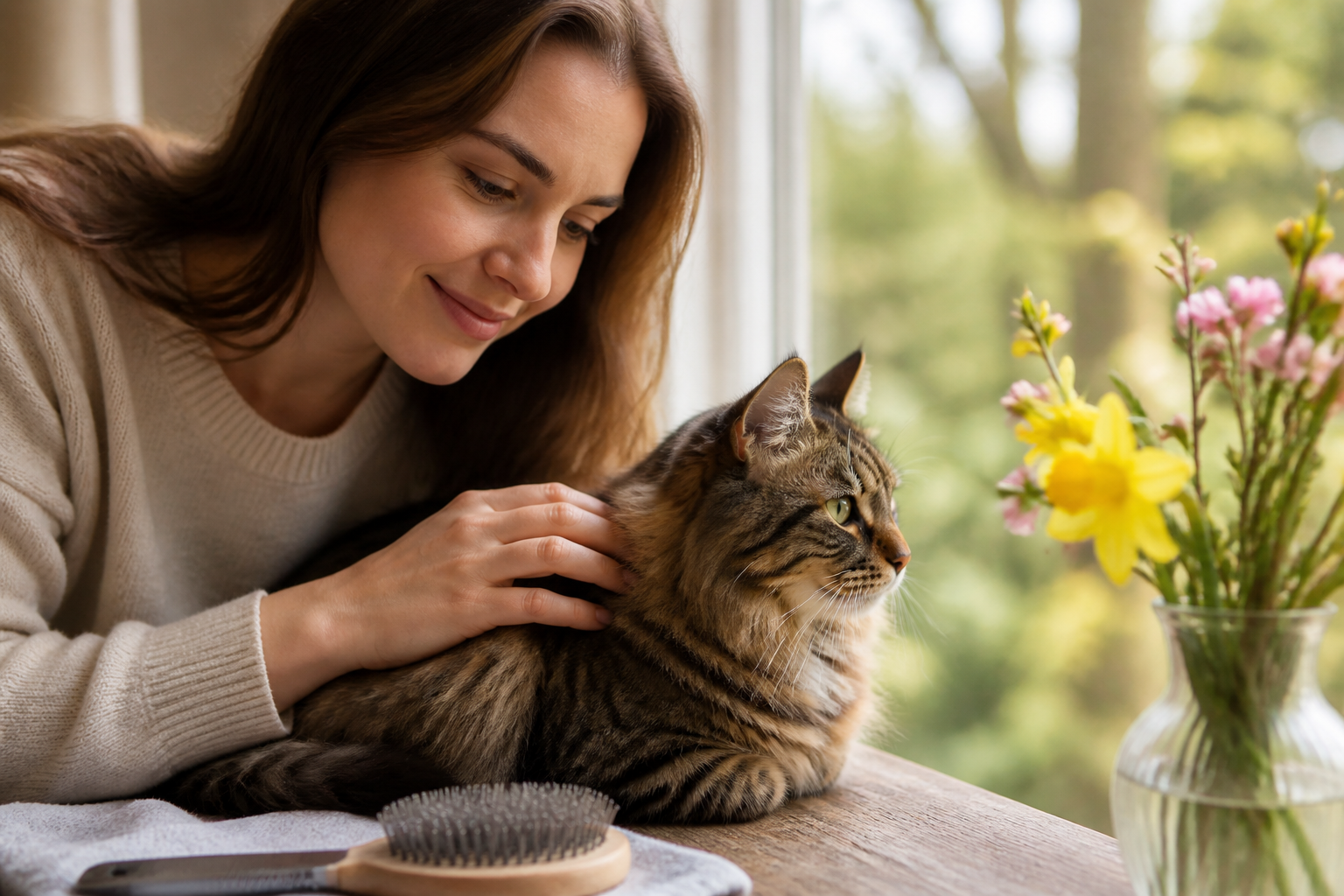
Step 1: Choose the right tool. Use a soft slicker brush or a stainless steel comb that reaches the undercoat without scratching the skin. We stock various combs at BaxterBoo that are designed specifically for sensitive feline skin.
Step 2: Brush daily. Frequent, short sessions are better than one long session. This prevents the buildup of dead skin and keeps oils moving.
Step 3: Use a humidifier. Adding moisture back into your home during winter can stop the skin from drying out in the first place.
Step 4: Check their weight. If your cat cannot reach their back, they may need a specialized diet to reach a healthier weight.
The Role of Nutrition and Supplements
Adding a high-quality fish oil supplement can make a significant difference in skin elasticity. These supplements provide the fats needed to "glue" skin cells together, preventing them from flaking off prematurely. Always consult your vet before adding new supplements to ensure they do not interfere with existing health needs. For repeat-care items, our Autoship programme can help you schedule regular deliveries.
Bottom line: Improving skin health requires a combination of external grooming, environmental moisture, and internal nutritional support.
When to Seek Professional Help
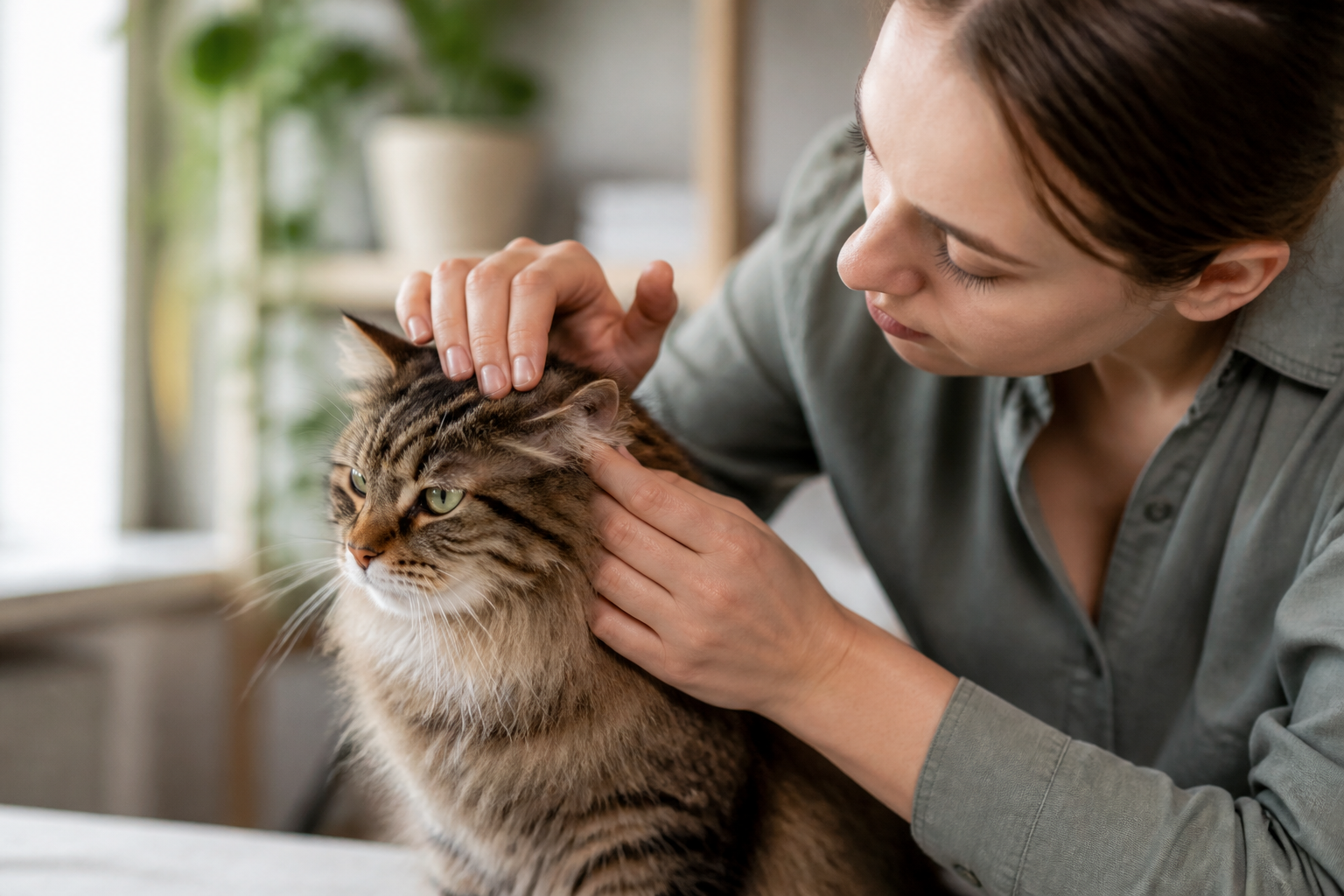
While a few flakes are usually a cosmetic issue, some symptoms require a trip to the clinic. You should contact your veterinarian if you notice:
- Patches of total hair loss
- Red, inflamed, or bleeding skin
- Oozing sores or scabs
- Intense, non-stop scratching
- Visible parasites like fleas or mites
Our pet pharmacy carries FDA-approved medications for many of these conditions. Through our partnership with Pet's Choice, we offer prescription flea and tick preventives and medicated shampoos that can address the root cause of skin irritation. Having a confirmed diagnosis from your vet allows you to use the right medication rather than guessing with over-the-counter fixes.
Conclusion
Seeing cat dandruff after brushing is a common experience for many pet owners. It is usually a sign that your cat needs a little extra help with their grooming routine or a boost in their nutrition. By maintaining a regular brushing schedule and ensuring they have a high-quality diet, you can keep their coat looking its best. If the flakes persist or your cat seems uncomfortable, your veterinarian can help identify any underlying health issues. You can trust BaxterBoo for the tools and supplements needed to support a healthy coat. Consider signing up for the MVP Rewards programme to earn points on the grooming supplies and skin-supportive foods your cat needs to stay flake-free.
FAQ
Is it normal for my cat to have dandruff?
A small amount of dandruff can be normal, especially for cats that do not groom themselves perfectly. However, if the flakes are heavy, persistent, or accompanied by itching and redness, it usually indicates a problem with their health or environment.
Can I use human dandruff shampoo on my cat?
No, you should never use human dandruff shampoos on a cat. These products often contain ingredients like zinc or salicylic acid that are toxic if ingested when the cat grooms themselves. Always use a shampoo specifically formulated for felines or follow your vet's prescription.
Does brushing my cat more often help with dandruff?
Yes, regular brushing helps by removing the dead skin cells before they accumulate into large flakes. It also stimulates the skin to produce natural oils and distributes those oils across the fur to keep it hydrated and shiny.
Why does my cat only have dandruff on their lower back?
The lower back and base of the tail are the hardest areas for a cat to reach. If a cat is overweight or has arthritis, they will often stop cleaning these spots entirely, leading to a localized buildup of dandruff and loose hair.