
 Save 15% on your 1st Autoship learn more

 Email us
 Live Chat
 FAQs





Introduction
You are relaxing on the sofa with your cat when you reach down for a long, slow stroke. Instead of just feeling soft fur, you notice a dusting of white flakes along their lower back. It looks exactly like human dandruff. This is a common sight for many cat owners, and while those little flakes might seem like a simple cosmetic issue, they often tell a story about your cat's skin health. At BaxterBoo, we know how much these small changes can worry a dedicated pet parent. This post covers why these flakes appear and how you can help your cat return to a glossy, flake-free coat. While many cases are easy to handle at home, some indicate deeper health needs. Understanding the cause is the first step toward effective treatment.
Defining Cat Dandruff
It is helpful to start by knowing exactly what you are looking at. Many people use the terms dander and dandruff as if they mean the same thing. They are actually quite different. Dander consists of microscopic skin cells that every healthy cat sheds. You cannot see dander with the naked eye, but it is the primary cause of allergies in humans.
Dandruff is much larger. These are visible flakes of dead skin that have clumped together. If you see white or gray specks on your cat’s fur or bedding, that is dandruff. It is a sign that the skin is either too dry or too oily. In a healthy cat, the natural grooming process removes these cells before they become visible. When they start to pile up, it means something in the system is out of balance.
Quick Answer: Treating cat dandruff usually involves a combination of regular brushing, increasing environmental humidity, and improving hydration through wet food or omega-3 supplements. If flakes are accompanied by itching, hair loss, or lethargy, a visit to the veterinarian is necessary to rule out underlying health conditions or parasites.
Dandruff vs. Flea Dirt
Before you start a treatment routine, look closely at the flakes. If the specks are white or light gray, it is likely dandruff. If the specks are black and look like ground pepper, you might be dealing with flea dirt. Flea dirt is actually flea waste. You can test this by placing a few dark specks on a wet white paper towel. If they turn red, it is flea dirt. Our pharmacy for cats carries flea and tick treatments for these infestations.
Cat Skin & Coat Care












Common Causes of Flaky Skin
There is rarely just one reason for a flaky cat. Often, it is a combination of the environment and the cat’s physical ability to care for themselves.
Grooming Challenges
Cats are famous for being meticulous about cleanliness. They spend hours every day licking their fur to remove dirt and dead skin. If a cat stops grooming, dandruff will appear almost immediately. Obesity is one of the most common reasons for this. If a cat is too heavy, they cannot reach their middle back or the base of their tail. This is why you often see the most flakes in those specific spots.
Arthritis is another major factor. Senior cats may find it painful to twist and turn to reach certain areas. If your cat seems stiff or spends less time cleaning themselves, the resulting dandruff is a symptom of their discomfort. In these cases, helping them groom is a vital part of their care.
Environmental Factors
Just like humans, cats suffer when the air is dry. During the winter, indoor heating systems strip the moisture out of the air. This dries out the top layer of your cat's skin, leading to itching and flaking. If you notice the dandruff only appears when the temperature drops, the environment is likely the culprit.
Dietary Deficiencies and Dehydration
Skin needs moisture from the inside out to stay elastic and healthy. Cats have a low thirst drive. In the wild, they get most of their water from their prey. Many domestic cats live on a strictly dry kibble diet. This can lead to chronic, mild dehydration. Without enough water, the skin becomes brittle and sheds more easily.
Poor quality food can also lack the essential fats needed for a healthy coat. Omega-3 and Omega-6 fatty acids are crucial for maintaining the skin barrier. If the diet is low in these fats, the skin cannot hold onto moisture. We recommend looking at high-quality brands like Tiki Cat or Fussie Cat that focus on high moisture content.
Parasites and Infections
Sometimes the cause of dandruff is an unwanted guest. External parasites can cause significant skin irritation.
Walking Dandruff
There is a specific type of mite called Cheyletiella. These mites are large enough to be seen with the naked eye. Because they move around under the skin scales, it looks like the dandruff is actually moving. This is why it is often called walking dandruff. It is highly contagious between pets and can even cause itchy spots on humans.
Fungal and Bacterial Infections
Ringworm is a common fungal infection that causes circular patches of hair loss and heavy flaking. Bacterial infections can also cause the skin to become crusty or oily. Both of these require a professional diagnosis and specific medication.
Vet Tip: If your cat is scratching excessively or has red, inflamed skin along with dandruff, please consult your veterinarian. These symptoms often point to infections or parasites that require prescription-strength treatment. Our cat pharmacy provides prescription medications once your vet provides a prescription.
How to Treat Dandruff at Home
Once you have ruled out serious medical issues with your vet, you can start a home care routine. Most cats respond well to a few simple changes in their daily life.
Establish a Brushing Routine
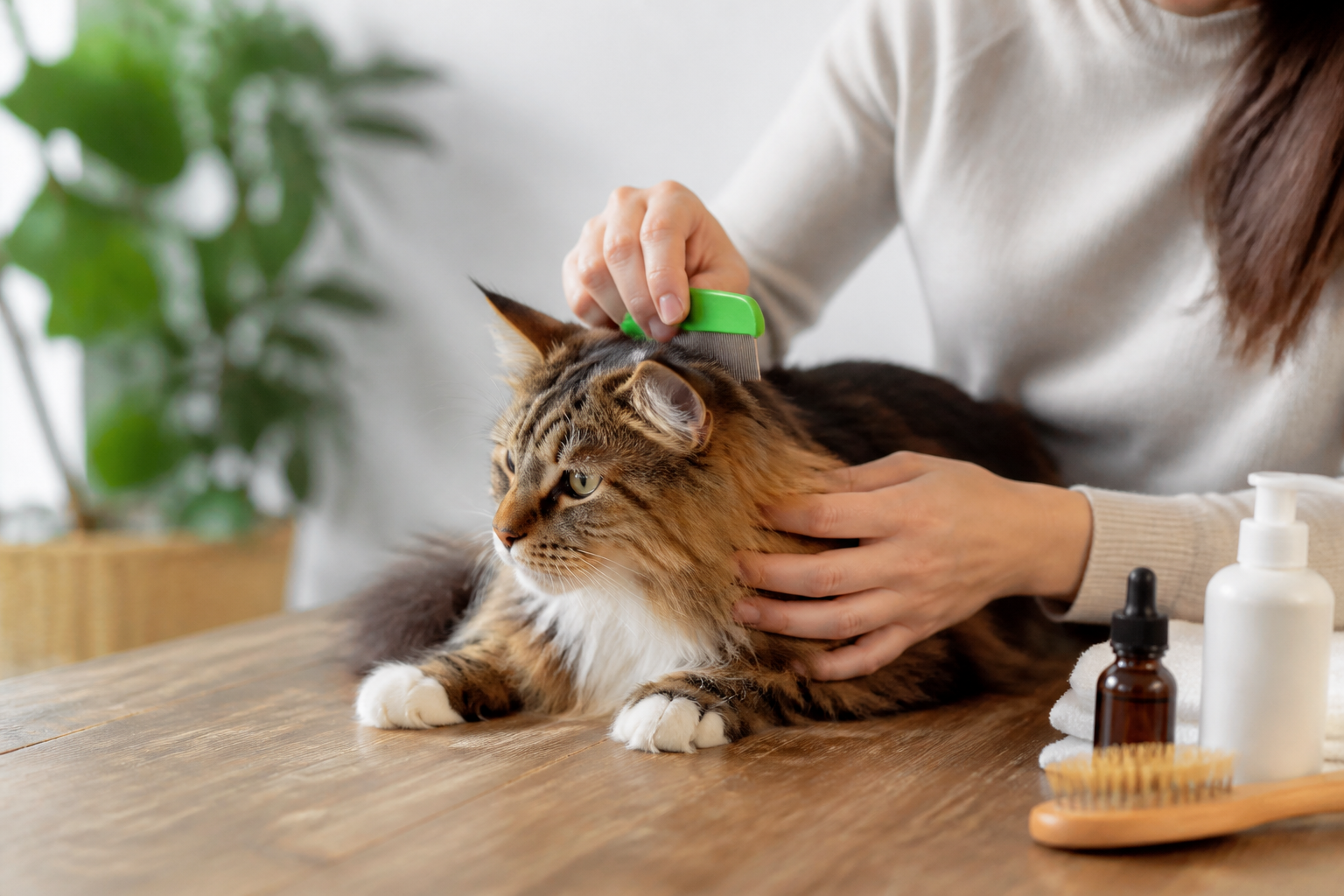
If your cat cannot groom themselves, you must step in. Brushing does more than just move the flakes away. It stimulates the skin and encourages the production of natural oils. These oils are the best defense against dryness.
Step 1: Choose the right tool. / For short-haired cats, a soft rubber curry brush or a fine-toothed comb works well. Long-haired cats may need a slicker brush to get through the undercoat.
Step 2: Brush in the direction of hair growth. / Use gentle, long strokes. Focus on the areas your cat cannot reach, such as the lower back and the base of the tail.
Step 3: Make it a positive experience. / Keep sessions short. Offer a treat like Greenies or a small amount of wet food afterward so your cat associates brushing with a reward. You can find suitable tools in our cat grooming collection.
Manage the Home Environment
If dry air is the problem, the solution is to add moisture back into your home. Using a humidifier in the rooms where your cat spends the most time can make a massive difference. You should aim for a humidity level between 30 and 50 percent. This helps keep your cat's skin and nasal passages from drying out.
Improve Hydration
Encouraging a cat to drink more water can be a challenge. Many cats prefer moving water over a stagnant bowl. A pet fountain can entice a finicky drinker to consume more throughout the day.
Another effective strategy is to incorporate more wet food into their diet. Even replacing one dry meal a day with a high-moisture canned food can improve skin health. You can also add a small amount of warm water or tuna juice to their regular meals to increase their fluid intake. Our wet cat food selection includes a variety of moisture-rich options.
Key Takeaway: Consistent grooming and better hydration are the most effective ways to manage mild cat dandruff. These simple steps support the skin's natural barrier and prevent the buildup of dead cells.
Nutritional Support and Supplements
What your cat eats directly impacts the quality of their fur. If a basic diet change is not enough, supplements can provide a boost.
Omega Fatty Acids
Fish oil is one of the most popular supplements for skin health. It is rich in EPA and DHA, which are types of omega-3 fatty acids. These nutrients reduce inflammation in the skin and help it retain moisture. You can find these in liquid forms that pump directly onto food or in soft chew treats. Brands like Zesty Paws or Honest Paws offer options specifically formulated for feline needs. Our skin and coat care collection includes supplements and other supportive products.
Prescription Diets
For cats with severe skin sensitivities or food allergies, a standard over-the-counter food might not be enough. Your vet might recommend a limited ingredient diet or a prescription skin support formula. Brands like Farmina Vet Life and Royal Canin offer specialized nutrition for these cases. We carry many of these prescription diets through our pharmacy partnership.
Bottom line: High-quality fats and increased moisture in the diet are essential for long-term skin health and dandruff prevention.
When to See Your Vet
While a few white flakes are usually not an emergency, you should monitor your cat for other changes. Dandruff is often the first visible sign of an internal problem.
Warning Signs
If you notice any of the following, schedule a veterinary appointment:
- Patchy hair loss or thinning fur
- Red, raw, or bleeding skin
- An unpleasant odor coming from the skin
- Increased thirst or frequent urination
- Visible weight loss or a sudden change in appetite
- Lethargy or hiding more than usual
These symptoms could point to conditions like hyperthyroidism or diabetes. Both of these metabolic diseases can affect the skin and coat. A vet can perform simple blood tests to see if an underlying condition is causing the flakes.
The Role of Stress
Cats are creatures of habit. Significant changes in the home can lead to stress, which often manifests physically. A stressed cat might over-groom one area until it is bald or stop grooming entirely. If you have recently moved or added a new pet to the family, the dandruff might be a reaction to the environmental stress. Using calming aids or pheromone diffusers can help settle their nerves and improve their skin health over time.
Specialized Treatments
If your vet confirms that the dandruff is caused by a specific issue like mites or a fungal infection, they will prescribe a targeted treatment. This might include medicated shampoos, topical drops, or oral medications.
It is important to follow the dosing instructions exactly. Some medicated shampoos need to sit on the skin for ten minutes before rinsing to be effective. While bathing a cat can be difficult, it is sometimes the fastest way to clear up a serious skin issue. Use a gentle, cat-specific shampoo to avoid further irritation.
Our pharmacy at BaxterBoo is designed to make this process easier. Through our partnership with Pet's Choice, we can fulfill prescriptions for FDA-approved medications and specialized diets. This allows you to get your cat's health supplies in the same place you buy their favorite toys and treats.
Summary of Next Steps
Dealing with cat dandruff requires a patient, multi-step approach. You cannot fix the skin overnight, but you can see improvement within a few weeks of consistent care.
- Check for parasites first to ensure you are not dealing with fleas or mites.
- Increase daily brushing to help your cat manage their coat.
- Add moisture to the air with a humidifier.
- Transition to a diet with higher water content and healthy fats.
- Consult your vet if you see any signs of illness or skin infection.
Managing your cat's skin health is a great way to bond with them. Regular grooming sessions allow you to check for lumps, bumps, or other changes early. By keeping their skin healthy, you are ensuring they stay comfortable and happy for years to come.
Bottom line: Most cat dandruff is treatable through better grooming and hydration, but persistent flakes should always be discussed with a vet.
Conclusion
Cat dandruff is a common issue that most owners will face at some point. Whether it is caused by the dry winter air or a cat that is simply getting a bit too old to reach their back, it is a manageable condition. By focusing on nutrition, hydration, and regular grooming, you can help your cat feel their best. We are here to support you with everything from grooming tools to the specialized medications found in our pharmacy. If you want to make sure you never run out of your cat's favorite skin-supporting food or supplements, consider using our Autoship programme. It saves you time and ensures your pet always has what they need for a healthy, shiny coat.
FAQ
Can I use human dandruff shampoo on my cat?
No, you should never use human dandruff shampoo on a cat. The pH balance of a cat's skin is very different from a human's, and the active ingredients in human shampoos can be toxic or highly irritating to felines. Always use a shampoo specifically formulated for cats, or consult your vet for a medicated recommendation.
Is cat dandruff contagious to humans or other pets?
Standard dandruff caused by dry skin or poor grooming is not contagious. However, if the dandruff is caused by parasites like Cheyletiella mites (walking dandruff) or a fungal infection like ringworm, it can easily spread to other animals and humans. If you suspect an infection or parasites, keep the affected cat separated from other pets until you see a vet.
How long does it take for cat dandruff to go away?
If you are treating dandruff through diet changes or brushing, it usually takes about three to four weeks to see a significant difference. This is because it takes time for new, healthy skin cells to grow and for the coat to reflect the internal changes. Consistency is the most important factor in seeing results.
Does wet food really help with a cat's flaky skin?
Yes, wet food is often very helpful for cats with dry skin because it significantly increases their daily water intake. Proper hydration is essential for maintaining the skin's elasticity and moisture barrier. Many cats on a dry-only diet live in a state of mild dehydration, which is a leading cause of flaking and itching.






- Site & Contents BaxterBoo.com. BaxterBoo is located in the United States.
- Privacy & Security
- Terms of Use
- Accessibility Statement
