
 Save 15% on your 1st Autoship learn more

 Email us
 Live Chat
 FAQs





Introduction
You are relaxing on the sofa with your cat when you notice small white flecks scattered across their dark fur. At first, you might think it is just a bit of dust. When you look closer, you realize these are flakes of skin. Many owners find themselves in this exact moment, wondering if they should be worried about their pet's skin health. At BaxterBoo, we know that a glossy coat is often the first sign of a healthy cat. While a tiny bit of shedding is part of a natural cycle, a coat full of flakes usually tells a different story. This post covers the common causes of feline dandruff, how it differs from normal dander, and when you should call your veterinarian. Our goal is to help you understand what those white flakes are telling you about your cat's well-being.
Understanding the Basics of Feline Skin
A cat's skin is their largest organ. It serves as a vital barrier against the environment. To keep this barrier strong, the skin constantly renews itself. Older skin cells die and fall away to make room for new ones. In a healthy cat, this process is almost invisible because cats are such meticulous groomers. They typically lick away these cells before you ever see them.
When those skin cells become visible to the human eye, we call it dandruff. It often looks like white or gray scales. You might notice it most clearly along the lower back and at the base of the tail. These are areas where the skin tends to be a bit drier or where a cat might have more trouble reaching during their daily tongue bath.
Quick Answer: A small amount of skin flaking is normal as cats naturally shed dead cells. However, frequent or heavy dandruff usually indicates an underlying issue like poor grooming, allergies, or parasites that requires attention.
Cat Skin & Coat Care













Dandruff vs. Dander: What Is the Difference?
It is common to hear these two terms used as if they are the same thing. They are actually quite different in the world of pet care. Understanding the distinction helps you describe what you see to your vet more accurately.
What is Cat Dander?
Dander consists of microscopic skin cells that all cats shed. You cannot see individual pieces of dander with the naked eye. It is a normal and healthy byproduct of living skin. For humans with allergies, dander is often the culprit. It carries a specific protein from the cat's saliva that causes sneezing and watery eyes. Since it is invisible, the presence of dander does not mean your cat has a skin problem.
What is Cat Dandruff?
Dandruff is visible. It involves larger clumps of skin cells that have bonded together. If you can see white flecks on your cat’s coat or in their bedding, you are looking at dandruff. Unlike dander, dandruff is a symptom rather than a standard biological process. It suggests that the skin is either producing cells too quickly or that the cat is not able to remove them through grooming.
Why Does My Cat Have Dandruff?
There is rarely just one reason for a flaky coat. Finding the cause requires looking at your cat's environment, diet, and physical abilities. At BaxterBoo, we see many owners dealing with these issues during seasonal changes or as their pets age.
Low Humidity and Dry Air
This is one of the most common causes in the United States, especially during the winter. When you turn on the heater, the air in your home loses moisture. This saps the hydration right out of your cat's skin. The result is dry, itchy skin that flakes off easily. If you notice your own skin feeling tight and dry during the winter, your cat is likely experiencing the same thing.
Obesity and Grooming Challenges
Cats are famous for their flexibility. However, an overweight cat often loses the ability to reach certain parts of their body. If a cat cannot reach their lower back or the base of their tail, dead skin and natural oils will build up. This creates a cycle where the skin becomes irritated and flakes off in large amounts. Keeping your cat at a healthy weight is about more than just heart health: it is essential for their hygiene.
Arthritis and Senior Health
For older cats, the issue is often pain rather than weight. Arthritis makes it uncomfortable to twist and turn. If your senior cat has stopped grooming their back, you will see a sudden increase in dandruff. This is often a "hidden" sign of joint pain that owners might overlook.
Vet Tip: If you notice dandruff specifically on your cat's lower back or hindquarters, it may be a sign they are struggling with mobility. Consult your veterinarian to see if joint support or pain management could help restore their grooming habits.
Nutritional Factors and Skin Health
What your cat eats directly impacts the quality of their fur. The skin requires a high amount of protein and specific fats to remain supple and healthy. If a diet is lacking in these areas, the skin is usually the first place the deficiency shows up. You can explore our cat food category when evaluating options for your pet's routine.
The Role of Essential Fatty Acids
Omega-3 and Omega-6 fatty acids are crucial for skin health. They help maintain the moisture barrier of the skin. If your cat’s food is low in these healthy fats, their skin can become brittle. Many high-quality brands we carry, such as Stella & Chewy's or Open Farm, prioritize these nutrients. If you feed a low-fat diet to manage weight, ensure it still contains the necessary fatty acids for coat maintenance.
Hydration and Wet Food
Cats often have a low thirst drive. If they only eat dry kibble, they may live in a state of mild, chronic dehydration. This shows up as dry, flaky skin. Introducing wet food or a hydration supplement can significantly improve skin elasticity. Brands like Tiki Cat or Fussie Cat offer high-moisture options that help hydrate your pet from the inside out.
Food Allergies
Sometimes the dandruff is a reaction to an ingredient. Food allergies in cats often manifest as skin irritation. This leads to scratching, which creates more flakes. If the dandruff is accompanied by redness or small bumps, a food sensitivity might be the cause.
Parasites: When the "Dandruff" Moves
In some cases, those white flakes are not skin at all. There are several parasites that can mimic the appearance of dandruff. This is why a close inspection of your cat's coat is so important.
Walking Dandruff (Cheyletiella Mites)
There is a specific mite called Cheyletiella that looks remarkably like skin flakes. If you watch the "dandruff" closely and see it moving, your cat likely has these mites. This condition is highly contagious between pets. It requires specific medical treatment to clear up.
Fleas and Flea Dirt
Fleas cause intense itching. As your cat scratches, they damage the skin and create flakes. You might also see "flea dirt," which looks like tiny specks of black pepper. If you see both white flakes and black specks, a flea infestation is the likely culprit. Learn more about how flea collars work as you consider prevention options.
Our pharmacy offers a wide range of FDA-approved flea and tick preventatives to address these issues. Through our partnership with Pet's Choice, we provide access to the medications your vet prescribes to keep parasites away. Regular prevention is the easiest way to ensure your cat's skin remains calm and flake-free. You can browse our cat flea and tick collection for available options.
Environmental and Health Conditions
Beyond the basics, several internal health issues can cause changes in the skin. These often require a professional diagnosis from a vet.
- Diabetes: Changes in metabolism can lead to a greasy, flaky coat.
- Hyperthyroidism: An overactive thyroid often causes the coat to look unkempt and matted.
- Kidney Disease: Dehydration associated with kidney issues often results in dry skin.
- Skin Infections: Bacterial or fungal infections (like ringworm) cause localized patches of dandruff and hair loss.
Key Takeaway: While dandruff can be a simple matter of dry air, it is often a visible indicator of internal health. Always look for accompanying symptoms like changes in thirst, appetite, or energy levels.
How to Help Your Cat at Home
If your vet has ruled out serious medical conditions, there are several practical steps you can take to manage your cat's dandruff. Consistency is the most important part of any grooming routine.
Step 1: Establish a Brushing Routine
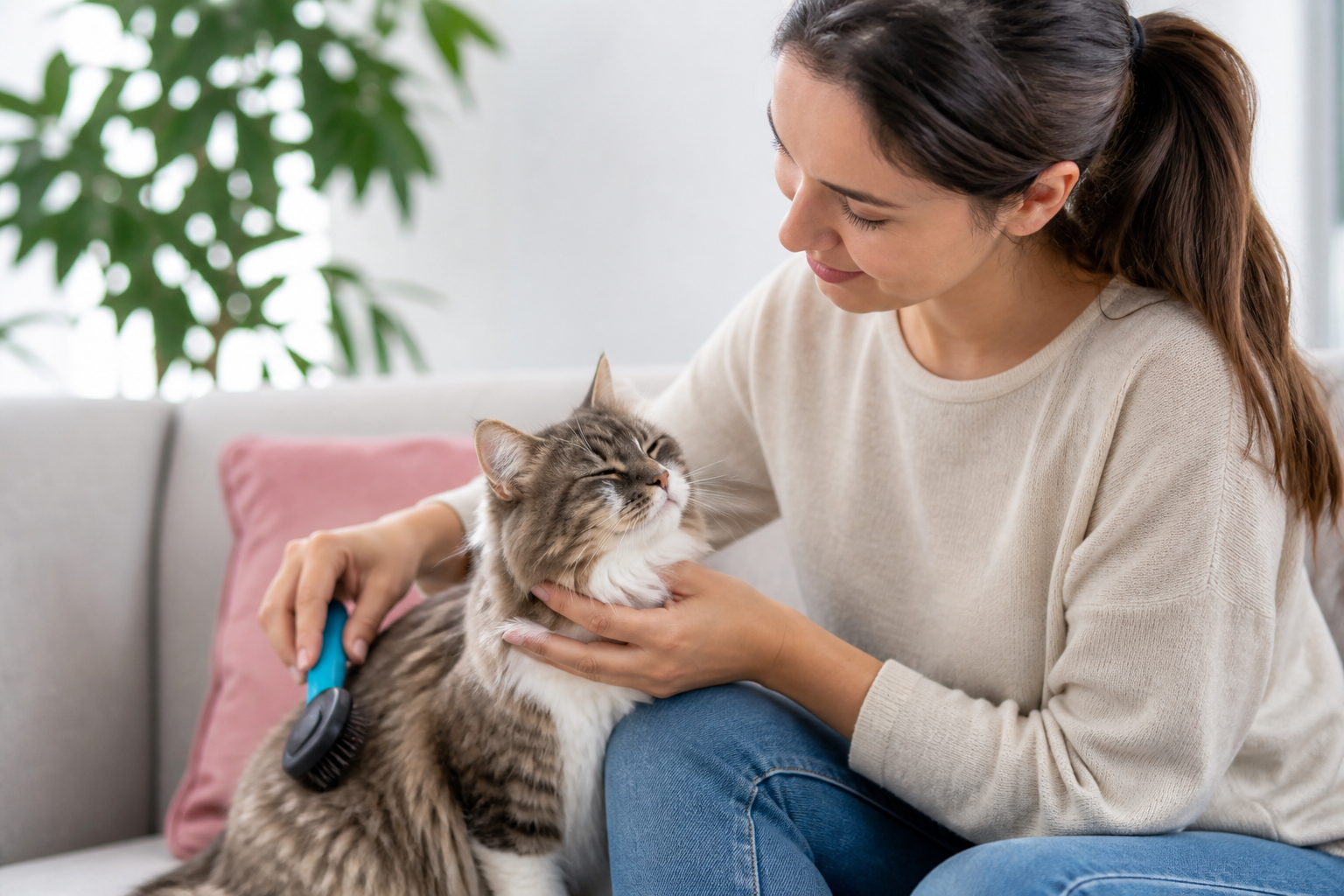
Brushing is the most effective way to manage dandruff. It manually removes the dead skin cells before they can clump together. It also stimulates the skin to produce natural oils. For short-haired cats, a weekly session is usually enough. Long-haired cats or seniors who cannot groom themselves may need a quick daily brush. Our cat grooming supplies include brushes and other coat-care tools.
Step 2: Manage Your Home Environment
During the winter months, use a humidifier in the rooms where your cat spends the most time. This keeps the air from pulling moisture out of their skin. You should also ensure they have multiple sources of fresh water to encourage hydration.
Step 3: Evaluate the Diet
Look for foods enriched with fish oils or flaxseed. If you are hesitant to change their entire diet, consider a skin and coat supplement. Products containing Omega-3 fatty acids can help "grease the wheels" of the skin's renewal process.
Step 4: Use Pet-Safe Topical Solutions
Never use human dandruff shampoo on a cat. Our skin has a different pH level than theirs, and human products can be toxic. If your cat needs a bath, use a moisturizing shampoo specifically formulated for felines. Many cats do better with "waterless" foam shampoos that you can massage in and towel off, which avoids the stress of a full bath.
The BaxterBoo Approach to Skin Health
We believe that every pet deserves a coat that feels as good as it looks. At BaxterBoo, we carefully select grooming tools and supplements that actually work. Whether you need a gentle slicker brush for a sensitive senior or a high-protein food to support a shiny coat, we have the expertise to guide you.
Our MVP Rewards program is a great way to save on the grooming supplies you use every week. If you find a specific food or supplement that clears up your cat's dandruff, our Autoship program ensures you never run out. Plus, you get a discount on those recurring orders, making it easier to maintain your cat's health long-term.
When to Contact Your Veterinarian
While a few flakes are usually not an emergency, you should call your vet if the dandruff is accompanied by other signs of distress. Feline skin issues can escalate quickly if an infection is present.
- Intense Itching: If your cat is scratching so much they are breaking the skin.
- Hair Loss: Finding bald patches or "moth-eaten" areas in the fur.
- Redness or Scabs: This indicates inflammation or a secondary infection.
- Odor: Healthy cats should not have a strong smell. A foul odor often means yeast or bacteria.
- Behavioral Changes: If your cat is hiding, lethargic, or acting aggressive when touched.
Your vet may perform a skin scraping or blood work to find the root cause. If they prescribe a medicated treatment or a prescription diet, remember that our pharmacy can fulfill those needs. Our partnership with Pet's Choice allows us to ship FDA-approved medications directly to your door, saving you a trip to the clinic for refills.
Conclusion
Cat dandruff is a common concern that ranges from a simple environmental fix to a sign of a deeper health issue. By paying attention to where the flakes appear and watching for other symptoms, you can help your cat stay comfortable. Regular grooming, a diet rich in fatty acids, and proper hydration are the foundations of a flake-free coat. We are here to support you with the best products and advice for every stage of your cat's life.
Bottom line: Visible dandruff is a signal to check your cat's grooming habits, hydration, and overall environment to ensure they are getting the care they need.
FAQ
Can I use human dandruff shampoo on my cat?
No, you should never use human dandruff shampoos on your cat. These products are formulated for the pH levels of human skin and often contain ingredients like zinc or salicylic acid that can be toxic if your cat licks their fur. Always use a shampoo specifically designed for cats, or consult your vet for a prescription topical treatment.
Is cat dandruff contagious to humans or other pets?
Standard dandruff caused by dry skin or poor grooming is not contagious. However, if the "dandruff" is actually caused by parasites like Cheyletiella mites (walking dandruff) or a fungal infection like ringworm, it can spread to other animals and even humans. If you suspect your cat has a contagious skin condition, keep them separated from other pets until a vet provides a diagnosis.
Does brushing my cat really help with dandruff?
Yes, regular brushing is one of the best ways to manage and prevent dandruff. It helps by physically removing dead skin cells and distributing the natural oils across the hair shaft to keep the skin moisturized. For senior cats or those with limited mobility, manual brushing replaces the grooming they can no longer do for themselves.
Why does my cat only get dandruff in the winter?
Winter dandruff is usually caused by low humidity. Indoor heating systems dry out the air, which in turn dries out your cat's skin. You can help manage this by using a humidifier in your home and ensuring your cat stays well-hydrated through their diet. If the flakes persist into the more humid spring months, there may be another underlying cause like allergies.






- Site & Contents BaxterBoo.com. BaxterBoo is located in the United States.
- Privacy & Security
- Terms of Use
- Accessibility Statement
