
 Save 15% on your 1st Autoship learn more

 Email us
 Live Chat
 FAQs
FAQs





Introduction
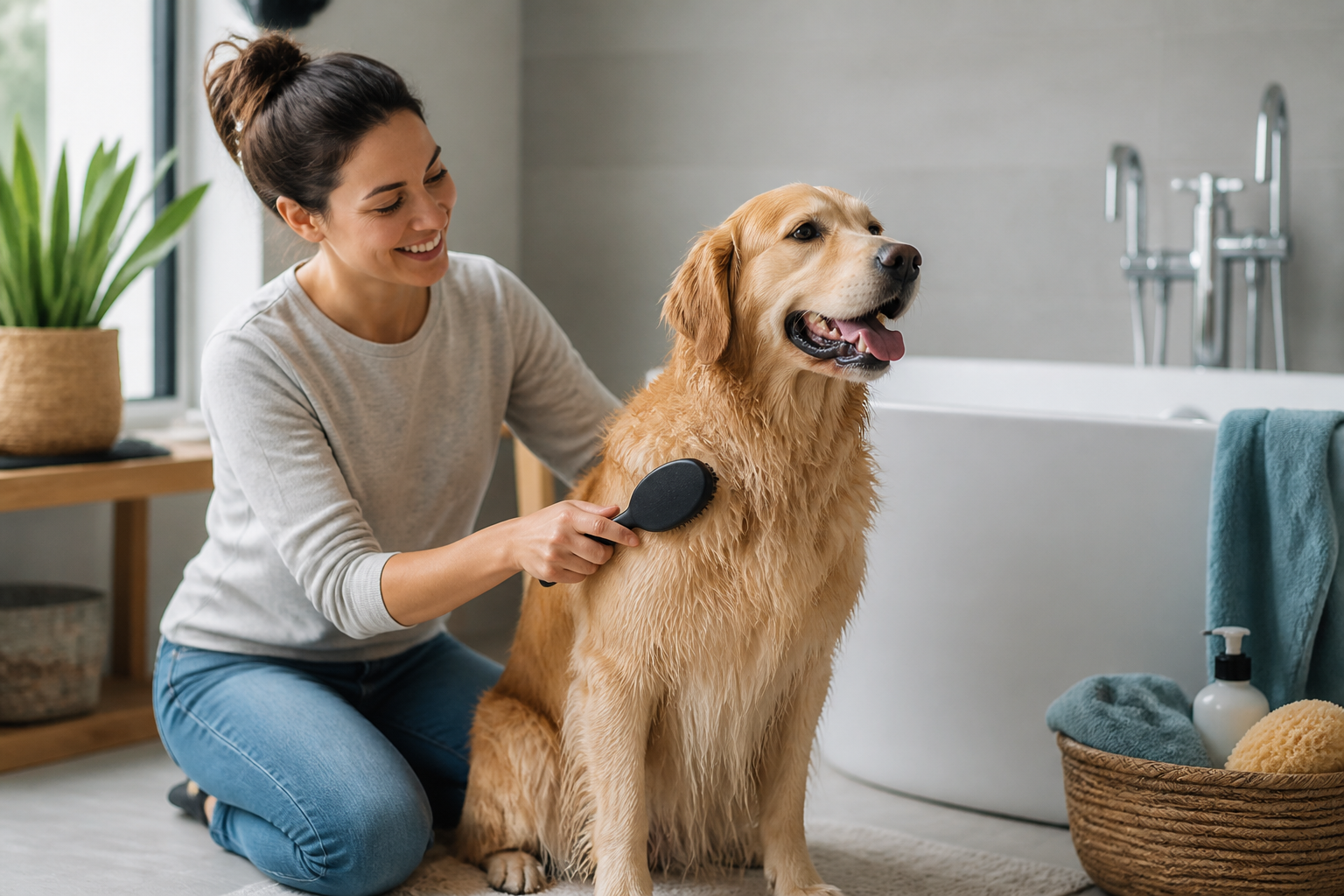
You just finished a long, muddy walk, and your dog looks like they have been through a swamp. Their coat is a chaotic mix of wet dirt, grass seeds, and those tiny tangles that seem to appear out of nowhere. You know the bathtub is the next stop, but you are standing there with a brush in one hand and a towel in the other, wondering which one to use first. At BaxterBoo, we know that grooming at home can feel like a balancing act between keeping your dog clean and keeping them comfortable.
While many pet owners assume there is one right way to do it, the truth is that your routine should change based on your dog's coat type and current messiness. This post covers the benefits of brushing before the water starts running, when it actually makes sense to wait until the coat is clean, and how to handle those stubborn mats. Understanding the timing of your grooming session will save your dog from unnecessary discomfort and keep your home much cleaner.
Quick Answer: For most long-haired dogs, you should brush before the bath to prevent water from tightening mats and knots. However, for short-haired breeds or heavy shedders, brushing during or after the bath can be more effective for removing dead fur once the coat is conditioned.
Why the "Before" Brush Is the Golden Rule for Mats
If you have a dog with long hair, a curly coat, or a dense undercoat, you have likely heard that you must brush before the bath. This is the most common advice for a very important reason. Water acts like a shrinking agent for tangles and mats. When a knot gets wet, the hair fibers swell and then lock together as they dry. This makes a small tangle turn into a hard, felt-like mat that is nearly impossible to remove without clippers.
Brushing a dry coat allows you to identify where these problem areas are before they become permanent. You can use a slicker brush or a metal comb to gently tease apart small knots. If you skip this step and go straight to the tub, you might find that your dog’s coat feels like a solid sheet of carpet once they are dry. This is especially true for "doodle" breeds, Poodles, and Bichons, where the curly hair traps shed fur very easily. Explore our dog brushes and combs to find tools suited to your dog's coat.
The Benefits of Pre-Bath Brushing
- Prevents Mat Tightening: Removing tangles while the hair is dry ensures they do not become painful "pelts" against the skin.
- Reduces Tub Clogs: A thorough brushing removes a massive amount of loose fur that would otherwise end up down your drain.
- Identifies Skin Issues: You can feel for lumps, bumps, or ticks that might be hidden under the fur before you start scrubbing.
- Distributes Natural Oils: Brushing helps move oils from the skin down the hair shaft, which can actually help the shampoo work more effectively.
Key Takeaway: Always prioritize a pre-bath brush-out if your dog is prone to matting. It is a safety measure that prevents skin irritation and saves you from having to shave your pet later.
When Brushing After the Bath Is Actually Better
Despite the common rule of brushing first, professional groomers often do a lot of their heavy-duty brushing after the dog is clean. There is a practical reason for this. Dirty hair is covered in grit, dust, and sebum. This debris creates friction, which makes the brush pull harder on the dog's skin. When the hair is clean and treated with a high-quality conditioner, the brush can glide through the coat with much less resistance. You can find shampoo, conditioner, brushes, towels, and other supplies in our dog grooming collection.
For dogs with very short coats, like Boxers, Labradors, or Beagles, brushing before the bath is often a waste of time. These dogs do not get mats, but they do shed a lot. For these breeds, using a rubber grooming tool like a KONG Zoom Groom Natural Rubber Dog Grooming Brush while the dog is covered in soapy suds is the best way to pull out dead hair. The water and shampoo help the loose fur slide out of the follicles easily.
The Power of Clean, Conditioned Hair
Working on a clean coat is also better for your grooming tools. Dirt and sand act like sandpaper on the fine metal pins of a slicker brush or the blades of your scissors. By waiting until the coat is washed, you extend the life of your gear. Additionally, the steam and warm water of a bath can help relax the hair follicles, making it the perfect time to tackle a heavy shedding season for double-coated breeds like Huskies or Shepherds.
Vet Tip: If you notice your dog has red, flaky, or itchy skin during the bath, it may be a sign of an underlying allergy or skin condition. We recommend consulting your veterinarian to see if a medicated shampoo from our pet pharmacy is necessary to help soothe their discomfort.
The Danger of Brushing Damp Fur
One of the biggest mistakes a pet owner can make is brushing a dog while their hair is damp but not fully conditioned or dry. Damp hair is at its most elastic and fragile state. If you pull a brush through damp fur without using a detangling spray or a heavy conditioner, you risk stretching and breaking the hair shafts. This leads to a frizzy, damaged coat that will actually tangle even faster in the future.
If you are going to brush after the bath, you should choose one of two paths. Either brush while the dog is still in the tub and saturated with conditioner, or wait until the coat is 100 percent dry. If you choose to brush while the dog is wet, use a wide-toothed comb or a brush designed specifically for wet hair. This prevents the "snap" that happens when a brush gets stuck in a wet knot.
How to Dry Properly Before Brushing
Step 1: Towel dry by blotting. / Do not rub the towel vigorously back and forth, as this creates new tangles. Simply squeeze the fur to soak up excess water.
Step 2: Use a blow dryer on a cool setting. / Move the dryer constantly to avoid hot spots. For double-coated dogs, the air pressure from the dryer will actually help "brush" out the loose undercoat for you.
Step 3: Check for "hidden" moisture. / Feel the thickest parts of the coat, like the neck and the base of the tail. Ensure these are bone-dry before you start your final brush-out.
Bottom line: Never brush a partially dry dog without a detangling aid, as you will likely cause more damage and pain than you are fixing.
Choosing the Right Tools for the Job
Your success depends heavily on the tools you use. You would not use a fine-toothed comb on a thick-coated Malamute, just like you would not use a heavy de-shedding rake on a thin-haired Yorkie. At BaxterBoo, we curate our selection to ensure you have the right tool for every stage of the bath.
| Coat Type | Best Tool Before Bath | Best Tool During/After Bath |
|---|---|---|
| Short/Smooth | None needed | Rubber curry brush (in the tub) |
| Double Coat | Undercoat rake | High-velocity dryer + Slicker brush |
| Long/Silky | Pin brush + Metal comb | Wide-toothed comb (while conditioned) |
| Curly/Wavy | Slicker brush | Metal comb (after fully dry) |
Using a rubber brush in the bath is a great way to massage the skin and improve circulation. For long-haired breeds, a metal "greyhound" comb is the ultimate truth-teller. Even if a coat looks brushed, a metal comb will find the tiny knots hiding near the skin. Always use the comb after you think you are finished with the slicker brush to ensure you haven't missed anything. For wet and dry brushing options, browse our selection of BASS Brushes.
Managing Skin and Coat Health
Grooming is not just about looks. It is a vital part of your dog's health. While you are brushing, you should be looking for any signs of trouble. This includes redness, unusual odors, or patches of missing hair. Sometimes, a dog that is "impossible" to brush because they are too sensitive actually has a skin infection or dry, cracked skin that makes the process painful.
Our pharmacy at BaxterBoo offers a variety of FDA-approved treatments for skin conditions through our partnership with Pet's Choice. If your dog is constantly itchy or has "hot spots," a bath might actually make the problem worse if you use the wrong products. It is always a good idea to talk to your vet about whether your dog needs a prescription-strength shampoo or a topical treatment to manage allergies or fungal issues.
Key Takeaway: Brushing is your best opportunity to perform a "body scan." If something looks or smells wrong, reach out to your vet for a professional diagnosis.
Handling Extreme Matting
Sometimes, despite our best efforts, a dog ends up with severe matting. Maybe they went for a swim in a pond and then rolled in the sand. When you encounter a "pelted" coat, the rules of brushing change. You should never try to brush out a mat that is tight against the skin. This pulls on the nerves and can actually tear the skin, leading to a serious injury.
In these cases, the best "brush" is a pair of clippers. It is much more humane to shave the mats away and start fresh than to spend hours pulling on a dog's sensitive skin. If the mats are only in a few spots, like behind the ears or in the armpits, you can try to "split" the mat with a de-matting tool. These tools have sharp edges that cut through the knot so you can then brush out the pieces. However, these should be used with extreme caution.
- Check the skin tension: Always hold the base of the hair near the skin so you aren't pulling the skin itself.
- Use cornstarch: Rubbing a little cornstarch into a dry mat can help the hairs slide apart.
- Know when to stop: If your dog is growling, crying, or trying to hide, the mats are too painful to brush out at home.
Vet Tip: Severe matting can hide skin infections, sores, and even parasites like fleas or ticks. If you have to shave your dog due to mats, keep a close eye on the skin for several days and contact your vet if you see any raw or weeping areas.
Protecting Your Dog’s Ears and Eyes During the Bath
A successful grooming session can be ruined if the dog ends up with an ear infection or irritated eyes. This often happens when pet owners are so focused on the coat that they forget about the sensitive areas. Water trapped in the ear canal is a leading cause of yeast infections in dogs with floppy ears.
To prevent this, you can place a large cotton ball just inside the opening of each ear before the bath starts. This acts as a barrier to keep splashing water out. For the face, skip the sprayer entirely. Instead, use a soft washcloth to wipe the face and around the eyes. This keeps shampoo out of their eyes and prevents them from inhaling water through their nose, which can cause a "reverse sneezing" fit.
Post-Bath Ear Care
After the bath is over, remove the cotton balls and use a vet-approved ear cleaner. This helps dry out any residual moisture and keeps the ear canal healthy. If your dog is prone to chronic ear issues, our dog ear care selection carries prescription ear drops and cleaners that can be part of your regular maintenance routine. Just ask your vet to send the prescription over to us.
Bottom line: A clean dog is a happy dog, but a clean dog with an ear infection is a miserable one. Protect the ears at all costs.
Conclusion
The debate over whether to brush before or after a bath does not have a single winner because every dog is different. If your dog has long hair or is prone to tangles, brushing before the bath is the only way to ensure those knots do not turn into permanent mats. For short-haired dogs or heavy shedders, the bath itself is your best tool for removing dead fur. No matter which method you choose, always make sure your dog is fully dry before performing a final brush-out to prevent hair breakage.
Regular grooming is a great way to bond with your pet and keep them feeling their best. To make the process even easier, consider signing up for our Autoship programme. You can get your favorite shampoos, brushes, and even prescription skin treatments delivered right to your door on a schedule that works for you. Plus, you will earn MVP Rewards on every purchase through the MVP Rewards programme to use toward future grooming supplies.
FAQ
Is it okay to brush my dog while they are soaking wet in the tub?
Yes, but only if you use a lot of conditioner and a brush designed for wet hair. The conditioner provides "slip," which allows the brush to move through the coat without snagging. If you do not use conditioner, brushing wet hair can stretch and break the strands, causing long-term damage to the coat.
How do I get a "wet dog smell" out of the coat after brushing?
The "wet dog smell" is caused by bacteria and yeast that live on the skin and become active when wet. To eliminate it, ensure you are using a high-quality dog shampoo rather than human products, and dry the coat completely with a blow dryer. If the smell persists even after the dog is dry, it may indicate a skin infection that requires a visit to the vet.
My dog hates the brush; should I just bathe them more often instead?
Bathing more often is not a substitute for brushing and can actually dry out the skin, making it more sensitive. If your dog dislikes brushing, try using a very soft brush or a grooming glove to get them used to the sensation. Always pair grooming with high-value treats and keep the sessions very short until they become more comfortable.
Can I use human hair conditioner to help brush out my dog's tangles?
You should avoid using human products on dogs whenever possible. Human skin has a different pH balance than dog skin, and our conditioners often contain fragrances and chemicals that can cause severe irritation or even chemical burns on pets. It is much safer to use a conditioner specifically formulated for dogs that will help close the hair cuticle and make brushing easier.






