
 Save 15% on your 1st Autoship learn more

 Email us
 Live Chat
 FAQs
FAQs





Introduction
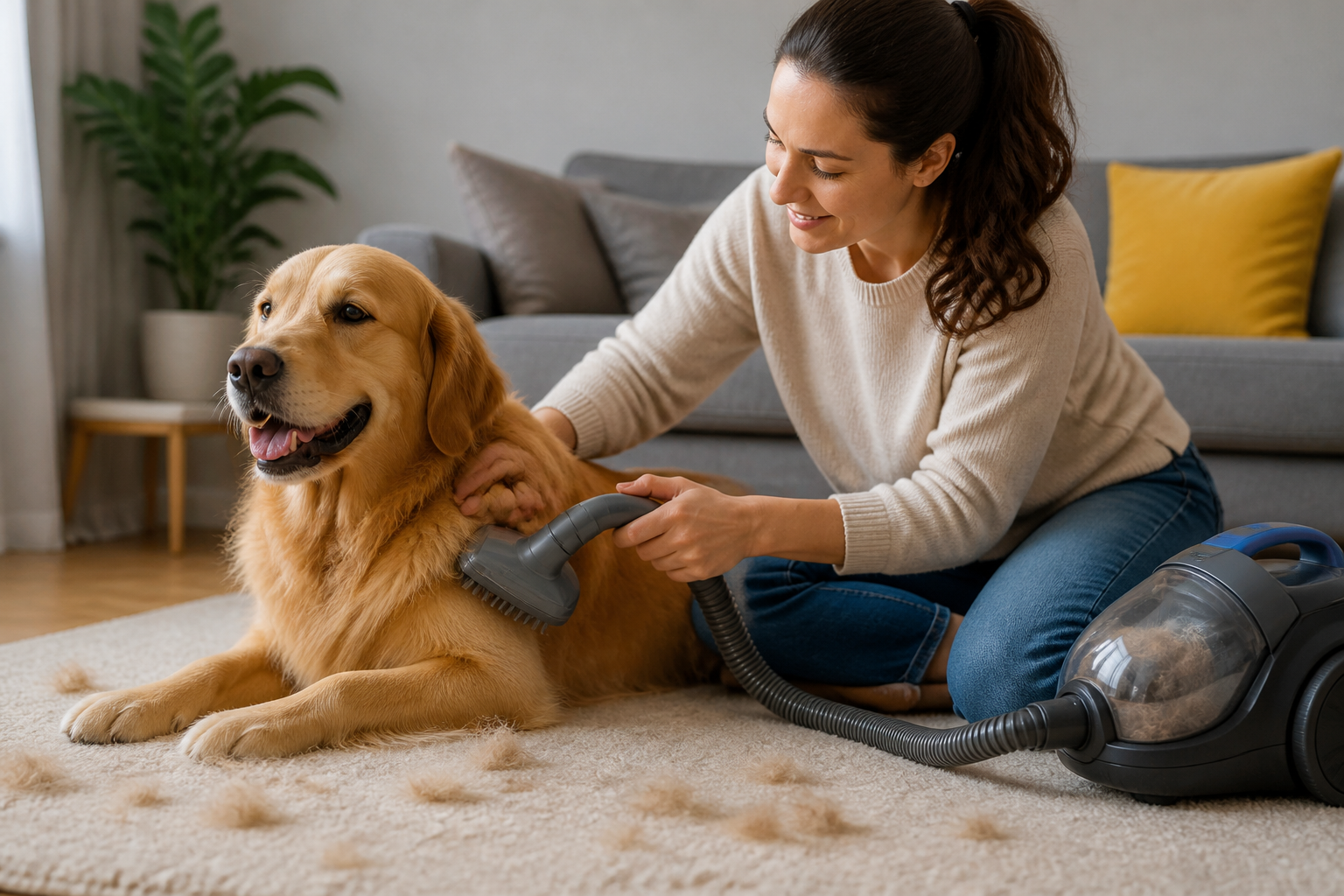
You are sitting on your living room rug, petting your dog, and a literal cloud of fur drifts into the air. By the time you finish a quick scratching session, your clothes are covered and the floor looks like it hasn't been cleaned in weeks. This is the daily reality for owners of Labs, Huskies, and even some fluffy doodles. At BaxterBoo, we know that traditional brushing often feels like you are just moving the mess from the dog to the floor. A vacuum brush for dogs solves this problem by capturing hair at the source. This post explains how these specialized tools work, the different types available, and how to choose the right one for your pet. Using a grooming vacuum can help you keep a cleaner home while making the grooming process much more efficient.
Quick Answer: Yes, there are several types of vacuum brushes for dogs, including universal attachments that fit your home vacuum and dedicated all-in-one grooming vacuum systems. These tools use suction to pull loose fur and dander directly into a canister while you brush, preventing the hair from floating onto your floors or furniture.
The Rise of the Dog Grooming Vacuum
Traditional grooming usually involves a brush, a comb, and a lot of cleanup afterward. Even if you brush your dog outside, the wind can carry that fur right back onto your porch or into your neighbor's yard. The dog grooming vacuum has gained popularity because it eliminates the second step of the process. It reverses the script by catching the mess before it ever hits the ground.
These systems are not just for professional groomers anymore. Many owners now use them at home to manage seasonal shedding or to maintain a tidy coat between professional appointments. Because the vacuum captures dander and allergens, these tools are also a massive help for households where family members suffer from pet allergies. We have seen a significant shift toward these all-in-one systems as they become quieter and more affordable for the average pet owner.
Types of Vacuum Tools for Dogs
When you start looking for a vacuum brush, you will generally find two main categories. One uses your existing home equipment, while the other is a standalone machine built specifically for pets.
Universal Vacuum Attachments
These are individual brush heads designed to fit onto the hose of a standard household vacuum or a central vacuum system. They are often the most budget-friendly option. A popular example is the Vac-n-Groom attachment. These tools typically feature soft rubber bristles or slicker-style pins.
The vacuum suction is managed by the power of your home vacuum, though some attachments have a small slider to bleed off air and reduce the pull. This is important because a high-powered upright vacuum might have too much suction for a small dog, making the brush hard to move across the skin.
All-in-One Grooming Systems
These are dedicated machines like those from brands such as furMe, Neakasa, or oneisall. These units include a motorized base, a specialized hose, and a variety of interchangeable heads. Because they are designed specifically for dogs, they are usually much quieter than a standard vacuum cleaner.
These systems often come with a kit of tools. This includes grooming brushes, deshedding tools, and even electric clippers that suction hair away as you trim. They are highly portable and usually have a collection bin that is easy to pop off and empty into the trash.
Essential Features to Evaluate
If you decide to invest in a dedicated grooming system, you need to look at the technical specifications. Not all vacuums are built to handle thick, wiry, or double coats.
Suction Power and Settings
Suction is usually measured in Pascals (Pa). A higher number means the vacuum can pull more hair through the hose without clogging. For most dogs, a range of 8,000 Pa to 10,000 Pa is sufficient. If you have a dog with a very dense undercoat, like a Samoyed or a Great Pyrenees, you may want a model that reaches 14,000 Pa or higher.
Most quality units offer at least three suction levels. You can use the low setting for sensitive areas like the belly or face. The high setting is best for the thickest parts of the coat where loose fur tends to get trapped.
Noise Levels and Pet Anxiety
Noise is the biggest hurdle for most dogs. A standard household vacuum usually operates at around 75 to 80 decibels (dB). Dedicated pet vacuums are designed to be much quieter. Many models, such as the furMe series, operate at around 42 dB on their lowest setting. This is roughly the volume of a running refrigerator.
Key Takeaway: A quieter motor is essential for a stress-free grooming experience. Look for models that stay under 60 dB to prevent your dog from becoming fearful of the grooming process.
Collection Bin Capacity
The size of the dustbin determines how often you have to stop and empty it. For a small dog that doesn't shed much, a 1-liter bin is plenty. However, if you are grooming a large, heavy shedder, you will want a bin that holds at least 2 liters or more. Some professional-grade models offer bins as large as 4.5 liters.
A Breakdown of Common Attachments
When you buy a grooming vacuum kit, you typically receive five to seven different attachments. Understanding what each one does will help you get the best results for your dog's specific coat type.
- Grooming Brush: This is usually a slicker-style brush with soft pins. It is used for daily brushing to remove surface debris and light tangles.
- Deshedding Tool: This tool has a fine-toothed blade designed to reach through the topcoat and pull out the loose undercoat. It is the most important tool for heavy shedders.
- Electric Clippers: These attach to the vacuum hose. As the blades cut the hair, the vacuum sucks the clippings away immediately. This is excellent for keeping paw pads tidy or doing full haircuts.
- Crevice Tool: This is used to clean up any stray hairs that might have escaped onto your clothes or the sofa during the session.
- Paw Trimmer: A smaller version of clippers used for precise work around the toes.
For additional brushing options, explore our dog brushes and combs collection.
Note: Some brands offer specific blade replacements for their electric clippers. Always check if the brand you choose sells these parts separately so you can maintain the tool over time.
Comparison of Popular Grooming Vacuum Models
| Feature | furMe Pro Plus | Neakasa P2 Pro | oneisall Kit | Hicozy Budget |
|---|---|---|---|---|
| Max Suction | 10,500 Pa | 9,000 Pa | 15,000 Pa | 8,000 Pa |
| Bin Size | 2.0 L | 2.5 L | 2.0 L | 1.0 L |
| Min Noise | 42 dB | 52 dB | 59 dB | 55 dB |
| Power Source | Corded | Corded/Cordless | Cordless | Corded |
How to Acclimate Your Dog to a Vacuum Brush
Even a quiet vacuum can be intimidating to a dog. You cannot simply turn it on and start brushing the first day. Success requires a slow introduction.
Step 1: Introduce the machine while it is off. Place the vacuum in the room and let your dog sniff it. Put treats on top of the machine so they associate it with something positive.
Step 2: Turn the vacuum on at a distance. Keep the machine in a different room or at the far end of the hallway. Give your dog high-value treats while the motor is running so they get used to the hum.
Step 3: Pair the noise with the brush. Once your dog is calm around the noise, bring the machine closer. Use the brush attachment on your dog without turning the suction on yet.
Step 4: Start with low suction. Turn the vacuum on its lowest setting. Gently place the brush on your dog's back, which is usually the least sensitive area. Keep the sessions very short at first.
Step 5: Gradually increase duration. As your dog becomes comfortable, you can move to different parts of the body and use higher suction settings if needed.
For more ideas about managing seasonal shedding, read our guide to Australian Shepherd shedding.
Vet Tip: If your dog has extreme anxiety or a history of noise phobia, consult your veterinarian. They can recommend calming techniques or supplements to help make grooming sessions manageable. Never force a fearful dog to endure the vacuum, as this can lead to defensive behavior.
Maintenance and Filter Care
To keep the vacuum working effectively, you must maintain the filters and attachments. Most pet vacuums use a HEPA filtration system to trap dander and pollen. These filters usually need to be rinsed or replaced every few months depending on how often you groom.
Check the hose regularly for clogs. Large clumps of fur can sometimes get stuck in the elbows of the hose, especially if you are grooming a dog with very long or matted hair. If the suction feels weak, a clog or a dirty filter is almost always the cause.
If you use the clipper attachment, remember to oil the blades. Hair and dander can dull the blades quickly if they are not cleaned and lubricated. Most kits include a small bottle of clipper oil for this purpose.
For everyday grooming tools that can complement a vacuum system, consider our grooming tools for dogs.
When to See a Veterinarian About Shedding
While a vacuum brush is a great tool for managing normal shedding, sometimes excessive hair loss is a sign of an underlying health issue. If you notice your dog is shedding significantly more than usual, or if you see specific bald patches, it is time for a checkup.
Skin conditions, allergies, or hormonal imbalances can all cause changes in the coat. At BaxterBoo, we emphasize that grooming is a great time to check your dog's skin for lumps, bumps, or redness. Our pharmacy carries various FDA-approved treatments for skin allergies and infections through our partnership with Pet's Choice. If your vet prescribes a specific medicated shampoo or an allergy medication, we can help you fulfill those needs.
Explore our dog skin and coat care selection for grooming-related products, or visit our pet pharmacy when your veterinarian prescribes medication.
Bottom line: A grooming vacuum is for maintenance, but it cannot replace a medical diagnosis for skin or coat abnormalities.
Benefits for Different Coat Types
Not every dog needs the same approach. The vacuum brush should be used differently depending on what kind of hair your dog has.
Double-Coated Breeds
For Huskies, Shepherds, and Labs, the deshedding attachment is your best friend. These dogs have a soft undercoat that sheds twice a year in large amounts. The vacuum helps pull that loose undercoat out before it becomes trapped in the topcoat and starts to smell or mat.
Curly and Wavy Coats
Doodles and Poodles often have hair that doesn't fall out on its own. Instead, the loose hair gets caught in the curls, leading to mats. Using a vacuum slicker brush can help pull those loose strands out safely. However, be careful not to use high suction on very long hair, as it can occasionally cause the hair to tangle around the pins.
Short-Haired Breeds
For Beagles or Boxers, a rubber curry brush attachment is usually best. These dogs have stiff, needle-like hairs that get stuck in upholstery. The vacuum suction is highly effective at grabbing these short hairs as the rubber bristles massage the skin and loosen them.
A rubber option such as the KONG Zoom Groom Natural Rubber Dog Grooming Brush can also be useful for short-haired grooming routines.
Why Quality Equipment Matters
It is tempting to buy the cheapest attachment possible, but the materials matter. Cheap plastic pins on a slicker brush can be sharp and scratch your dog's skin. Higher-quality brands use rounded tips or soft rubber to ensure the experience is comfortable.
At BaxterBoo, we pride ourselves on being a specialty pet hybrid retailer. We handpick products that provide real value without cutting corners on safety. Whether you are visiting our warehouse in Vernon Hills or ordering online for home delivery, you are getting products vetted by people who actually know pets. We have been operating since 2006, and we understand the difference between a tool that works and one that just sits in the closet.
The U-Groom selection of dog brushes and combs offers additional tools for maintaining your dog's coat at home.
Conclusion
Investing in a vacuum brush for dogs is one of the most effective ways to reclaim your home from pet hair. Whether you choose a universal attachment or a dedicated all-in-one grooming system, the result is the same: less mess and a healthier coat for your pet. Remember to start slowly with acclimation and choose a model with the right suction and bin capacity for your dog's size. By integrating a grooming vacuum into your routine, you can turn a chore into a bonding experience.
- Choose between universal attachments or standalone systems based on your budget and noise concerns.
- Prioritize low noise levels (under 60 dB) to keep your pet calm.
- Look for HEPA filters to help with household allergies.
- Maintain your equipment by cleaning filters and oiling clipper blades.
If your dog’s shedding is accompanied by itchy skin or redness, browse our Skin & Coat Care section for helpful supplements. For pets with more significant skin issues, remember that we offer a full range of prescription medications through our dog pharmacy.
FAQ
Can I use a regular vacuum brush on my dog?
You should not use a standard vacuum floor attachment on your dog as the suction is too strong and the bristles are too stiff. You can, however, use a specialized pet grooming attachment designed for home vacuums. These tools have air-release valves to ensure the suction is gentle enough for a dog's skin.
Are grooming vacuums too loud for nervous dogs?
Most dedicated grooming vacuums are significantly quieter than standard household vacuums, often operating at 42 to 50 decibels. While some dogs may still be nervous initially, most can be acclimated through a slow introduction and positive reinforcement. Always start with the machine off and use treats to build a positive association.
Do vacuum brushes work on long-haired dogs?
Yes, vacuum brushes are very effective on long-haired dogs, particularly for removing the loose undercoat. However, you must be careful with very long or fine hair to prevent it from tangling in the brush pins. It is often helpful to use a standard comb to check for large mats before using the vacuum brush.
How often should I use a grooming vacuum on my dog?
For most dogs, a thorough session once or twice a week is enough to manage shedding. During heavy shedding seasons, such as spring and fall, you may want to use it more frequently. Regular use helps keep dander and loose fur from building up in your carpet and furniture.






